Plastic Mat
CN → US| HS Code | Tariff Rate | Origin | Destination | Doc |
|---|---|---|---|---|
| 3914002000 | 35.0% | CN | US | Official Doc |
| 3926909989 | 22.8% | CN | US | Official Doc |
| 3926909905 | 22.8% | CN | US | Official Doc |
| 3914006000 | 38.9% | CN | US | Official Doc |
| 3926904590 | 13.5% | CN | US | Official Doc |
Product Images

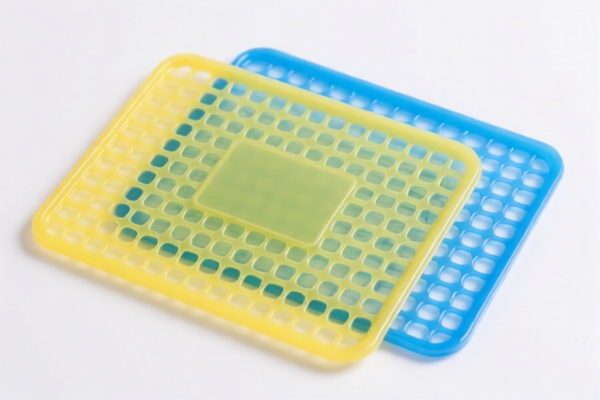


AI Analysis
🧱 Plastic Mats: The Ultimate HS Code & Tax Breakdown | 2026 Global Clearance Strategy
🌐 HS Code Reference & Clearance Guide | 2026 Latest Tariff Analysis | Professional Strategy
📌 One: Product Definition & Classification: Do You Really Understand "Plastic Mats"?
Plastic Mats are versatile items used in industrial, commercial, and residential settings for flooring, anti-slip protection, drainage, or cushioning. In international trade, their classification hinges on two critical factors: 1. Material: Are they purely polymeric (Chapter 39)? 2. Form/Function: Are they "netting/mesh pads" (Chapter 39.14) or "other finished plastic articles" (Chapter 39.26)?
⚠️ Key Distinction:
- "Net/Pad" Shape + Polymer Logic → Often falls under 3914 (Resins/Polymer shapes).
- Finished Utility (Gaskets, Pads, etc.) → Often falls under 3926 (Other plastic articles).
- Misclassification Risk: Labeling a functional gasket as a "mat" to avoid duty often leads to 3914 classification with 35-39% total tax, which is significantly higher than the functional gasket rate (13.5%).
📦 Two: HS Code Classification Details (2026 Official Tariff Data)
Based on the provided data, here is the breakdown of the 5 potential HS Codes for "Plastic Mat" products, ranging from raw polymer shapes to finished utility items.
| HS Code | Product Description & Logic | Tax Scenario | Total Tax Rate |
|---|---|---|---|
3914.00.20.00 |
Resin/Polymer Pads: "Plastic" material inferred as polymer. "Net mat" considered primary/semi-finished form. No conflict with Chapter 39 logic. | High Duty Zone | 35.0% |
3926.90.99.89 |
Other Plastic Articles: "Plastic" material meets requirements. Classified as "Other plastic articles" with no specific form conflict. | Medium Duty Zone | 22.8% |
3926.90.99.05 |
All-Plastic Articles: "Plastic" material meets "All-Plastic" requirement. Fits within the plastic article category. No obvious conflict. | Medium Duty Zone | 22.8% |
3914.00.60.00 |
Resin/Other Forms: Matches "Plastic" core material. "Net mat" treated as semi-finished form extending to "Other" category logic. | High Duty Zone | 38.9% |
3926.90.45.90 |
Gaskets/Seals (Non-O-ring): Material is Plastic. Form matches "pads/washers". Fits "Plastic sealing parts (non-O-ring)" logic. | Low Duty Zone | 13.5% |
🔍 Critical Insight:
- Codes 3914 (20.00 & 60.00) are for semi-finished resin shapes. If your "mat" is sold as a raw polymer netting to be further processed, this is the correct code, but expect 35%+ taxes. - Code 3926 (99.05 & 99.89) is for finished plastic goods. If the mat is a final product (e.g., a gym mat, a drainage pad), this is the likely path at 22.8%. - Code 3926.90.45.90 is the sweet spot (13.5%) IF your product can be legitimately described/defined as a gasket, washer, or sealing pad. If you market it purely as a "floor mat," you may lose this benefit.
💰 Three: 2026 Tariff Rate Breakdown (Base + Surcharges + Policy)
✅ Applicable Jurisdiction: USA (US)
✅ Origin: China (CN)
✅ Effective Date: Current/Upcoming 2025-2026 Regime
🎯 1. High-Tax Scenario: 3914.00.20.00 & 3914.00.60.00
(Resins & Semi-finished Polymer Shapes)
| Component | Rate | Source / Logic |
|---|---|---|
| Base Duty | 0.0% (Code .20) or 3.9% (Code .60) | Standard Most-Favored-Nation (MFN) rate |
| Section 301 Surcharge | +25.0% | Critical: "Additional Duty" under US Trade Act for Chinese plastics/resins. |
| Section 122 / IEEPA | +10.0% | Critical: Additional tariff targeting Chinese goods (often linked to Section 301 or emergency powers). |
| Total Effective Rate | 35.0% (Code .20) 38.9% (Code .60) |
Highest Risk Tier |
📌 Explanation:
- These codes classify the "Plastic Mat" as a raw material or semi-finished resin shape (e.g., a roll of plastic netting). - The 25% Section 301 is the main driver here, making this classification extremely expensive for final assembly or sale. - Strategy: Avoid this unless the product is explicitly sold as "resin for molding."
🎯 2. Medium-Tax Scenario: 3926.90.99.89 & 3926.90.99.05
(Other Finished Plastic Articles)
| Component | Rate | Source / Logic |
|---|---|---|
| Base Duty | 5.3% | Standard MFN rate for "Other" plastic goods. |
| Section 301 Surcharge | +7.5% | Moderate: Lower surcharge for "Other" articles compared to raw resins. |
| Section 122 / IEEPA | +10.0% | Standard additional duty. |
| Total Effective Rate | 22.8% | Standard Tier |
📌 Explanation:
- This classification treats the "Plastic Mat" as a finished consumer/industrial good (e.g., a rubberized floor mat, anti-slip pad). - Why it's better: The base rate (5.3%) is higher than raw resins (0%/3.9%), but the Section 301 surcharge drops from 25% to 7.5%, resulting in a 12.3% lower total tax than the 3914 codes.
🎯 3. Low-Tax Scenario: 3926.90.45.90
(Plastic Gaskets, Washers, & Seals)
| Component | Rate | Source / Logic |
|---|---|---|
| Base Duty | 3.5% | Low MFN rate for sealing components. |
| Section 301 Surcharge | 0.0% | Exempt! No Section 301 surcharge for specific sealing components in this category. |
| Section 122 / IEEPA | +10.0% | Additional duty applies. |
| Total Effective Rate | 13.5% | Optimal Tier |
📌 Explanation:
- This is the best-case scenario if the product qualifies. - The 0% Section 301 surcharge is the game-changer. - The Catch: The product must be described and documented as a gasket, washer, or sealing pad (e.g., "Plastic垫圈/垫片" in Chinese context). If you call it a "Gym Mat" or "Floor Mat," US Customs will likely reject this classification and reassign it to the higher 3926.90.99 or 3914 categories.
🛠️ Four: Clearance Operational Advice (实战避坑指南)
✅ 1. Preparation Checklist (The "Do or Die" List)
| Document | Required? | Why It Matters |
|---|---|---|
| ✅ Detailed Product Spec | YES | Must clearly state: "Plastic," "Gasket/Seal" (if claiming 3926.45) OR "Mat/Pad" (if 3926.99). |
| ✅ Technical Drawing | YES | Show cross-section. Is it a flat sheet (3914/3926.99) or a shaped seal (3926.45)? |
| ✅ Photos (Labeled) | YES | Clear images showing edges, usage, and any markings. |
| ✅ Bill of Materials (BOM) | YES | Confirm 100% plastic content. No fabric backing = Pure Plastic. |
| ✅ Commercial Invoice | YES | CRITICAL: Do NOT just write "Plastic Mat." Write "Plastic Sealing Washer" or "Plastic Anti-Slip Pad" to match HS logic. |
| ✅ Packing List | YES | Ensure weight and quantity match the invoice perfectly. |
✅ 2. Declaration Strategy (The "Golden Rules")
🔥 Rule #1: Function Dictates Code.
- If it's used to seal a machine: Declare as "Plastic Gasket/Washer" → Target3926.90.45.90(13.5%).
- If it's used for flooring/safety: Declare as "Plastic Mat" → Target3926.90.99.xx(22.8%).
- If it's a raw sheet/net: Declare as "Resin Form" →3914.xx(35-39%) (Avoid unless intended for further manufacturing).🔥 Rule #2: Avoid the "3914 Trap".
- Many traders try to classify finished mats under 3914 to avoid "finished goods" scrutiny. DO NOT DO THIS. Customs will see "Net Mat" as a semi-finished form and apply the 25% Section 301 surcharge. - Safe Zone: Finish the product. If it's a "Mat," it's 3926.90.99 (22.8%). If it's a "Gasket," it's 3926.90.45 (13.5%).
✅ 3. Special Scenarios & Solutions
| Scenario | Recommended Action | Expected Outcome |
|---|---|---|
| "Plastic Mat" with Fabric Backing | DO NOT classify as pure plastic. May need 59.11 (Textile/Composite) or 3926 with different logic. | Avoids misclassification penalty. |
| "Plastic Mat" for Industrial Machinery | Rebrand/Reclassify as "Plastic Gasket/Seal" if it fits a mechanical interface. | Saves ~9.3% tax (22.8% → 13.5%). |
| "Plastic Mat" for Retail/Gym | Classify as "Other Plastic Article" (3926.90.99). | Standard 22.8% rate. Safe and compliant. |
| "Plastic Mat" Sold as Raw Material | Classify as 3914. | High tax (35-39%) but correct for raw inputs. |
🌍 Five: Global Market Comparison (2026 Quick View)
| Market | Recommended Code | Total Tax (Approx.) | Key Requirement |
|---|---|---|---|
| 🇺🇸 USA | 3926.90.45.90 |
13.5% | Must prove "Gasket/Seal" function. |
| 🇺🇸 USA | 3926.90.99.89 |
22.8% | Standard "Mat" classification. |
| 🇺🇸 USA | 3914.00.20.00 |
35.0% | Raw Resin (High Risk). |
| 🇪🇺 EU | 3926.90 |
~2-4% | No Section 301/IEEPA surcharges. |
| 🇨🇳 China | 3926.90 |
~5-9% | No Section 301 surcharges. |
📌 Conclusion:
- The USA is the most complex market due to the Section 301 (25%) vs. 7.5% differential. - Strategy for USA: Try to structure the product as a Sealing Component (3926.90.45.90) to save 22% vs. the base mat rate. If not possible, accept the 22.8% "Other Article" rate. - Never use3914unless the product is literally a raw resin sheet.
📌 Six: Common Mistakes & "Blood and Tears" Lessons
❌ Mistake 1: Calling a "Gasket" a "Plastic Mat" to avoid duty.
👉 Result: Customs rejects the "Gasket" claim, reclassifies as "Other Plastic" (22.8%) or "Resin" (35%). Penalty + Back Tax.
❌ Mistake 2: Using 3914.00.20.00 for a finished floor mat.
👉 Result: 25% Section 301 surcharge applies. Total 35% tax.
👉 Fix: Reclassify to 3926.90.99 to drop Section 301 to 7.5%.
❌ Mistake 3: Inconsistent naming on Invoice vs. Packing List.
👉 Result: Customs delays shipment for 2-3 weeks. Storage fees apply.
✅ Correct Approach:
"Product: Industrial Plastic Sealing Pad (Non-O-ring). Material: 100% Polypropylene. Application: Gasket for Pump Assembly."
🎯 Seven: Final Conclusion: Precision Classification = Profit Protection
🎯 Remember the Golden Rule:
🔹 "If it seals, it's 3926.45 (13.5%); if it covers, it's 3926.99 (22.8%); if it's raw, it's 3914 (35%+)."
🔹 "Don't let a 25% surcharge eat your margin. Classify correctly the first time!"
📌 Pro Tip:
If your "Plastic Mat" is truly a gasket or washer, explicitly state "Non-O-ring sealing part" on the invoice and provide a diagram showing the sealing interface. This is your ticket to the 13.5% rate.
📣 Immediate Action Plan:
📞 Review your product function. Can it be described as a seal?
📄 Update your Invoice Description. Use "Sealing Pad" or "Anti-Slip Mat" as appropriate.
🚀 File a Pre-Ruling with US Customs if unsure. Avoid the 35-39% trap!
✨ Professional Clearance Starts with the Right Code!
💼 Every percentage point saved is pure profit!
Customer Reviews
About HS Code Classification
The Harmonized System (HS) is an internationally standardized nomenclature developed by the World Customs Organization (WCO) to classify traded products. Over 200 countries use the HS system as the basis for customs tariffs, trade statistics, and import/export regulations.
Each HS code follows a hierarchical structure:
- Chapter (2 digits) — Broad category of goods (e.g., Chapter 84: Machinery and Mechanical Appliances)
- Heading (4 digits) — More specific grouping within the chapter
- Subheading (6 digits) — Internationally standardized breakdown, used by all WCO member countries
- National subdivisions (8-10 digits) — Country-specific extensions for further classification, such as US HTSUS 10-digit codes
Correct HS code classification is essential for smooth customs clearance, accurate duty payment, and compliance with trade regulations. Misclassification can lead to customs delays, overpayment of duties, or penalties.
When importing from CN to US, the applicable tariff rates may include:
- Most-Favored-Nation (MFN) rate — The standard duty rate applied to WTO members
- General rate — Applied to countries without trade agreements
- Trade remedy duties — Additional tariffs such as Section 301 (anti-dumping), Section 232 (national security), or countervailing duties
The information provided on this page is for reference purposes only. For official classification, please consult with your local customs authority or a licensed customs broker.