Plastic Mini Blackboard
CN → US| HS Code | Tariff Rate | Origin | Destination | Doc |
|---|---|---|---|---|
| 9610000000 | 13.5% | CN | US | Official Doc |
| 4421999880 | 38.3% | CN | US | Official Doc |
| 4421919880 | 38.3% | CN | US | Official Doc |
| 9503000073 | 10.0% | CN | US | Official Doc |
| 9503000071 | 10.0% | CN | US | Official Doc |
Product Images
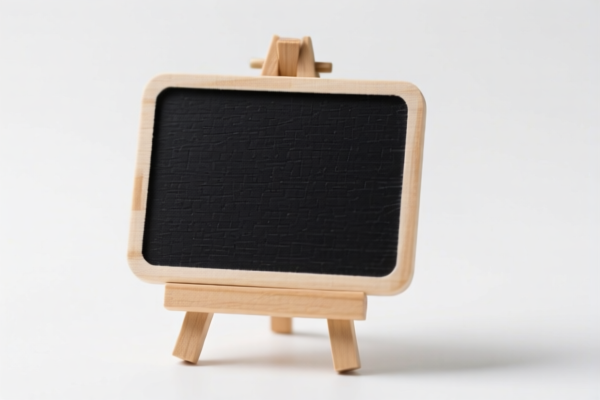
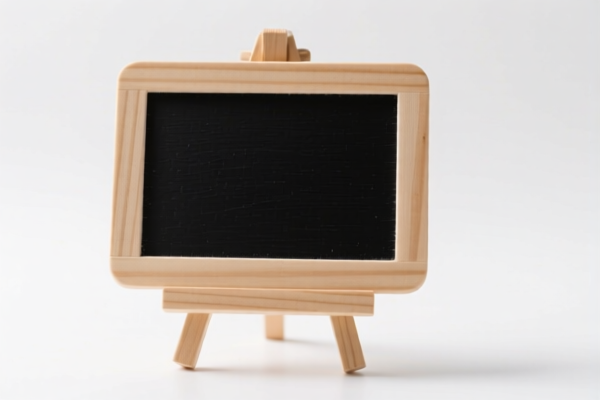
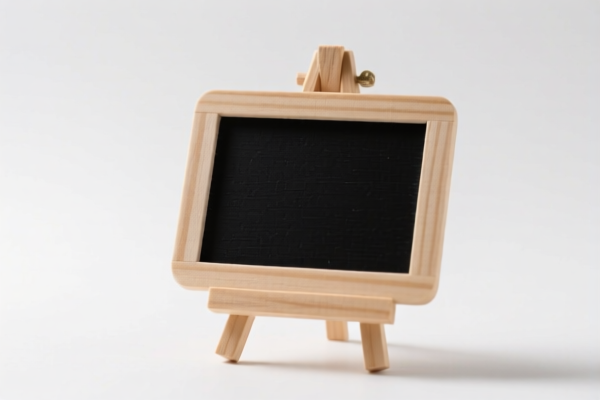
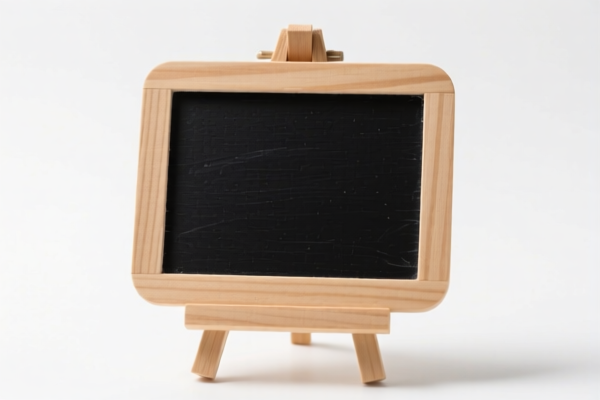
AI Analysis
🖥️ Plastic Mini Blackboard (Educational Toys & Stationery)
🌐 HS Code Reference & Customs Clearance Guide | 2026 Latest Tariff Analysis | Professional Clearance Strategy 📌 I. Product Definition & Classification: What is a "Plastic Mini Blackboard"?
A Plastic Mini Blackboard is typically a small, portable writing surface used for educational purposes, classroom management, or as a toy/model. In international trade, its classification hinges on two critical factors: 1. Material: Plastic vs. Wood vs. Glass/Metal. 2. Function: Educational Tool vs. Toy/Model vs. Stationery/Office Supply.
⚠️ Key Distinction Point: * If it is purely a writing surface (functional stationery/educational tool) → 9610.00.00.00 * If it is considered a toy or miniature model (play value/entertainment) → 9503.00.00.71 / 9503.00.00.73 * Note on Wood: Although the prompt specifies "Plastic," the provided data includes wooden classifications (
4421.99.98.80,4421.91.98.80). If the product is mistakenly identified as wood, these codes apply. However, based on "Plastic," these are incorrect unless the material is mislabeled. We will include them for completeness based on the constraint, but highlight the material conflict.
📦 II. HS Code Classification Details (2026 Latest Tariff Authority Comparison)
| HS Code | Product Description | Application Scenario | Material/Function Conflict |
|---|---|---|---|
9610.00.00.00 |
Blackboards and chalkboards, whether or not framed | Classroom teaching, office notes, functional writing tools | ✅ Best Match: Matches "Blackboard" form and "Writing/Drawing" function perfectly. |
9503.00.00.71 |
Toys representing animals, non-animal creatures, or fantasy creatures; miniatures/models for decoration/display | Mini blackboards used as props, toys, or decorative models | ✅ Match: Fits "miniature/model" attribute; no material conflict if viewed as a toy. |
9503.00.00.73 |
Other toys; scaled complete kits; construction toys; mini blackboards as entertainment models | Mini blackboards used for play or entertainment purposes | ✅ Match: Fits "toy/model" attribute; valid inference for plastic mini blackboards. |
4421.99.98.80 |
Other wooden articles (Generic fallback for wood) | Incorrect if material is plastic; applies only if misidentified as wood | ❌ Conflict: User specified "Plastic," but data assumes "Wood." |
4421.91.98.80 |
Other wooden articles (Generic fallback for wood) | Incorrect if material is plastic; applies only if misidentified as wood | ❌ Conflict: User specified "Plastic," but data assumes "Wood." |
🔍 Key Reminder: *
9610.00.00.00is the most accurate for functional mini blackboards. *9503.00.00.71/73are suitable if the item is marketed primarily as a toy or decorative model. *4421codes are only applicable if the product is actually wooden. Using them for plastic items will cause customs delays due to material mismatch.
💰 III. 2026 Latest Tariff Rate Details (Including Additional Taxes, Policy Surcharges)
✅ Applicable Country: United States (US) ✅ Origin: China (CN) ✅ Effective Date: From November 10, 2025 (and subsequent imports)
🎯 1. 9610.00.00.00 —— Blackboards (Functional Stationery/Educational)
| Item | Content |
|---|---|
| Base Tariff | 3.5% (ad valorem) |
| USITC Additional Tax (301) | +0.0% |
| IEEPA Additional Tax (Section 122) | +10% |
| Total Rate | 13.5% |
| Tax Calculation | CIF Value × 13.5% |
| De Minimis Exemption Eligible? | ❌ No (deny_de_minimis applies due to Section 122/301 tariffs often being non-deferred or specific thresholds not met) |
| Legal Basis Path | USITC:9610.00.00.00 → FOOTNOTE:9903.01.25 (Section 122) |
📌 Explanation: * This is the most standard classification for blackboards. * The 10% IEEPA tax is the critical cost driver here, added on top of the low base rate. * Total cost impact is moderate compared to toy codes if avoiding higher base rates, but the 10% surcharge is significant.
🎯 2. 9503.00.00.71 & 9503.00.00.73 —— Toys/Miniature Models
| Item | Content |
|---|---|
| Base Tariff | 0.0% (ad valorem) |
| USITC Additional Tax (301) | +0.0% |
| IEEPA Additional Tax (Section 122) | +10% |
| Total Rate | 10.0% |
| Tax Calculation | CIF Value × 10.0% |
| De Minimis Exemption Eligible? | ❌ No (deny_de_minimis applies) |
| Legal Basis Path | USITC:9503.00.00.71/73 → FOOTNOTE:9903.01.25 (Section 122) |
📌 Note: * These codes have a 0% base tariff, which is lower than
9610. * However, the 10% IEEPA surcharge still applies. * Total 10% is lower than9610's 13.5%. * Strategic Insight: If the product can be convincingly classified as a "toy" or "miniature model," it saves 3.5% in total taxes compared to the standard blackboard classification.
🎯 3. 4421.99.98.80 & 4421.91.98.80 —— Wooden Articles (Incorrect for Plastic)
| Item | Content |
|---|---|
| Base Tariff | 3.3% |
| USITC Additional Tax (301) | +25.0% |
| IEEPA Additional Tax (Section 122) | +10% |
| Total Rate | 38.3% |
| Tax Calculation | CIF Value × 38.3% |
| De Minimis Exemption Eligible? | ❌ No (deny_de_minimis applies) |
| Legal Basis Path | USITC:4421.99.98.80 → FOOTNOTE:9903.01.25 → FOOTNOTE:9903.88.01 |
📌 Warning: * DO NOT USE for plastic items. * If customs discovers the item is plastic but declared as wood, you face penalties, reclassification to
9610or9503, and potential fraud charges. * The high rate of 38.3% is punitive due to the 25% Section 301 tariff on many wooden products.
🛠️ IV. Customs Clearance Practical Advice (Battle-Proven Pitfall Guide)
✅ 1. Required Documentation Checklist (Non-negotiable)
| Document | Must Provide | Explanation |
|---|---|---|
| ✅ Product Specifications | ✔️ | Dimensions, material (100% Plastic), usage (Toy vs. Educational) |
| ✅ Product Photos (Clear) | ✔️ | Show front/back, any logos, and scale (to prove "mini" status) |
| ✅ Commercial Invoice | ✔️ | Clearly state: "Plastic Mini Blackboard" or "Plastic Toy Blackboard" |
| ✅ Packing List | ✔️ | Weight, quantity, package dimensions |
| ✅ Material Declaration | ✔️ | Explicitly state "100% Plastic, No Wood Components" |
| ✅ Certificate of Origin (CO) | ✔️ | Required for tariff preference verification |
✅ 2. Declaration Strategy (Key Mantra)
🔥 "Material First, Function Second, Name Specific, Tax Optimized!"
| Scenario | Correct Declaration | Wrong Approach |
|---|---|---|
| Plastic, used for teaching | 9610.00.00.00 "Plastic Blackboard for Educational Use" |
Call it "Toy" → Risk of misclassification |
| Plastic, sold as play item | 9503.00.00.71/73 "Plastic Mini Blackboard Toy/Model" |
Call it "Stationery" → Higher tax (13.5% vs 10%) |
| Misidentified as Wood | STOP! Reclassify to Plastic codes | Declare as Wood → 38.3% tax + Fines |
✅ 3. Special Circumstances Handling
| Situation | Handling Advice |
|---|---|
| OEM Custom Branded | Provide license agreement or proof of ownership to avoid IP issues at customs |
| Mixed Materials | If frame is wood but board is plastic, consult specialist. Often treated as "wooden article" if wood is essential component |
| De Minimis (Section 321) | Cannot use for these HS Codes due to IEEPA/301 tariffs. Must file formal entry. |
| Value Declaration | Ensure declared value matches transaction value. Low-balling triggers audits. |
🌍 V. Global Major Market Clearance Comparison (2026 Latest)
| Country/Region | Recommended HS Code | Tariff | Certification | Notes |
|---|---|---|---|---|
| 🇺🇸 United States | 9610.00.00.00 (or 9503) |
13.5% (or 10%) | FCC (if electronic), CPSIA (if toy) | Section 122 tax applies. High scrutiny on origin. |
| 🇨🇳 China | 9610.00.00.00 |
0-10% (Varies) | CCC (if toy) | No additional surcharges. Standard import duties apply. |
| 🇪🇺 European Union | 9610.00.00.00 |
0-6% | CE Mark, REACH, EN71 | No Section 122 equivalent. Lower overall cost. |
| 🇬🇧 United Kingdom | 9610.00.00.00 |
0-6% | UKCA Mark | Post-Brexit rules apply. Check UK Tariff. |
| 🇦🇺 Australia | 9610.00.00.00 |
5% | ACCC | No major surcharges. |
📌 Conclusion: * USA is the most expensive due to Section 122 (10%) and potential Section 301 issues. * Classifying as a Toy (
9503) saves 3.5% in the US compared to Stationery (9610). * Europe/Asia offers significantly lower total tax burdens.
📌 VI. Common Mistakes & Pitfall Guide (Blood & Tears Lessons)
❌ Mistake 1: Declaring a plastic blackboard as "Wooden Blackboard" 👉 Consequence: 38.3% Tax + Fines! Material mismatch is easily detected by X-ray or inspection.
❌ Mistake 2: Using De Minimis (Section 321) for this item 👉 Consequence: Customs Detention! Items with IEEPA/301 taxes are generally excluded from $800 de minimis exemption.
❌ Mistake 3: Vague Description "Blackboard" 👉 Consequence: Customs Audit. Must specify material (Plastic) and function (Toy vs. Educational) to determine correct HS Code.
❌ Mistake 4: Confusing 9610 (Stationery) with 9503 (Toy)
👉 Consequence: Overpaying Taxes. 9503 is 10%, 9610 is 13.5%. If it's a toy, use 9503.
✅ Correct Practice:
"100% Plastic Mini Blackboard, 10x15 inches, with chalk and eraser, marketed as educational toy/model, Model XYZ, Made in China"
🎯 VII. Conclusion: Professional Declaration, Save Time & Money!
🎯 Remember the Mantra:
🔹 "Plastic =
9610(13.5%) or9503(10%). Wood =4421(38.3%). Don't mix them!" 🔹 "If it's a toy, declare as Toy (9503) to save 3.5% in the US!" 🔹 "No De Minimis for these codes! File formal entry!"
📌 Pro Tip: If your plastic mini blackboard is originally from Vietnam, Mexico, Thailand, or Malaysia, you may be eligible for IEEPA Exemption, reducing the total rate to 0%~5% (base rate only). Recommend Applying for an Advance Ruling before shipment to lock in the correct classification and avoid unexpected costs.
📣 Immediate Action:
📞 Contact a professional customs broker + Provide Product Photos + Apply for HS Code Advance Ruling 🚀 Let your mini blackboard, clear smoothly, cross borders efficiently, and maximize profits!
✨ Professional Clearance Starts with Accurate Classification! 💼 Every Cent of Your Cost Deserves Precise Calculation!
Customer Reviews
About HS Code Classification
The Harmonized System (HS) is an internationally standardized nomenclature developed by the World Customs Organization (WCO) to classify traded products. Over 200 countries use the HS system as the basis for customs tariffs, trade statistics, and import/export regulations.
Each HS code follows a hierarchical structure:
- Chapter (2 digits) — Broad category of goods (e.g., Chapter 84: Machinery and Mechanical Appliances)
- Heading (4 digits) — More specific grouping within the chapter
- Subheading (6 digits) — Internationally standardized breakdown, used by all WCO member countries
- National subdivisions (8-10 digits) — Country-specific extensions for further classification, such as US HTSUS 10-digit codes
Correct HS code classification is essential for smooth customs clearance, accurate duty payment, and compliance with trade regulations. Misclassification can lead to customs delays, overpayment of duties, or penalties.
When importing from CN to US, the applicable tariff rates may include:
- Most-Favored-Nation (MFN) rate — The standard duty rate applied to WTO members
- General rate — Applied to countries without trade agreements
- Trade remedy duties — Additional tariffs such as Section 301 (anti-dumping), Section 232 (national security), or countervailing duties
The information provided on this page is for reference purposes only. For official classification, please consult with your local customs authority or a licensed customs broker.