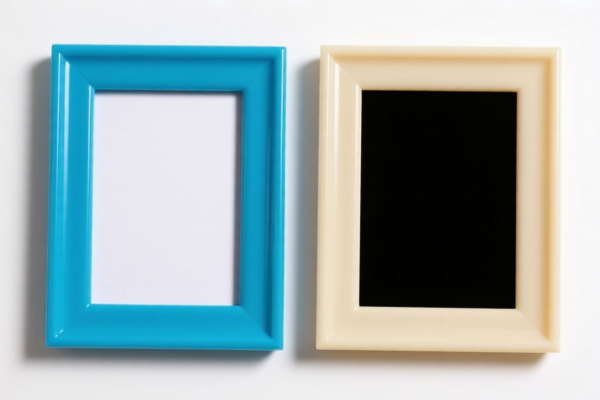
Plastic Modern Frame
CN → US| HS Code | Tariff Rate | Origin | Destination | Doc |
|---|---|---|---|---|
| 3925200010 | 22.8% | CN | US | Official Doc |
| 3926905000 | 21.3% | CN | US | Official Doc |
| 9003110000 | 20.0% | CN | US | Official Doc |
| 3925200020 | 22.8% | CN | US | Official Doc |
| 3926909989 | 22.8% | CN | US | Official Doc |
Product Images



AI Analysis
🖼️ Plastic Modern Frame (Plastic Architectural/Decorative Frames)
🌐 HS Code Reference & Customs Clearance Guide | 2024 Latest Tariff Analysis | Professional Clearance Strategy
📌 1. Product Definition & Classification: What exactly is a "Plastic Modern Frame"?
A "Plastic Modern Frame" is a broad category that typically refers to rigid structures made of synthetic polymers (plastics). In international trade, the classification depends heavily on the specific application (architectural vs. decorative vs. general purpose) and the form (window frame vs. photo frame vs. structural support).
The ambiguity lies in whether it is considered a "Building Material" or a "General Plastic Article."
⚠️ Key Distinction Points:
- If it is used for windows/doors in construction → It is a Building Component (Chapter 39, Heading 3925).
- If it is used for wall mounting/decoration without specific architectural function → It may be General Plastic Article (Chapter 39, Heading 3926).
- If it is specifically an Eyeglass Frame → It falls under Optical Appliances (Chapter 90).
📦 2. HS Code Classification Details (Authoritative Cross-Reference)
| HS Code | Product Description | Application Scenario | Material/Form Match |
|---|---|---|---|
3925.20.00.10 |
Building components: Frames, Plastic, for Doors | Architectural door frames, entrance frames, modern villa doors | ✅ Plastic Material + Frame Form |
3926.90.50.00 |
Articles of plastics: Other, Framed | General decorative frames, wall art frames, non-structural frames | ✅ Plastic Material + Framed Form |
9003.11.00.00 |
Frames, mountings and pince-nez, and parts thereof, of plastics | Eyeglasses, spectacles frames, optical frames | ✅ Plastic Material + Frame Form (Specific Use) |
3925.20.00.20 |
Building components: Frames, Plastic, for Windows | Window frames, sliding windows, uPVC window casings | ✅ Plastic Material + Window Frame Form |
3926.90.99.89 |
Articles of plastics: Other, n.e.c. | General plastic framing parts, trim, accessories not specified elsewhere | ✅ Plastic Material + General Frame Category |
🔍 Key Reminder:
- Architectural Frames (Windows/Doors) are strictly regulated under 3925.
- Decorative/General Frames fall under 3926.
- Eyewear Frames are a special category under 9003 due to their precise optical function.
- Misclassification can lead to significant duty differences due to Section 301 (Trade War) and Section 232/122 tariffs on Chinese goods.
💰 3. 2024 Latest Tariff Rate Breakdown (Including Additional Taxes)
✅ Applicable Country: USA (US)
✅ Origin: China (CN)
✅ Effective Time: Current (Subject to ongoing trade policies)
🎯 1. 3925.20.00.10 – Plastic Building Components (Door Frames)
| Item | Detail |
|---|---|
| Base Tariff Rate | 5.3% (Ad Valorem) |
| Additional Tariff (Section 301) | +7.5% |
| 122 Clause Tariff | +10% |
| Total Effective Tariff | 22.8% |
| Tax Calculation | CIF Value × 22.8% |
| De Minimis Exemption | ❌ Not Applicable (Commercial shipment) |
| Legal Basis | USITC:3925.20.00.10 → Section 301: 7.5% → Section 122: 10% |
📌 Explanation:
- Plastic door frames are considered construction materials.
- The 22.8% total includes the base duty plus two layers of additional penalties (Section 301 and Section 122).
- High Risk: Customs may scrutinize if the frame is actually a window frame (3925.20.00.20) to ensure correct tariff application, though the rate is identical here.
🎯 2. 3926.90.50.00 – Framed Plastic Articles (General/Decorative)
| Item | Detail |
|---|---|
| Base Tariff Rate | 3.8% (Ad Valorem) |
| Additional Tariff (Section 301) | +7.5% |
| 122 Clause Tariff | +10% |
| Total Effective Tariff | 21.3% |
| Tax Calculation | CIF Value × 21.3% |
| De Minimis Exemption | ❌ Not Applicable |
| Legal Basis | USITC:3926.90.50.00 → Section 301: 7.5% → Section 122: 10% |
📌 Note:
- This code is often used for wall art frames, mirror frames, or non-structural plastic frames.
- The base duty is lower (3.8%) than building components, but the total impact is still high due to additional tariffs.
- Crucial: Must prove it is not a window/door frame. If it has weather-stripping or glazing channels, it may be reclassified to 3925.
🎯 3. 9003.11.00.00 – Plastic Frames for Eyeglasses
| Item | Detail |
|---|---|
| Base Tariff Rate | 2.5% (Ad Valorem) |
| Additional Tariff (Section 301) | +7.5% |
| 122 Clause Tariff | +10% |
| Total Effective Tariff | 20.0% |
| Tax Calculation | CIF Value × 20.0% |
| De Minimis Exemption | ❌ Not Applicable |
| Legal Basis | USITC:9003.11.00.00 → Section 301: 7.5% → Section 122: 10% |
📌 Explanation:
- This is the lowest total tariff (20%) among the options.
- Strict Definition: Must be strictly for eyeglasses/spectacles.
- Warning: Do NOT use this code for "photo frames" or "wall frames." Customs will reject it as a misdeclaration if the product is not optical eyewear.
🎯 4. 3925.20.00.20 – Plastic Building Components (Window Frames)
| Item | Detail |
|---|---|
| Base Tariff Rate | 5.3% (Ad Valorem) |
| Additional Tariff (Section 301) | +7.5% |
| 122 Clause Tariff | +10% |
| Total Effective Tariff | 22.8% |
| Tax Calculation | CIF Value × 22.8% |
| De Minimis Exemption | ❌ Not Applicable |
| Legal Basis | USITC:3925.20.00.20 → Section 301: 7.5% → Section 122: 10% |
📌 Note:
- Functionally similar to Door Frames (3925.20.00.10) in tariff impact.
- Includes uPVC, PVC, and other rigid plastic window casings.
- Clearance Tip: Ensure the description explicitly states "Window Frame" to distinguish from Door Frames, even if rates are the same.
🎯 5. 3926.90.99.89 – Other Plastic Articles (General Category)
| Item | Detail |
|---|---|
| Base Tariff Rate | 5.3% (Ad Valorem) |
| Additional Tariff (Section 301) | +7.5% |
| 122 Clause Tariff | +10% |
| Total Effective Tariff | 22.8% |
| Tax Calculation | CIF Value × 22.8% |
| De Minimis Exemption | ❌ Not Applicable |
| Legal Basis | USITC:3926.90.99.89 → Section 301: 7.5% → Section 122: 10% |
📌 Explanation:
- This is a "catch-all" for plastic articles not specified elsewhere.
- Use this only if the frame does not fit specific definitions (e.g., complex plastic trim).
- Higher base duty than 3926.90.50.00, so prefer 3926.90.50.00 if it qualifies as "Framed."
🛠️ 4. Customs Clearance Practical Advice (Anti-Pitfall Guide)
✅ 1. Document Checklist (Mandatory)
| Document | Required | Purpose |
|---|---|---|
| ✅ Product Specifications | ✔️ | Define dimensions, material type (PVC, ABS, etc.), and exact use (Window vs. Decor). |
| ✅ Product Photos | ✔️ | Show the frame structure, joints, and any branding. |
| ✅ Declaration of Use | ✔️ | Explicitly state: "Used for window installation" or "Decorative wall frame." |
| ✅ Material Safety Data Sheet (MSDS) | ✔️ | If plastic contains specific additives. |
| ✅ Commercial Invoice | ✔️ | Clearly state "Plastic Frame, Model XYZ, Material: PVC." |
| ✅ Packing List | ✔️ | Weight and dimensions for freight calculation. |
✅ 2. Declaration Strategy (Key Mantra)
🔥 "Define Use Clearly, Avoid Ambiguity, Lower Risk!"
| Scenario | Correct Declaration | Risk if Incorrect |
|---|---|---|
| Window Frame | 3925.20.00.20 (Plastic Window Frame) |
Misclassification as 3926 may lead to audits, but rates are similar. |
| Door Frame | 3925.20.00.10 (Plastic Door Frame) |
Same as above. |
| Wall Art Frame | 3926.90.50.00 (Framed Plastic Article) |
If declared as building material, customs may question why no glazing/weatherproofing. |
| Eyeglass Frame | 9003.11.00.00 (Plastic Eyeglass Frame) |
HIGH RISK: If not optical, declared as 9003 will be rejected immediately. |
| General Plastic Trim | 3926.90.99.89 |
Use only if it doesn't fit "Framed" definition. |
✅ 3. Special Situations
| Situation | Handling Advice |
|---|---|
| OEM Custom Frames | Provide design blueprints to prove specific use (e.g., window profile shape). |
| Mixed Shipments | If one container has windows and wall frames, separate declarations are required. Do not mix 3925 and 3926 in one line item. |
| Eyewear vs. Decor | Eyewear frames must have lens mounting grooves. Decorative frames do not. Clearly distinguish. |
| Origin Labeling | Ensure "Made in China" is visible on the product or packaging to trigger accurate additional tariffs. |
🌍 5. Global Market Comparison (2024 Latest)
| Country/Region | Recommended HS Code | Base Tariff | Additional Tariffs (China Origin) | Total Estimate | Notes |
|---|---|---|---|---|---|
| 🇺🇸 USA | 3925.20 / 3926.90 / 9003 |
2.5% - 5.3% | +17.5% (301+122) | 20.0% - 22.8% | High additional tariffs apply. |
| 🇨🇳 China | Same HS Codes | 5.0% - 8.0% | None | ~6-8% | Import duty varies by exact subheading. |
| 🇪🇺 EU | 3925 / 3926 / 9003 | 3.0% - 4.0% | None | ~3-4% | No Section 301 equivalent. |
| 🇬🇧 UK | Same as EU | 3.0% - 4.0% | None | ~3-4% | Post-Brexit tariffs align with EU generally. |
📌 Conclusion:
- USA is the most expensive market due to 17.5% in additional tariffs.
- EU/UK are more favorable for plastic frames if you can source non-Chinese origin or qualify for preferences.
- China Domestic market has low entry barriers but high competition.
📌 6. Common Errors & Pitfalls (Lessons Learned)
❌ Error 1: Declaring a Window Frame as a Decorative Frame (3926.90.50.00)
👉 Consequence: Base duty is lower (3.8% vs 5.3%), but Customs may audit for misdeclaration if the product clearly has window profiles. Fine risk.
❌ Error 2: Declaring Eyeglass Frames as General Plastic Frames (3926)
👉 Consequence: Higher tariff (22.8% vs 20.0%). You pay 2.8% more unnecessarily. Also, 9003 has specific regulatory requirements for optical goods.
❌ Error 3: Not specifying "Plastic" in the Description
👉 Consequence: Customs may misclassify as Wood or Metal, leading to 89.5% tariffs if misidentified as a different chapter. Always state "Plastic Frame."
❌ Error 4: Ignoring Section 122 Tariff
👉 Consequence: Assuming only Section 301 (7.5%) applies. You will face a 10% surprise charge upon arrival.
✅ Correct Practice:
"PVC Plastic Window Frame, Model XYZ, for Residential Use, Made in China"
HS Code:3925.20.00.20
Total Tax: 22.8%
🎯 7. Conclusion: Precision in Classification Saves Money!
🎯 Remember the Mantra:
🔹 "Window/Door = 3925 (22.8%)"; "Decorative = 3926 (21.3% or 22.8%)"; "Eyewear = 9003 (20.0%)"
🔹 "Don't mix uses, declare material, avoid 89.5% penalties!"
📌 Pro Tip:
If your product is Eyewear, stick to 9003.11.00.00 for the lowest total duty (20%).
If your product is Architectural, ensure it is clearly defined as Window or Door to avoid ambiguity with General Plastic Articles.
For Decorative items, 3926.90.50.00 offers the lowest base duty (3.8%), making it slightly more cost-effective than building components if the use is non-structural.
📣 Immediate Action:
📞 Verify the end-use of your frame.
📸 Provide clear photos to your customs broker.
📝 Apply for a Pre-Ruling if the classification is ambiguous.
🚀 Clearance Efficiency: Start with Accurate HS Codes!
✨ Professional Clearance Starts with Precise Classification!
💼 Every percentage point matters in global trade!
Customer Reviews
About HS Code Classification
The Harmonized System (HS) is an internationally standardized nomenclature developed by the World Customs Organization (WCO) to classify traded products. Over 200 countries use the HS system as the basis for customs tariffs, trade statistics, and import/export regulations.
Each HS code follows a hierarchical structure:
- Chapter (2 digits) — Broad category of goods (e.g., Chapter 84: Machinery and Mechanical Appliances)
- Heading (4 digits) — More specific grouping within the chapter
- Subheading (6 digits) — Internationally standardized breakdown, used by all WCO member countries
- National subdivisions (8-10 digits) — Country-specific extensions for further classification, such as US HTSUS 10-digit codes
Correct HS code classification is essential for smooth customs clearance, accurate duty payment, and compliance with trade regulations. Misclassification can lead to customs delays, overpayment of duties, or penalties.
When importing from CN to US, the applicable tariff rates may include:
- Most-Favored-Nation (MFN) rate — The standard duty rate applied to WTO members
- General rate — Applied to countries without trade agreements
- Trade remedy duties — Additional tariffs such as Section 301 (anti-dumping), Section 232 (national security), or countervailing duties
The information provided on this page is for reference purposes only. For official classification, please consult with your local customs authority or a licensed customs broker.