Plastic Multifunctional Wallet
CN → US| HS Code | Tariff Rate | Origin | Destination | Doc |
|---|---|---|---|---|
| 3923109000 | 38.0% | CN | US | Official Doc |
| 4202322000 | 55.0% | CN | US | Official Doc |
| 4202321000 | 0.0% | CN | US | Official Doc |
| 3923900080 | 38.0% | CN | US | Official Doc |
Product Images
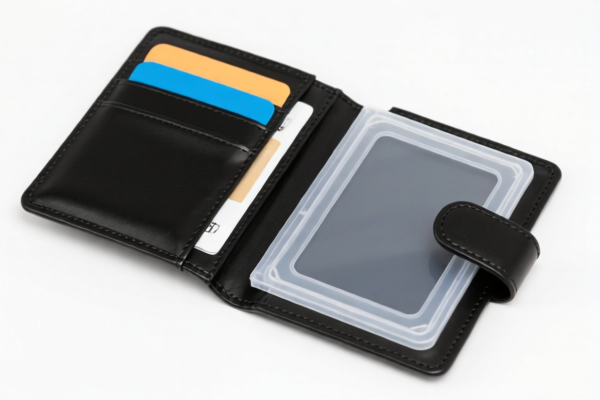
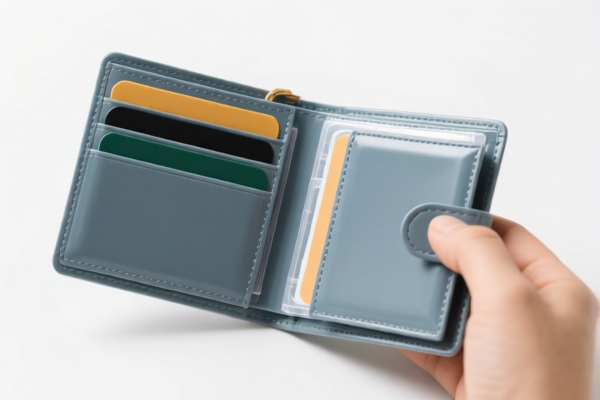
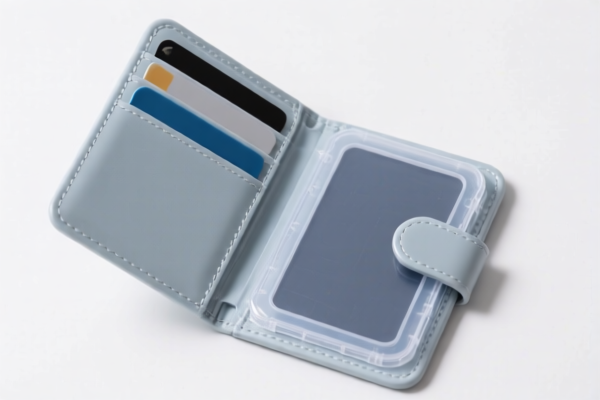
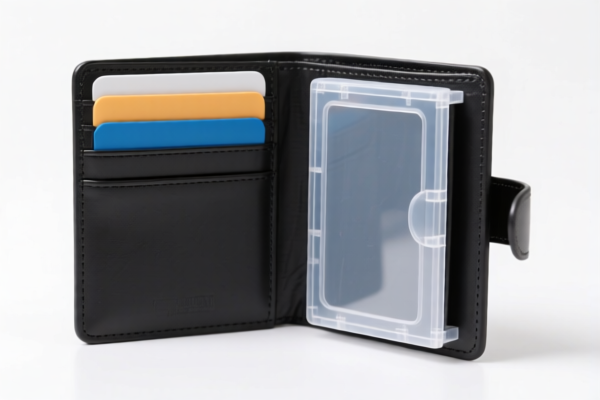
AI Analysis
👛 Plastic Multifunctional Wallet (The "Chameleon" of Customs Classification)
🌐 HS Code Reference & Customs Clearance Guide | 2026 Latest Tariff Analysis | High-Tax Compliance Strategy
📌 One Product, Four Classifications: Why Does the HS Code Matter?
A "Plastic Multifunctional Wallet" seems simple, but in international trade (specifically US Customs), material composition, manufacturing process, and specific use case dictate the HS Code. Misclassification here doesn't just mean a typo; it means facing 38% to 55% total tariffs plus significant compliance risks.
There are 4 distinct HS Codes for this product, each with drastically different tax implications. Below is the authoritative breakdown based on the 2026 tariff data.
⚠️ Critical Insight:
- Is it just a plastic sleeve? → 3923.10.90.00 / 3923.90.00.80 (38% Tax)
- Is it a finished article with a specific shape (like a wallet)? → 4202.32.20.00 (55% Tax)
- Is it reinforced/laminated plastic? → 4202.32.10.00 (Complex Mixed Tax)
📦 II. HS Code Classification Details (2026 Authorized Mapping)
| HS Code | Product Description (Summary) | Key Classification Criteria | Total Tax Rate (China Origin) |
|---|---|---|---|
| 3923.10.90.00 | Plastic wallet, falling under "other packaging or carrying articles" | General plastic packaging; fits the "other" category for carrying items. | 38.0% |
| 4202.32.20.00 | Wallet with outer surface made of plastic sheets, for pocket/purse use | Finished wallet article; outer surface is plastic sheets. | 55.0% |
| 4202.32.10.00 | Reinforced or laminated plastic wallet, fits personal carry definition | Material is reinforced or laminated plastic. | 12.1¢/kg + 4.6% + 35.0% |
| 3923.90.00.80 | Plastic wallet, "other" residual category, for packaging/carrying | General plastic article; "catch-all" for non-specific plastic carrying goods. | 38.0% |
🔍 Classification Logic:
- 3923 vs. 4202: The core split is between "Plastics/Articles of Plastic" (3923) and "Articles of Leather/Plastic Sheets/Travel Goods" (4202).
- Finished vs. Packaging: If it is explicitly a "wallet" for carrying in pockets/purses, it often leans toward 4202. If it is a generic plastic pouch/sleeve, it leans toward 3923.
- Material Specificity: 4202.32.10.00 is unique because it requires the plastic to be reinforced or laminated, triggering a compound tax (ad valorem + specific duty).
💰 III. 2026 Tariff Rate Breakdown (Including Surcharges & Policy Add-ons)
✅ Applicable Country: United States (US)
✅ Origin: China (CN)
✅ Effective Date: Post-2025 policies (Section 301 + IEEPA)
🎯 1. HS Code 3923.10.90.00 & 3923.90.00.80
(The "General Plastic Packaging/Carrying" Route)
| Item | Detail |
|---|---|
| Base Tariff | 3.0% (Ad Valorem) |
| Section 301 Surcharge | +25.0% |
| Section 122 Tariff | +10.0% |
| Total Effective Rate | 38.0% |
| Calculation | CIF Value × 38% |
| De Minimis Eligibility | ❌ No (High risk of seizure if undervalued) |
| Legal Path | USITC:3923.10.90.00 → FOOTNOTE:301_Sec3 → IEEPA:Sec122 |
📌 Explanation:
- These codes treat the wallet as a plastic article/packaging item.
- The 25% Section 301 duty applies to most Chinese plastic goods.
- The 10% "Section 122" tariff is an additional punitive duty often applied to certain plastic imports from China.
- Result: A flat, high 38% burden.
🎯 2. HS Code 4202.32.20.00
(The "Finished Plastic Wallet" Route)
| Item | Detail |
|---|---|
| Base Tariff | 20.0% (Ad Valorem) |
| Section 301 Surcharge | +25.0% |
| Section 122 Tariff | +10.0% |
| Total Effective Rate | 55.0% |
| Calculation | CIF Value × 55% |
| De Minimis Eligibility | ❌ No |
| Legal Path | USITC:4202.32.20.00 → FOOTNOTE:301_Sec3 → IEEPA:Sec122 |
📌 Explanation:
- This code classifies the item as a finished article (a wallet) rather than just plastic material.
- Finished articles often have a higher base tariff (20% vs 3%).
- Result: This is the most expensive classification at 55%. Avoid this unless the product clearly defines itself as a "wallet for pocket/carrying" without being laminated/reinforced.
🎯 3. HS Code 4202.32.10.00
(The "Reinforced/Laminated Plastic" Route)
| Item | Detail |
|---|---|
| Base Tariff | 12.1¢/kg + 4.6% (Compound Duty) |
| Section 301 Surcharge | +25.0% |
| Section 122 Tariff | +10.0% |
| Total Effective Rate | Compound: 12.1¢/kg + 4.6% + 25% + 10% |
| Calculation | (Weight × 0.121) + (CIF × 4.6%) + (CIF × 35%) |
| De Minimis Eligibility | ❌ No |
| Legal Path | USITC:4202.32.10.00 → FOOTNOTE:301_Sec3 → IEEPA:Sec122 |
📌 Explanation:
- This code is for reinforced or laminated plastic.
- It uses a compound duty: A specific duty per kilogram plus an ad valorem percentage.
- Warning: For lightweight wallets, the per-kg fee might be low, but the total ad valorem burden (4.6% + 35% surcharges) is still significant.
- Strategy: If the wallet is thin and light, this might be cheaper than4202.32.20.00, but requires precise weight declaration.
🛠️ IV. Customs Clearance Operational Advice (Pitfall Avoidance Guide)
✅ 1. Documentation Checklist (Non-Negotiable)
| Document | Requirement | Purpose |
|---|---|---|
| ✅ Product Specification Sheet | ✔️ Must detail: Material (Plastic type, lamination status), Dimensions, Weight | To determine HS Code (especially for 4202.32.10.00 vs .20.00) |
| ✅ Product Photos | ✔️ Show: Outer surface texture, interior structure, any reinforcing layers | To prove "Reinforced/Laminated" status |
| ✅ Commercial Invoice | ✔️ Explicitly state: "Plastic Wallet" or "Plastic Carrying Article" | Avoid vague terms like "Gift" or "Accessories" |
| ✅ Packing List | ✔️ Net Weight & Gross Weight (Critical for 4202.32.10.00) | Needed for compound duty calculation |
| ✅ Material Declaration | ✔️ Confirm: Is it "Sheets" or "Laminated/Reinforced"? | Key differentiator between 38% and 55% tax |
✅ 2. Classification Strategy & Declaration Tips
🔥 "Material Defines Tax: Laminated vs. Sheet vs. General Plastic"
| Scenario | Recommended HS Code | Tax Rate | Risk Level |
|---|---|---|---|
| Thin Plastic Pouch/Sleeve (No specific wallet structure) | 3923.10.90.00 or 3923.90.00.80 |
38% | Low (Common for generic plastic bags) |
| Standard Plastic Wallet (Sheets, not laminated/reinforced) | 4202.32.20.00 |
55% | High (Highest tax burden) |
| Reinforced/Laminated Plastic Wallet (Multi-layer, sturdy) | 4202.32.10.00 |
Compound | Medium (Complex calculation, risk of mis-declared weight) |
📌 Pro Tip:
- If your wallet is not reinforced/laminated, do NOT declare it as4202.32.10.00. Customs will check the weight and material, and if it doesn't match, they may reclassify it to4202.32.20.00(55%) + penalties.
- If your wallet is a finished article, try to argue for3923if it lacks specific "wallet" features (like card slots, zippers), potentially lowering tax from 55% to 38%. However, this is risky and requires strong technical justification.
✅ 3. Special Cases & Mitigation
| Situation | Action |
|---|---|
| Low-Value Shipments | ❌ Do Not Rely on De Minimis. All these HS Codes are excluded from de minimis exemptions due to Section 301/122. Expect full tax collection. |
| Mixed Materials | If the wallet has leather accents, it may be reclassified under leather codes (higher tax). Keep it 100% plastic for consistency. |
| Lamination Status | If unsure, provide a material test report confirming whether the plastic is "reinforced/laminated" or just "sheets." This determines the path to 38% or Compound vs. 55%. |
🌍 V. Global Market Comparison (Quick Reference)
| Market | Recommended HS Code (Plastic Wallet) | Approx. Tariff (China Origin) | Note |
|---|---|---|---|
| 🇺🇸 USA | 3923.10.90.00 / 4202.32.x0.00 |
38% - 55% | High punitive tariffs. Strict classification. |
| 🇨🇳 China | 4202.32.00.00 |
~5-10% | Lower base rates, no Section 301. |
| 🇪🇺 EU | 4202.32.00.00 |
~12% | No additional punitive tariffs. |
| 🇬🇧 UK | 4202.32.00.00 |
~12% | Post-Brexit rules apply. |
📌 Conclusion for US Exporters:
The 38% tax rate (via 3923 codes) is significantly more viable than the 55% rate (via 4202.32.20.00).
Strategy: Design your product description and physical attributes to align with "Plastic Packaging/Carrying Article" (3923) if possible, rather than "Finished Wallet" (4202.32.20.00).
📌 VI. Common Mistakes & Pitfalls (Lessons Learned)
❌ Mistake 1: Declaring a "Plastic Wallet" as 3926.90 (Other plastic articles)
👉 Consequence: Customs will reclassify to 4202 or 3923 and apply the correct (high) tariff + penalties.
❌ Mistake 2: Ignoring the "Laminated/Reinforced" definition for 4202.32.10.00
👉 Consequence: If customs determines it's not laminated, they may apply 4202.32.20.00 (55%) instead of the compound rate, causing surprise costs.
❌ Mistake 3: Assuming De Minimis applies to low-value plastic wallets
👉 Consequence: Seizure or forced tax payment. Section 301 goods from China are explicitly excluded.
✅ Correct Approach:
"Plastic Carrying Pouch, 100% PVC, Non-Reinforced, For Use in Pockets. HS: 3923.10.90.00."
🎯 VII. Conclusion: Professional Declaration, Cost Optimization!
🎯 Remember the Key:
🔹 "Plastic Sheet vs. Laminated: Check the Structure."
🔹 "Finished Wallet = 55% (Ouch). General Carrying Article = 38% (Better)."
🔹 "No De Minimis for China Plastic Goods in the US."
📌 Pro Tip:
If your wallet is manufactured in Vietnam or Mexico, you may qualify for IEEPA Exemptions or lower tariffs.
Recommend Advance Ruling (Pre-Classification) from CBP to lock in the 3923 classification if your product design allows it.
📣 Immediate Action:
📞 Consult with a licensed customs broker.
📸 Provide detailed photos and material specs.
🚀 Optimize your supply chain to avoid the 55% tax trap!
✨ Professional Customs Clearance Starts with Accurate Classification!
💼 Every Percent Saved is Profit Earned!
Customer Reviews
About HS Code Classification
The Harmonized System (HS) is an internationally standardized nomenclature developed by the World Customs Organization (WCO) to classify traded products. Over 200 countries use the HS system as the basis for customs tariffs, trade statistics, and import/export regulations.
Each HS code follows a hierarchical structure:
- Chapter (2 digits) — Broad category of goods (e.g., Chapter 84: Machinery and Mechanical Appliances)
- Heading (4 digits) — More specific grouping within the chapter
- Subheading (6 digits) — Internationally standardized breakdown, used by all WCO member countries
- National subdivisions (8-10 digits) — Country-specific extensions for further classification, such as US HTSUS 10-digit codes
Correct HS code classification is essential for smooth customs clearance, accurate duty payment, and compliance with trade regulations. Misclassification can lead to customs delays, overpayment of duties, or penalties.
When importing from CN to US, the applicable tariff rates may include:
- Most-Favored-Nation (MFN) rate — The standard duty rate applied to WTO members
- General rate — Applied to countries without trade agreements
- Trade remedy duties — Additional tariffs such as Section 301 (anti-dumping), Section 232 (national security), or countervailing duties
The information provided on this page is for reference purposes only. For official classification, please consult with your local customs authority or a licensed customs broker.