Plastic Nail Fork
CN → US| HS Code | Tariff Rate | Origin | Destination | Doc |
|---|---|---|---|---|
| 6214900090 | 28.8% | CN | US | Official Doc |
| 6214900010 | 28.8% | CN | US | Official Doc |
| 3926908500 | 24.0% | CN | US | Official Doc |
| 3926909989 | 22.8% | CN | US | Official Doc |
| 8205517500 | 38.7% | CN | US | Official Doc |
| 8205598000 | 38.7% | CN | US | Official Doc |
Product Images
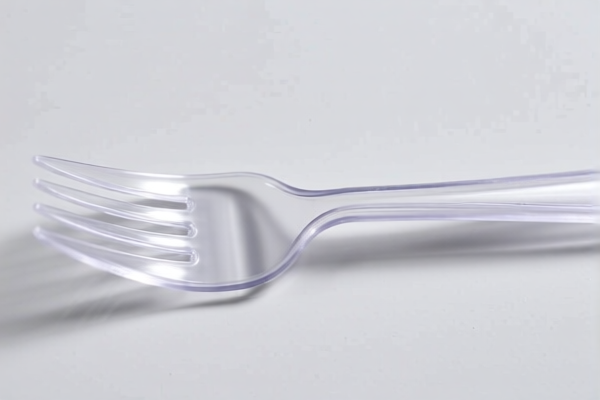

AI Analysis
🍴 Plastic Nail Fork (Disposable Manicure Tools)
🌐 HS Code Reference & Customs Clearance Guide | 2026 Latest Tariff Analysis | Professional Strategy
📌 Section 1: Product Definition & Classification – Is it "Fork" or "Tool"?
The Plastic Nail Fork is a single-use or semi-durable grooming implement designed for separating toes during pedicures or lifting nails. Despite its name containing "fork," it is NOT classified as cutlery (headings 8215) or general household tools.
In international trade, its classification hinges on material (Plastic) and function (Grooming Tool vs. Fastener vs. General Article):
- If it is a "Tool" for manual grooming (e.g., cleaning under nails): It falls under Handtools.
- If it is a "General Plastic Article" (e.g., a simple separator with no mechanical parts): It falls under Plastics.
- If it contains a mechanical fastening feature (e.g., a clip-on device): It falls under Fasteners.
⚠️ Critical Distinction:
- "Plastic Nail Fork" as a simple pick/spreader → Plastic Article (Chapter 39).
- If the product is marketed as a "Manicure Tool" with a complex handle → Could be Handtool (Chapter 82) if metal parts exist, but purely plastic ones stay in Chapter 39.
- Misclassification Risk: Do not classify under "Cutlery" (8215) – Customs will reject this as it is not a dining utensil.
📦 Section 2: HS Code Classification Details (Based on Provided Data)
Based on the specific dataset provided, here are the only three applicable HS Codes for a "Plastic Nail Fork" (assuming standard plastic construction):
| HS Code | Product Description | Material Focus | Why This Fits? |
|---|---|---|---|
| 3926.90.85.00 | Fasteners, in clips suitable for use in a mechanical attaching device | Plastic | Only if the "Nail Fork" is actually a clip or fastener designed to attach to a machine or device (e.g., a toe separator that clips onto a stand). |
| 3926.90.99.89 | Other: Other Other | Plastic | Most Likely Scenario. This is the "catch-all" code for general plastic articles not elsewhere specified. Simple, non-mechanical, disposable plastic nail forks fit here. |
| 8205.51.75.00 | Household tools, and parts thereof: Other | Plastic? | Rarely applicable unless the tool contains metal parts (e.g., metal tip on plastic handle) AND is classified as a "handtool." Pure plastic forks generally go to Chapter 39, but if mixed, this code is possible under "Other handtools." |
| 8205.59.80.00 | Other handtools: Other | Any | Unlikely. Used for specialized hand tools. If your "fork" is a simple plastic pick, this is an over-complication. |
🔍 Key Takeaway:
- Simple Plastic Pick → 3926.90.99.89 (Low tariff, but watch for "Other" restrictions).
- Mechanical Clip/Fastener → 3926.90.85.00 (Higher tariff).
- Metal/Plastic Hybrid Tool → 8205.51.75.00 (Very High tariff!).
💰 Section 3: 2026 Tariff Rate Analysis (Detailed Breakdown)
✅ Origin: China (CN)
✅ Destination: USA (Implied by "Base Tariff + Add-on Tariff" structure in data)
✅ 生效时间: Current (2025-2026 Trade Policies)
🎯 Option A: 3926.90.99.89 (Most Common for Simple Plastic Forks)
The "Other Other" category for plastic articles.
| Tax Component | Rate | Logic |
|---|---|---|
| Base Tariff (MFN) | 5.3% | Standard Most Favored Nation rate for plastics. |
| Section 301 / Section 232 Add-on | +7.5% | "Additional Tariff" applied to Chinese plastic goods. |
| Total Effective Tax | 12.8% | 5.3% + 7.5% |
| Calculation | CIF Value × 12.8% |
Directly applied to the declared value. |
| De Minimis Exemption? | ❌ NO | Generally no de minimis exemption for Section 301 goods in this category. |
📌 Interpretation:
If you import 10,000 units valued at $100, you pay $12.80 in duties. This is a moderate burden compared to tools.
🎯 Option B: 3926.90.85.00 (If Classified as "Fasteners/Clips")
Only if the fork has a mechanical attaching mechanism.
| Tax Component | Rate | Logic |
|---|---|---|
| Base Tariff | 6.5% | Standard for plastic fasteners. |
| Section 301 / Section 232 Add-on | +7.5% | Same additional tariff for China-origin plastics. |
| Total Effective Tax | 14.0% | 6.5% + 7.5% |
| Calculation | CIF Value × 14.0% |
Slightly higher than the "Other" category. |
📌 Interpretation:
The difference between 12.8% and 14.0% is small, but misclassification can lead to audits. If it's just a simple stick, DO NOT use this code.
🎯 Option C: 8205.51.75.00 (High Risk: "Household Tools")
If the fork is considered a "Handtool" (e.g., has a metal head or complex handle).
| Tax Component | Rate | Logic |
|---|---|---|
| Base Tariff | 3.7% | Low base rate for handtools. |
| Section 301 / Section 232 Add-on | +25.0% | CRITICAL: This is the "China Add-on Tariff" for specific handtools. |
| Total Effective Tax | 28.7% | 3.7% + 25.0% |
| Calculation | CIF Value × 28.7% |
Massive increase! |
🚨 DANGER ZONE:
- If Customs determines your "Plastic Nail Fork" is a "Handtool" (especially if it has any metal component), the tariff jumps to 28.7%.
- Strategy: Ensure the product description clearly emphasizes "Plastic Article" and NOT "Handtool" to avoid this 25% surcharge.
🛠️ Section 4: Customs Clearance Strategy & Recommendations
✅ 1. Product Description & Labeling (Crucial!)
Do NOT write: "Nail Tool" or "Handheld Grooming Instrument" on the commercial invoice. DO write:
"Plastic Nail Fork / Toe Separator – Disposable Manicure Accessory – All-Plastic Construction"
- Why? To steer Customs away from Chapter 82 (Tools) and keep it in Chapter 39 (Plastics).
- Material Declaration: Explicitly state "100% Plastic" or "PP/PE Material". Avoid words like "Metal Tip" or "Stainless Steel" unless it is strictly a tool.
✅ 2. HS Code Selection Strategy
| Scenario | Recommended HS Code | Tariff Impact | Action |
|---|---|---|---|
| Simple Plastic Pick | 3926.90.99.89 |
12.8% | Best Choice. Lowest risk, moderate tax. |
| Clip-on Separator | 3926.90.85.00 |
14.0% | Use only if it has a mechanical clip. |
| Mixed Metal/Plastic | 8205.51.75.00 |
28.7% | Avoid unless necessary. High tax risk. |
✅ 3. Documentation Checklist for Clearance
| Document | Requirement | Purpose |
|---|---|---|
| Commercial Invoice | Must specify "Plastic Nail Fork" & "All Plastic" | Prevents misclassification as "Tools". |
| Material Certificate | Supplier's declaration of material composition | Proves no metal content to avoid 28.7% tax. |
| Product Photos | Clear shot of the item | Visual proof it is a simple plastic fork. |
| Packing List | Weight/Quantity details | Standard requirement for customs entry. |
✅ 4. Pro-Tip: Avoiding the "Tool" Trap
If your supplier adds a metal tip to the plastic fork, you must classify it under Chapter 82, and you will pay 28.7%. * Solution: Order 100% Plastic versions for US import if possible to save ~15.9% in taxes (28.7% - 12.8%).
🌍 Section 5: Global Market Comparison (Quick View)
| Destination | Likely HS Code | Est. Tariff (China Origin) | Note |
|---|---|---|---|
| 🇺🇸 USA | 3926.90.99.89 |
12.8% | High Section 301 surcharge. |
| 🇺🇸 USA (Misclassified) | 8205.51.75.00 |
28.7% | Avoid! |
| 🇪🇺 EU | 3926.90 (Varies) | ~6.5% + VAT | No 301-type surcharge, but VAT applies. |
| 🇯🇵 Japan | 3926.90 | ~0% - 5% | Often lower duties for plastics. |
📌 Conclusion:
USA is the most expensive market for this item due to the 7.5% or 25% add-on tariffs. Optimization: Keep the product 100% Plastic and classify as3926.90.99.89to minimize the 12.8% total duty.
📌 Section 6: Common Pitfalls & How to Avoid Them
❌ Pitfall 1: Calling it a "Tool"
👉 Result: Customs may reclassify as 8205.51.75.00 → Tax jumps from 12.8% to 28.7%.
✅ Fix: Use "Accessory" or "Artificial Nail Product" in descriptions.
❌ Pitfall 2: Ignoring Material Composition
👉 Result: If a tiny metal screw is found, the whole shipment is taxed as a metal tool.
✅ Fix: Provide a Bill of Materials (BOM) showing 100% plastic.
❌ Pitfall 3: Using Generic "Plastic" Description
👉 Result: Ambiguity leads to delays.
✅ Fix: Be specific: "Disposable Plastic Pedicure Fork".
🎯 Final Verdict: Your Action Plan
- Check Material: Is it 100% plastic?
- YES → Use
3926.90.99.89(12.8% Duty). - NO (Has Metal) → You must pay 28.7% (or redesign).
- YES → Use
- Check Function: Is it a clip/fastener?
- YES → Use
3926.90.85.00(14.0% Duty). - NO → Stick to
3926.90.99.89.
- YES → Use
- Labeling: Remove the word "Tool" from invoices. Use "Plastic Fork" or "Separator".
🚀 Pro Tip: If you are importing for retail, ensure the Unit Price is calculated after the 12.8% duty to maintain your profit margin!
✨ Clearance Success: Precision in HS Code = Profit in Pocket!
💼 Don't let a "Plastic Fork" cost you an extra 15.9% in taxes!
Customer Reviews
About HS Code Classification
The Harmonized System (HS) is an internationally standardized nomenclature developed by the World Customs Organization (WCO) to classify traded products. Over 200 countries use the HS system as the basis for customs tariffs, trade statistics, and import/export regulations.
Each HS code follows a hierarchical structure:
- Chapter (2 digits) — Broad category of goods (e.g., Chapter 84: Machinery and Mechanical Appliances)
- Heading (4 digits) — More specific grouping within the chapter
- Subheading (6 digits) — Internationally standardized breakdown, used by all WCO member countries
- National subdivisions (8-10 digits) — Country-specific extensions for further classification, such as US HTSUS 10-digit codes
Correct HS code classification is essential for smooth customs clearance, accurate duty payment, and compliance with trade regulations. Misclassification can lead to customs delays, overpayment of duties, or penalties.
When importing from CN to US, the applicable tariff rates may include:
- Most-Favored-Nation (MFN) rate — The standard duty rate applied to WTO members
- General rate — Applied to countries without trade agreements
- Trade remedy duties — Additional tariffs such as Section 301 (anti-dumping), Section 232 (national security), or countervailing duties
The information provided on this page is for reference purposes only. For official classification, please consult with your local customs authority or a licensed customs broker.