Plastic Nucleating Agent
CN → US| HS Code | Tariff Rate | Origin | Destination | Doc |
|---|---|---|---|---|
| 3824405000 | 40.0% | CN | US | Official Doc |
| 3824991100 | 35.0% | CN | US | Official Doc |
| 381210 | 0.0% | CN | US | Official Doc |
| 381290 | 0.0% | CN | US | Official Doc |
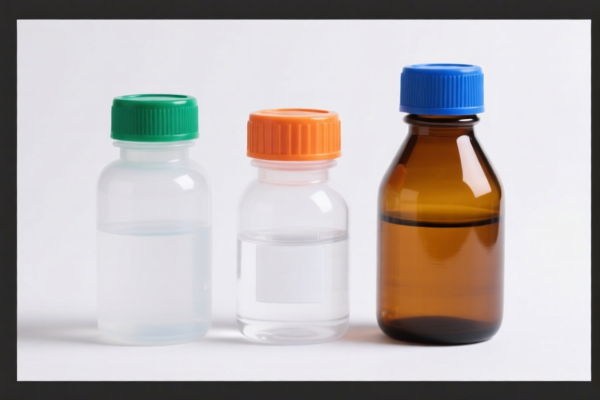
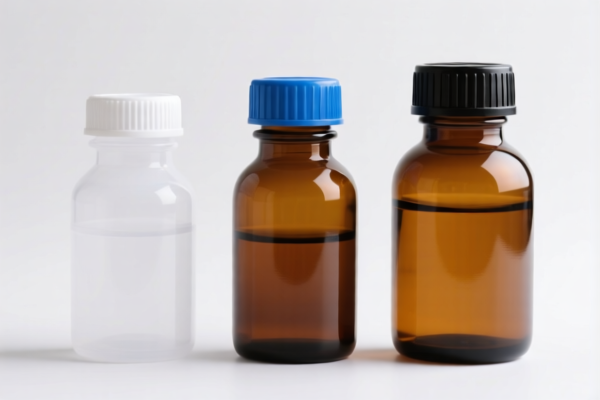
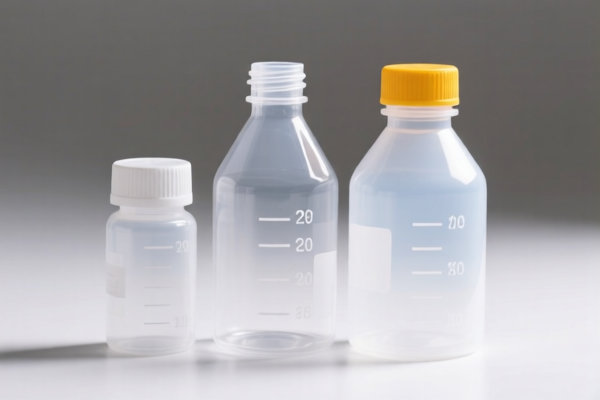
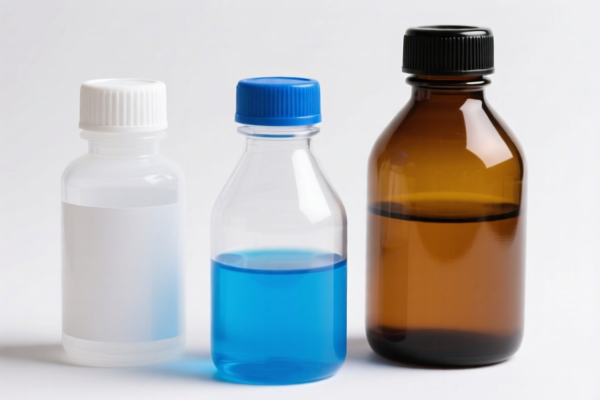
Product Images
AI Analysis
🧪 Plastic Nucleating Agents (Crystallization Promoters)
🌐 HS Code Reference & Customs Clearance Guide | 2026 Latest Tariff Analysis | Professional Clearance Strategy
📌 1. Product Definition & Classification: Do You Really Understand "Plastic Nucleating Agents"?
Plastic Nucleating Agents are specialized chemical additives used in polymer processing to promote and accelerate crystallization. They act as "seeds" for crystal growth, improving the physical properties of plastics such as rigidity, transparency, heat resistance, and production efficiency (reducing cycle time).
In international trade, they are primarily classified based on their specific application and composition:
- Plastic Nucleating Agents (Specific Headings): Additives specifically designed for plastics, falling under Chapter 38, Heading 3812.
- Other Chemical Preparations: Additives not specifically covered under other headings, or general chemical products, falling under 3812.90 or 3824.
⚠️ Key Distinction Point:
- If the product is a specific plastic nucleating agent (e.g., sorbitol derivatives, talc-based), it typically falls under 3812.10 or 3812.90.
- If the product is a foundry binder or a general chemical preparation not elsewhere specified (including some complex mixtures or crystalline forms not strictly defined as plastic additives), it may fall under 3824.
- Crucial Note: The provided data includes a specific entry for "Cultured crystals... in the form of ingots" under 3824.99.11.00, which is highly specific and likely not for standard plastic nucleating agents unless they are sold as bulk ingots for industrial culturing (rare for standard plastic additives).
📦 2. HS Code Classification Details (2026 Latest Tariff Authority Comparison)
Based on the provided , here are the relevant HS Codes and their descriptions:
| HS Code | Product Description | Applicability Context | Tax Status |
|---|---|---|---|
3812.10 |
Preparations based on phosphorus, sulphur or both, for internal combustion engines (Note: Description in data says "Nucleating agents for plastics..."). | Specifically for promoting crystallization in polymer materials during processing. | ❌ Error: Failed to retrieve tax information |
3812.90 |
Other chemical products not elsewhere specified... including additives for plastics such as nucleating agents. | General plastic additives not covered under 3812.10. | ❌ Error: Failed to retrieve tax information |
3824.40.50.00 |
Prepared additives for cements, mortars or concretes: Other. | Mismatch Alert: This code is for cement/concrete additives, NOT plastic nucleating agents. Do not use unless misdeclared or incorrectly categorized. | ⚠️ 30.0% (Base 5% + Additional 25%) |
3824.99.11.00 |
Other: Cultured crystals (other than optical elements)... weighing not less than 2.5 g each: In the form of ingots. | Highly Specific: Only applies if the nucleating agent is sold as cultured crystals in ingot form weighing ≥2.5g. Unlikely for standard plastic processing. | ⚠️ 25.0% (Base 0% + Additional 25%) |
🔍 Important Reminder:
- Standard Plastic Nucleating Agents (powders, pellets, masterbatches) should primarily be classified under 3812.10 or 3812.90.
- Do NOT use 3824.40.50.00 unless the product is explicitly a cement/concrete additive. Misclassification leads to severe penalties.
- Do NOT use 3824.99.11.00 unless the product is literally cultured crystals in ingot form. This is an unusual form for plastic additives.
💰 3. 2026 Latest Tariff Rate Details (Including Additional Taxes & Policy Add-ons)
✅ Applicable Country: United States (US)
✅ Origin: China (CN) (Assumed based on tax details showing "Additional Tariff")
✅ Effective Date: As per provided data
🎯 1. 3812.10 & 3812.90 —— Plastic Nucleating Agents
| Item | Content |
|---|---|
| Base Tariff | ❓ Failed to retrieve tax information (Likely 0%~6.5% depending on specific subheading) |
| Additional Tariff (Section 301) | ❓ Failed to retrieve tax information (Likely 25% if subject to trade war tariffs) |
| Total Tax Rate | ❌ Error: Data Unavailable |
| Legal Basis | Chapter 38, Heading 3812 |
📌 Explanation:
- The provided data shows "Failed to retrieve tax information" for these codes.
- In practice, 3812 goods often fall under Section 301 tariffs (25%) if originating from China.
- Recommendation: Apply for a Pre-Ruling (HS Code Classification Ruling) to confirm the exact rate, as it may be 0% base + 25% additional = 25% total, or similar.
🎯 2. 3824.40.50.00 —— Prepared Additives for Cements/Mortars/Concretes
| Item | Content |
|---|---|
| Base Tariff | 5.0% |
| Additional Tariff (Section 301) | 25.0% |
| Total Tariff | 30.0% |
| Tax Calculation | CIF Value × 30% |
| De Minimis Exemption | ❌ Not Applicable (High tariff rate) |
| Legal Basis Path | USITC:3824.40.50.00 → FOOTNOTE:301 |
📌 Warning:
- This code is NOT for plastic nucleating agents. Using this code for plastic additives is misclassification.
- If you mistakenly use this code, you may face customs audits, fines, and back taxes.
🎯 3. 3824.99.11.00 —— Cultured Crystals in Ingot Form
| Item | Content |
|---|---|
| Base Tariff | 0.0% |
| Additional Tariff (Section 301) | 25.0% |
| Total Tariff | 25.0% |
| Tax Calculation | CIF Value × 25% |
| De Minimis Exemption | ❌ Not Applicable |
| Legal Basis Path | USITC:3824.99.11.00 → FOOTNOTE:301 |
📌 Note:
- This code applies only to cultured crystals in ingot form ≥2.5g.
- Most plastic nucleating agents are powders or pellets, so this code is likely inapplicable.
- Using this code incorrectly can lead to customs rejection.
🛠️ 4. Customs Clearance Practical Advice (Battle-Tested Pitfall Avoidance Guide)
✅ 1. Required Document Checklist (All Are Mandatory)
| Document | Mandatory? | Description |
|---|---|---|
| ✅ Product Specification Sheet | ✔️ | Must clearly state: "Plastic Nucleating Agent," chemical composition (e.g., dibenzylidene sorbitol), CAS number, function. |
| ✅ Safety Data Sheet (SDS) | ✔️ | Required for chemical products. Must confirm non-hazardous status if applicable. |
| ✅ Product Photos | ✔️ | Clear images showing packaging, label, and physical form (powder/pellet/ingot). |
| ✅ Commercial Invoice | ✔️ | Must describe the goods accurately: "Plastic Nucleating Agent for Polymer Crystallization." |
| ✅ Packing List | ✔️ | Details net/gross weight, dimensions, and number of packages. |
| ✅ Origin Certificate | ✔️ | If claiming preferential rates (e.g., for non-China origin). |
✅ 2. Declaration Tips (Critical Mantras)
🔥 “Accurate Description, Correct HS, Avoid Cement Codes!”
| Scenario | Correct Declaration | Incorrect Declaration |
|---|---|---|
| Standard Plastic Nucleating Agent (Powder/Pellet) | HS Code: 3812.10 or 3812.90 Description: "Nucleating Agent for Plastics" |
HS Code: 3824.40.50.00 Description: "Cement Additive" → Penalty! |
| Nucleating Agent Masterbatch (Pellets mixed with resin) | HS Code: 3812.90 Description: "Plastic Additive Masterbatch" |
HS Code: 3901 (Plastics) → May be misclassified |
| Cultured Crystals in Ingot Form (Rare) | HS Code: 3824.99.11.00 Description: "Cultured Crystals, Ingot Form, ≥2.5g" |
HS Code: 3812.10 → Mismatch |
📌 Key Advice:
- Never describe nucleating agents as "cement additives" or "construction materials" to avoid high tariffs. This is fraudulent misclassification.
- If the tax rate for 3812 is unavailable in your system, contact your customs broker to verify the current Section 301 status.
✅ 3. Special Circumstances Handling
| Scenario | Handling Advice |
|---|---|
| OEM Custom Nucleating Agent | Provide client’s technical data sheet and approval to prove it’s a specialized additive, not a general chemical. |
| Mixtures (Masterbatches) | If the nucleating agent is mixed with a carrier resin (e.g., PP), it may still be classified as an additive (3812) if the additive function is predominant. Consult a classification expert. |
| Origin Non-China | If shipped from Vietnam/Malaysia, verify if Section 301 tariffs apply. Some origins may have 0% additional tariff. |
🌍 5. Global Market Customs Comparison (2026 Latest)
| Country/Region | Recommended HS Code | Tariff Rate | Certification Requirement | Notes |
|---|---|---|---|---|
| 🇺🇸 USA | 3812.10 / 3812.90 |
❓ Unavailable (Likely 25% Additional) | SDS, FDA (if food-contact) | High tariff risk if China-origin. |
| 🇨🇳 China | 3812.10 / 3812.90 |
0%~6.5% | CCC (if applicable) | No additional tariffs. |
| 🇪🇺 EU | 3824.99 / 3824.40 |
0%~6.5% | REACH Registration | Must have REACH compliance. |
| 🇦🇺 Australia | 3812.90 |
5% | AICIS | No additional tariffs. |
| 🇯🇵 Japan | 3812.90 |
0%~6% | FSC (Food Sanitation) | Low tariffs, strict chemical safety. |
📌 Conclusion:
- USA is the most challenging market due to potential Section 301 tariffs.
- EU and Japan have stricter chemical regulations (REACH, FSC) but lower tariffs.
- China-origin products face the highest cost in the US market. Consider supply chain diversification.
📌 6. Common Errors & Pitfall Avoidance Guide (Lessons Learned)
❌ Mistake 1: Misclassifying plastic nucleating agents as cement additives (3824.40.50.00) to "hide" or "simplify" declaration.
👉 Consequence: Severe customs penalties, audits, and blacklisting. Do not do this!
❌ Mistake 2: Using 3824.99.11.00 (Cultured Crystals Ingot) for standard powder nucleating agents.
👉 Consequence: Customs will reject the declaration due to form mismatch (powder vs. ingot).
❌ Mistake 3: Failing to provide SDS for chemical products.
👉 Consequence: Shipment held at customs, delayed clearance, fines.
❌ Mistake 4: Not declaring the chemical composition (e.g., CAS Number).
👉 Consequence: Customs may reclassify under a higher-tariff "other chemical" heading.
✅ Correct Practice:
"Plastic Nucleating Agent, Sorbitol Derivative, Powder, CAS No. XXXXX, For PP/PE Crystallization, Origin: China"
🎯 7. Conclusion: Professional Declaration, Save Time, Reduce Costs!
🎯 Remember the Mantra:
🔹 “Plastic Additive = 3812, Cement = 3824.40, Ingot = 3824.99.11. Do not mix them!”
🔹 “SDS is mandatory, Description must be precise. Tax rate 30% is for cement, not for plastic!”
📌 Pro Tip:
- If the tax rate for 3812 is unclear, apply for a Pre-Ruling from US Customs and Border Protection (CBP).
- For China-origin goods, verify if any exclusions exist under Section 301.
- Consider shipping from non-China origins (e.g., Vietnam, Thailand) if tariffs are too high.
📣 Immediate Action:
📞 Contact a professional customs broker + Provide SDS + Apply for HS Code Pre-Ruling
🚀 Ensure your plastic nucleating agents clear customs smoothly, efficiently, and profitably!
✨ Professional Customs Clearance Starts with Accurate Classification!
💼 Every cent of cost deserves precise calculation!
Customer Reviews
About HS Code Classification
The Harmonized System (HS) is an internationally standardized nomenclature developed by the World Customs Organization (WCO) to classify traded products. Over 200 countries use the HS system as the basis for customs tariffs, trade statistics, and import/export regulations.
Each HS code follows a hierarchical structure:
- Chapter (2 digits) — Broad category of goods (e.g., Chapter 84: Machinery and Mechanical Appliances)
- Heading (4 digits) — More specific grouping within the chapter
- Subheading (6 digits) — Internationally standardized breakdown, used by all WCO member countries
- National subdivisions (8-10 digits) — Country-specific extensions for further classification, such as US HTSUS 10-digit codes
Correct HS code classification is essential for smooth customs clearance, accurate duty payment, and compliance with trade regulations. Misclassification can lead to customs delays, overpayment of duties, or penalties.
When importing from CN to US, the applicable tariff rates may include:
- Most-Favored-Nation (MFN) rate — The standard duty rate applied to WTO members
- General rate — Applied to countries without trade agreements
- Trade remedy duties — Additional tariffs such as Section 301 (anti-dumping), Section 232 (national security), or countervailing duties
The information provided on this page is for reference purposes only. For official classification, please consult with your local customs authority or a licensed customs broker.