Plastic Nursery Pots
CN → US| HS Code | Tariff Rate | Origin | Destination | Doc |
|---|---|---|---|---|
| 3923102000 | 35.0% | CN | US | Official Doc |
| 3923109000 | 38.0% | CN | US | Official Doc |
| 3924104000 | 13.4% | CN | US | Official Doc |
| 3924103000 | 22.8% | CN | US | Official Doc |
| 3923900080 | 38.0% | CN | US | Official Doc |
Product Images
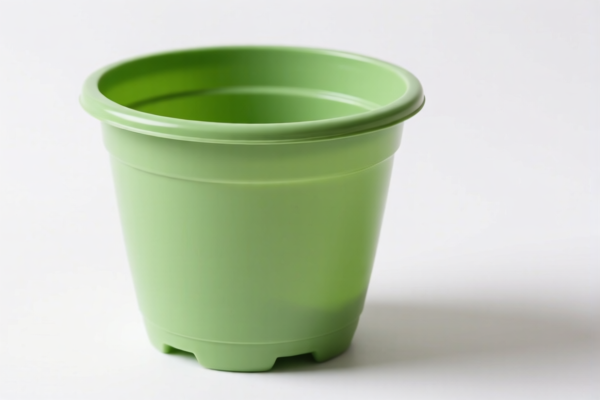


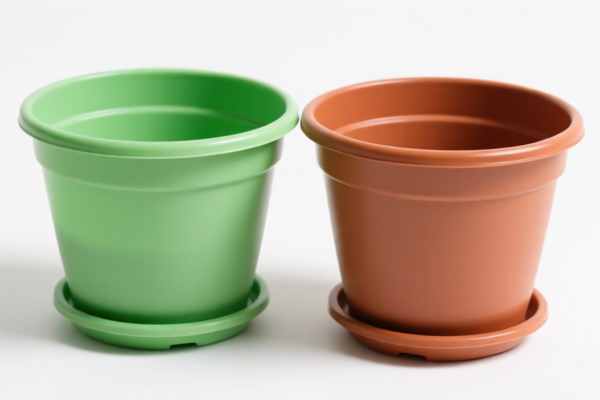
AI Analysis
🌱 Plastic Nursery Pots (Plastic Seedling Trays)
🌐 HS Code Reference & Customs Clearance Guide | 2026 Latest Tariff Analysis | Professional Clearance Strategy
📌 I. Product Definition & Classification: Do You Really Understand "Nursery Pots"?
Plastic Nursery Pots, also known as seedling trays or planting pots, are essential agricultural and horticultural supplies. They are primarily used for germinating seeds, growing seedlings, and transplanting young plants. In international trade, their classification depends heavily on their material, form, and specific intended use.
⚠️ Key Distinction:
- If classified as packaging/transport containers →归入 Chapter 39.23;
- If classified as household/agricultural articles →归入 Chapter 39.24;
- The presence of "Section 301" tariffs and "Section 122" tariffs significantly impacts the final cost for goods originating from China to the US.
📦 II. HS Code Classification Details (2026 Latest Tariff Authority Comparison)
Based on the provided data, here are the 5 possible HS Code classifications for Plastic Nursery Pots, with detailed tax breakdowns.
| HS Code | Product Description & Logic | Total Tax Rate | Tax Composition (China to US) |
|---|---|---|---|
3923.10.20.00 |
Plastic Nursery Pots: Classified under Plastic Packaging Articles. Form: Tray. Purpose: Seedling. Fits the logic of plastic packaging goods. | 35.0% | Base Tariff: 0.0% Addl. Tariff (Sec 301): 25.0% Sec 122 Tariff: 10% |
3923.10.90.00 |
Plastic Nursery Pots: Classified under Boxes, Cases, Crates, etc. as accessories/sub-category. | 38.0% | Base Tariff: 3.0% Addl. Tariff (Sec 301): 25.0% Sec 122 Tariff: 10% |
3924.10.40.00 |
Plastic Nursery Pots: Classified under Household/Agricultural Articles (Other). Form: Tray. Purpose: Planting. | 13.4% | Base Tariff: 3.4% Addl. Tariff (Sec 301): 0.0% Sec 122 Tariff: 10% |
3924.10.30.00 |
Plastic Nursery Pots: Classified as Plastic Trays. Fits the definition of plastic tableware/household articles. | 22.8% | Base Tariff: 5.3% Addl. Tariff (Sec 301): 7.5% Sec 122 Tariff: 10% |
3923.90.00.80 |
Nursery Pots (Containers): Classified as Other Containers for transport or packaging. Material: Mostly Plastic. | 38.0% | Base Tariff: 3.0% Addl. Tariff (Sec 301): 25.0% Sec 122 Tariff: 10% |
🔍 Critical Insight:
-3924.10.40.00offers the lowest tariff (13.4%) but requires strong evidence that the product is an "agricultural/household article" rather than a "package."
-3923codes are higher (35%-38%) because they are viewed as "packaging materials," attracting the full 25% Section 301 tariff.
- Section 122 Tariff (10%) applies to all these categories, adding a significant fixed cost.
💰 III. 2026 Latest Tariff Rate Breakdown (Detailed Tax Clauses)
✅ Applicable Country: United States (US)
✅ Country of Origin: China (CN)
✅ Effective Date: Current tariffs apply (2025-2026 context)
🎯 1. 3923.10.20.00 – Plastic Packaging (Trays for Seedlings)
| Item | Content |
|---|---|
| Base Tariff | 0% (ad valorem) |
| USITC Additional Tariff (Sec 301) | +25% |
| Section 122 Tariff | +10% |
| Total Tax Rate | 35.0% |
| Tax Calculation | CIF Value × 35% |
| De Minimis Exemption | ❌ Not Eligible (Deny de minimis) |
| Legal Basis | HTSUS 3923.10.20.00 → USITC Footnote 301 → Section 122 |
📌 Explanation:
- Classified as "plastic packaging," it attracts the maximum 25% Section 301 tariff.
- The 10% Section 122 tariff is added on top.
- High Cost Warning: This is the most common classification for bulk seedling trays, leading to high landed costs.
🎯 2. 3923.10.90.00 – Other Plastic Boxes/Cases
| Item | Content |
|---|---|
| Base Tariff | 3.0% |
| USITC Additional Tariff (Sec 301) | +25% |
| Section 122 Tariff | +10% |
| Total Tax Rate | 38.0% |
| Tax Calculation | CIF Value × 38% |
| De Minimis Exemption | ❌ Not Eligible |
📌 Note:
- Higher base tariff (3%) + Full Section 301 (25%) + Sec 122 (10%).
- This code is used when the tray is considered an "accessory" to packaging rather than the packaging itself.
🎯 3. 3924.10.40.00 – Plastic Household/Agricultural Articles (Best Option?)
| Item | Content |
|---|---|
| Base Tariff | 3.4% |
| USITC Additional Tariff (Sec 301) | 0.0% |
| Section 122 Tariff | +10% |
| Total Tax Rate | 13.4% |
| Tax Calculation | CIF Value × 13.4% |
| De Minimis Exemption | ❌ Not Eligible |
📌 Strategic Advantage:
- Why 0% Section 301?
- Items classified under Chapter 39.24 (Household, Kitchenware, Toilet Articles, and Agricultural Articles) are often exempt from certain Section 301 lists compared to packaging goods in 39.23.
- Condition: You must prove the item is primarily for agricultural use (e.g., labeling as "Agricultural Seedling Trays," not "Plastic Packaging Containers").
🎯 4. 3924.10.30.00 – Plastic Trays (Tableware/Household)
| Item | Content |
|---|---|
| Base Tariff | 5.3% |
| USITC Additional Tariff (Sec 301) | +7.5% |
| Section 122 Tariff | +10% |
| Total Tax Rate | 22.8% |
| Tax Calculation | CIF Value × 22.8% |
📌 Note:
- If customs views the item as a "household tray" (e.g., for office plants), it may fall here.
- Partial Section 301 reduction (7.5%) but higher base tariff.
🎯 5. 3923.90.00.80 – Other Plastic Containers
| Item | Content |
|---|---|
| Base Tariff | 3.0% |
| USITC Additional Tariff (Sec 301) | +25% |
| Section 122 Tariff | +10% |
| Total Tax Rate | 38.0% |
| Tax Calculation | CIF Value × 38% |
📌 Note:
- This is a "catch-all" for containers not specified elsewhere.
- Same high tariff as other 39.23 codes.
🛠️ IV. Customs Clearance Practical Advice (Real-World Pitfall Avoidance)
✅ 1. Document Preparation Checklist (Missing Any = Delay)
| Document | Required? | Description |
|---|---|---|
| ✅ Product Specification Sheet | ✔️ | Material (PP/PE), Dimensions, Capacity, Color, Stackability. |
| ✅ Product Photos | ✔️ | Show the item in use (with soil/seeds) to prove agricultural purpose. |
| ✅ Commercial Invoice | ✔️ | Clear description: "Plastic Agricultural Seedling Trays" (NOT "Plastic Containers"). |
| ✅ Packing List | ✔️ | Quantity, Weight, Dimensions per carton. |
| ✅ Certificate of Origin (CO) | ✔️ | If applicable for non-China origin (to avoid Sec 301). |
| ✅ Usage Declaration | ✔️ | Statement: "For use in horticulture/agriculture for seedling cultivation." |
✅ 2. Declaration Strategy (Key Mantra)
🔥 “Agri-Use Proof, Avoid Packaging Code, Sec 301 Saved!”
| Scenario | Correct Declaration | Wrong Practice |
|---|---|---|
| Bulk Seedling Trays | 3924.10.40.00 (Agri Article) |
Misdeclare as 3923 (Packaging) → 35-38% Tax |
| Decorative Indoor Pots | 3924.10.30.00 (Household) |
Declare as Agricultural → Audit Risk |
| Large Transport Crates | 3923.10.90.00 (Packaging) |
Declare as Pot → Misclassification |
| Mixed Shipment | Separate HS Codes | Blending Agri & Packaging → Confusion & Penalties |
✅ 3. Special Circumstances Handling
| Situation | Handling Advice |
|---|---|
| OEM Custom Trays | Provide client order + design. If client is a nursery, emphasize agri-use. |
| Stackable Trays | Highlight stackability as an efficiency feature for agriculture, not just logistics packaging. |
| Recycled Plastic | If made from post-consumer waste, some jurisdictions offer reduced rates, but US Sec 301 still applies unless origin is exempt. |
| Samples vs. Commercial | Samples < $800 may qualify for de minimis, but Commercial Orders do not. |
🌍 V. Global Market Comparison (2026 Latest)
| Country/Region | Recommended HS Code | Tariff (China Origin) | Certification | Notes |
|---|---|---|---|---|
| 🇺🇸 USA | 3924.10.40.00 |
13.4% | None Specific | Best option if agri-use is proven. |
| 🇪🇺 EU | 3924.10 |
~3-6.5% | REACH (Material Safety) | No Sec 301. Lower tariffs. |
| 🇨🇳 China | 3924.10.40.00 |
5-10% | N/A | Domestic tax rates differ. |
| 🇬🇧 UK | 3924.10 |
~5% | UKCA | Post-Brexit rules. |
| 🇨🇦 Canada | 3924.10 |
0-6.5% | None | CUSMA benefits if from US/Mexico. |
📌 Conclusion:
- USA is the most challenging market due to Section 301 and Section 122 tariffs.
- Strategic Goal: Aim for3924.10.40.00(13.4%) by proving agricultural purpose. Avoid3923(35%+).
📌 VI. Common Mistakes & Pitfall Guide (Lessons Learned)
❌ Mistake 1: Using "Plastic Container" in the invoice description.
👉 Consequence: Customs defaults to 3923 → 35-38% Tax.
👉 Fix: Use "Agricultural Seedling Tray" or "Nursery Pot."
❌ Mistake 2: No evidence of agricultural use.
👉 Consequence: Customs may reject 3924 classification.
👉 Fix: Provide photos of plants growing in the pots, or invoices from nurseries.
❌ Mistake 3: Ignoring Section 122 Tariff.
👉 Consequence: Underpayment → Penalties & Interest.
👉 Fix: Always add 10% Sec 122 to your cost calculation for China-origin goods.
✅ Correct Declaration Example:
"Plastic Agricultural Seedling Trays, Made of PP, Stackable, For Horticultural Use, Model XYZ, Not for Food Contact."
🎯 VII. Conclusion: Smart Classification Saves Money!
🎯 Remember the Mantra:
🔹 “Agri-First, Avoid Packaging, Save 25% Tax!”
🔹 “HS Code is Destiny, 13% vs 38%, Declare Right to Survive!”
📌 Pro Tip:
If your nursery pots are originating from Vietnam, Mexico, or Thailand, you may qualify for Section 301 Exemptions or CUSMA/FTA benefits, reducing tariffs to 0-5%.
Recommendation: Apply for an Advance Ruling with US Customs (CBP) to confirm the HS Code before shipping.
📣 Immediate Action:
📞 Consult a professional customs broker.
📦 Provide product photos + agricultural use statement.
🚀 Clear smoothly, profit efficiently, grow globally!
✨ Professional Clearance Starts with Precise Classification!
💼 Every dollar of tariff saved is pure profit!
Customer Reviews
About HS Code Classification
The Harmonized System (HS) is an internationally standardized nomenclature developed by the World Customs Organization (WCO) to classify traded products. Over 200 countries use the HS system as the basis for customs tariffs, trade statistics, and import/export regulations.
Each HS code follows a hierarchical structure:
- Chapter (2 digits) — Broad category of goods (e.g., Chapter 84: Machinery and Mechanical Appliances)
- Heading (4 digits) — More specific grouping within the chapter
- Subheading (6 digits) — Internationally standardized breakdown, used by all WCO member countries
- National subdivisions (8-10 digits) — Country-specific extensions for further classification, such as US HTSUS 10-digit codes
Correct HS code classification is essential for smooth customs clearance, accurate duty payment, and compliance with trade regulations. Misclassification can lead to customs delays, overpayment of duties, or penalties.
When importing from CN to US, the applicable tariff rates may include:
- Most-Favored-Nation (MFN) rate — The standard duty rate applied to WTO members
- General rate — Applied to countries without trade agreements
- Trade remedy duties — Additional tariffs such as Section 301 (anti-dumping), Section 232 (national security), or countervailing duties
The information provided on this page is for reference purposes only. For official classification, please consult with your local customs authority or a licensed customs broker.