Plastic Other Accessories
CN → US| HS Code | Tariff Rate | Origin | Destination | Doc |
|---|---|---|---|---|
| 3920995000 | 40.8% | CN | US | Official Doc |
| 8708295160 | 0.0% | CN | US | Official Doc |
| 8708998180 | 37.5% | CN | US | Official Doc |
| 3926305000 | 22.8% | CN | US | Official Doc |
| 3926909989 | 22.8% | CN | US | Official Doc |
Product Images
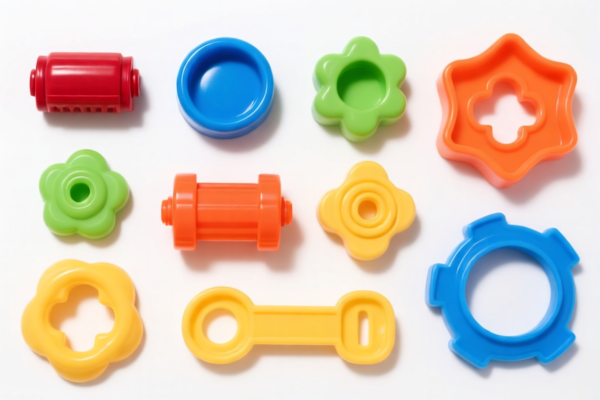
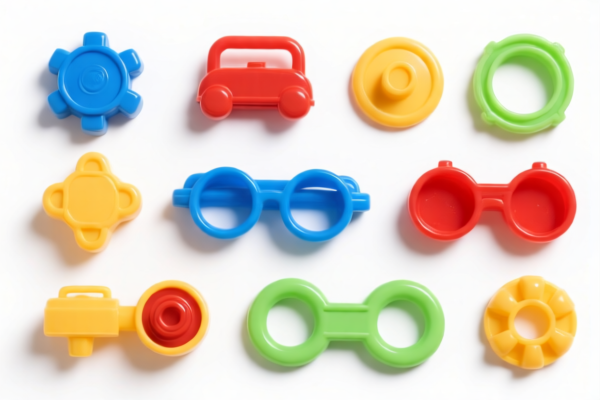
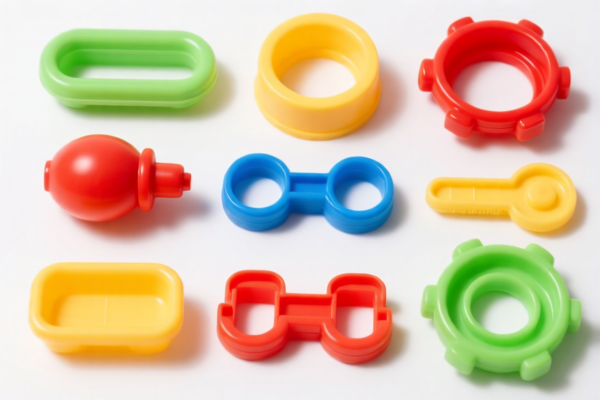

AI Analysis
🚗 Plastic Other Accessories (Automotive Trim & Body Parts)
🌐 HS Code Reference & Customs Clearance Guide | 2026 Latest Tariff Analysis | Professional Compliance Strategy
📌 I. Product Definition & Classification: What Exactly Are "Plastic Other Accessories"?
"Plastic Other Accessories" in the context of automotive and industrial trade primarily refers to non-structural plastic components used for aesthetics, protection, or assembly. These include: * Exterior Trim: Grilles, badges, mirror caps, wheel arch cladding. * Interior Trim: Dashboard panels, door inserts, console covers. * Unidentified/General Plastic Parts: Connectors, brackets, or generic body parts not specifically listed elsewhere.
⚠️ Key Distinction Point:
- If the part is a solid, non-foam, non-reinforced plate/sheet, it falls under Chapter 39 (Plastics).
- If the part is a specific finished automotive component (like a bumper or specific body piece), it falls under Chapter 87 (Vehicles).
- Misclassification Risk: Declaring a complex plastic assembly as a "general plastic part" to avoid higher auto-part tariffs is a common customs violation.
📦 II. HS Code Classification Details (2026 Latest Tariff Authority Comparison)
| HS Code | Product Description | Application Scenario | Classification Logic |
|---|---|---|---|
3920.99.50.00 |
Other plastic plates, sheets, film, foil, and strips, other than foam and unreinforced | Raw plastic exterior trim sheets, large decorative panels | ✅ Chapter 39: Focuses on the material form (sheet/plate), not the finished assembly. |
8708.29.51.60 |
Other parts and accessories of bodies (e.g., doors, roofs, floors) | Specific plastic body panels, fenders, or structural exterior trim | ✅ Chapter 87: Specific to auto body parts. Highest tariff due to "Section 301" + "122" + Metal/Alloy surcharge logic. |
8708.99.81.80 |
Other parts and accessories of motor vehicles | General automotive exterior/interior accessories (e.g., trim pieces, connectors) | ✅ Chapter 87: Catch-all for auto parts not elsewhere specified. Applies to finished accessory items. |
3926.30.50.00 |
Plastic articles for furnishing (Note: In auto context, often applied to trim/paneling) | Plastic interior trim panels, dashboard components, connection fittings | ✅ Chapter 39: Treated as "furnishing" or general plastic article. Lower base tariff than auto parts. |
3926.90.99.89 |
Other plastic articles and articles of other materials | Generic plastic parts, unlisted accessories, small plastic fixtures | ✅ Chapter 39: Catch-all for plastic goods not specified in other subheadings. |
🔍 Critical Reminder:
-8708Codes are subject to much higher combined tariffs (up to 87.5%) compared to3920/3926Codes (~22.8-40.8%).
- The distinction often lies in whether the item is deemed a "part of the vehicle body" (8708.29) or a "general accessory" (8708.99), or if it can be argued as a pure plastic article (39xx) based on its form and function.
-3926.30is often a strategic classification for interior trim panels, avoiding the "auto part" surcharges if they are not structural body parts.
💰 III. 2026 Latest Tariff Rate Breakdown (Including Surcharges & Policy Add-ons)
✅ Applicable Country: United States (US)
✅ Origin: China (CN)
✅ Effective Time: Ongoing (Post-2025 adjustments)
🎯 1. 3920.99.50.00 – Plastic Plates/Sheets (Non-Foam, Unreinforced)
| Item | Content |
|---|---|
| Base Tariff | 5.8% |
| Section 301 Surcharge | +25.0% |
| Section 122 Surcharge | +10.0% |
| Total Tax Rate | 40.8% |
| Tax Calculation | CIF Value × 40.8% |
| De Minimis Eligibility | ❌ Not Eligible (Section 301/122 items are excluded) |
| Legal Basis | Base HTSUS → Section 301 Footnote 9903.01.25 → Section 122 EO |
📌 Explanation:
- This code is for raw material forms (sheets/plates). While the rate is high (40.8%), it is lower than auto parts.
- Warning: If you import a finished trim piece, customs may reclassify it to8708, increasing the rate.
🎯 2. 8708.29.51.60 – Other Body Parts & Accessories
| Item | Content |
|---|---|
| Base Tariff | 2.5% |
| Section 301 Surcharge | +25.0% |
| Section 122 Surcharge | +10.0% |
| Steel/Aluminum/Copper Surcharge | +50.0% (Note: Even if plastic, if classified under this specific steel/aluminum-heavy body code logic or if hybrid materials trigger this clause) |
| Total Tax Rate | 2.5% + 85.0% = 87.5% |
| Tax Calculation | CIF Value × 87.5% |
| De Minimis Eligibility | ❌ Not Eligible |
| Legal Basis | 8708.29.51.60 → Heavy Surcharge Clause |
📌 Critical Warning:
- This is the HIGHEST TAX BRACKET.
- The "+50%" surcharge for steel/aluminum/copper is triggered under specific trade enforcement measures for "body parts."
- Strategy: Avoid this code unless the item is strictly a structural body panel and cannot be classified as a general plastic accessory.
🎯 3. 8708.99.81.80 – Other Auto Parts & Accessories
| Item | Content |
|---|---|
| Base Tariff | 2.5% |
| Section 301 Surcharge | +25.0% |
| Section 122 Surcharge | +10.0% |
| Total Tax Rate | 37.5% |
| Tax Calculation | CIF Value × 37.5% |
| De Minimis Eligibility | ❌ Not Eligible |
| Legal Basis | 8708.99.81.80 → Standard Section 301/122 Application |
📌 Explanation:
- This is the standard "Auto Part" rate.
- It is significantly lower than8708.29.51.60(87.5%) because it does not trigger the heavy steel/aluminum surcharge clause (likely because it's not classified as a "body" part under the strict definition).
- Best Option for Finished Auto Accessories if classified under Chapter 87.
🎯 4. 3926.30.50.00 – Plastic Furnishings/Trim Parts
| Item | Content |
|---|---|
| Base Tariff | 5.3% |
| Section 301 Surcharge | +7.5% (Note: Some plastic items have reduced 301 rates depending on specific exclusions or product type) |
| Section 122 Surcharge | +10.0% |
| Total Tax Rate | 22.8% |
| Tax Calculation | CIF Value × 22.8% |
| De Minimis Eligibility | ❌ Not Eligible (Section 122 applies) |
| Legal Basis | 3926.30.50.00 → Reduced 301 Rate + 122 |
📌 Strategic Advantage:
- Lowest Tariff Among Finished Parts.
- Classifying interior trim, dashboard panels, or non-structural fittings as "Plastic Articles for Furnishing" (3926) can save ~15%+ compared to "Auto Parts" (8708).
- Justification: Argue that these are "interior furnishings" or "general plastic articles" rather than "vehicle parts."
🎯 5. 3926.90.99.89 – Other Plastic Articles (Catch-All)
| Item | Content |
|---|---|
| Base Tariff | 5.3% |
| Section 301 Surcharge | +7.5% |
| Section 122 Surcharge | +10.0% |
| Total Tax Rate | 22.8% |
| Tax Calculation | CIF Value × 22.8% |
| De Minimis Eligibility | ❌ Not Eligible |
| Legal Basis | 3926.90.99.89 → Same as 3926.30 |
📌 Explanation:
- Same tax rate as3926.30. Use this for plastic accessories that do not fit "furnishing" but are not "auto parts" in the strict legal sense.
- Risk: Higher scrutiny from customs if declared as a "car part" but classified here. Must provide strong documentation that it is a generic plastic good.
🛠️ IV. Customs Clearance Practical Advice (Avoiding Pitfalls)
✅ 1. Required Documentation Checklist
| Document | Must Provide | Purpose |
|---|---|---|
| Product Technical Data Sheet | ✔️ | Defines material composition (100% plastic? reinforced?). Crucial for Chapter 39 vs 87. |
| Detailed Part Drawing | ✔️ | Shows if the part is a "body panel" (structural) or a "trim piece" (decorative). |
| Function Description | ✔️ | Clearly state: "Interior decorative trim," not "Structural body component." |
| Commercial Invoice | ✔️ | Item description must match HS Code logic (e.g., "Plastic Dashboard Cover" vs "Auto Body Part"). |
| Material Certificate | ✔️ | Proves absence of steel/aluminum/copper to avoid the +50% surcharge in 8708.29. |
| Prior Ruling (Optional) | ✔️ | Best practice for high-value shipments. |
✅ 2. Declaration Strategy (Key Mnemonics)
🔥 "Plastic Trim, Not Body Part; Chapter 39 Wins, Chapter 87 Burns!"
| Scenario | Correct Declaration | Wrong Declaration |
|---|---|---|
| Interior Dashboard/Door Panel | 3926.30.50.00 (Plastic Furnishing) |
8708.99.81.80 (Auto Part) → Saves 14.7% |
| Exterior Mirror Cap/Trim | 3926.90.99.89 or 3926.30 |
8708.29.51.60 → Avoids 87.5% Tax! |
| Raw Plastic Sheet for Trim | 3920.99.50.00 |
3926.90... → Avoids 122 if raw (Check specific 122 exclusions for raw materials) |
| Structural Bumper/Fender | 8708.29.51.60 |
3926... → High Risk of Rejection (Must be 8708 if it's a body part) |
📌 Key Insight:
- Interior parts are easier to classify under Chapter 39 as "furnishings" or "general plastic articles."
- Exterior structural parts are harder to defend as Chapter 39 and may fall under Chapter 87.
- Avoid8708.29.51.60at all costs unless necessary. The +50% surcharge is catastrophic. Use8708.99.81.80(37.5%) or better,3926(22.8%).
✅ 3. Special Cases
| Situation | Handling Advice |
|---|---|
| Hybrid Parts (Plastic + Metal Insert) | If metal insert is structural, customs may push to 8708. If metal is just a clip/fastener, argue for 3926. |
| OEM Custom Parts | Provide the manufacturer’s part list. If it’s listed as "Trim" or "Accessory," use 3926. If "Body Panel," use 8708.99. |
| Small Clips/Brackets | Likely 3926.90.99.89 (22.8%). Do not declare as "Auto Part" if not structural. |
| Large Body Kits (Aftermarket) | Often classified as 8708.99.81.80 (37.5%). Harder to push to 3926 due to "body" function. |
🌍 V. Global Market Comparison (2026 Overview)
| Country/Region | Recommended HS Code | Tariff Estimate | Note |
|---|---|---|---|
| 🇺🇸 USA | 3926.30.50.00 or 8708.99.81.80 |
22.8% or 37.5% | Avoid 8708.29 (87.5%). Section 122 applies to all. |
| 🇨🇳 China | 3926.90.99.89 |
~5% | Low base tariff. No Section 301/122 issues. |
| 🇪🇺 EU | 3926.90.99 |
0-4% | Generally low. No "Section 301" equivalent. |
| 🇨🇦 Canada | 3926.90.99.89 |
~5% | Similar to US but without 301/122. |
| 🇲🇽 Mexico | 3926.90.99.89 |
~5% | USMCA benefits may apply if local content met. |
📌 Conclusion:
- The US market is the most challenging due to Section 301 (+25%) and Section 122 (+10%) surcharges.
- Maximize savings by classifying as Chapter 39 (3926) whenever possible.
- Minimize risk by avoiding8708.29.51.60unless the part is undeniably a structural body component.
📌 VI. Common Errors & Pitfalls (Blood & Tears Lessons)
❌ Error 1: Declaring a finished plastic bumper as 3926 (Plastic Article)
👉 Consequence: Customs reclassifies to 8708.29 or 8708.99 → Back taxes + Penalties.
👉 Fix: If it’s a bumper, use 8708.99.81.80 (37.5%) and declare honestly. Do not lie.
❌ Error 2: Using 8708.29.51.60 for non-structural trim
👉 Consequence: 87.5% Tax is applied unnecessarily.
👉 Fix: Argue it’s a "general accessory" (8708.99.81.80) or "plastic furnishing" (3926.30) if possible.
❌ Error 3: Ignoring Section 122 (10%) on all plastic/auto parts from China
👉 Consequence: Underestimating landed cost by 10%.
👉 Fix: Add 10% to all cost projections for HS Codes in the 39xx and 87xx ranges.
✅ Correct Practice:
"Plastic Interior Trim Panel, Model XYZ, Non-Structural, 100% ABS Plastic, Not a Body Part"
→ Use3926.30.50.00(22.8%).
🎯 VII. Conclusion: Smart Classification Saves Money!
🎯 Remember the Golden Rules:
🔹 "Interior = Furnishing (3926) → 22.8%"
🔹 "Exterior Accessory = Auto Part (8708.99) → 37.5%"
🔹 "Body Panel = Auto Part (8708.29) → 87.5% (AVOID!)"
🔹 "Raw Sheet = Plastic Sheet (3920) → 40.8%"
📌 Pro Tip:
If your product is on the US Customs Exclusion List for Section 301 or 122, you may pay only the base tariff. Check the USTR Exclusion List annually!
For high-volume imports, apply for a Binding Ruling from US Customs before shipping.
📣 Immediate Action:
📞 Review your Bill of Lading descriptions.
📊 Compare3926vs8708rates for each SKU.
🚀 Optimize your HS Code classification to save up to 64.7% in tariffs!
✨ Professional Customs Compliance Starts with Accurate Classification!
💼 Every Percent Saved is Profit Gained!
Customer Reviews
About HS Code Classification
The Harmonized System (HS) is an internationally standardized nomenclature developed by the World Customs Organization (WCO) to classify traded products. Over 200 countries use the HS system as the basis for customs tariffs, trade statistics, and import/export regulations.
Each HS code follows a hierarchical structure:
- Chapter (2 digits) — Broad category of goods (e.g., Chapter 84: Machinery and Mechanical Appliances)
- Heading (4 digits) — More specific grouping within the chapter
- Subheading (6 digits) — Internationally standardized breakdown, used by all WCO member countries
- National subdivisions (8-10 digits) — Country-specific extensions for further classification, such as US HTSUS 10-digit codes
Correct HS code classification is essential for smooth customs clearance, accurate duty payment, and compliance with trade regulations. Misclassification can lead to customs delays, overpayment of duties, or penalties.
When importing from CN to US, the applicable tariff rates may include:
- Most-Favored-Nation (MFN) rate — The standard duty rate applied to WTO members
- General rate — Applied to countries without trade agreements
- Trade remedy duties — Additional tariffs such as Section 301 (anti-dumping), Section 232 (national security), or countervailing duties
The information provided on this page is for reference purposes only. For official classification, please consult with your local customs authority or a licensed customs broker.