Plastic Outer Surface Card Holder
CN → US| HS Code | Tariff Rate | Origin | Destination | Doc |
|---|---|---|---|---|
| 3923900080 | 38.0% | CN | US | Official Doc |
| 3923109000 | 38.0% | CN | US | Official Doc |
| 3926908700 | 40.3% | CN | US | Official Doc |
| 3926909989 | 22.8% | CN | US | Official Doc |
| 4202322000 | 55.0% | CN | US | Official Doc |
| 4202321000 | 0.0% | CN | US | Official Doc |
Product Images
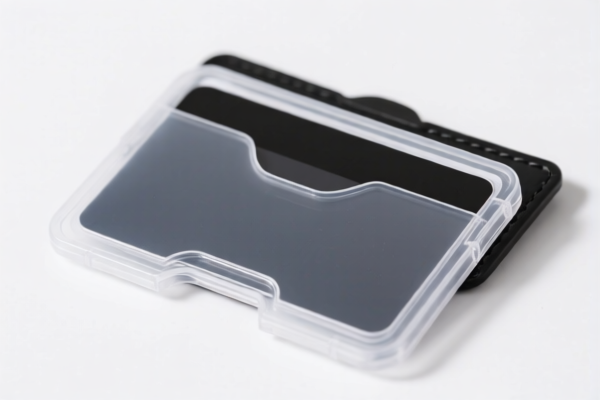
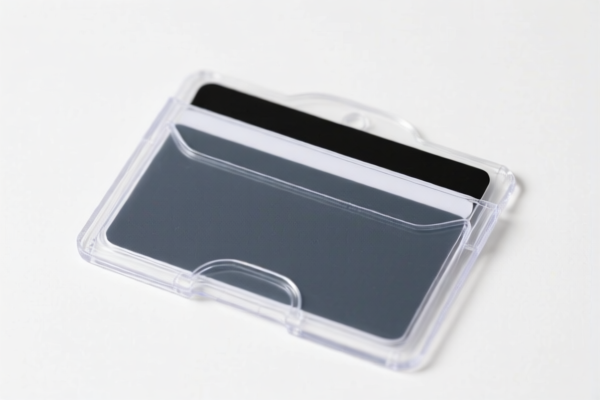
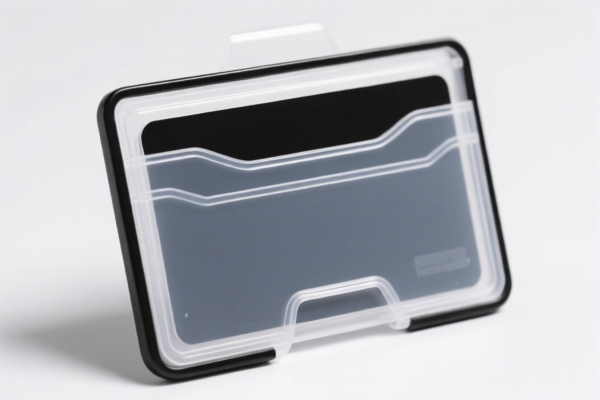
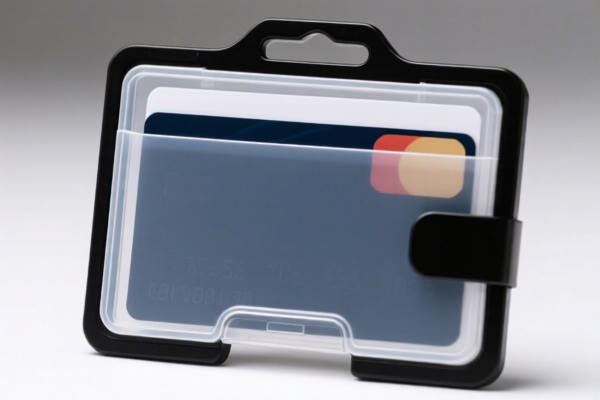
AI Analysis
💳 Plastic Outer Surface Card Holder (Wallets/Purses/Card Cases)
🌐 HS Code Reference & Customs Clearance Guide | 2026 Latest Tariff Analysis | Professional Clearance Strategy
📌 I. Product Definition & Classification: What exactly is a "Plastic Card Holder"?
In international trade, a Card Holder is typically classified under Heading 4202 if it is a dedicated container for carrying cards, cash, or documents, and is of a kind normally carried in the pocket or handbag. However, if it lacks the specific characteristics of a "wallet" or "pouch" and is purely a rigid storage container, it may fall under Heading 3926 (Articles of Plastic) or 3923 (Packing Articles).
The critical distinction lies in material composition and function:
1. Textile/Plastic Outer Surface Wallets/Purses (Heading 4202)
Description: Containers specifically designed to hold cards/money, with an outer surface of plastics sheeting or textile materials.
Key Feature: It must be "of a kind normally carried in the pocket or handbag."
Sub-category: If the outer surface is plastics sheeting, it falls under 4202.32*.
2. Rigid Plastic Document Binders/Storage (Heading 3926)
Description: If the item is a flexible binder with tabs or a rigid plastic case not primarily designed as a "wallet" (e.g., a simple plastic sleeve or binder), it may be classified here.
Key Feature: Lack of "pocket/handbag" carrier characteristics; more functional/storage-oriented.
3. Plastic Boxes/Cases for Goods (Heading 3923)
Description: Boxes, cases, or similar articles for conveyance/packing.
Key Feature: If the item is a shipping container or a bulk storage box rather than a personal accessory, it falls here.
⚠️ Critical Distinction Point:
- If the item is a personal accessory (wallet, card case, bi-fold, tri-fold) with a plastic outer surface → 4202.32.xx
- If the item is a rational plastic storage unit (binder, rigid case) without textile/plastic sheeting outer surface → 3926.90.xx or 3923.xx
- Misclassification Risk: Declaring a personal card holder as "Plastic Box" (3923) or vice versa can lead to significant tariff differences and customs delays.
📦 II. HS Code Classification Details (2026 Latest Tariff Authority Comparison)
Based on the provided <DATA>, here are the exact HS Codes and their descriptions for "Plastic Outer Surface Card Holder" scenarios:
| HS Code | Product Description | Application Scenario | Outer Material |
|---|---|---|---|
4202.32.20.00 |
Trunks, suitcases... Articles of a kind normally carried in the pocket or in the handbag... With outer surface of sheeting of plastics... Other | Standard personal card holders, wallets, bi-fold wallets with plastic outer surface (not reinforced/laminated) | Plastics Sheeting |
4202.32.10.00 |
... Articles of a kind normally carried in the pocket or in the handbag... With outer surface of sheeting of plastics... Of reinforced or laminated plastics | Premium card holders/wallets made of reinforced or laminated plastic sheets | Reinforced/Laminated Plastics |
3926.90.87.00 |
Other articles of plastics... Flexible plastic document binders with tabs, rolled or flat | Plastic document binders, card sleeves with tabs (not typically worn/carry as handbag accessory) | Plastic |
3926.90.99.89 |
Other articles of plastics... Other | Other plastic articles not specified elsewhere (e.g., generic plastic card trays, non-wearable storage) | Plastic |
3923.90.00.80 |
Articles for conveyance or packing of goods... Other | Plastic boxes/cases for packaging goods, not personal accessories | Plastic |
3923.10.90.00 |
Articles for conveyance or packing of goods... Boxes, cases, crates and similar articles | Shipping boxes, storage crates, bulk plastic containers | Plastic |
🔍 Key Reminder:
- Personal Use: If the card holder is designed to be carried in a pocket or handbag, HS Code 4202.32 is the correct heading.
- Business/Storage Use: If it is a binder or a rigid box for storing documents/goods, HS Code 3926 or 3923 is more appropriate.
- Material Matters: Within 4202.32, the difference between4202.32.10.00and4202.32.20.00is reinforcement/lamination.
💰 III. 2026 Latest Tariff Rate Breakdown (Including Surtaxes)
✅ Applicable Country: United States (US)
✅ Origin: China (CN)
✅ Effective Date: 2025年11月10日起 (and subsequent imports)
🎯 1. 4202.32.10.00 & 4202.32.20.00 —— Personal Card Holders/Wallets (Plastic Outer)
| Item | Content |
|---|---|
| Base Tariff | 0.0% |
| Additional Tariff (Section 301) | 0.0% |
| Total Tariff | 0.0% |
| Tax Calculation | CIF Value × 0.0% |
| De Minimis Eligibility | ✅ Yes (If value ≤ $800, generally duty-free under Section 321, but subject to strict scrutiny for textiles/plastics) |
| Legal Basis | HTSUS:4202.32.xx |
📌 Explanation:
- Why 0%? The provided data explicitly states "Basic Tariff: 0.0%, Additional Tariff: 0.0%" for HS Codes4202.32.10.00and4202.32.20.00.
- Advantage: This is a highly favorable classification for personal accessories made of plastic.
- Caution: Ensure the product is clearly described as a "wallet" or "card holder" for personal use. If misclassified as a "plastic box" (3923), the rate jumps to 28%.
🎯 2. 3926.90.87.00 —— Flexible Plastic Document Binders
| Item | Content |
|---|---|
| Base Tariff | 0.0% |
| Additional Tariff (Section 301) | 0.0% |
| Total Tariff | 0.0% |
| Tax Calculation | CIF Value × 0.0% |
| De Minimis Eligibility | ✅ Yes (Subject to scrutiny) |
| Legal Basis | HTSUS:3926.90.87 |
📌 Note:
- This code is for flexible plastic document binders.
- If your "card holder" is a simple plastic sleeve with no binding mechanism or tabs, it might be better suited for3926.90.99.89or4202.32.
🎯 3. 3926.90.99.89 —— Other Plastic Articles
| Item | Content |
|---|---|
| Base Tariff | 5.3% |
| Additional Tariff (Section 301) | 7.5% |
| Total Tariff | 12.8% |
| Tax Calculation | CIF Value × 12.8% |
| De Minimis Eligibility | ✅ Yes (But higher duty) |
| Legal Basis | HTSUS:3926.90.99 |
📌 Warning:
- This is a catch-all category. If your product doesn't fit neatly into binders or wallets, it falls here.
- 12.8% is significantly higher than 0%. Avoid this classification if your product fits4202.32.
🎯 4. 3923.10.90.00 & 3923.90.00.80 —— Plastic Boxes/Cases for Packing
| Item | Content |
|---|---|
| Base Tariff | 3.0% |
| Additional Tariff (Section 301) | 25.0% |
| Total Tariff | 28.0% |
| Tax Calculation | CIF Value × 28.0% |
| De Minimis Eligibility | ✅ Yes (But very high duty) |
| Legal Basis | HTSUS:3923.10 / 3923.90 |
📌 Critical Error Alert:
- Do NOT classify personal card holders as "Plastic Boxes" unless they are strictly for shipping/packing.
- 28% tariff is extremely high. This classification is for packaging materials, not personal accessories.
- Penalty Risk: Misclassification can lead to audits, back duties, and penalties.
🛠️ IV. Customs Clearance Practical Advice (Real-World Pitfall Guide)
✅ 1. Document Checklist (Non-negotiable)
| Document | Required | Description |
|---|---|---|
| ✅ Product Specification Sheet | ✔️ | Must clearly state: "Card Holder/Wallet," "Outer Surface Material: Plastic Sheeting," "For Personal Use" |
| ✅ Material Composition Statement | ✔️ | Confirm if outer surface is reinforced/laminated (for 4202.32.10) or plain plastics sheeting (for 4202.32.20) |
| ✅ Product Photos | ✔️ | Clear images showing the item being carried in a pocket/handbag, with plastic outer surface visible |
| ✅ Commercial Invoice | ✔️ | Description: "Plastic Card Holder, Personal Use, Outer Surface: Plastic Sheeting" |
| ✅ Packing List | ✔️ | List quantities, weights, and ensure no shipping-related packaging is included in the value if claiming de minimis |
✅ 2. Declaration Tips (Key Mantra)
🔥 "Personal Use is Key, Plastic Surface Defines, Box for Packing, 28% Will Sting!"
| Scenario | Correct Declaration | Wrong Declaration |
|---|---|---|
| Personal Card Holder (Plastic Outer) | 4202.32.20.00 (0%) |
3923.10.90.00 (28%) |
| Reinforced Plastic Card Holder | 4202.32.10.00 (0%) |
3926.90.99.89 (12.8%) |
| Plastic Document Binder | 3926.90.87.00 (0%) |
4202.32.20.00 (0%) - Risk of misclassification if not "wallet-like" |
| Shipping Box for Cards | 3923.10.90.00 (28%) |
4202.32.20.00 (0%) - High risk of penalty |
✅ 3. Special Case Handling
| Scenario | Handling Advice |
|---|---|
| Mixed Materials | If the card holder has textile and plastic parts, ensure the outer surface is primarily plastic to qualify for 4202.32. If textile dominates, check textile tariffs (which may be different). |
| OEM/White Label | Provide clear descriptions. Avoid vague terms like "Plastic Container." Use "Card Holder" or "Wallet." |
| Gift Sets | If a card holder is part of a gift set with other items, the entire set is classified according to the principal item. If the card holder is principal, use 4202.32. |
| De Minimis ($800) | Even though 0% duty applies, customs may still require detailed documentation for plastics to prevent evasion. Keep records. |
🌍 V. Global Market Clearance Comparison (2026 Latest)
| Country/Region | Recommended HS Code | Tariff | Certification | Note |
|---|---|---|---|---|
| 🇺🇸 USA | 4202.32.20.00 |
0% | None | Best scenario for plastic card holders |
| 🇨🇳 China | 4202.32.20.00 |
5-10% | None | Standard import tariff |
| 🇪🇺 EU | 4202.32.20.00 |
0% (if under FTA) | CE (if electronics involved) | Generally low duty |
| 🇬🇧 UK | 4202.32.20.00 |
0% | None | Post-Brexit, similar to EU |
| 🇯🇵 Japan | 4202.32.20.00 |
5-10% | None | Standard tariff |
📌 Conclusion:
- USA offers 0% tariff for correctly classified plastic card holders (4202.32).
- Misclassification as plastic packaging (3923) leads to 28% tariff.
- Always emphasize "Personal Use" and "Outer Surface Material" in documentation.
📌 VI. Common Mistakes & Pitfall Guide (Lessons Learned)
❌ Mistake 1: Calling a personal card holder a "Plastic Box" or "Storage Case"
👉 Consequence: Tariff jumps from 0% to 28% → Huge Cost Increase!
❌ Mistake 2: Ignoring the "Reinforced/Laminated" distinction in 4202.32
👉 Consequence: May lead to classification dispute, but both sub-codes currently have 0% tariff in the provided data, so less critical for cost, but important for compliance.
❌ Mistake 3: Failing to declare "Outer Surface of Plastic Sheeting"
👉 Consequence: Customs may reclassify under 3926.90.99.89 (12.8%) if they deem it not a "wallet."
❌ Mistake 4: Including shipping packaging in the declared value for De Minimis claims
👉 Consequence: If total value > $800, full duty applies, and incorrect classification leads to penalties.
✅ Correct Practice:
"Card Holder, Personal Use, Outer Surface: Plastic Sheeting, Model XYZ, For Pocket/Handbag Carry"
🎯 VII. Conclusion: Professional Declaration Saves Money!
🎯 Remember the Mantra:
🔹 "Personal Use = 4202 (0%), Packaging = 3923 (28%), Binder = 3926 (0-12.8%)"
🔹 "Clarify Outer Material, Avoid 28% Trap, Declaration Accuracy is Key!"
📌 Pro Tip:
- If your card holder is made of textile material, the tariff might differ (not covered in this specific data, but generally higher).
- For plastic outer surface, 4202.32 is your 0% sweet spot.
- Always consult with a customs broker for pre-classification rulings if the product is complex or high-value.
📣 Immediate Action:
📞 Contact your customs broker + Provide clear product photos + Confirm "Personal Use" designation
🚀 Ensure your card holders clear US Customs at 0% duty!
✨ Professional Clearance Starts with Accurate Classification!
💼 Every dollar saved on duty is pure profit!
Customer Reviews
About HS Code Classification
The Harmonized System (HS) is an internationally standardized nomenclature developed by the World Customs Organization (WCO) to classify traded products. Over 200 countries use the HS system as the basis for customs tariffs, trade statistics, and import/export regulations.
Each HS code follows a hierarchical structure:
- Chapter (2 digits) — Broad category of goods (e.g., Chapter 84: Machinery and Mechanical Appliances)
- Heading (4 digits) — More specific grouping within the chapter
- Subheading (6 digits) — Internationally standardized breakdown, used by all WCO member countries
- National subdivisions (8-10 digits) — Country-specific extensions for further classification, such as US HTSUS 10-digit codes
Correct HS code classification is essential for smooth customs clearance, accurate duty payment, and compliance with trade regulations. Misclassification can lead to customs delays, overpayment of duties, or penalties.
When importing from CN to US, the applicable tariff rates may include:
- Most-Favored-Nation (MFN) rate — The standard duty rate applied to WTO members
- General rate — Applied to countries without trade agreements
- Trade remedy duties — Additional tariffs such as Section 301 (anti-dumping), Section 232 (national security), or countervailing duties
The information provided on this page is for reference purposes only. For official classification, please consult with your local customs authority or a licensed customs broker.