Plastic Outer Surface Coin Purse
CN → US| HS Code | Tariff Rate | Origin | Destination | Doc |
|---|---|---|---|---|
| 3923900080 | 38.0% | CN | US | Official Doc |
| 3923109000 | 38.0% | CN | US | Official Doc |
| 4202322000 | 55.0% | CN | US | Official Doc |
| 4202321000 | 0.0% | CN | US | Official Doc |
| 4202322000 | 55.0% | CN | US | Official Doc |
Product Images
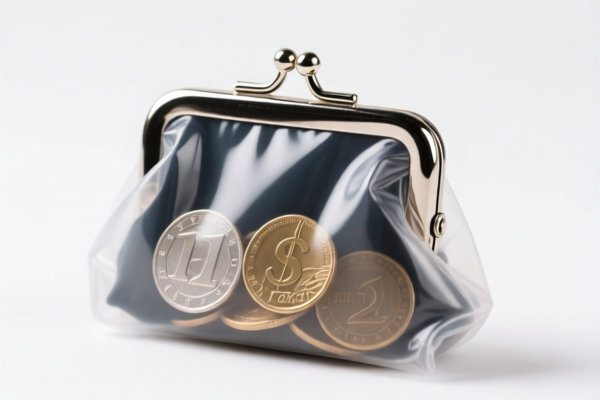
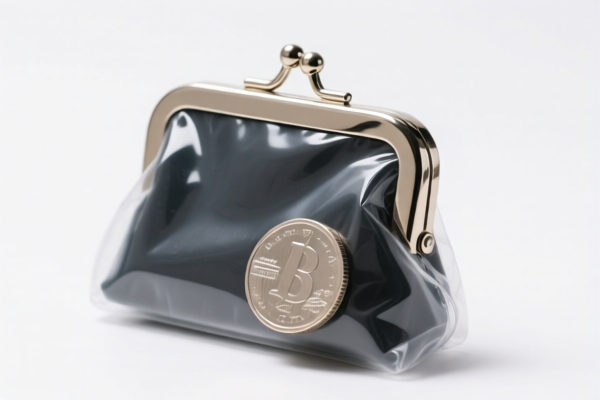
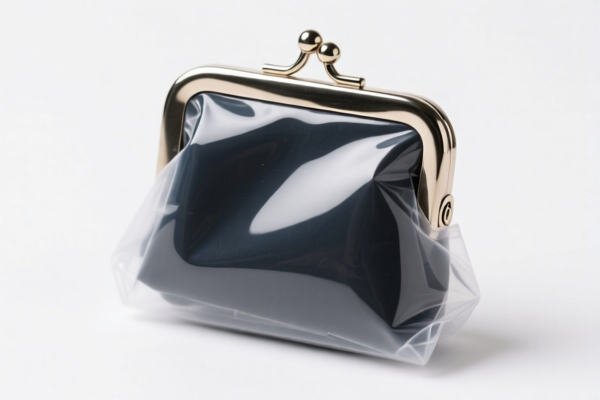
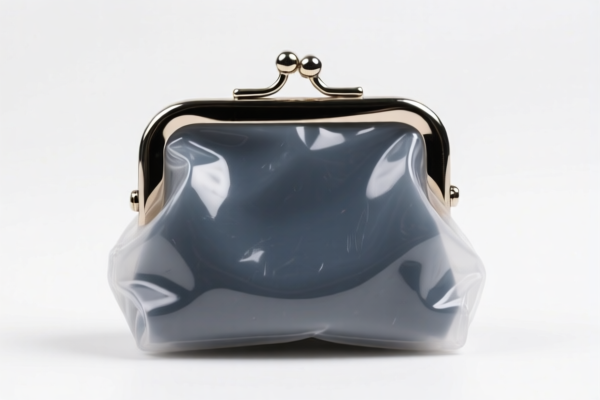
AI Analysis
👛 Coin Purse (Plastic Outer Surface)
🌐 HS Code Reference & Customs Clearance Guide | 2026 Latest Tariff Analysis | Professional Transit Strategy
📌 I. Product Definition and Classification: Do You Really Understand "Plastic Coin Purses"?
A plastic coin purse is a small, portable container typically made entirely or partially of plastic materials, designed to hold coins, small bills, keys, or other minor personal items. In international trade, the classification depends heavily on the material composition, construction method, and intended use.
Key Distinctions: - Packaging vs. Personal Articles: Is it merely a container for goods (packaging) or a durable personal accessory? - Surface Material: Is the outer surface purely plastic film/sheets, or is it reinforced/laminated with other materials? - Construction: Is it molded, sewn, or glued?
⚠️ Critical Classification Points:
- If the item is primarily seen as a container for holding other goods (e.g., bulk plastic bags or simple wrappers), it may fall under Chapter 39 (Plastics).
- If it is a finished personal accessory with a specific function (carrying coins/personal items), it generally falls under Chapter 42 (Articles of Leather; Travel Goods).
- Material nuances: "Plastic sheet" vs. "Reinforced/Laminated Plastic" triggers different subheadings.
📦 II. HS Code Classification Details (2026 Latest Tariff Authority Cross-Reference)
Based on the provided data, here are the four potential HS Codes for a "Plastic Outer Surface Coin Purse":
| HS Code | Product Description | Applicable Scenario | Key Differentiator |
|---|---|---|---|
3923.90.00.80 |
Plastic material coin purse, classified as other packaging articles | Simple, non-durable plastic pouches used for packaging or temporary storage | ❌ Not a durable good; treated as packaging |
3923.10.90.00 |
Plastic material coin purse, belongs to other packing or carrying articles | Similar to above; broadly categorized under plastic packaging supplies | ❌ Not a fashion/travel accessory; treated as packaging |
4202.32.20.00 |
Coin purse with outer surface of plastic sheets, for carrying | Durable personal accessory; outer layer is flat plastic film/sheet | ✅ Yes; recognized as a "carrying article" with plastic exterior |
4202.32.10.00 |
Coin purse made of reinforced or laminated plastic, for personal carry | High-durability accessory; plastic is layered/compounded for strength | ✅ Yes; specific subheading for reinforced/laminated plastic goods |
🔍 Key Reminder:
- Items classified under4202.32.x0are considered finished goods (personal accessories) and are subject to higher base tariffs but potentially different duty structures compared to pure packaging (3923).
- Items classified under3923are treated as packaging materials, which may have lower base tariffs but are strictly scrutinized for "de minimis" and anti-dumping rules.
💰 III. 2026 Latest Tariff Rate Breakdown (Including Additional Taxes, Policy Add-ons)
✅ Applicable Country: United States (US)
✅ Origin: China (CN)
✅ Effective Date: November 10, 2025 (and subsequent imports)
🎯 1. 3923.90.00.80 & 3923.10.90.00 —— Plastic Packaging Articles
| Item | Content |
|---|---|
| Base Tariff | 3.0% (Ad Valorem) |
| Additional Tariff (Section 301) | +25.0% |
| 122 Clause Tariff | +10.0% |
| Total Tariff Rate | 38.0% |
| Tax Calculation | CIF Value × 38.0% |
| De Minimis Exemption | ❌ Not Applicable (Deny De Minimis for these categories) |
| Legal Basis Path | USITC:3923.90.00.80 → 301:25% → 122:10% |
📌 Explanation:
- These codes classify the item as packaging, not a consumer good.
- The 38% total rate is a combination of the standard MFN rate (3%), the Section 301 tariff (25%), and the specific 122 clause tariff (10%).
- Risk: High scrutiny for misclassification. If deemed a "personal article" instead of "packaging," it shifts to Chapter 42, changing the tax burden.
🎯 2. 4202.32.20.00 —— Coin Purse with Plastic Sheet Exterior
| Item | Content |
|---|---|
| Base Tariff | 20.0% (Ad Valorem) |
| Additional Tariff (Section 301) | +25.0% |
| 122 Clause Tariff | +10.0% |
| Total Tariff Rate | 55.0% |
| Tax Calculation | CIF Value × 55.0% |
| De Minimis Exemption | ❌ Not Applicable |
| Legal Basis Path | USITC:4202.32.20.00 → 301:25% → 122:10% |
📌 Explanation:
- This is the highest ad valorem rate for this product type.
- It recognizes the item as a finished durable good.
- The high base rate (20%) reflects the protection of domestic manufacturing for finished leather/plastic goods.
🎯 3. 4202.32.10.00 —— Reinforced/Laminated Plastic Coin Purse
| Item | Content |
|---|---|
| Base Tariff | 12.1¢/kg + 4.6% (Compound Rate) |
| Additional Tariff (Section 301) | +25.0% |
| 122 Clause Tariff | +10.0% |
| Total Tariff Structure | 12.1¢/kg + 4.6% + 25% + 10% |
| Tax Calculation | (Weight × 12.1¢) + (CIF × 4.6%) + (CIF × 35%) |
| De Minimis Exemption | ❌ Not Applicable |
| Legal Basis Path | USITC:4202.32.10.00 → 301:25% → 122:10% |
📌 Explanation:
- This code uses a compound tariff (specific + ad valorem).
- Specific Duty: 12.1 cents per kilogram.
- Ad Valorem Total: 4.6% (base) + 25% (301) + 10% (122) = 39.6% added to the value.
- Strategy: For lightweight purses, the specific duty is low, but the ad valorem portion is significant. For heavy purses, the specific duty adds up.
🛠️ IV. Customs Clearance Practical Advice (Battlefield Pitfall Avoidance)
✅ 1. Documentation Checklist (Non-negotiable)
| Document | Must Provide | Explanation |
|---|---|---|
| ✅ Product Photos | ✔️ | Clear shots of the front, back, interior, and material texture (sheet vs. laminated). |
| ✅ Material Specification | ✔️ | Confirm if the plastic is "sheet," "film," "reinforced," or "laminated." |
| ✅ Commercial Invoice | ✔️ | Description must match the HS Code: e.g., "Plastic Coin Purse, Outer Surface: PVC Sheets." |
| ✅ Packing List | ✔️ | Include gross weight (critical for 4202.32.10.00 specific duty). |
| ✅ Customs Ruling (if available) | ✔️ | Prior HS Code determination letters reduce risk. |
✅ 2. Classification Strategy (Key Mantras)
🔥 "Weight Matters for Laminated, Value Matters for Sheets!"
| Scenario | Recommended HS Code | Why? |
|---|---|---|
| Simple Plastic Pouch (Thin, flexible, no reinforcement) | 3923.90.00.80 or 3923.10.90.00 |
Treated as packaging. Lower base rate (3%), but still 38% total due to add-ons. |
| Durable Plastic Wallet/Purse (Flat plastic sheet exterior) | 4202.32.20.00 |
Treated as a personal article. Higher base rate (20%), total 55%. |
| Reinforced/Laminated Plastic Purse (Thick, layered, durable) | 4202.32.10.00 |
Treated as specialized plastic article. Compound rate (12.1¢/kg + 4.6% + 35%). |
📌 Warning:
- Misclassifying a4202.32.20.00(55%) item as3923.90.00.80(38%) to save taxes is high risk. Customs may demand back payments + penalties.
- Weight Accuracy: For4202.32.10.00, an incorrect weight declaration leads to specific duty errors.
✅ 3. Special Case Handling
| Situation | Handling Advice |
|---|---|
| Mixed Material (e.g., Plastic outer + Fabric inner) | Still likely 4202.32 if plastic is the exterior surface. |
| Bulk Import vs. Retail | Bulk packaging units still classified by the individual item's nature. |
| De Minimis (Section 321) | ❌ Not Eligible: All these codes are subject to additional tariffs (301 & 122) and are typically excluded from the $800 de minimis exemption for China-origin goods. |
🌍 V. Global Market Clearance Comparison (2026 Latest)
| Country/Region | Recommended HS Code | Tariff Impact | Certification | Note |
|---|---|---|---|---|
| 🇺🇸 USA | 4202.32.20.00 or 3923.90.00.80 |
38% – 55% (High) | No specific CE/FCC | Highest barrier due to 301 & 122 clauses. |
| 🇨🇳 China | 4202.32.20.00 |
~5% (Import) | No special | Lower duties, but focus on domestic consumption. |
| 🇪🇺 EU | 4202.32.00 |
0% (Most FTA) | CE (if applicable) | No Section 301 equivalent. |
| 🇬🇧 UK | 4202.32.00 |
4.5% + VAT | UKCA | Post-Brexit standards apply. |
📌 Conclusion:
- USA is the most challenging market for plastic coin purses due to the layered tariff structure.
- Packaging Classification (3923) offers a slightly lower rate (38%) but carries classification risk.
- Personal Article Classification (4202) is safer for branded/durable goods but costs more (55%).
📌 VI. Common Errors & Pitfall Guide (Blood Lessons)
❌ Error 1: Declaring a 4202.32.20.00 (55%) purse as 3923.90.00.80 (38%) to save taxes.
👉 Consequence: Customs audit → Back taxes + 20% penalty → Shipment Delayed.
❌ Error 2: Ignoring the 122 Clause Tariff (10%) in cost calculations.
👉 Consequence: Underquoting CIF value or missing the 10% add-on → Seizure at Border.
❌ Error 3: Misdeclaring weight for 4202.32.10.00.
👉 Consequence: Specific duty (12.1¢/kg) calculated incorrectly → Balance Due upon inspection.
❌ Error 4: Assuming De Minimis ($800) applies to China-origin goods.
👉 Consequence: Denied entry. Section 301 and 122 tariffs explicitly exclude these goods from de minimis treatment.
✅ Correct Approach:
"Plastic Coin Purse, Outer Surface: PVC Sheets, Reinforced Lamination, Model XYZ, Weight: 0.05kg, Origin: China"
🎯 VII. Conclusion: Professional Classification, Cost Control, Risk Mitigation
🎯 Remember the Mantra:
🔹 "Packaging vs. Personal: Choose Wisely!"
🔹 "38% for Packaging, 55% for Finished Goods, 39.6%+Weight for Laminated!"
🔹 "No De Minimis for China Plastic Goods!"
📌 Pro Tip:
- For high-volume, low-cost items, consider the 3923 classification if structurally simple (packaging-like).
- For branded, durable items, use 4202.32.20.00 for clarity, despite the higher rate.
- Always include the 122 Clause (10%) in your cost modeling!
📣 Immediate Action:
📞 Consult a customs broker for a Pre-Ruling on material composition.
🚀 Calculate landed cost using 38%, 55%, or Compound Rate accurately.
💼 Don't let tariff errors eat your margins!
✨ Professional Clearance Starts with Accurate Classification!
💼 Every Dollar Saved in Tariffs is Pure Profit!
Customer Reviews
About HS Code Classification
The Harmonized System (HS) is an internationally standardized nomenclature developed by the World Customs Organization (WCO) to classify traded products. Over 200 countries use the HS system as the basis for customs tariffs, trade statistics, and import/export regulations.
Each HS code follows a hierarchical structure:
- Chapter (2 digits) — Broad category of goods (e.g., Chapter 84: Machinery and Mechanical Appliances)
- Heading (4 digits) — More specific grouping within the chapter
- Subheading (6 digits) — Internationally standardized breakdown, used by all WCO member countries
- National subdivisions (8-10 digits) — Country-specific extensions for further classification, such as US HTSUS 10-digit codes
Correct HS code classification is essential for smooth customs clearance, accurate duty payment, and compliance with trade regulations. Misclassification can lead to customs delays, overpayment of duties, or penalties.
When importing from CN to US, the applicable tariff rates may include:
- Most-Favored-Nation (MFN) rate — The standard duty rate applied to WTO members
- General rate — Applied to countries without trade agreements
- Trade remedy duties — Additional tariffs such as Section 301 (anti-dumping), Section 232 (national security), or countervailing duties
The information provided on this page is for reference purposes only. For official classification, please consult with your local customs authority or a licensed customs broker.