Plastic Packaging Products
CN → US| HS Code | Tariff Rate | Origin | Destination | Doc |
|---|---|---|---|---|
| 3923109000 | 38.0% | CN | US | Official Doc |
| 3923900080 | 38.0% | CN | US | Official Doc |
| 3926901000 | 20.9% | CN | US | Official Doc |
| 3926909989 | 22.8% | CN | US | Official Doc |
| 3901105010 | 41.5% | CN | US | Official Doc |
| 3904210000 | 41.5% | CN | US | Official Doc |
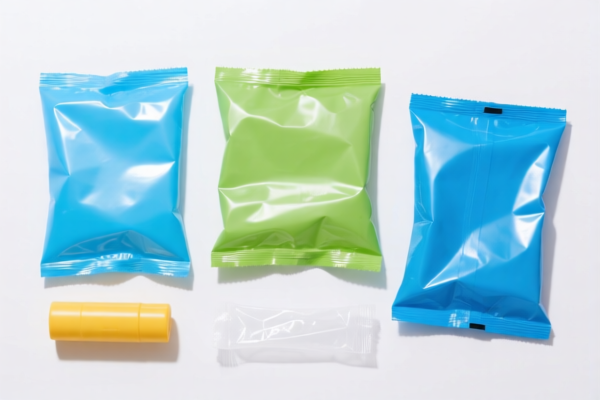
Product Images


AI Analysis
📦 Plastic Packaging Products (Industrial & Commercial)
🌐 HS Code Reference & Customs Clearance Guide | 2026 Tax Regime Analysis | Strategic Compliance Strategy
📌 I. Product Definition: What Exactly Are "Plastic Packaging Products"?
In international trade, "Plastic Packaging Products" is a broad category encompassing various goods made of plastics used for containing, protecting, handling, delivering, and presenting goods. However, customs authorities strictly differentiate them based on function, structure, and specific use.
The core distinction lies in whether the item is: 1. Packaging/Transport Equipment (Boxes, bags, reels, pallets) → Classified under Chapter 39, Heading 3923 or 3924. 2. General Plastic Containers (Bottles, jars, tanks not specifically for transport) → Classified under Chapter 39, Heading 3926. 3. Raw Plastic Materials (Pellets, beads, resins) → Classified under Chapter 39, Heading 3901–3914.
⚠️ Critical Distinction Point:
- If it is a container designed for transport (e.g., pallets, large bags, reels) → 3923.
- If it is a general container (e.g., plastic jars, bins) → 3926.
- If it is raw material (e.g., plastic pellets) → 3901.
📦 II. HS Code Classification Details (2026 Latest Tariff Schedule)
| HS Code | Product Description | Application Scenario | Key Characteristic |
|---|---|---|---|
3923.10.90.00 |
Plastic articles for the conveyance or packing of goods | Industrial bulk bags, shrink wrap, reels, plastic boxes for transport | ✅ Transport/Packing Specific |
3923.90.00.80 |
Other articles for the conveyance or packing of goods | Non-standard plastic packing items, specialized industrial packaging | ✅ Transport/Packing Specific |
3926.90.10.00 |
Other articles of plastic (Containers) | Plastic bottles, jars, cans, general storage containers | ✅ General Containers |
3926.90.99.89 |
Other plastic articles (Not elsewhere specified) | Plastic lids, labels, non-container plastic parts, miscellaneous packaging accessories | ✅ Miscellaneous/Non-Container |
3901.10.50.10 |
Primary forms of polymers of ethylene | Plastic raw materials (pellets, granules, powders) for manufacturing | ✅ Raw Material |
🔍 Key Reminder:
- Items under 3923 are specifically for conveyance or packing. If a plastic box is used for storage in a warehouse but not for transport, it might be classified differently, but for export/import, 3923 is standard for packaging goods.
- Items under 3926 are "other" plastic articles. If a product fits 3923 or 3924, it should not be classified here.
- Raw materials (3901) are completely different from finished packaging. Never confuse pellets with bags!
💰 III. 2026 Latest Tariff Rate Breakdown (Including Surcharge & Policy Add-ons)
✅ Applicable Country: United States (US)
✅ Country of Origin: China (CN)
✅ Effective Date: 2025 November 10 (Includes subsequent imports)
🎯 1. 3923.10.90.00 & 3923.90.00.80 —— Plastic Articles for Conveyance/Packing
| Item | Content |
|---|---|
| Base Rate | 3.0% (ad valorem) |
| Section 301 Surcharge | +25.0% (USITC Footnote 9903.88.01) |
| IEEPA Surcharge | +10.0% (Targeting China/HK products, effective Nov 10, 2025) |
| Total Tax Rate | 38.0% |
| Tax Calculation | CIF Value × 38.0% |
| De Minimis Eligibility | ❌ No (deny_de_minimis) |
| Legal Basis Path | IEEPA:9903.01.25 → IEEPA:9903.01.24 → USITC:3923.10.90.00 / 3923.90.00.80 → FOOTNOTE:9903.88.01 |
📌 Explanation:
- The 25% Section 301 duty applies to most plastic packaging goods from China.
- The 10% IEEPA duty is an additional layer for Chinese-origin plastics.
- Total 38% is a significant cost. Strategic sourcing or supply chain adjustments are highly recommended.
🎯 2. 3926.90.10.00 —— Other Plastic Articles (Containers)
| Item | Content |
|---|---|
| Base Rate | 3.4% (ad valorem) |
| Section 301 Surcharge | +7.5% (USITC Footnote 9903.88.01 - Specific subheading rate) |
| IEEPA Surcharge | +10.0% (Targeting China/HK products) |
| Total Tax Rate | 20.9% |
| Tax Calculation | CIF Value × 20.9% |
| De Minimis Eligibility | ❌ No (deny_de_minimis) |
| Legal Basis Path | IEEPA:9903.01.25 → IEEPA:9903.01.24 → USITC:3926.90.10.00 → FOOTNOTE:9903.88.01 |
📌 Note:
- This category has a lower Section 301 surcharge (7.5%) compared to transport packaging (25%).
- Why? Because these are often considered "general use" containers rather than "industrial transport" goods, which may fall under different trade remedy scopes.
- Total 20.9% is more manageable than 38%, but still substantial.
🎯 3. 3926.90.99.89 —— Other Plastic Articles (Miscellaneous)
| Item | Content |
|---|---|
| Base Rate | 5.3% (ad valorem) |
| Section 301 Surcharge | +7.5% (USITC Footnote 9903.88.01 - Specific subheading rate) |
| IEEPA Surcharge | +10.0% (Targeting China/HK products) |
| Total Tax Rate | 22.8% |
| Tax Calculation | CIF Value × 22.8% |
| De Minimis Eligibility | ❌ No (deny_de_minimis) |
| Legal Basis Path | IEEPA:9903.01.25 → IEEPA:9903.01.24 → USITC:3926.90.99.89 → FOOTNOTE:9903.88.01 |
📌 Note:
- Similar to3926.90.10.00, this category benefits from a lower Section 301 surcharge (7.5%).
- Applicable to plastic lids, labels, or non-standard packaging accessories.
- Total 22.8% is competitive compared to transport packaging.
🎯 4. 3901.10.50.10 —— Polymers of Ethylene (Raw Material)
| Item | Content |
|---|---|
| Base Rate | 6.5% (ad valorem) |
| Section 301 Surcharge | +25.0% (USITC Footnote 9903.88.01) |
| IEEPA Surcharge | +10.0% (Targeting China/HK products) |
| Total Tax Rate | 41.5% |
| Tax Calculation | CIF Value × 41.5% |
| De Minimis Eligibility | ❌ No (deny_de_minimis) |
| Legal Basis Path | IEEPA:9903.01.25 → IEEPA:9903.01.24 → USITC:3901.10.50.10 → FOOTNOTE:9903.88.01 |
📌 Warning:
- Raw plastic materials face the highest total tariff (41.5%).
- This is because plastic resins are critical industrial inputs, and trade policies often target upstream materials.
- Do not misclassify raw materials as finished packaging to avoid penalties.
🛠️ IV. Customs Clearance Practical Advice (Pitfall Avoidance Guide)
✅ 1. Required Documentation Checklist (All Mandatory)
| Document | Must Provide | Description |
|---|---|---|
| ✅ Product Specification Sheet | ✔️ | Detailed description: material type (PE, PP, PET), weight, dimensions, intended use. |
| ✅ Product Photos | ✔️ | Clear images of the product, including labels, packaging, and any markings. Show if it’s a bag, box, or bottle. |
| ✅ Commercial Invoice | ✔️ | Must clearly state "Plastic Packaging" or specific item name. Avoid vague terms like "Plastic Goods." |
| ✅ Packing List | ✔️ | Detail net/gross weight, number of pieces, and packaging type. |
| ✅ Certificate of Origin (CO) | ✔️ | If not from China, may qualify for lower rates. For China, confirms origin for surcharge application. |
| ✅ Material Safety Data Sheet (MSDS) | ✔️ | Required if plastics contain specific chemicals or are considered hazardous. |
✅ 2. Declaration Tips (Key Mantras)
🔥 "Be Specific, Be Accurate, Avoid 'Plastic' Alone!"
| Scenario | Correct Declaration | Wrong Practice |
|---|---|---|
| Bulk Bags/Pallets | "Plastic Pallets for Transport, PE Material" → 3923.10.90.00 |
"Plastic Boxes" → Risk of misclassification |
| Jars/Bottles | "Plastic Jars for Food Storage, PP Material" → 3926.90.10.00 |
"Plastic Packaging" → Vague, leads to audit |
| Plastic Lids/Caps | "Plastic Caps for Bottles" → 3926.90.99.89 |
"Plastic Parts" → Ambiguous |
| Plastic Pellets | "Ethylene Polymer Pellets, Primary Form" → 3901.10.50.10 |
"Plastic Raw Material" → Too vague |
✅ 3. Special Cases Handling
| Situation | Handling Advice |
|---|---|
| OEM Packaging | Provide client order + design specs. Ensure description matches the actual product, not just the client’s name. |
| Mixed Shipment | If a shipment contains both 3923 (packaging) and 3926 (containers), declare separately. Do not lump them under one HS code. |
| Recycled Plastics | If made from recycled content, specify "Recycled Plastic" in description. May affect environmental compliance but not necessarily tariff. |
| Food-Contact Plastics | If used for food, provide FDA Compliance Statement or equivalent. This doesn’t change HS code but is crucial for customs clearance. |
🌍 V. Global Market Comparison (2026 Latest)
| Country/Region | Recommended HS Code | Tariff (China Origin) | Certification | Notes |
|---|---|---|---|---|
| 🇺🇸 USA | 3923.10.90.00 (Packaging) |
38.0% | None specific | High tariff due to 301 + IEEPA. |
| 🇨🇳 China | 3923.10.90.00 |
5.0% | GB Standards | No additional surcharges. |
| 🇪🇺 EU | 3923.10.90.00 |
6.5% | REACH | No Section 301 equivalent. |
| 🇯🇵 Japan | 3923.10.90.00 |
5.0% | PSE (if applicable) | Lower tariffs. |
| 🇬🇧 UK | 3923.10.90.00 |
5.0% | UKCA | Post-Brexit rules. |
📌 Conclusion:
- USA is the most expensive market for Chinese plastic packaging due to 38-41.5% total tariffs.
- EU, Japan, and UK offer more favorable rates (5-6.5%).
- Strategy: If exporting to the US, consider supply chain diversification (e.g., manufacturing in Vietnam, Thailand, or Mexico) to avoid surcharges.
📌 VI. Common Errors & Pitfall Guide (Lessons Learned)
❌ Error 1: Declaring "Plastic Bags" as 3926.90.99.89 (Miscellaneous)
👉 Consequence: If used for transport/packing, it should be 3923.10.90.00. Misclassification can lead to 38% tariff instead of 22.8%, plus penalties.
❌ Error 2: Declaring "Plastic Pellets" as 3923.10.90.00 (Packaging)
👉 Consequence: Raw materials are 3901.10.50.10. Misclassification leads to 41.5% tariff instead of 38%, and potential anti-dumping inquiries.
❌ Error 3: Vague Description: "Plastic Goods"
👉 Consequence: Customs will request additional information, causing delays and potential seizure if not resolved.
❌ Error 4: Ignoring IEEPA Surcharge
👉 Consequence: Failure to account for the 10% IEEPA duty results in underpayment and fines upon audit.
✅ Correct Practice:
"Industrial Plastic Pallets, Polyethylene, Reusable, for Freight Transport, Model P-100" →
3923.10.90.00
"Food-Grade Plastic Jars, Polypropylene, 500ml, for Beverage Packaging, Model J-500" →3926.90.10.00
🎯 VII. Conclusion: Strategic Cost Optimization
🎯 Remember the Mantra:
🔹 "Packaging vs. Container: 38% vs. 21%. Raw Material: 41.5%. Don't Guess, Classify Right!"
🔹 "USA Tariffs are High: 38-41%. Consider Supply Chain Shift for Profitability!"
📌 Pro Tip:
- If your plastic packaging products are originating from Vietnam, Thailand, Malaysia, or Mexico, you may avoid the 25% Section 301 and 10% IEEPA surcharges.
- Apply for an Advance Ruling with US Customs (CBP) for high-volume shipments to ensure correct classification and avoid surprises.
📣 Immediate Action:
📞 Consult a Licensed Customs Broker
📄 Provide Product Specs & Photos
🚀 Optimize Your Supply Chain for Tariff Efficiency
✨ Professional Clearance Starts with Precise Classification!
💼 Every Percentage Point of Tariff Counts!
Customer Reviews
About HS Code Classification
The Harmonized System (HS) is an internationally standardized nomenclature developed by the World Customs Organization (WCO) to classify traded products. Over 200 countries use the HS system as the basis for customs tariffs, trade statistics, and import/export regulations.
Each HS code follows a hierarchical structure:
- Chapter (2 digits) — Broad category of goods (e.g., Chapter 84: Machinery and Mechanical Appliances)
- Heading (4 digits) — More specific grouping within the chapter
- Subheading (6 digits) — Internationally standardized breakdown, used by all WCO member countries
- National subdivisions (8-10 digits) — Country-specific extensions for further classification, such as US HTSUS 10-digit codes
Correct HS code classification is essential for smooth customs clearance, accurate duty payment, and compliance with trade regulations. Misclassification can lead to customs delays, overpayment of duties, or penalties.
When importing from CN to US, the applicable tariff rates may include:
- Most-Favored-Nation (MFN) rate — The standard duty rate applied to WTO members
- General rate — Applied to countries without trade agreements
- Trade remedy duties — Additional tariffs such as Section 301 (anti-dumping), Section 232 (national security), or countervailing duties
The information provided on this page is for reference purposes only. For official classification, please consult with your local customs authority or a licensed customs broker.