Plastic Pallet (Blow Molding)
CN → US| HS Code | Tariff Rate | Origin | Destination | Doc |
|---|---|---|---|---|
| 3923102000 | 35.0% | CN | US | Official Doc |
| 3926100000 | 15.3% | CN | US | Official Doc |
| 3926901000 | 20.9% | CN | US | Official Doc |
| 3923109000 | 38.0% | CN | US | Official Doc |
| 3924102000 | 24.0% | CN | US | Official Doc |
Product Images
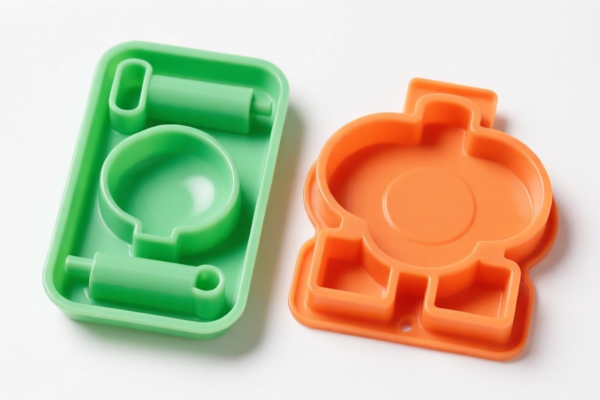
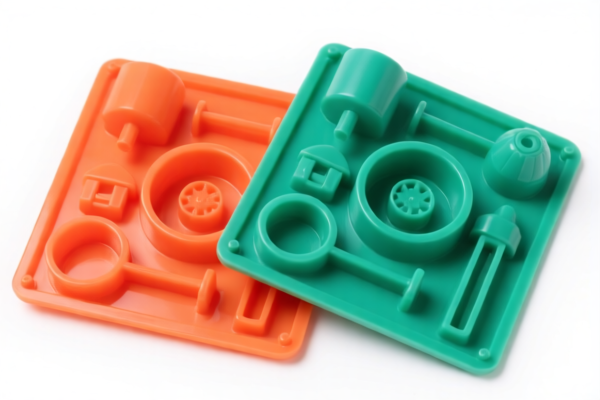

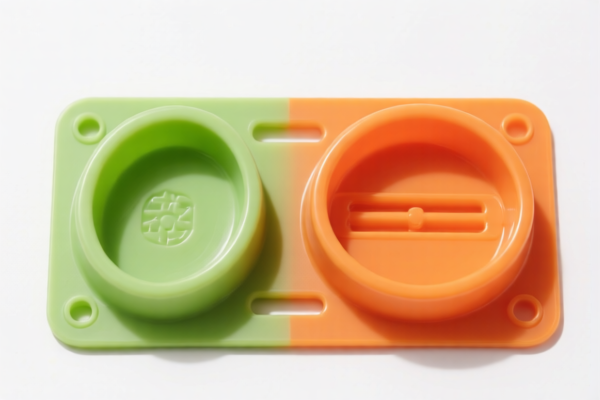
AI Analysis
📦 Plastic Pallets (Blow Molding) | 2026 Customs Clearance & HS Code Guide
🌐 HS Code Reference & Clearance Guide | 2026 Latest Tariff Structure | Strategic Compliance Strategy
📌 I. Product Definition & Classification: What Exactly is a "Plastic Pallet"?
Plastic pallets are rigid, reusable containers used for storing, handling, and transporting goods. In international trade, especially under US customs regulations, they are classified based on their primary function and end-use.
For Blow Molding plastic pallets, two distinct classification paths exist depending on how the pallet is marketed and utilized:
- Transportation/Packaging Supplies (Chapter 39.23): If the pallet is explicitly designed for the transportation or packaging of goods (e.g., holding boxes, crates, or drums), it falls under "Articles for the conveyance or packing of goods."
- General Plastic Articles (Chapter 39.26): If the pallet is classified as a general-purpose plastic item (e.g., for office shelving, school storage, or general household organization) and not strictly for "conveyance/packing," it may fall under "Other articles of plastics."
⚠️ Key Distinction Point:
- HS 3923 Series: Explicitly for "conveyance or packing" (Logistics/Shipping focus).
- HS 3926 Series: General plastic articles, including "office or school supplies" or general "other" plastics (General Utility focus).
📊 II. HS Code Classification Details (2026 Latest Tariff Authority对照)
| HS Code | Product Description | Applicable Scenario | Tax Logic |
|---|---|---|---|
3923.10.20.00 |
Plastic pallets, blow-molded, for packaging or transport | Logistics, shipping, warehouse transport | ✅ Transport/Packaging Focus |
3926.10.00.00 |
Plastic articles, pallet type, blow-molded, office/school use | Office storage, school supplies, general utility | ✅ General/Office Use |
3926.90.10.00 |
Other plastic articles, pallet type, blow-molded | General plastic goods, non-specific use | ✅ General "Other" Plastics |
3923.10.90.00 |
Other plastic articles for conveyance/packing | Non-standard pallets, custom packaging units | ✅ Other Packaging Supplies |
3924.10.20.00 |
Plastic tableware (plates/dishes) | Incorrect but sometimes misclassified due to "plate" shape | ❌ Avoid (Wrong Category) |
🔍 Critical Reminder:
- If the pallet is used in a supply chain/logistics context, prefer 3923 codes.
- If it is marketed as furniture/storage (e.g., under-desk storage), 3926 may apply.
- Do not classify as tableware (3924.10.20.00) even if it looks like a flat plate; end-use dictates classification.
💰 III. 2026 Latest Tariff Rate Breakdown (Including Add-ons)
✅ Applicable Country: United States (US)
✅ Origin: China (CN)
✅ Effective Date: Post-November 2025 (Includes Section 301 & IEEPA)
🎯 1. 3923.10.20.00 —— Plastic Pallets (Transport/Packaging)
| Item | Detail |
|---|---|
| Base Tariff | 0.0% |
| Section 301 Add-on | +25.0% |
| 122 Clause (IEEPA) | +10.0% |
| Total Tax Rate | 35.0% |
| Tax Calculation | CIF Value × 35% |
| De Minimis Exemption | ❌ Denied |
| Legal Path | USITC:3923.10.20.00 → Section 301: 25% → IEEPA: 10% |
📌 Explanation:
- This is the most common code for logistics pallets.
- Although the base rate is 0%, the 35% total tax is heavy due to Section 301 and the 122 Clause.
- No de minimis exemption applies to this category for Chinese origin.
🎯 2. 3926.10.00.00 —— Plastic Pallets (Office/School Use)
| Item | Detail |
|---|---|
| Base Tariff | 5.3% |
| Section 301 Add-on | 0.0% |
| 122 Clause (IEEPA) | +10.0% |
| Total Tax Rate | 15.3% |
| Tax Calculation | CIF Value × 15.3% |
| De Minimis Exemption | ❌ Denied (Note: Check latest de minimis rules for specific exemptions, but generally high-risk for pallets) |
| Legal Path | USITC:3926.10.00.00 → IEEPA: 10% |
📌 Why Lower Tax?
- This code does not trigger Section 301 (25% add-on) because it is classified as "Office/School Supplies" rather than "Transport Equipment."
- Strategy: If your pallet can be legitimately marketed for office or school storage (e.g., "Under-desk Storage Pallet"), you can save ~20% in taxes.
- ⚠️ Risk: Must prove non-logistics use. Customs may challenge if used in warehouses.
🎯 3. 3926.90.10.00 —— Other Plastic Pallets (General Use)
| Item | Detail |
|---|---|
| Base Tariff | 3.4% |
| Section 301 Add-on | +7.5% |
| 122 Clause (IEEPA) | +10.0% |
| Total Tax Rate | 20.9% |
| Tax Calculation | CIF Value × 20.9% |
| De Minimis Exemption | ❌ Denied |
| Legal Path | USITC:3926.90.10.00 → Section 301: 7.5% → IEEPA: 10% |
📌 Explanation:
- A "catch-all" for plastic pallets that don't fit office/school categories.
- Lower than3923but higher than3926.10.
- Suitable for general household or non-industrial use.
🎯 4. 3923.10.90.00 —— Other Plastic Packaging Articles
| Item | Detail |
|---|---|
| Base Tariff | 3.0% |
| Section 301 Add-on | +25.0% |
| 122 Clause (IEEPA) | +10.0% |
| Total Tax Rate | 38.0% |
| Tax Calculation | CIF Value × 38.0% |
| De Minimis Exemption | ❌ Denied |
| Legal Path | USITC:3923.10.90.00 → Section 301: 25% → IEEPA: 10% |
📌 Warning:
- This is the most expensive option (38%).
- Only use if the pallet is a custom packaging component that doesn't fit the standard "pallet" definition of3923.10.20.
- Avoid if possible; it offers no tax advantage over3923.10.20but has a higher base rate.
🎯 5. 3924.10.20.00 —— Plastic Tableware (Plates)
| Item | Detail |
|---|---|
| Base Tariff | 6.5% |
| Section 301 Add-on | +7.5% |
| 122 Clause (IEEPA) | +10.0% |
| Total Tax Rate | 24.0% |
| Tax Calculation | CIF Value × 24.0% |
| De Minimis Exemption | ❌ Denied |
📌 ⚠️ HIGH RISK MISCLASSIFICATION:
- Some traders try to classify flat plastic pallets as "Plates" to reduce Section 301 rates.
- Customs Warning: If the item is clearly a pallet (with fork entry points, specific dimensions for forklifts), classifying it as tableware is fraudulent.
- Penalty: Seizure, fines, and potential criminal charges.
- Only use if the product is genuinely a plate/dish and not a pallet.
🛠️ IV. Clearance Practical Advice (Avoiding Pitfalls)
✅ 1. Documentation Checklist
| Document | Required? | Notes |
|---|---|---|
| ✅ Product Brochure | ✔️ | Show intended use (Office vs. Warehouse) |
| ✅ Photos (with Scale) | ✔️ | Highlight "Fork Entry" features if logistics pallet |
| ✅ Commercial Invoice | ✔️ | Clearly state: "Plastic Pallet for Office Storage" or "Plastic Pallet for Logistics" |
| ✅ Bill of Lading | ✔️ | Consistent with invoice description |
| ✅ Material Declaration | ✔️ | Confirm plastic type (HDPE, PP, etc.) |
✅ 2. Classification Strategy (The "Tax Saving" Trick)
🔥 "Logistics? 35%. Office? 15.3%. Don't fake it, just market it right!"
| Scenario | Recommended HS Code | Tax Rate | Strategy |
|---|---|---|---|
| Industrial/Warehouse Use | 3923.10.20.00 |
35.0% | Declare as "Transport Pallet." No avoidance possible. |
| Office/School Storage | 3926.10.00.00 |
15.3% | Market as "Under-Desk Storage Unit" or "School Supply Organizer." |
| General Home Use | 3926.90.10.00 |
20.9% | Market as "Household Storage Rack." |
| Custom Packaging | 3923.10.90.00 |
38.0% | Only if unique shape doesn't fit standard pallet definitions. |
📌 Key Tip:
- If you ship pallets to a furniture store or office supply retailer, use3926.10.00.00.
- If you ship to a logistics company or warehouse, use3923.10.20.00.
- Misalignment between buyer, invoice, and HS code is the #1 cause of customs delays.
✅ 3. Special Cases
| Situation | Advice |
|---|---|
| OEM Pallets with Logo | Ensure logo doesn't imply "Food Service" or "Tableware" unless using 3924 (risky). |
| Foldable Pallets | Still classified as pallets. Foldable feature doesn't change HS code. |
| Mixed Shipment (Pallets + Accessories) | Declare pallets separately. Do not bundle with non-pallet items to confuse classification. |
🌍 V. Global Market Comparison (2026)
| Country/Region | Recommended HS Code | Tariff (China Origin) | Notes |
|---|---|---|---|
| 🇺🇸 USA | 3923.10.20.00 |
35.0% | High taxes due to Section 301 + IEEPA. |
| 🇨🇳 China | 3926.90.90.00 |
~5-6% | Low base import tax. |
| 🇪🇺 EU | 3926.90.90 |
0-6.5% | Varies by member state. No "122 Clause." |
| 🇯🇵 Japan | 3926.90.90 |
3-5% | Stable tariff structure. |
📌 Conclusion:
- The US market is the most expensive due to political tariffs.
- EU/Japan offer lower barriers but require strict quality/REACH compliance.
📌 VI. Common Mistakes & Pitfalls (Lessons Learned)
❌ Mistake 1: Declaring a warehouse pallet as "Plastic Plate" (3924.10.20.00)
👉 Result: Customs audit, seizure, and fines. The 24% tax looks better, but the risk is not worth it.
❌ Mistake 2: Using 3923.10.90.00 for standard pallets
👉 Result: You pay 38% tax instead of 35%. No benefit, just higher cost.
❌ Mistake 3: Ignoring the "122 Clause" (IEEPA)
👉 Result: Unexpected 10% tax on top of Section 301. Always factor this in.
✅ Correct Approach:
"Match the End-Use: Office = 3926.10, Logistics = 3923.10. Never misclassify!"
🎯 VII. Conclusion: Smart Classification, Lower Costs
🎯 Remember:
🔹 "Office Pallets save 20% vs. Logistics Pallets!"
🔹 "122 Clause adds 10% to everything."
🔹 "Never lie about the product type; market it correctly."
📌 Pro Tip:
If you are unsure about the classification, apply for a Binding Tariff Information (BTI) or USCBP Advance Ruling before shipment.
For US imports, ensure your commercial invoice clearly states the intended use to support your chosen HS code.
📣 Action Plan:
📞 Consult your customs broker with product photos and end-user profile.
📝 Label your goods accurately: "Plastic Storage Pallet – Office Use" or "Logistics Pallet – Transport Use."
🚀 Save taxes, avoid delays, and clear customs smoothly!
✨ Professional Clearance Starts with Accurate Classification!
💼 Every percentage point matters in 2026 tariffs.
Customer Reviews
About HS Code Classification
The Harmonized System (HS) is an internationally standardized nomenclature developed by the World Customs Organization (WCO) to classify traded products. Over 200 countries use the HS system as the basis for customs tariffs, trade statistics, and import/export regulations.
Each HS code follows a hierarchical structure:
- Chapter (2 digits) — Broad category of goods (e.g., Chapter 84: Machinery and Mechanical Appliances)
- Heading (4 digits) — More specific grouping within the chapter
- Subheading (6 digits) — Internationally standardized breakdown, used by all WCO member countries
- National subdivisions (8-10 digits) — Country-specific extensions for further classification, such as US HTSUS 10-digit codes
Correct HS code classification is essential for smooth customs clearance, accurate duty payment, and compliance with trade regulations. Misclassification can lead to customs delays, overpayment of duties, or penalties.
When importing from CN to US, the applicable tariff rates may include:
- Most-Favored-Nation (MFN) rate — The standard duty rate applied to WTO members
- General rate — Applied to countries without trade agreements
- Trade remedy duties — Additional tariffs such as Section 301 (anti-dumping), Section 232 (national security), or countervailing duties
The information provided on this page is for reference purposes only. For official classification, please consult with your local customs authority or a licensed customs broker.