Plastic Paper Covered Business Card Holders
CN → US| HS Code | Tariff Rate | Origin | Destination | Doc |
|---|---|---|---|---|
| 3926909989 | 22.8% | CN | US | Official Doc |
| 3926901000 | 20.9% | CN | US | Official Doc |
| 4820300040 | 35.0% | CN | US | Official Doc |
| 4820900000 | 35.0% | CN | US | Official Doc |
| 3926909989 | 22.8% | CN | US | Official Doc |
Product Images
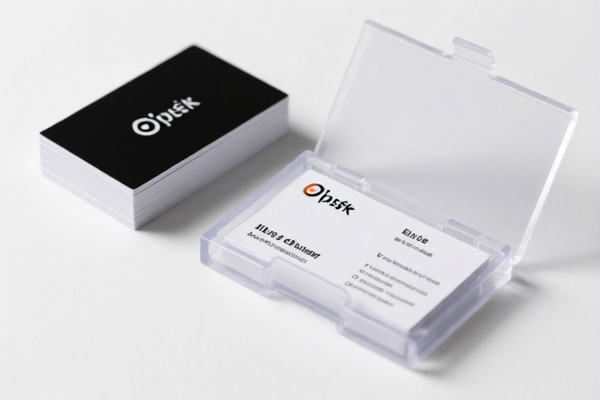
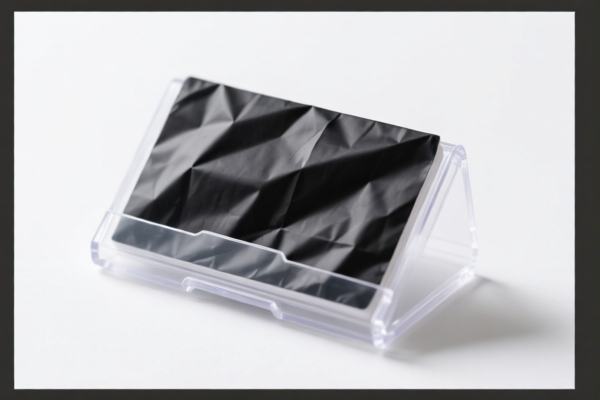
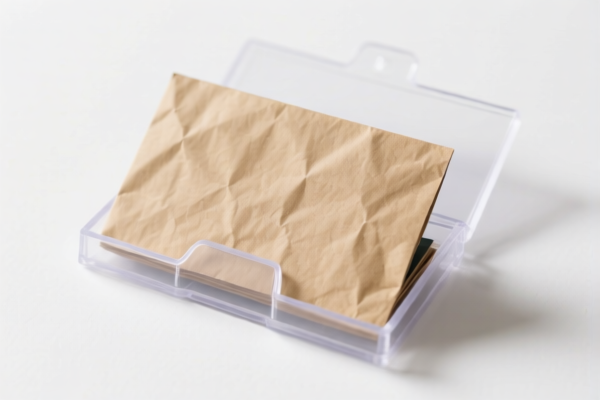
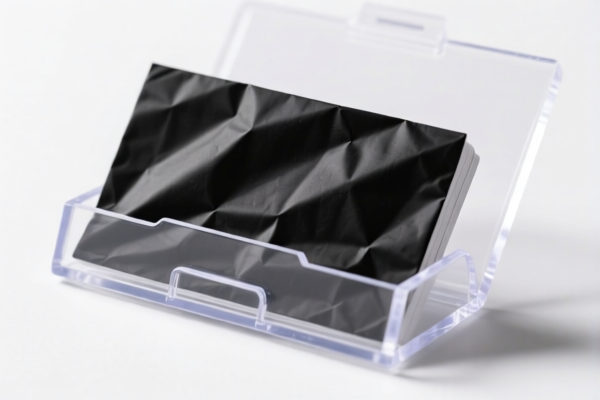
AI Analysis
🃏 Business Card Holders (Plastic Paper Covered)
🌐 HS Code Reference & Customs Clearance Guide | 2026 Latest Tariff Breakdown | Professional Strategy
📌 I. Product Definition & Classification: What Exactly Are You Importing?
"Business Card Holders" seem simple, but customs classification depends heavily on the material composition and primary use. The term "Plastic Paper Covered" is ambiguous and can lead to two completely different HS Codes with vastly different tax implications.
1. Pure Plastic Holders: - Made entirely of plastic materials. - Classified under Chapter 39 (Plastics and articles thereof). - Key Indicator: No paper or cardboard components in the main structure.
2. Paper/Cardboard Covered Holders: - Made of plastic cores or frames, but covered or laminated with paper/paperboard. - Classified under Chapter 48 (Paper and paperboard; articles of paper pulp, of paper or paperboard). - Key Indicator: The visible surface or structural integrity relies on paper/cardboard.
⚠️ Critical Distinction Point: - If the product is primarily plastic (even if coated slightly), it often falls under 3926.90. - If the product is primarily paper/cardboard (even if plastic-backed or coated), it often falls under 4820.90 or 4820.30. - Misclassification Risk: Declaring a paper-covered holder as "pure plastic" to get lower base tariffs can trigger audits, penalties, and retroactive duties if customs inspects the physical goods.
📦 II. HS Code Classification Details (Based on Provided Data)
| HS Code | Product Description | Primary Material | Total Tax Rate | Tariff Composition |
|---|---|---|---|---|
3926.90.99.89 |
Plastic Business Card Holder (Other plastic articles) | Plastic | 22.8% | Base: 5.3% Section 301 (7.5%) Section 122 (10%) |
3926.90.10.00 |
Plastic Business Card Holder (Office stationery) | Plastic | 20.9% | Base: 3.4% Section 301 (7.5%) Section 122 (10%) |
4820.30.00.40 |
Plastic-Paper Covered Vehicle Registration File Folder (Folder form) | Paper/Cardboard with Plastic Cover | 35.0% | Base: 0.0% Section 301 (25.0%) Section 122 (10%) |
4820.90.00.00 |
Plastic-Paper Covered File Holder (Clamp/Holder form) | Paper/Cardboard | 35.0% | Base: 0.0% Section 301 (25.0%) Section 122 (10%) |
🔍 Analysis: - Plastic-only holders benefit from a lower base tariff (3.4% - 5.3%). - Paper-covered holders have a 0% base tariff but suffer from a massive 25% Section 301 surcharge, making their total tax burden (35%) significantly higher than plastic-only alternatives. - Note on HS 4820.30.00.40: This specific code mentions "Vehicle Registration File Folder." If your business card holder resembles a small folder for documents, customs may scrutinize this classification. Ensure the product is clearly a "card holder" and not a "document folder" to avoid mismatched descriptions.
💰 III. 2026 Tariff Rate Breakdown (Detailed Analysis)
✅ Context: United States Import (US)
✅ Origin: China (CN)
✅ Applicable Tariffs: Section 301 (7.5% or 25%) + Section 122 (10%)
🎯 Option 1: HS Code 3926.90.10.00 (Best for Plastic Stationery)
Recommended if the product is clearly office stationery made of plastic.
| Item | Detail |
|---|---|
| Base Tariff | 3.4% |
| Section 301 Surcharge | 7.5% |
| Section 122 Surcharge | 10.0% |
| Total Effective Tax | 20.9% |
| Calculation | CIF Value × 20.9% |
| De Minimis Eligibility | ❌ No (De Minimis does not apply to Section 301/122 duties) |
📌 Why this code? - It specifically identifies the item as office stationery. - Lower base tariff (3.4%) vs. other plastic goods (5.3%). - Total tax is 20.9%, the lowest among all options.
🎯 Option 2: HS Code 3926.90.99.89 (General Plastic Articles)
Use if the product does not fit the specific "office stationery" definition strictly.
| Item | Detail |
|---|---|
| Base Tariff | 5.3% |
| Section 301 Surcharge | 7.5% |
| Section 122 Surcharge | 10.0% |
| Total Effective Tax | 22.8% |
| Calculation | CIF Value × 22.8% |
📌 Comparison: - $1.9\%$ higher than Option 1. - Useful if the item is generic or used in non-office settings.
🎯 Option 3: HS Code 4820.90.00.00 or 4820.30.00.40 (Paper/Cardboard Based)
Avoid if possible due to high total tax.
| Item | Detail |
|---|---|
| Base Tariff | 0.0% |
| Section 301 Surcharge | 25.0% |
| Section 122 Surcharge | 10.0% |
| Total Effective Tax | 35.0% |
| Calculation | CIF Value × 35.0% |
📌 Warning: - Although the base tariff is 0%, the 25% Section 301 surcharge (applicable to paper products) makes this 14% more expensive than plastic options. - Only use this if the product is legally defined as "paper/cardboard articles" under HS Chapter 48.
🛠️ IV. Customs Clearance Practical Advice
✅ 1. Documentation Checklist (Essential for Smooth Clearance)
| Document | Required | Notes |
|---|---|---|
| Commercial Invoice | ✔️ | Must clearly state "Business Card Holder," material (Plastic/Paper), and HS Code. |
| Product Photos | ✔️ | High-resolution images showing texture (plastic vs. paper) and structure. |
| Material Composition Sheet | ✔️ | Specify % of plastic vs. paper. Crucial for Chapter 39 vs. 48 classification. |
| Packing List | ✔️ | List quantity, weight, and dimensions. |
| Manufacturer’s Declaration | ✔️ | Confirm origin (China) and material composition. |
✅ 2. Strategic Classification Tips
🔥 Key Rule: "Material Defines Chapter, Use Defines Subheading"
| Scenario | Recommended HS Code | Reasoning |
|---|---|---|
| 100% Plastic (e.g., PVC, PP, Acrylic) | 3926.90.10.00 |
Best for office stationery; lowest total tax (20.9%). |
| Plastic with Minimal Paper Label | 3926.90.10.00 |
If paper is only a label/sticker, it remains a plastic article. |
| Plastic Core + Paper Wrap/Cover | 4820.90.00.00 |
If paper is the primary visible/functional material, it shifts to Chapter 48. Expect 35% tax. |
| Folder-Shaped Card Holder | 4820.30.00.40 |
If it resembles a document folder, customs may apply this. Still 35% tax. |
✅ 3. Common Pitfalls & Avoidance Strategies
❌ Pitfall 1: Calling it "Plastic" when it’s Paper-Covered - Risk: Customs inspection reveals paper layer → Re-classification to Chapter 48 → 35% tax applied retroactively + penalties. - Solution: Be honest in description. If it’s paper-covered, declare Chapter 48. If you can switch suppliers to 100% plastic, do so to save 14%.
❌ Pitfall 2: Vague Description "Card Holder" - Risk: Customs officer assigns arbitrary code based on visual inspection. - Solution: Use precise description: "Business Card Holder, 100% Plastic, PVC Material, Office Stationery, No Paper Components."
❌ Pitfall 3: Ignoring Section 122 - Risk: Assuming only Section 301 applies. - Solution: Remember, Section 122 (10%) applies to all Chinese imports of this nature. Total tax is Base + 301 + 122.
🌍 V. Global Market Comparison (Quick Reference)
| Market | Recommended HS | Approx. Total Duty | Notes |
|---|---|---|---|
| 🇺🇸 USA | 3926.90.10.00 |
20.9% | Lowest tax if 100% plastic. |
| 🇨🇳 China (Export) | N/A | 0% | No export tax for these goods. |
| 🇪🇺 EU | 3926.90 | ~4.5% | No Section 301/122 equivalents. Much cheaper. |
| 🇬🇧 UK | 3926.90 | ~4.5% | Post-Brexit tariffs similar to EU. |
📌 Conclusion: - The US is the most expensive market for these goods due to Section 301 and 122 tariffs. - Plastic-only is significantly cheaper than paper-covered.
📌 VI. Final Verdict & Action Plan
🎯 Recommendation:
If you have control over manufacturing:
1. Switch to 100% Plastic: Ensure no paper components. Use 3926.90.10.00.
- Tax Savings: $35\% - 20.9\% = \mathbf{14.1\%}$ lower tax.
- Benefit: Lower base tariff (3.4% vs 0% is irrelevant when 301 is 25% vs 7.5%).
- If Paper-Covered is Unavoidable:
- Use
4820.90.00.00. - Accept 35% total tax.
- Price accordingly or absorb the cost.
✅ Clearance Checklist:
- [ ] Verify 100% Plastic composition with supplier.
- [ ] Label product as "Plastic Office Stationery" on invoice.
- [ ] Declare HS Code
3926.90.10.00. - [ ] Prepare for 20.9% duty payment upon arrival in the US.
📣 Immediate Action:
📞 Contact your freight forwarder with product photos and material specs. 📄 Request an Advance Ruling from CBP if the product is borderline (plastic/paper mix). 🚀 Optimize supply chain: 100% plastic saves you 14.1% in US import duties.
✨ Professional Clearance Starts with Precise Classification!
💼 Every percentage point matters. Don’t let ambiguous materials cost you profits!
Customer Reviews
About HS Code Classification
The Harmonized System (HS) is an internationally standardized nomenclature developed by the World Customs Organization (WCO) to classify traded products. Over 200 countries use the HS system as the basis for customs tariffs, trade statistics, and import/export regulations.
Each HS code follows a hierarchical structure:
- Chapter (2 digits) — Broad category of goods (e.g., Chapter 84: Machinery and Mechanical Appliances)
- Heading (4 digits) — More specific grouping within the chapter
- Subheading (6 digits) — Internationally standardized breakdown, used by all WCO member countries
- National subdivisions (8-10 digits) — Country-specific extensions for further classification, such as US HTSUS 10-digit codes
Correct HS code classification is essential for smooth customs clearance, accurate duty payment, and compliance with trade regulations. Misclassification can lead to customs delays, overpayment of duties, or penalties.
When importing from CN to US, the applicable tariff rates may include:
- Most-Favored-Nation (MFN) rate — The standard duty rate applied to WTO members
- General rate — Applied to countries without trade agreements
- Trade remedy duties — Additional tariffs such as Section 301 (anti-dumping), Section 232 (national security), or countervailing duties
The information provided on this page is for reference purposes only. For official classification, please consult with your local customs authority or a licensed customs broker.