Plastic Paper Covered Coated Handbags
CN → USProduct Images
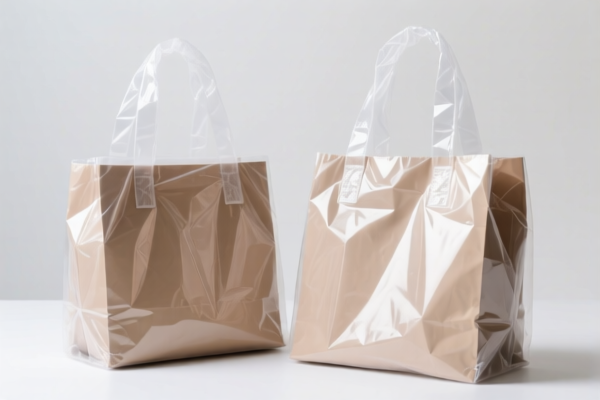


AI Analysis
🎒 Plastic Paper Covered Coated Handbags (Plastic-Coated Paper Handbags)
🌐 HS Code Reference & Customs Clearance Guide | 2026 Latest Tariff Analysis | Expert-Level Strategy
📌 I. Product Definition & Classification: What Exactly Is "Plastic Paper Covered Coated Handbags"?
These are handbags made primarily from paper, with a plastic coating or layer applied to improve durability, water resistance, and aesthetics. They are not pure plastic bags, nor are they pure paper bags.
⚠️ Critical Distinction:
- If the core material is paper and the plastic is a coating or lamination → Likely 4202.32 (Paper)
- If the core material is plastic and paper is just a decorative layer → Likely 4202.32 or 4202.22 (Plastic)
- If it's a hybrid with no dominant material → Customs may classify based on principal use or packaging intent🔍 Key Question for Classification:
- Is the paper the structural backbone?
- Is the plastic just a surface treatment?
- Is the product primarily used for shopping, fashion, or gifting?
📦 II. HS Code Classification Details (2026 Official Tariff Reference)
| HS Code | Product Description | Applicable Scenario | Dominant Material |
|---|---|---|---|
| 4202.32.00.00 | Handbags with outer surface of paper or paperboard, whether or not covered with plastic | Paper-based bags with plastic coating/lamination | ✅ Paper |
| 4202.32.90.00 | Other handbags with outer surface of paper or paperboard | Less common variants, non-standard sizes | ✅ Paper |
| 4202.22.00.00 | Handbags with outer surface of plastic sheeting | If plastic is the main structural material, even with paper design | ✅ Plastic |
| 4202.21.00.00 | Handbags with outer surface of leather | ❌ Not applicable (unless leather present) | ❌ No |
| 4202.92.00.00 | Other containers, handbags, and similar containers | If no clear paper/plastic dominance | ⚠️ Hybrid/Other |
🔍 Key Reminder:
- Paper-coated plastic bags (plastic base, paper decorative layer) → 4202.22.00.00
- Plastic-coated paper bags (paper base, plastic coating) → 4202.32.00.00
- Ambiguous cases → May be classified as 4202.92.00.00 ("Other"), leading to higher scrutiny and potential delays
💰 III. 2026 Latest Tariff Rates (US Market Focus)
✅ Applicable Country: United States (US)
✅ Origin: China (CN)
✅ Effective Date: November 10, 2025 (current and future imports)
🎯 1. 4202.32.00.00 — Handbags with outer surface of paper or paperboard (plastic-coated paper bags)
| Item | Content |
|---|---|
| Base Tariff Rate | 3.4% (ad valorem) |
| USITC Additional Tariff (Section 301) | +25% |
| IEEPA Additional Tariff (China-Specific) | +10% (effective Nov 10, 2025) |
| Total Tariff Rate | 38.4% |
| Tax Calculation | CIF Value × 38.4% |
| De Minimis Exemption Eligible? | ❌ No (de minimis = denied) |
| Legal Reference Path | IEEPA:9903.01.25 → IEEPA:9903.01.24 → USITC:4202.32.00.00 → FOOTNOTE:9903.88.01 |
📌 Explanation:
- 3.4% is the base rate for paper handbags;
- +25% is the Section 301 additional duty for Chinese-origin goods;
- +10% is the IEEPA tariff specifically targeting China/HK;
- Total = 38.4% → Extremely High Tariff, must be factored into pricing!
🎯 2. 4202.22.00.00 — Handbags with outer surface of plastic sheeting (paper-coated plastic bags)
| Item | Content |
|---|---|
| Base Tariff Rate | 5.9% (ad valorem) |
| USITC Additional Tariff (Section 301) | +25% |
| IEEPA Additional Tariff (China-Specific) | +10% |
| Total Tariff Rate | 40.9% |
| Tax Calculation | CIF Value × 40.9% |
| De Minimis Exemption Eligible? | ❌ No |
| Legal Reference Path | IEEPA:9903.01.25 → IEEPA:9903.01.24 → USITC:4202.22.00.00 → FOOTNOTE:9903.88.01 |
📌 Note:
- Slightly higher base rate than paper-based bags;
- Still extremely high total tariff;
- Even if labeled "paper-coated plastic," if plastic is structural, it falls here.
🛠️ IV. Customs Clearance Practical Advice (Real-World Avoidance Guide)
✅ 1. Required Documentation Checklist (All Must Be Provided)
| Document | Must Provide? | Notes |
|---|---|---|
| ✅ Product Specification Sheet | ✔️ | Include material composition, coating thickness, dimensions |
| ✅ Material Composition Statement | ✔️ | Clearly state % of paper vs. plastic, which is the base |
| ✅ Product Photos (Label & Structure) | ✔️ | Show front/back, coating, seams, handles |
| ✅ Third-Party Test Reports | ✔️ | FSC, REACH, RoHS (if applicable), durability tests |
| ✅ Commercial Invoice | ✔️ | Use precise product name: “Plastic-Coated Paper Handbag” |
| ✅ Certificate of Origin (CO) | ✔️ | If non-China, may qualify for lower tariffs |
| ✅ Packing List | ✔️ | Show quantity, packaging type, and whether bags are empty or full |
✅ 2. Declaration Tips (Golden Rules)
🔥 “Material Truth, Structure Truth, Name Truth!”
| Scenario | Correct Declaration | Wrong Action |
|---|---|---|
| Paper-based + plastic coating | 4202.32.00.00 |
Declare as 4202.22.00.00 → 40.9% instead of 38.4% |
| Plastic-based + paper layer | 4202.22.00.00 |
Declare as 4202.32.00.00 → Risk of audit & penalties |
| Hybrid/unclear material | 4202.92.00.00 |
Guess wrong → 38.4% or 40.9% + audit risk |
| "Paper bag" with plastic lining | 4202.32.00.00 |
If plastic >50% → reclassify |
✅ 3. Special Cases Handling
| Case | Handling Advice |
|---|---|
| Custom-Printed Paper Bags with Plastic Glaze | Provide design proof + coating spec → confirm paper base |
| Eco-Friendly "Bioplastic-Coated Paper" Bags | Still likely 4202.32.00.00, but may qualify for green incentives in EU |
| Bags with Mixed Materials (e.g., Fabric + Paper) | May fall under 4202.92.00.00 → higher scrutiny |
| Sample Bags for Trade Shows | Use temporary admission (ATA Carnet) to avoid duty |
🌍 V. Global Market Comparison (2026 Tariff Overview)
| Country/Region | Recommended HS Code | Tariff Rate | Certification | Notes |
|---|---|---|---|---|
| 🇺🇸 USA | 4202.32.00.00 |
38.4% (China) | FSC, REACH | High tariff for Chinese origin |
| 🇨🇳 China | 4202.32.00.00 |
5% | CCC | Low domestic import tax |
| 🇪🇺 EU | 4202.32.00.00 |
0% (if FSC certified) | CE, REACH, FSC | Lower tariffs if eco-certified |
| 🇦🇺 Australia | 4202.32.00.00 |
5% | RCM | Moderate tariff |
| 🇯🇵 Japan | 4202.32.00.00 |
0% | PSE, FSC | No additional duty |
📌 Conclusion:
- USA is the most expensive market due to Section 301 + IEEPA;
- EU and Japan offer significant tariff advantages if eco-certified;
- Consider diversifying production to Vietnam/Mexico/Thailand to avoid China-based tariffs.
📌 VI. Common Mistakes & Pitfalls (Real Cost Warnings)
❌ Mistake 1: Labeling "Plastic-Coated Paper Bag" but declaring as "Plastic Bag"
👉 Result: 40.9% instead of 38.4% + audit risk
❌ Mistake 2: Not specifying material composition in invoice
👉 Result: Customs holds shipment for clarification → delay + storage fees
❌ Mistake 3: Using "Paper Bag" without noting plastic coating
👉 Result: Under-declaration → penalties + potential seizure
❌ Mistake 4: Claiming "Paper Bag" but plastic is >50% by weight
👉 Result: Re-classified as 4202.22.00.00 → 40.9% + back-dated duties
✅ Correct Practice:
"Plastic-Coated Paper Handbag, 100% Recycled Paper Base, Water-Resistant PE Coating, 30x25x15 cm, FSC Certified, Model X123, No Plastic Lining Inside"
🎯 VII. Conclusion: Precise Classification = Maximum Savings
🎯 Remember the Rules:
🔹 “Paper Base = 38.4% | Plastic Base = 40.9% | Hybrid = Risk Zone!”
🔹 “HS Code = Tariff Key; Misclassify = Pay Double!”
📌 Pro Tip:
If your handbags are produced in Vietnam, Mexico, Thailand, or Malaysia, you may avoid IEEPA 10% surcharge, reducing total tariff to 28.4% or 30.9%!
Recommend applying for Advance Ruling (Customs Pre-Determination) before shipment.
📣 Take Action Now:
📞 Contact a certified customs broker + Submit material specs + Apply for HS Code pre-ruling
🚀 Ensure your plastic paper handbags clear customs smoothly, save costs, and maximize profit!
✨ Professional Classification, Efficient Clearance, Smart Logistics!
💼 Every dollar saved is a dollar earned!
Customer Reviews
About HS Code Classification
The Harmonized System (HS) is an internationally standardized nomenclature developed by the World Customs Organization (WCO) to classify traded products. Over 200 countries use the HS system as the basis for customs tariffs, trade statistics, and import/export regulations.
Each HS code follows a hierarchical structure:
- Chapter (2 digits) — Broad category of goods (e.g., Chapter 84: Machinery and Mechanical Appliances)
- Heading (4 digits) — More specific grouping within the chapter
- Subheading (6 digits) — Internationally standardized breakdown, used by all WCO member countries
- National subdivisions (8-10 digits) — Country-specific extensions for further classification, such as US HTSUS 10-digit codes
Correct HS code classification is essential for smooth customs clearance, accurate duty payment, and compliance with trade regulations. Misclassification can lead to customs delays, overpayment of duties, or penalties.
When importing from CN to US, the applicable tariff rates may include:
- Most-Favored-Nation (MFN) rate — The standard duty rate applied to WTO members
- General rate — Applied to countries without trade agreements
- Trade remedy duties — Additional tariffs such as Section 301 (anti-dumping), Section 232 (national security), or countervailing duties
The information provided on this page is for reference purposes only. For official classification, please consult with your local customs authority or a licensed customs broker.