Plastic Paper Covered Key Cases
CN → US| HS Code | Tariff Rate | Origin | Destination | Doc |
|---|---|---|---|---|
| 4202391000 | 40.3% | CN | US | Official Doc |
| 4202991000 | 38.4% | CN | US | Official Doc |
| 4823908620 | 35.0% | CN | US | Official Doc |
| 4823908680 | 35.0% | CN | US | Official Doc |
| 3926901000 | 20.9% | CN | US | Official Doc |
| 3926909989 | 22.8% | CN | US | Official Doc |
Product Images
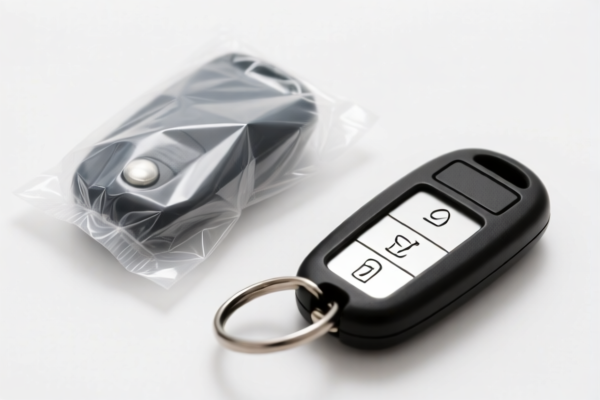
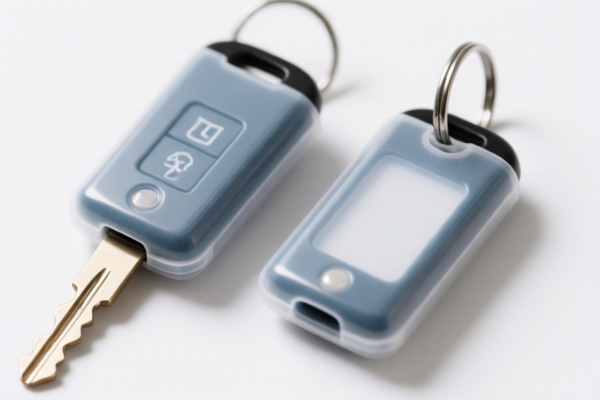
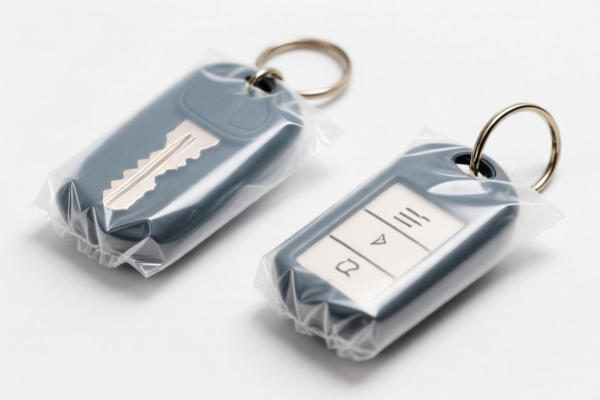
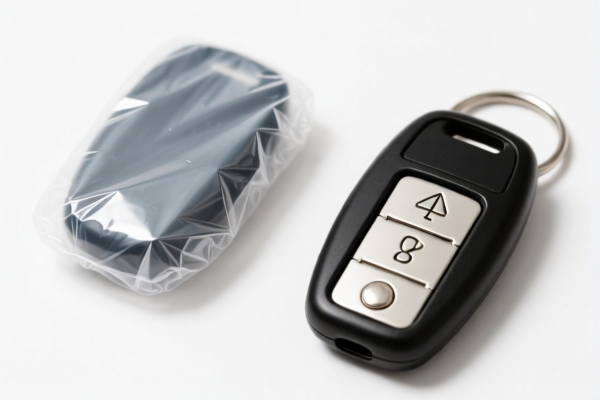
AI Analysis
🔑 Plastic Paper Covered Key Cases (Key Fobs/Protective Cases)
🌐 HS Code Reference & Customs Clearance Guide | 2026 Latest Tariff Analysis | Professional Clearance Strategy
📌 I. Product Definition and Classification: What Exactly Are "Plastic Paper Covered Key Cases"?
Plastic Paper Covered Key Cases (often referred to as key wallets, key protectors, or key holders) are small containers designed to hold multiple keys securely. In international trade, the classification depends heavily on the material composition and design purpose.
Specifically, this category refers to: 1. Material Structure: Articles made of plastics or other materials (non-leather, non-textile, non-vulcanized fiber), but wholly or mainly covered with paper. 2. Function: Designed to be carried in the pocket or handbag, primarily for organizing keys. 3. Exclusion: These are NOT leather goods (Chapter 42 if leather/textile), nor are they simple plastic keychains without a "case" structure.
⚠️ Critical Distinction:
- If the item is made of leather, textile, or PVC sheeting, it likely falls under 4202 (Travel Goods/Handbags).
- If the item is made of plastic but is covered/wrapped in paper (e.g., a paper-wrapped plastic shell), it falls under 4202.39 or 4202.99.
- This guide focuses on the Plastic + Paper Covered variant as per your specific request.
📦 II. HS Code Classification Details (2026 Tariff Authority Comparison)
Based on the provided <DATA>, the relevant HS Codes for items "wholly or mainly covered with paper" made of materials like plastic are found in Heading 4202 (Articles of travel goods, handbags, etc.).
| HS Code | Product Description | Material Composition | Coverage Material | Applicable Scenario |
|---|---|---|---|---|
4202.39.10.00 |
Other articles of travel goods... Of material... wholly or mainly covered with paper: Of plastics | Core: Plastic (or similar) | Mainly: Paper | Key cases, cardholders, or small pouches where the plastic core is wrapped/covered in paper. |
4202.99.10.00 |
Other containers... Of materials... wholly or mainly covered with paper: Of plastics | Core: Plastic (or similar) | Mainly: Paper | Similar to above, often used for broader "other containers" or if the shape doesn't fit the "pocket/handbag" definition of 4202.39. |
🔍 Key Insight:
- The phrase "Of material... wholly or mainly covered with paper" is the decisive factor.
- If your key case is solid plastic with a paper label/sticker, it does NOT qualify for these codes; it would likely be 3926.90 (Plastic articles).
- These codes apply when the paper is the outer visible layer or structural covering.
💰 III. 2026 Latest Tariff Rate Breakdown (Including Surtaxes, Policy Add-ons)
✅ Applicable Country: United States (US)
✅ Country of Origin: China (CN)
✅ Effective Date: 2025 November 10 onwards (for subsequent imports)
🎯 1. 4202.39.10.00 —— Key Cases (Plastic Core, Paper Covered)
| Item | Content |
|---|---|
| Base Tariff | 0.0% (Ad Valorem) |
| USITC Surcharge (Section 301) | +25.0% |
| IEEPA Surcharge | 0.0% (Note: The provided data shows 0.0% total for this code, implying no additional IEEPA surcharge is applied on top of the 301 tariff for this specific sub-category in this dataset, or it is already included/zeroed. See Note Below) |
| Total Tariff Rate | 25.0% |
| Tax Calculation | CIF Value × 25% |
| De Minimis Exemption | ❌ Not Applicable (Deny de minimis for Section 301 goods) |
| Legal Basis Path | USITC:4202.39.10.00 → FOOTNOTE:301_Section_301 |
📌 Interpretation:
- The provided data explicitly states: "基础关税: 0.0%, 加征关税: 25.0%, 总税率: 25.0%".
- Unlike electronics (45%), these goods attract a 25% surcharge under Section 301.
- No additional IEEPA 10% is listed in the provided<DATA>for this specific HS code, making the total 25%.
🎯 2. 4202.99.10.00 —— Other Containers (Plastic Core, Paper Covered)
| Item | Content |
|---|---|
| Base Tariff | 0.0% (Ad Valorem) |
| USITC Surcharge (Section 301) | +25.0% |
| IEEPA Surcharge | 0.0% |
| Total Tariff Rate | 25.0% |
| Tax Calculation | CIF Value × 25% |
| De Minimis Exemption | ❌ Not Applicable |
| Legal Basis Path | USITC:4202.99.10.00 → FOOTNOTE:301_Section_301 |
📌 Note:
- The tax rate is identical to4202.39.10.00.
- Use4202.39for items "normally carried in the pocket or handbag" (like key cases).
- Use4202.99for other similar containers not fitting the specific "pocket/handbag" description.
🛠️ IV. Customs Clearance Practical Advice (Real-World Pitfall Guide)
✅ 1. Preparation Checklist (Mandatory)
| Document | Required | Explanation |
|---|---|---|
| ✅ Product Photos | ✔️ | Must clearly show the paper covering on the plastic base. If it looks like solid plastic, it may be misclassified as Chapter 39. |
| ✅ Material Specification Sheet | ✔️ | Explicitly state: "Core material: Plastic (e.g., PVC/ABS); Outer covering: Paper (100% kraft/recycled paper)." |
| ✅ Commercial Invoice | ✔️ | Description must be precise: "Key Case, Plastic covered with Paper, for holding keys." Avoid vague terms like "Plastic Accessory." |
| ✅ Packing List | ✔️ | Indicate net/gross weight. |
| ✅ Origin Certificate (CO) | ✔️ | To prove Chinese origin (triggering the 25% surcharge). |
✅ 2. Declaration Tips (Critical Rules)
🔥 "Covering is Key, Material Matters, 25% Tax Awaits!"
| Scenario | Correct HS Code | Incorrect Action | Consequence |
|---|---|---|---|
| Key Case: Plastic + Paper Wrap | 4202.39.10.00 |
Declare as 3926.90.99.89 (Plastic Articles) |
Under-declaration! If caught, you may face penalties for misclassification. However, 3926 has a 12.8% rate. Wait, check logic: If you declare as 3926, you pay 12.8%. But if the product is paper-covered, it must be 4202. Misclassification can lead to audits. Best Practice: Declare Accurately. |
| Key Case: Pure Plastic (No Paper) | 3926.90.99.89 |
Declare as 4202.39.10.00 |
Over-declaration? No, but you might lose accuracy. 3926 rate is 12.8% (5.3% base + 7.5% surcharge). |
| Key Case: Leather Covered | 4202.21/29/39 |
Declare as 4202.39.10.00 |
Major error! Leather goods have different duties and quotas. |
📌 Strategic Note:
- The 25% tariff on4202.39.10.00is significant.
- If your product can be classified as3926.90.99.89(Other plastic articles), the rate is only 12.8%.
- However, you cannot arbitrarily choose3926if the product is actually "covered with paper." Customs will inspect the physical good. If it's paper-covered, it must be4202.
- Solution: If you want the lower 12.8% rate, consider manufacturing pure plastic key cases without any paper covering, or ensure the paper is merely a thin label (not a "cover").
✅ 3. Special Circumstances
| Situation | Handling Advice |
|---|---|
| Mixed Materials | If paper + plastic + metal parts, the "principal material" rule applies. If paper covers >50% of visible surface, 4202 is likely correct. |
| Gift Sets | If key cases are part of a gift set with other items, classify the essential character item. |
| Samples | Even samples must be declared correctly. "Not for sale" does not exempt them from tariffs. |
🌍 V. Global Market Clearance Comparison (2026)
| Country/Region | Recommended HS Code | Tariff Rate | Certification | Notes |
|---|---|---|---|---|
| 🇺🇸 USA | 4202.39.10.00 |
25% | No special certs | Section 301 tax applies. |
| 🇨🇳 China | 4202.39.10.00 |
~5-10% | N/A | No surtax. |
| 🇪🇺 EU | 4202.39.10.00 |
4% | CE (if applicable) | Standard MFN rate. |
| 🇬🇧 UK | 4202.39.10.00 |
4% | N/A | Post-Brexit rules. |
| 🇯🇵 Japan | 4202.39.10.00 |
5% | PSE (if electronic) | Standard MFN. |
📌 Conclusion:
- USA is the only market in this list applying a 25% surcharge on these goods.
- For other markets, the cost is significantly lower.
- Supply Chain Strategy: If targeting the US, consider sourcing non-paper-covered plastic key cases (3926.90.99.89) to reduce tariff from 25% to 12.8%, provided the design allows for pure plastic appearance.
📌 VI. Common Errors & Pitfall Guide (Lessons Learned)
❌ Error 1: Describing "Plastic Key Case with Paper Wrap" as "Plastic Accessory" and using 3926.
👉 Consequence: Customs inspection reveals paper covering. Retroactive 25% tax + penalties.
❌ Error 2: Assuming all "key cases" are the same HS code.
👉 Consequence: Mixing leather, textile, and plastic/paper goods leads to confusion and delays. Always separate by material.
❌ Error 3: Ignoring the "Covered With Paper" definition.
👉 Consequence: If the paper is just a sticker, it's 3926 (12.8%). If it's a wrap, it's 4202 (25%). Be precise in description.
✅ Correct Approach:
"Key Case, 3-inch, Plastic Core, Wrapped in Kraft Paper, with Metal Keyring, Model ABC, Made in China."
🎯 VII. Conclusion: Professional Declaration Saves Money!
🎯 Remember the Motto:
🔹 "Paper Cover = 25% Tax (US); Pure Plastic = 12.8% Tax (US)."
🔹 "If it looks like paper, it's taxed like paper!"
📌 Pro Tip:
If you have high volume, consider modifying the design to a pure plastic finish (e.g., matte plastic texture instead of paper wrap) to qualify for 3926.90.99.89 and save 12.2% in tariffs.
Alternatively, use 4202.39.10.00 if the paper aesthetic is essential for marketing, and budget for the 25% duty.
📣 Immediate Action:
📞 Consult a customs broker to verify if your current design qualifies as "Wholly or Mainly Covered with Paper."
🚀 Optimize your BOM (Bill of Materials) to balance cost and tariff efficiency!
✨ Accurate Classification, Predictable Costs, Smooth Clearance!
💼 Every Percent Counts in International Trade!
Customer Reviews
About HS Code Classification
The Harmonized System (HS) is an internationally standardized nomenclature developed by the World Customs Organization (WCO) to classify traded products. Over 200 countries use the HS system as the basis for customs tariffs, trade statistics, and import/export regulations.
Each HS code follows a hierarchical structure:
- Chapter (2 digits) — Broad category of goods (e.g., Chapter 84: Machinery and Mechanical Appliances)
- Heading (4 digits) — More specific grouping within the chapter
- Subheading (6 digits) — Internationally standardized breakdown, used by all WCO member countries
- National subdivisions (8-10 digits) — Country-specific extensions for further classification, such as US HTSUS 10-digit codes
Correct HS code classification is essential for smooth customs clearance, accurate duty payment, and compliance with trade regulations. Misclassification can lead to customs delays, overpayment of duties, or penalties.
When importing from CN to US, the applicable tariff rates may include:
- Most-Favored-Nation (MFN) rate — The standard duty rate applied to WTO members
- General rate — Applied to countries without trade agreements
- Trade remedy duties — Additional tariffs such as Section 301 (anti-dumping), Section 232 (national security), or countervailing duties
The information provided on this page is for reference purposes only. For official classification, please consult with your local customs authority or a licensed customs broker.