Plastic Paper Covered Pen Cases
CN → US| HS Code | Tariff Rate | Origin | Destination | Doc |
|---|---|---|---|---|
| 3924104000 | 13.4% | CN | US | Official Doc |
| 3923109000 | 38.0% | CN | US | Official Doc |
| 3923900080 | 38.0% | CN | US | Official Doc |
| 3926909989 | 22.8% | CN | US | Official Doc |
| 3924905650 | 20.9% | CN | US | Official Doc |
Product Images
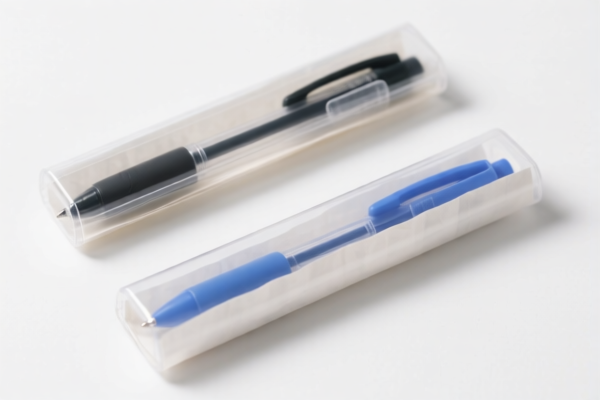
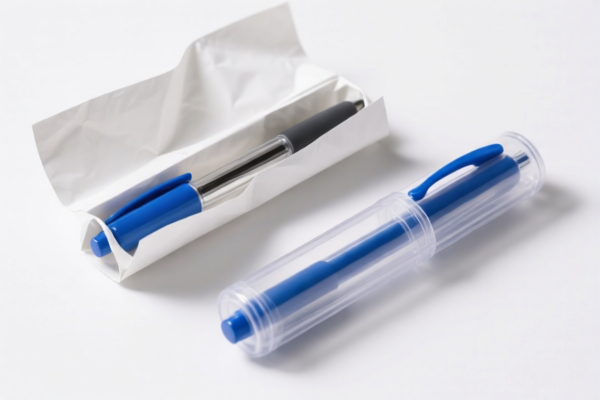
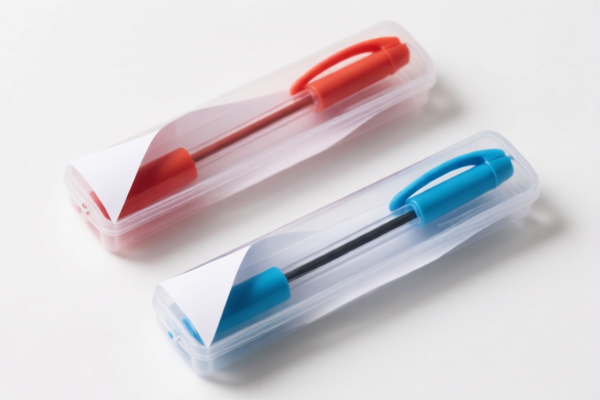
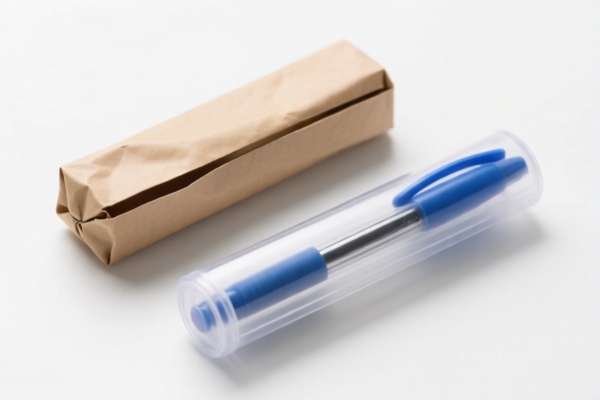
AI Analysis
🖊️ Plastic Paper Covered Pen Cases (Plastic Stationery Items)
🌐 HS Code Reference & Customs Clearance Guide | 2026 Latest Tariff Analysis | Professional Compliance Strategy
📌 I. Product Definition and Classification: What Exactly Are "Plastic Paper Covered Pen Cases"?
Plastic paper covered pen cases are stationery items used for storing and transporting writing instruments (pens, pencils, markers). In international trade, these are typically classified under Chapter 39: Plastics and Articles Thereof.
The classification depends on the primary material and the specific function: * General Plastic Stationery/Office Supplies: If the item is primarily made of plastic (even with paper covering/decoration) and used for household or personal office storage, it generally falls under Heading 3924. * Specialized Containers/Storage: If the item is designed specifically as a container for transportation or specialized packaging (less common for simple pen cases, but possible for bulk storage), it might fall under Heading 3923. * Other Plastic Articles: If the item doesn't fit the specific definitions of 3924 or 3923, it may fall under Heading 3926.
⚠️ Key Distinction:
- If it’s a personal pen case (pouch, box) for daily use → 3924 (Household/Personal).
- If it’s a rigid box for shipping/industrial packaging → 3923.
- If it’s a generic plastic container not specified elsewhere → 3926.
📦 II. HS Code Classification Details (2026 Latest Tariff Concordance)
| HS Code | Product Description | Application Scenario | Key Characteristics |
|--------|--------------------------|--------------------|
| 3924.10.40.00 | Plastic sanitary/household articles; Other household articles | Daily use pen cases, pencil boxes, stationery pouches | Personal use, household category |
| 3923.10.90.00 | Plastic articles for conveyance or packaging; Other boxes/crates | Bulk plastic boxes for pen storage/transport | Industrial packaging, rigid boxes |
| 3923.90.00.80 | Other plastic articles for packaging | Generic plastic packaging containers | Non-specific packaging use |
| 3926.90.99.89 | Other plastic articles; Other containers/articles | Generic plastic stationery items not classified elsewhere | Catch-all for plastic stationery |
| 3924.90.56.50 | Plastic household articles; Storage boxes | Plastic storage boxes for pens/stationery | Specific storage function |
🔍 Focus Points:
-3924.10.40.00is the most common classification for personal plastic pen cases (soft or hard, with paper covering).
-3924.90.56.50applies if the item is specifically a storage box for pens.
-3926.90.99.89is a fallback for other plastic stationery items that don’t fit neatly into 3924.
-3923codes are generally not recommended for personal pen cases unless they are industrial packaging boxes.
💰 III. 2026 Latest Tariff Rate Breakdown (Including Surtaxes, Policy Add-ons)
✅ Applicable Country: United States (US)
✅ Origin: China (CN)
✅ Effective Date: November 10, 2025 (and subsequent imports)
🎯 1. 3924.10.40.00 —— Plastic Household Articles (Other) – Most Common for Pen Cases
| Item | Content |
|---|---|
| Base Tariff | 3.4% (ad valorem) |
| Section 301 Surtax | +0.0% (No Section 301 surtax for this subheading) |
| Section 122 Surtax | +10.0% (Section 122 surcharge on Chinese-origin goods) |
| Total Tariff | 13.4% |
| Tax Calculation | CIF Value × 13.4% |
| De Minimis Eligible? | ❌ No (Section 321 de minimis exemption generally does not apply to Section 122/301 surtaxes on certain goods, check latest CBP guidance. Note: Data indicates total tax 13.4%, implying 3.4 + 10.0 = 13.4. No 301 surtax listed in data.) |
| Legal Basis Path | Base Tariff: 3.4% → Section 122: 10% → Total: 13.4% |
📌 Explanation:
- This is the lowest tariff option among the provided codes.
- The 13.4% total rate consists of the 3.4% base duty and a 10% Section 122 surtax.
- No 25% Section 301 surtax applies here (unlike many other plastic articles).
- Advantage: Significantly lower than other plastic categories.
🎯 2. 3924.90.56.50 —— Plastic Household Articles; Storage Boxes
| Item | Content |
|---|---|
| Base Tariff | 3.4% |
| Section 301 Surtax | +7.5% |
| Section 122 Surtax | +10.0% |
| Total Tariff | 20.9% |
| Tax Calculation | CIF Value × 20.9% |
| De Minimis Eligible? | ❌ No |
| Legal Basis Path | Base Tariff: 3.4% → Section 301: 7.5% → Section 122: 10% → Total: 20.9% |
📌 Note:
- This code applies if the pen case is classified specifically as a storage box.
- The 7.5% Section 301 surtax increases the total cost compared to3924.10.40.00.
🎯 3. 3926.90.99.89 —— Other Plastic Articles
| Item | Content |
|---|---|
| Base Tariff | 5.3% |
| Section 301 Surtax | +7.5% |
| Section 122 Surtax | +10.0% |
| Total Tariff | 22.8% |
| Tax Calculation | CIF Value × 22.8% |
| De Minimis Eligible? | ❌ No |
| Legal Basis Path | Base Tariff: 5.3% → Section 301: 7.5% → Section 122: 10% → Total: 22.8% |
📌 Note:
- This is a catch-all category for plastic articles not specified elsewhere.
- Higher base duty (5.3%) plus surtaxes make it more expensive than3924codes.
🎯 4. 3923.10.90.00 & 3923.90.00.80 —— Plastic Packaging Articles
| Item | Content |
|---|---|
| Base Tariff | 3.0% |
| Section 301 Surtax | +25.0% |
| Section 122 Surtax | +10.0% |
| Total Tariff | 38.0% |
| Tax Calculation | CIF Value × 38.0% |
| De Minimis Eligible? | ❌ No |
| Legal Basis Path | Base Tariff: 3.0% → Section 301: 25.0% → Section 122: 10% → Total: 38.0% |
📌 Note:
- These codes attract the highest tariff (38.0%) due to the 25% Section 301 surtax.
- Strongly discouraged for personal pen cases. Only use if the item is industrial packaging.
🛠️ IV. Customs Clearance Practical Advice (Pitfall Avoidance Guide)
✅ 1. Recommended HS Code for "Plastic Paper Covered Pen Cases"
| Product Type | Recommended HS Code | Total Tariff | Reason |
|---|---|---|---|
| Standard Pen Case/Pouch | 3924.10.40.00 |
13.4% | Most accurate for personal stationery items |
| Plastic Pen Box/Storage | 3924.90.56.50 |
20.9% | If explicitly a storage box |
| Generic Plastic Stationery | 3926.90.99.89 |
22.8% | Fallback if not clearly household |
| Industrial Packing Box | 3923.10.90.00 |
38.0% | Only for bulk transport packaging |
🎯 Best Choice:
3924.10.40.00(13.4% tariff) for most personal pen cases.
✅ 2. Key Declaration Tips
🔥 “Classify as Household, Avoid Packaging, Specify Material Clearly!”
| Scenario | Correct Declaration | Incorrect Declaration |
|---|---|---|
| Personal Pen Case | “Plastic Pen Case, Household Use, Paper Covered” | “Plastic Packaging Box” → 38% |
| With Paper Cover | Emphasize “Plastic Article” (main material) | Emphasize “Paper Product” → Wrong Chapter |
| Rigid Box vs. Soft Pouch | Soft Pouch → 3924.10.40.00Rigid Box → 3924.90.56.50 |
Both misclassified as Packaging → 38% |
✅ 3. Documentation Requirements
| Document | Required? | Notes |
|---|---|---|
| ✅ Product Description | ✔️ | Must specify “Plastic,” “Stationery,” “Pen Case” |
| ✅ Material Composition | ✔️ | Confirm plastic is the primary material |
| ✅ Function Description | ✔️ | State “for personal use,” “household” |
| ✅ Photos | ✔️ | Show interior, exterior, and closure mechanism |
| ✅ Commercial Invoice | ✔️ | Clear HS Code and description |
| ✅ Packing List | ✔️ | No industrial packaging labels |
🌍 V. Global Market Comparison (2026)
| Country/Region | Recommended HS Code | Tariff (China Origin) | Notes |
|---|---|---|---|
| 🇺🇸 USA | 3924.10.40.00 |
13.4% | Lowest among plastic options; avoid 3923 |
| 🇨🇳 China | 3924.10.40.00 |
~3-5% | Standard import duty |
| 🇪🇺 EU | 3924.10.40.00 |
~3-5% | No Section 301/122 surtaxes |
| 🇬🇧 UK | 3924.10.40.00 |
~3-5% | Post-Brexit rules apply |
| 🇨🇦 Canada | 3924.10.40.00 |
~3-5% | No Section 301 |
📌 Conclusion:
- USA has unique surtaxes (Section 122, 301).
-3924.10.40.00is the most cost-effective HS code for plastic pen cases in the US.
- Avoid misclassifying as packaging (3923) to prevent 38% tariff.
📌 VI. Common Mistakes & Pitfalls (Lessons Learned)
❌ Mistake 1: Classifying a pen case as “Plastic Packaging” (3923)
👉 Consequence: Tariff jumps to 38% → Huge cost increase!
❌ Mistake 2: Ignoring “Household/Personal Use” in description
👉 Consequence: CBP may reclassify to 3926 (22.8%) or 3923 (38%).
❌ Mistake 3: Using “Stationery” as only keyword without material specification
👉 Consequence: Ambiguity → Delays or audits. Always state “Plastic”.
❌ Mistake 4: Assuming paper cover = “Paper Product” (Chapter 48)
👉 Consequence: Wrong chapter → Severe penalties. Primary material is plastic.
✅ Correct Practice:
“Plastic Pen Case, Household Use, Paper Coated Exterior, Model ABC, for Stationery Storage”
🎯 VII. Conclusion: Smart Classification Saves Money!
🎯 Remember the Rule:
🔹 “Plastic Pen Case = Household Article (3924)”
🔹 “Packaging Box = 3923 (38% Tax – Avoid!)”
🔹 “Section 122 is 10%, Section 301 is 0% or 7.5% or 25%”
🔹 “Total Tax for Best Code: 13.4%”
📌 Pro Tip:
If your pen cases are small, low-value, and shipped via postal service, check if de minimis ($800) applies. However, note that Section 122/301 surtaxes may still apply even if duty is exempt. Always consult a customs broker for shipments under $800.
📣 Immediate Action:
📞 Contact a Customs Broker
🖼️ Provide Photos
📝 Declare as “Plastic Household Article” (3924.10.40.00)
💰 Save up to 24.6% in tariffs vs. packaging classification!
✨ Precise Classification, Lower Costs, Smoother Customs!
💼 Your Pen Cases Deserve the Best Tariff Rate!
Customer Reviews
About HS Code Classification
The Harmonized System (HS) is an internationally standardized nomenclature developed by the World Customs Organization (WCO) to classify traded products. Over 200 countries use the HS system as the basis for customs tariffs, trade statistics, and import/export regulations.
Each HS code follows a hierarchical structure:
- Chapter (2 digits) — Broad category of goods (e.g., Chapter 84: Machinery and Mechanical Appliances)
- Heading (4 digits) — More specific grouping within the chapter
- Subheading (6 digits) — Internationally standardized breakdown, used by all WCO member countries
- National subdivisions (8-10 digits) — Country-specific extensions for further classification, such as US HTSUS 10-digit codes
Correct HS code classification is essential for smooth customs clearance, accurate duty payment, and compliance with trade regulations. Misclassification can lead to customs delays, overpayment of duties, or penalties.
When importing from CN to US, the applicable tariff rates may include:
- Most-Favored-Nation (MFN) rate — The standard duty rate applied to WTO members
- General rate — Applied to countries without trade agreements
- Trade remedy duties — Additional tariffs such as Section 301 (anti-dumping), Section 232 (national security), or countervailing duties
The information provided on this page is for reference purposes only. For official classification, please consult with your local customs authority or a licensed customs broker.