Plastic Paper Covered Public Transportation Card Holders
CN → US| HS Code | Tariff Rate | Origin | Destination | Doc |
|---|---|---|---|---|
| 4202391000 | 40.3% | CN | US | Official Doc |
| 4202991000 | 38.4% | CN | US | Official Doc |
| 4820900000 | 35.0% | CN | US | Official Doc |
| 4820300040 | 35.0% | CN | US | Official Doc |
| 3926901000 | 20.9% | CN | US | Official Doc |
| 3926909989 | 22.8% | CN | US | Official Doc |
Product Images
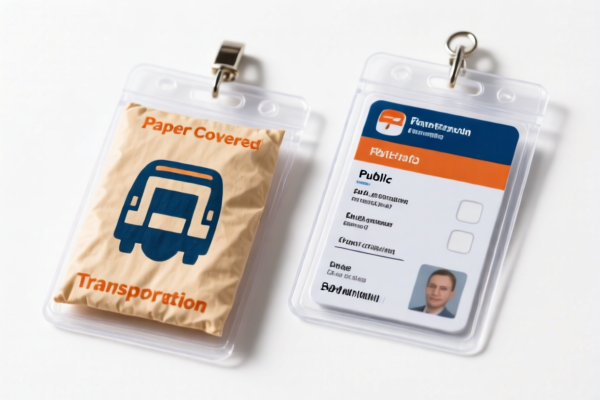
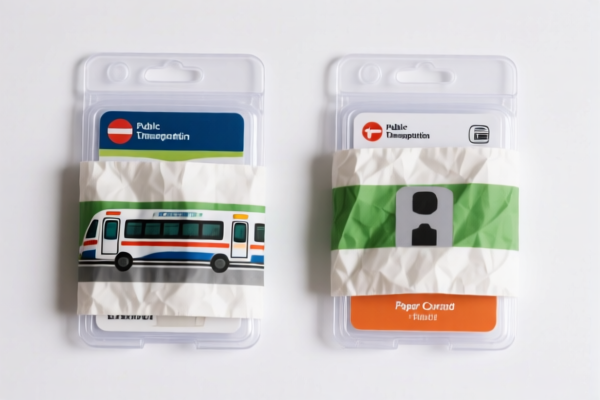
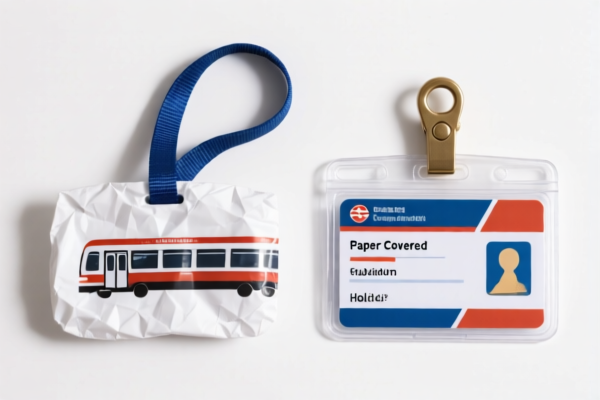
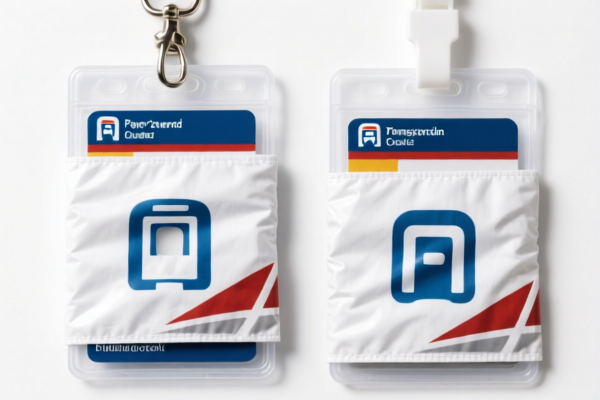
AI Analysis
🚇 Plastic Paper-Covered Public Transportation Card Holders
🌐 HS Code Reference & Customs Clearance Guide | 2026 Latest Tariff Analysis | Professional Clearance Strategy
📌 I. Product Definition & Classification: What Exactly Is This?
Plastic Paper-Covered Public Transportation Card Holders are small containers designed specifically to hold transit cards, access cards, or small IDs for public transportation. In international trade, these items fall under the broader category of trunks, suitcases, and similar containers.
Key Distinction: * Material Composition: The core structure is often plastic or composite, but the outer covering is paper. * Function: Portable wallet/accessory designed to be carried in a pocket or handbag. * Classification Trap: Do NOT classify these as "Articles of Stationery" (Chapter 48) or "Other Plastic Articles" (Chapter 39). They are specifically categorized as containers under Chapter 42 due to their shape, function, and portability similar to wallets or purses.
⚠️ Key Differentiation Point:
- If the item is primarily a flat folder for papers → Chapter 48 (Stationery).
- If the item is a 3D container/wallet for cards, money, or ID → Chapter 42 (Leather Goods/Containers).
- Since this is a "Card Holder" for transport, it functions as a wallet/purse equivalent → Chapter 42.
📦 II. HS Code Classification Details (2026 Latest Tariff Authority Comparison)
Based on the provided data, these products are classified under Heading 4202 (Trunks, suitcases, vanity cases... and similar containers). Specifically, they fall under sub-headings for "Articles of a kind normally carried in the pocket or in the handbag."
| HS Code | Product Description | Application Scenario | Material Structure |
|---|---|---|---|
4202.39.10.00 |
Trunks, suitcases... and similar containers... Articles of a kind normally carried in the pocket or in the handbag: Other: Of material wholly or mainly covered with paper: Of plastics | Small card holders, transit card sleeves, pocket wallets with paper exterior and plastic interior/structure. | Core: Plastic Cover: Paper |
4202.99.10.00 |
Trunks, suitcases... and similar containers... Other: Other: Of materials wholly or mainly covered with paper: Of plastics | Larger card organizers, zippered pouches for transit cards, non-pocket-sized containers made of plastic covered with paper. | Core: Plastic Cover: Paper |
🔍 Focus Reminder:
- Why not 4820 (Stationery)? Although made of paper/plastic, the function is carrying a card in a pocket/handbag, not writing or organizing loose papers. HS Code 4202 specifically covers "wallets, purses, map cases... and similar containers." - Why not 3926 (Plastic Articles)? While plastic is a component, the "paper covering" and the specific "container/wallet" shape push it into Chapter 42. HS 4202 is more specific than the general "other plastic articles" in Chapter 39.
💰 III. 2026 Latest Tariff Rate Details (Including Surcharges & Policy Add-ons)
✅ Applicable Country: United States (US)
✅ Origin: China (CN)
✅ Effective Date: 2025/2026 (Based on current trade policies)
🎯 1. 4202.39.10.00 —— Pocket/Card Holders (Plastic with Paper Cover)
| Item | Content |
|---|---|
| Basic Tariff Rate | 0.0% (ad valorem) |
| Section 301 Surcharge | +25.0% (from USITC Footnote 9903.88.01 / Trade Act) |
| IEEPA Surcharge | 0.0% (No additional IEEPA tax listed for this specific code in the data) |
| Total Tariff Rate | 25.0% |
| Tax Calculation | CIF Value × 25% |
| De Minimis Eligibility | ❌ Not Applicable (Section 301 duties typically apply regardless of de minimis, but check current CBP enforcement on low-value shipments) |
| Legal Basis Path | USITC:4202.39.10.00 → SECTION 301: 25% |
📌 Explanation:
- The base duty is 0%, meaning the US has a free trade rate for this specific type of paper-covered plastic container before trade remedies. - However, the 25% Section 301 tariff applies because it is an import from China. This is a significant cost increase. - Total Effective Rate: 25%. This is moderate compared to electronics (45-50%) but high for simple accessories.
🎯 2. 4202.99.10.00 —— Other Containers (Plastic with Paper Cover)
| Item | Content |
|---|---|
| Basic Tariff Rate | 0.0% (ad valorem) |
| Section 301 Surcharge | +25.0% (from USITC Footnote 9903.88.01 / Trade Act) |
| IEEPA Surcharge | 0.0% |
| Total Tariff Rate | 25.0% |
| Tax Calculation | CIF Value × 25% |
| De Minimis Eligibility | ❌ Not Applicable |
| Legal Basis Path | USITC:4202.99.10.00 → SECTION 301: 25% |
📌 Note:
- Identical tax treatment to4202.39.10.00. - Use4202.99.10.00if the item is not specifically "pocket-sized" (e.g., a larger clutch-style transit card organizer).⚠️ Important Note on Other Codes in Data:
-4820.90.00.00and4820.30.00.40(Stationery/Binders) also have a 25% total tax. However, misclassifying a card holder as "stationery" is a compliance risk. Card holders are containers, not stationery. -3926.90.10.00(Plastic Buckets/Pails) and3926.90.99.89(Other Plastic Articles) are NOT applicable because this item is a paper-covered container, not a general plastic article.
🛠️ IV. Customs Clearance Practical Advice (Real-World Pitfall Avoidance)
✅ 1. Required Documentation Checklist (Essential)
| Document | Mandatory | Description |
|---|---|---|
| ✅ Product Specifications | ✔️ | Detail: "Plastic core with paper exterior, for transit cards." |
| ✅ Material Breakdown | ✔️ | Specify % of paper vs. plastic to prove "mainly covered with paper." |
| ✅ Product Photos | ✔️ | Show the item in use (holding a card) to prove function as a container. |
| ✅ Commercial Invoice | ✔️ | Description must match HS Code: "Plastic Card Holder with Paper Cover." |
| ✅ HTS Classification Ruling | ✔️ | If unsure, request a pre-ruling from CBP. |
✅ 2. Declaration Tips (Key Mnemonic)
🔥 “Function is King, Cover is Key, Don’t Confuse with Stationery!”
| Scenario | Correct Declaration | Incorrect Action |
|---|---|---|
| Small pocket card holder | 4202.39.10.00 |
Classify as 4820 (Stationery) → Risk of audit |
| Larger zippered pouch | 4202.99.10.00 |
Classify as 3926 (Plastic) → Higher risk (12.8% vs 25%, but wrong code) |
| Pure paper wallet (no plastic core) | 4202.39.10.00 or 4202.99.10.00 |
— |
| Plastic sleeve with no paper | 3926.90.99.89 |
— |
✅ 3. Special Cases & Handling
| Situation | Handling Advice |
|---|---|
| OEM Custom Card Holders | Provide design files showing paper layer over plastic. |
| Bundle with Transit Card | Declare separately. The transit card itself may have different duties (often 0%). The holder is 4202.39.10.00. Do not bundle into one value if possible to simplify classification. |
| Sample Shipment | Even for samples, the 25% duty applies if declared correctly. Consider if de minimis ($800) exemption is still valid for Section 301 goods (currently, Section 301 duties do apply to de minimis shipments from China under current CBP enforcement). |
🌍 V. Global Market Comparison (2026 Latest)
| Country/Region | Recommended HS Code | Duty Rate (China Origin) | Certification | Remarks |
|---|---|---|---|---|
| 🇺🇸 USA | 4202.39.10.00 |
25% | None specific | High tariff due to Sec 301 |
| 🇨🇳 China | 4202.39.10.00 |
~5-6% | None | Standard import duty |
| 🇪🇺 EU | 4202.39.00 |
~1.7% - 4.7% | CE (if applicable) | Lower tariffs, no Sec 301 |
| 🇬🇧 UK | 4202.39.00 |
~4.5% | UKCA | Post-Brexit tariffs |
📌 Conclusion:
- The US market is the most expensive due to the 25% Section 301 surcharge.
- EU/UK offer significantly better duty rates.
- No special certifications (like FCC/CE) are needed for plastic/paper containers, but quality standards (durability, non-toxic inks) apply.
📌 VI. Common Errors & Pitfalls (Lessons Learned)
❌ Error 1: Classifying as 4820.90.00.00 (Stationery)
👉 Consequence: While the tax rate is also 25%, the description "Stationery" is factually incorrect. Customs may flag this for misdeclaration, leading to delays.
👉 Fix: Always emphasize "Container" or "Holder" in description.
❌ Error 2: Classifying as 3926.90.99.89 (Other Plastic Articles)
👉 Consequence: Tax is 12.8% (5.3% base + 7.5% surcharge). While cheaper, it is a wrong classification. If audited, you will owe the difference (25% - 12.8% = 12.2%) plus penalties.
👉 Fix: Paper-covered items designed as wallets/handbags go to Chapter 42, not 39.
❌ Error 3: Ignoring the "Paper Cover" aspect
👉 Consequence: If you describe it as "Plastic Card Holder" but it’s paper-covered, you might be wrongly classified under pure plastic codes.
👉 Fix: Explicitly state "Paper-Covered" in the invoice and packing list.
✅ Correct Declaration Example:
"Plastic Transit Card Holder with Paper Exterior, Model XYZ, for Pocket/Handbag Use, HS Code 4202.39.10.00"
🎯 VII. Conclusion: Precision in Classification Saves Money
🎯 Remember the Mnemonic:
🔹 “Paper Cover + Pocket Use = Chapter 42”
🔹 “China Origin = 25% Surcharge on Top of Base”
🔹 “Don’t Call It Stationery, Call It a Container!”
📌 Pro Tip:
If you are exporting to the US, calculate the 25% duty into your cost structure immediately. If the margin is thin, consider sourcing paper-covered items from non-China origins (e.g., Vietnam, India) to avoid the Section 301 tariff.
📣 Immediate Action:
📞 Consult a Customs Broker to confirm the "Paper Cover" threshold.
📄 Prepare a Sample for Pre-Ruling if the product is high-volume.
🚀 Optimize Your Supply Chain to mitigate the 25% US tariff impact.
✨ Professional Clearance Starts with Accurate Classification!
💼 Your Cost Efficiency Depends on the Right HS Code!
Customer Reviews
About HS Code Classification
The Harmonized System (HS) is an internationally standardized nomenclature developed by the World Customs Organization (WCO) to classify traded products. Over 200 countries use the HS system as the basis for customs tariffs, trade statistics, and import/export regulations.
Each HS code follows a hierarchical structure:
- Chapter (2 digits) — Broad category of goods (e.g., Chapter 84: Machinery and Mechanical Appliances)
- Heading (4 digits) — More specific grouping within the chapter
- Subheading (6 digits) — Internationally standardized breakdown, used by all WCO member countries
- National subdivisions (8-10 digits) — Country-specific extensions for further classification, such as US HTSUS 10-digit codes
Correct HS code classification is essential for smooth customs clearance, accurate duty payment, and compliance with trade regulations. Misclassification can lead to customs delays, overpayment of duties, or penalties.
When importing from CN to US, the applicable tariff rates may include:
- Most-Favored-Nation (MFN) rate — The standard duty rate applied to WTO members
- General rate — Applied to countries without trade agreements
- Trade remedy duties — Additional tariffs such as Section 301 (anti-dumping), Section 232 (national security), or countervailing duties
The information provided on this page is for reference purposes only. For official classification, please consult with your local customs authority or a licensed customs broker.