Plastic Paper Covered Travel Handbags
CN → US| HS Code | Tariff Rate | Origin | Destination | Doc |
|---|---|---|---|---|
| 3923210095 | 38.0% | CN | US | Official Doc |
| 3923210085 | 38.0% | CN | US | Official Doc |
| 4202999000 | 55.0% | CN | US | Official Doc |
| 4819400040 | 35.0% | CN | US | Official Doc |
| 4819400020 | 35.0% | CN | US | Official Doc |
Product Images
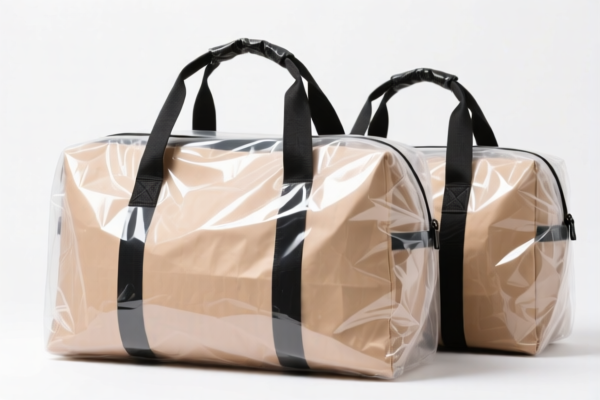
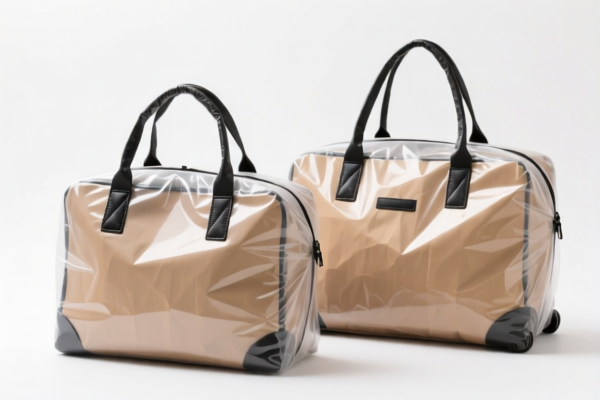
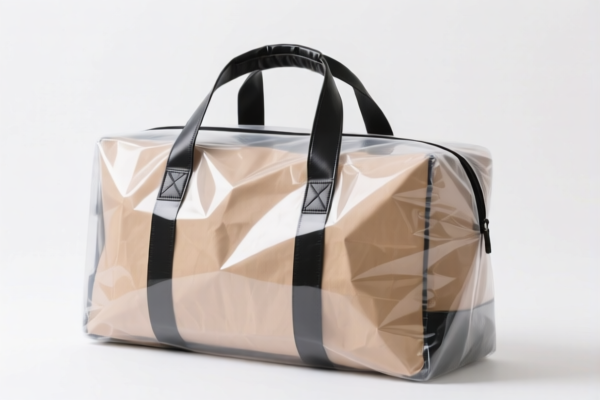
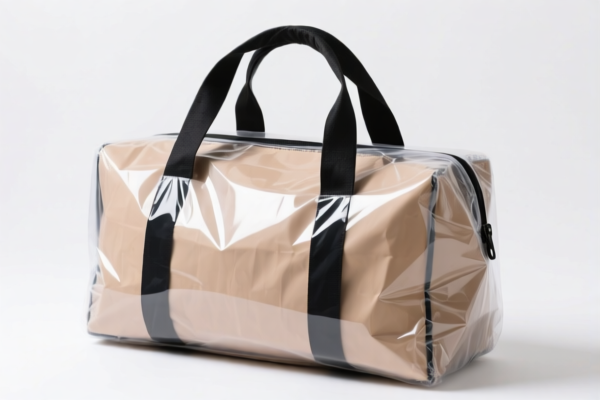
AI Analysis
🧳 Plastic Paper Covered Travel Handbags
🌐 HS Code Reference & Customs Clearance Guide | 2026 Latest Tariff Analysis | Professional Clearance Strategy
📌 1. Product Definition & Classification: Do You Really Understand "Plastic Paper Covered Handbags"?
"Plastic Paper Covered Travel Handbags" (塑料纸覆膜手提袋) are a category of packaging or carrying containers where the surface features a plastic film/lamination over paper or plastic material. In international trade, they are typically used for retail packaging, promotional giveaways, or advertising.
The key to classification lies in Material Composition and Function: - Plastic-dominated: If the material is primarily plastic (e.g., Polyethylene) with a printed/covered surface → Classified under Chapter 39. - Paper-dominated: If the core material is paper/cardboard with a plastic coating → Classified under Chapter 48. - Other Textile/Plastic Articles: If it falls outside standard packaging categories and is considered a general plastic article or accessory → May fall under Chapter 42 (though less common for simple bags).
⚠️ Critical Distinction:
- If the bag is predominantly plastic (PE, PP, etc.) → Use HS 3923.21.
- If the bag is predominantly paper with plastic coating → Use HS 4819.40.
- If classified as a general "plastic article" not elsewhere specified → Use HS 4202.99.
📦 2. HS Code Classification Details (2026 Latest Tariff Authority Comparison)
| HS Code | Product Description | Application Scenario | Primary Material |
|---|---|---|---|
3923.21.00.95 |
Plastic paper-covered promotional handbags, plastic material, bag form | Promotional items, retail packaging | Plastic (PE/PP) |
3923.21.00.85 |
Plastic paper-covered promotional handbags, plastic/polyethylene, with handle, retail packaging | Retail shopping bags, branded packaging | Plastic/Polyethylene |
4202.99.90.00 |
Plastic paper-covered advertising handbags, plastic/film material, handbag container | General advertising bags, non-standard plastic articles | Plastic/Film |
4819.40.00.40 |
Plastic paper-covered advertising handbags, bag form, paper/plastic composite material inferred | Paper-based bags with plastic lamination | Paper/Composite |
4819.40.00.20 |
Plastic paper-covered advertising handbags, bag form, paper/composite material, advertising use | Promotional paper bags with plastic coating | Paper/Composite |
🔍 Key Reminder:
- Plastic bags (even if covered with paper print) are generally classified under 3923.21.
- Paper bags with plastic coating are classified under 4819.40.
- Misclassification can lead to significant tariff differences (e.g., 35% vs 55%).
💰 3. 2026 Latest Tariff Rate Details (Including Surcharges & Policy Add-ons)
✅ Applicable Country: United States (US)
✅ Origin: China (CN)
✅ Effective Date: November 10, 2025 (including subsequent imports)
🎯 1. 3923.21.00.95 & 3923.21.00.85 —— Plastic Promotional Handbags
| Item | Content |
|---|---|
| Base Tariff | 3.0% (ad valorem) |
| Section 301 Surcharge | +25.0% |
| Section 122 Tariff | +10.0% |
| Total Tariff Rate | 38.0% |
| Tax Calculation | CIF Value × 38% |
| De Minimis Exemption | ❌ Not Applicable (deny_de_minimis) |
| Legal Basis Path | USITC:3923.21.00.85 → Section 301: 25% → Section 122: 10% |
📌 Explanation:
- These codes fall under Chapter 39 (Plastics).
- Subject to 25% Section 301 tariffs (trade war surcharge).
- Subject to 10% Section 122 tariffs (related to cargo security/shipping).
- Total: 38% – High duty rate, no de minimis exemption.
🎯 2. 4202.99.90.00 —— Plastic Film Advertising Handbags
| Item | Content |
|---|---|
| Base Tariff | 20.0% |
| Section 301 Surcharge | +25.0% |
| Section 122 Tariff | +10.0% |
| Total Tariff Rate | 55.0% |
| Tax Calculation | CIF Value × 55% |
| De Minimis Exemption | ❌ Not Applicable |
| Legal Basis Path | USITC:4202.99.90.00 → Section 301: 25% → Section 122: 10% |
📌 Warning:
- This code has a high base rate (20%).
- Combined with 25% + 10% surcharges, the total is 55% – the highest among the listed codes.
- Avoid this classification unless absolutely necessary; prefer 3923.21 or 4819.40 if product fits.
🎯 3. 4819.40.00.40 & 4819.40.00.20 —— Paper-Based Advertising Handbags
| Item | Content |
|---|---|
| Base Tariff | 0.0% |
| Section 301 Surcharge | +25.0% |
| Section 122 Tariff | +10.0% |
| Total Tariff Rate | 35.0% |
| Tax Calculation | CIF Value × 35% |
| De Minimis Exemption | ❌ Not Applicable |
| Legal Basis Path | USITC:4819.40.00.20 → Section 301: 25% → Section 122: 10% |
📌 Advantage:
- 0% Base Tariff is a significant advantage.
- Total rate is 35%, which is 3% lower than plastic-based bags (38%).
- Suitable for paper bags with plastic coating.
🛠️ 4. Customs Clearance Practical Advice (Avoid Pitfalls Guide)
✅ 1. Preparation Checklist (Must-Have Documents)
| Document | Required | Explanation |
|---|---|---|
| ✅ Product Specification Sheet | ✔️ | Material composition (paper vs. plastic ratio), dimensions, handle type |
| ✅ Material Certificate | ✔️ | Proof of primary material (Paper or Plastic) |
| ✅ Product Photos (Front/Side/Back) | ✔️ | Show lamination, handles, and printing |
| ✅ Commercial Invoice | ✔️ | Clearly state "Plastic Paper Covered Handbag" and HS Code |
| ✅ Packing List | ✔️ | Weight, volume, number of units |
| ✅ Original Certificate of Origin (CO) | ✔️ | If applicable, for potential preferential rates |
✅ 2. Declaration Tips (Key Mantra)
🔥 "Material Dictates Code, Paper vs. Plastic Matters!"
| Scenario | Correct Declaration | Wrong Practice |
|---|---|---|
| Bag is mostly plastic with paper print | 3923.21.00.85 or .95 |
Misdeclare as paper → Risk of audit |
| Bag is mostly paper with plastic film | 4819.40.00.20 or .40 |
Misdeclare as plastic → Higher base rate |
| Bag is thin plastic film bag | 3923.21.00.85 |
Misdeclare as textile → Wrong chapter |
| Bag is general plastic container | 4202.99.90.00 |
Use only if no better fit |
✅ 3. Special Situations
| Situation | Handling Advice |
|---|---|
| OEM Promotional Bags | Provide client order + design file to prove "promotional" nature |
| Mixed Materials | Declare based on essential character (what defines the bag) |
| Small Quantities | Still subject to 35-55% tariffs; no de minimis for China origin |
| Plastic Film Only | If no paper, use 3923.21 |
🌍 5. Global Market Clearance Comparison (2026 Latest)
| Country/Region | Recommended HS Code | Tariff (China Origin) | Certification Requirements | Notes |
|---|---|---|---|---|
| 🇺🇸 USA | 3923.21.00.85 or 4819.40.00.20 |
38% or 35% | None typically | High surcharges apply |
| 🇨🇳 China | 3923.21.00.85 or 4819.40.00.20 |
0-5% | N/A | Low duty |
| 🇪🇺 EU | 3923.21.00.85 or 4819.40.00.20 |
0-6.5% | CE (if applicable) | No Section 301/122 |
| 🇬🇧 UK | 3923.21.00.85 or 4819.40.00.20 |
0-5% | UKCA (if applicable) | Post-Brexit rules |
| 🇦🇺 Australia | 3923.21.00.85 or 4819.40.00.20 |
5% | N/A | No surcharges |
📌 Conclusion:
- USA is the only market with high additional tariffs (35-55%).
- China-origin bags face significant cost increases in the US.
- Consider supply chain relocation (e.g., Vietnam, Thailand) to avoid surcharges if shipping to US.
📌 6. Common Mistakes & Pitfall Guide (Lessons Learned)
❌ Mistake 1: Declaring plastic bags as "textile bags"
👉 Consequence: Wrong chapter, delay, or penalty.
❌ Mistake 2: Using 4202.99.90.00 for standard plastic bags
👉 Consequence: 55% tariff vs. 38% for 3923.21. Overpay by 17%!
❌ Mistake 3: Not specifying material in declaration
👉 Consequence: Customs may reclassify, leading to higher duties + fines.
❌ Mistake 4: Assuming de minimis applies
👉 Consequence: No exemption for China-origin goods under Section 301/122.
✅ Correct Practice:
"Promotional Handbag, Plastic Coated Paper, 12x12x6 inches, with Handle, Printed Logo, HS 4819.40.00.20"
🎯 7. Conclusion: Professional Declaration, Save Money, Smooth Clearance!
🎯 Remember the Mantra:
🔹 "Paper vs. Plastic, 3% Makes a Difference!" (35% vs. 38%)
🔹 "Avoid 4202.99 Unless Necessary – 55% is Too High!"
🔹 "No De Minimis for China – Plan Ahead!"
📌 Pro Tip:
If your bags are manufactured in Vietnam, Mexico, Thailand, or Malaysia, you may qualify for IEEPA Exemption, reducing tariffs to 0-5%.
Recommend Advance Ruling for complex composite materials.
📣 Immediate Action:
📞 Contact a licensed customs broker + Provide product photos + Apply for HS Code Advance Ruling
🚀 Let your bags clear smoothly, export efficiently, and maximize profits!
✨ Professional clearance starts with accurate classification!
💼 Every cent of duty matters!
Customer Reviews
About HS Code Classification
The Harmonized System (HS) is an internationally standardized nomenclature developed by the World Customs Organization (WCO) to classify traded products. Over 200 countries use the HS system as the basis for customs tariffs, trade statistics, and import/export regulations.
Each HS code follows a hierarchical structure:
- Chapter (2 digits) — Broad category of goods (e.g., Chapter 84: Machinery and Mechanical Appliances)
- Heading (4 digits) — More specific grouping within the chapter
- Subheading (6 digits) — Internationally standardized breakdown, used by all WCO member countries
- National subdivisions (8-10 digits) — Country-specific extensions for further classification, such as US HTSUS 10-digit codes
Correct HS code classification is essential for smooth customs clearance, accurate duty payment, and compliance with trade regulations. Misclassification can lead to customs delays, overpayment of duties, or penalties.
When importing from CN to US, the applicable tariff rates may include:
- Most-Favored-Nation (MFN) rate — The standard duty rate applied to WTO members
- General rate — Applied to countries without trade agreements
- Trade remedy duties — Additional tariffs such as Section 301 (anti-dumping), Section 232 (national security), or countervailing duties
The information provided on this page is for reference purposes only. For official classification, please consult with your local customs authority or a licensed customs broker.