Plastic Paper Covered Wallets
CN → US| HS Code | Tariff Rate | Origin | Destination | Doc |
|---|---|---|---|---|
| 4202999000 | 55.0% | CN | US | Official Doc |
| 4819400040 | 35.0% | CN | US | Official Doc |
| 4819400020 | 35.0% | CN | US | Official Doc |
| 3923210085 | 38.0% | CN | US | Official Doc |
| 3923210095 | 38.0% | CN | US | Official Doc |
Product Images
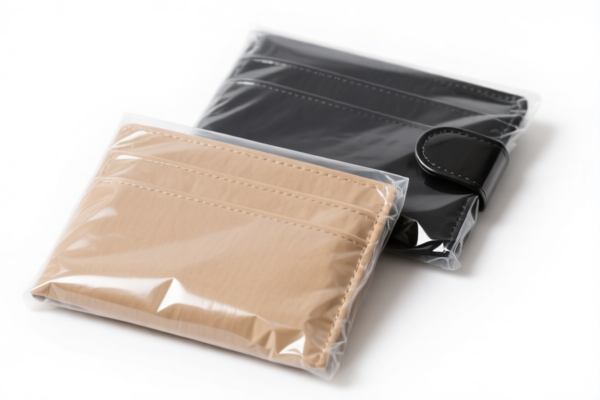
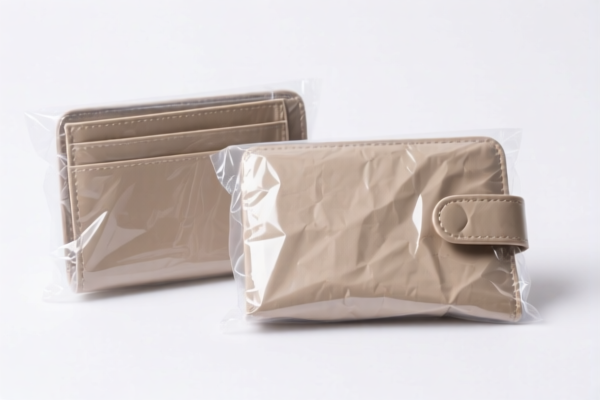
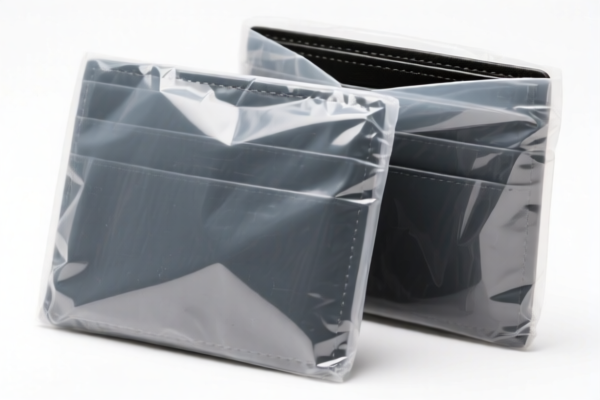
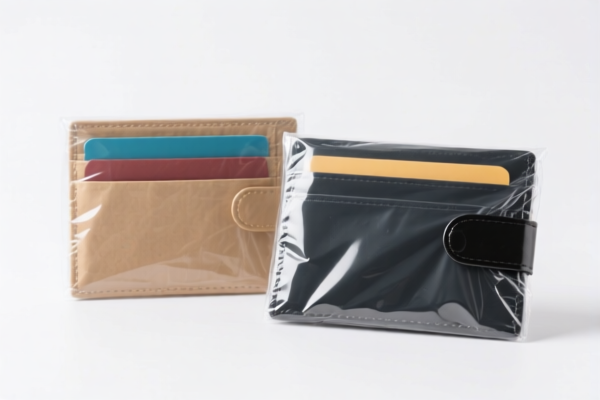
AI Analysis
👛 Plastic Paper Covered Wallets (Bifold/Trifold Wallets)
🌐 HS Code Reference & Customs Clearance Guide | 2026 Latest Tariff Analysis | Professional Classification Strategy
📌 I. Product Definition & Classification: What Exactly Are "Plastic Paper Covered Wallets"?
"Plastic Paper Covered Wallets" are small personal accessories used for carrying cash, cards, and identification. In international trade, the classification hinges on two critical factors: 1. Material Composition: The "Plastic Paper" (often plastic-coated paper, laminated paper, or paper-plastic composite) determines the chapter. 2. Function/Shape: The "Wallet" shape (folding, with compartments) distinguishes it from general-purpose bags or simple paper folders.
⚠️ Key Classification Dilemma:
- Is it treated as a Plastic Article (Ch. 39) because of the coating?
- Is it treated as a Paper/Plastic Composite (Ch. 48)?
- Is it treated as a General Bag/Pouch (Ch. 42 or 4202)?
The data provided suggests multiple valid interpretations depending on the specific manufacturing process and the dominant material characteristic.
📦 II. HS Code Classification Details (2026 Latest Tariff Authority)
Based on the provided data, here are the 5 possible HS Codes, ranked by potential tax liability and classification logic:
| HS Code | Product Description | Classification Logic | Total Tax Rate* |
|---|---|---|---|
4202.99.90.00 |
Other bags, pouches, and containers (Plastic/Film type) | Treated as a Bag/Pouch. Material inferred as plastic/film. "Wallet" is viewed as a small bag-like container. | 55.0% |
3923.21.00.95 |
Sacks and bags (incl. cones), of plastics | Treated as a Plastic Bag/Container. Material is plastic (ethylene polymer). "No specific handle/size limits" puts it in "Other". | 38.0% |
3923.21.00.85 |
Sacks and bags (incl. cones), of plastics (Retail Shopping Bags) | Treated as a Plastic Retail Bag. Used for carrying goods. Similar to 3923.21.00.95 but potentially categorized under retail-specific subheadings. |
38.0% |
4819.40.00.40 |
Other articles of paper, carton, paperboard or plasticized paper (Wallets/Pouches) | Treated as a Paper/Plastic Composite Article. "Plastic Paper" is interpreted as paper-based with plastic coating. | 35.0% |
4819.40.00.20 |
Other articles of paper, carton, paperboard or plasticized paper | Treated as a Paper/Plastic Composite Article. Similar to above. "Plastic Paper" inferred as paper/plastic composite. | 35.0% |
🔍 Critical Note:
- The 55% rate (4202) is the highest risk. It classifies the wallet as a "bag" made of plastic/film, subjecting it to higher base tariffs.
- The 35-38% rates are more favorable. They either classify the item as a "plastic bag" (3923) or a "paper/plastic composite" (4819).
- Crucial Decision: Does the "Plastic Paper" count as Paper (Chapter 48) or Plastic (Chapter 39/42)? This is the core of the dispute.
💰 III. 2026 Latest Tariff Rate Breakdown (Including Surcharges & Policy Add-ons)
✅ Applicable Country: United States (US)
✅ Country of Origin: China (CN)
✅ Effective Date: 2025 November 10 onwards
🎯 1. 4202.99.90.00 — Bags & Pouches (Plastic/Film Type)
| Item | Content |
|---|---|
| Base Tariff | 20.0% (General Rate for Ch. 42 Bags) |
| Section 301 Surcharge | +25.0% (USITC Footnote for Chinese Goods) |
| IEEPA Surcharge | +10.0% (Section 122 / IEEPA for Chinese Products) |
| Total Tax Rate | 55.0% |
| Tax Calculation | CIF Value × 55% |
| De Minimis Exemption | ❌ Not Eligible (Deny De Minimis for Ch. 42) |
| Legal Basis Path | IEEPA:9903.01.25 → USITC:4202.99.90.00 → FOOTNOTE:9903.88.01 |
📌 Explanation:
- This is the most expensive classification.
- "Plastic Paper" is interpreted as a plastic/film material suitable for bags.
- Warning: If your customs broker classifies this as "Plastic Bag" (4202), you will pay 55%.
🎯 2. 3923.21.00.85 & 3923.21.00.95 — Plastic Sacks/Bags
| Item | Content |
|---|---|
| Base Tariff | 3.0% (Low base rate for plastic containers) |
| Section 301 Surcharge | +25.0% |
| IEEPA Surcharge | +10.0% |
| Total Tax Rate | 38.0% |
| Tax Calculation | CIF Value × 38% |
| De Minimis Exemption | ❌ Not Eligible |
| Legal Basis Path | IEEPA:9903.01.24 → USITC:3923.21.00.XX |
📌 Explanation:
- Savings Potential: Compared to4202(55%), this saves 17% in total tariffs.
- Logic: The wallet is seen as a "plastic container" or "bag" made of polymer (ethylene). The "paper" aspect is ignored or considered secondary.
- Subheading Difference:85vs95may depend on whether it's specifically for "retail shopping" or "other" use. Both have the same total rate in this dataset.
🎯 3. 4819.40.00.20 & 4819.40.00.40 — Paper/Plastic Composite Articles
| Item | Content |
|---|---|
| Base Tariff | 0.0% (Zero base rate for paper/plastic composite articles) |
| Section 301 Surcharge | +25.0% |
| IEEPA Surcharge | +10.0% |
| Total Tax Rate | 35.0% |
| Tax Calculation | CIF Value × 35% |
| De Minimis Exemption | ❌ Not Eligible |
| Legal Basis Path | IEEPA:9903.01.24 → USITC:4819.40.00.XX |
📌 Explanation:
- Best Rate: This is the cheapest classification at 35%.
- Logic: "Plastic Paper" is classified as Plasticized Paper (Paper coated with plastic). Chapter 48 covers paper products.
- Key Argument: If the paper base is dominant, or the product is considered a "paper article" with plastic coating, this is the optimal route.
- Difference between .20 and .40: May relate to specific product types within "Other articles". Both have the same tax burden.
🛠️ IV. Customs Clearance Practical Advice (Battle-Tested Pitfall Guide)
✅ 1. Preparation Checklist (Non-Negotiable)
| Document | Required? | Description |
|---|---|---|
| ✅ Product Specification Sheet | ✔️ | Must detail: Layer structure (e.g., "Outer: Plastic-coated Paper, Inner: Felt"), dimensions, weight. |
| ✅ Material Composition Breakdown | ✔️ | CRITICAL: Specify % of paper vs. plastic. If plastic coating is thin, argue for Chapter 48. If thick, Chapter 39. |
| ✅ Product Photos (Close-up) | ✔️ | Show texture. Is it clearly "paper-like" with plastic shine? Or clearly "plastic"? |
| ✅ Commercial Invoice | ✔️ | Describe as "Plastic-Coated Paper Wallet" or "Laminated Paper Card Holder". Avoid "Plastic Bag". |
| ✅ Packing List | ✔️ | Standard. |
| ✅ Pre-Ruling (Optional but Recommended) | ✔️ | File for Advance Ruling to confirm Chapter 48 vs. 39/42. |
✅ 2. Declaration Strategy (Key Mantras)
🔥 “Paper Base Wins Low Rate, Plastic Base Pays More, Bag Shape Triggers Highest!”
| Scenario | Recommended HS Code | Why? |
|---|---|---|
| Wallet made of thin plastic-coated paper | 4819.40.00.20 / .40 |
Best Rate (35%). Classified as "Plasticized Paper". |
| Wallet made of thick plastic/polymer | 3923.21.00.95 |
Good Rate (38%). Classified as "Plastic Bag/Container". |
| Wallet classified as a "Bag" | 4202.99.90.00 |
Worst Rate (55%). Avoid if possible. |
⚠️ Danger Zone:
- Do NOT describe it as "Plastic Bag" in the invoice if it's a wallet.
- Do NOT let the broker automatically pick4202because it's a "pouch".
- Argue for Chapter 48: Emphasize "Paper" as the primary material if the plastic is just a coating.
✅ 3. Special Circumstances
| Situation | Handling Advice |
|---|---|
| OEM Custom Wallets | Provide design files showing material layers. |
| Mixed Materials (Leather + Plastic Paper) | Risk of reclassification to Ch. 42 (Leather Goods) → Higher Tariffs. Stick to pure Plastic Paper. |
| Samples | Even samples are subject to tariffs if declared as commercial goods. |
| Low Value Shipments | ❌ De Minimis ($800) does NOT apply to these HS codes due to Section 301/IEEPA. |
🌍 V. Global Market Comparison (2026 Latest)
| Country/Region | Recommended HS Code | Est. Total Tariff* | Notes |
|---|---|---|---|
| 🇺🇸 USA | 4819.40.00.20 |
35% | Best rate. Argue "Plasticized Paper". |
| 🇺🇸 USA | 3923.21.00.95 |
38% | Alternative if Chapter 48 is rejected. |
| 🇺🇸 USA | 4202.99.90.00 |
55% | Avoid. High tax. |
| 🇨🇳 China | 4819.40.00 |
5-10% | No Section 301. Low base rate. |
| 🇪🇺 EU | 4823.69 |
0-4% | VAT applies. Generally favorable for paper/plastic goods. |
| 🇬🇧 UK | 4823.69 |
0-5% | Post-Brexit rules. Check UK Tariff. |
📌 Conclusion for US Imports:
- Target4819.40.00(35%). It is the most defensible if the product is genuinely "paper with plastic coating".
- Backup3923.21.00(38%) if the plastic layer is thick and dominates the structure.
- Avoid4202(55%) unless the product is explicitly a "plastic bag" shape without paper characteristics.
📌 VI. Common Errors & Pitfalls (Blood Lessons)
❌ Error 1: Declaring as "Plastic Wallet" under 4202
👉 Consequence: 55% Tax. Lost Profit!
❌ Error 2: Declaring as "Paper Wallet" without mentioning plastic
👉 Consequence: Customs may inspect and find plastic, leading to misclassification penalty and delayed release.
❌ Error 3: Assuming "De Minimis" ($800) applies
👉 Consequence: Seizure or forced payment. Section 301/IEEPA items are exempt from de minimis.
❌ Error 4: Vague Description: "Wallet"
👉 Consequence: CBP may assign the highest default rate (often Ch. 42 or Ch. 39). Always specify material!
✅ Correct Declaration Example:
"Wallets, made of plastic-coated paper, bifold style, for personal use, HS 4819.40.00.20"
🎯 VII. Conclusion: Precision in Classification = Profit Protection
🎯 Remember the Mantra:
🔹 "Paper Base = 35%, Plastic Base = 38%, Bag Shape = 55%. Choose Wisely!"
🔹 "Describe Material, Not Just Function. 'Plastic-Coated Paper' is your shield."
📌 Pro Tip:
If your supplier can prove the paper content is >50% or the plastic is only a surface coating (<10%), aggressively push for Chapter 48 (4819.40). This saves you 17-20% compared to the worst-case scenario.
📣 Immediate Action:
📞 Consult a Customs Broker with your material composition report.
📄 File for an Advance Ruling if the shipment value is significant.
🚀 Optimize Your Cost: A 20% tariff difference is a 20% difference in net profit!
✨ Professional Clearance Starts with Accurate Classification!
💼 Your Bottom Line Depends on the First Four Digits of the HS Code!
Customer Reviews
About HS Code Classification
The Harmonized System (HS) is an internationally standardized nomenclature developed by the World Customs Organization (WCO) to classify traded products. Over 200 countries use the HS system as the basis for customs tariffs, trade statistics, and import/export regulations.
Each HS code follows a hierarchical structure:
- Chapter (2 digits) — Broad category of goods (e.g., Chapter 84: Machinery and Mechanical Appliances)
- Heading (4 digits) — More specific grouping within the chapter
- Subheading (6 digits) — Internationally standardized breakdown, used by all WCO member countries
- National subdivisions (8-10 digits) — Country-specific extensions for further classification, such as US HTSUS 10-digit codes
Correct HS code classification is essential for smooth customs clearance, accurate duty payment, and compliance with trade regulations. Misclassification can lead to customs delays, overpayment of duties, or penalties.
When importing from CN to US, the applicable tariff rates may include:
- Most-Favored-Nation (MFN) rate — The standard duty rate applied to WTO members
- General rate — Applied to countries without trade agreements
- Trade remedy duties — Additional tariffs such as Section 301 (anti-dumping), Section 232 (national security), or countervailing duties
The information provided on this page is for reference purposes only. For official classification, please consult with your local customs authority or a licensed customs broker.