Plastic Paper Insurance Policy Folder
CN → US| HS Code | Tariff Rate | Origin | Destination | Doc |
|---|---|---|---|---|
| 3923900080 | 38.0% | CN | US | Official Doc |
| 3923109000 | 38.0% | CN | US | Official Doc |
| 4820300040 | 35.0% | CN | US | Official Doc |
| 3926908700 | 40.3% | CN | US | Official Doc |
| 3926909989 | 22.8% | CN | US | Official Doc |
Product Images
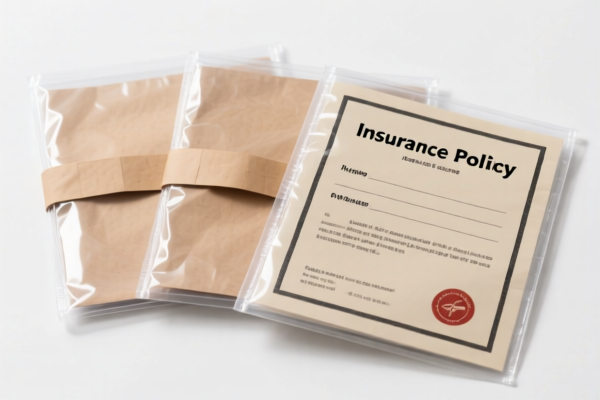
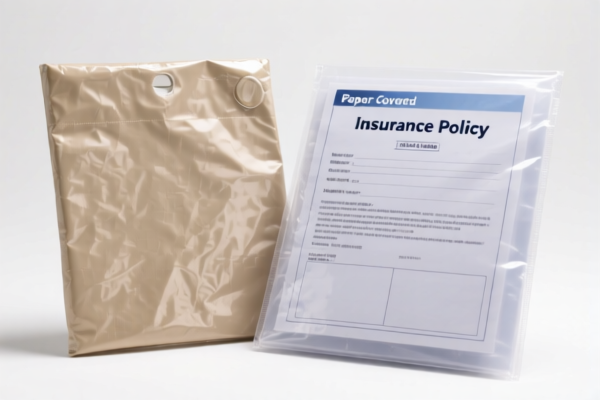
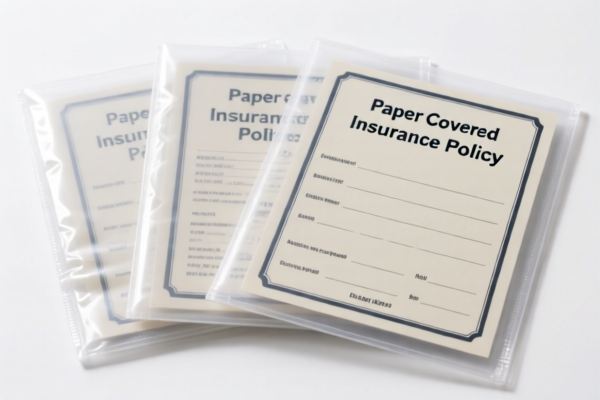
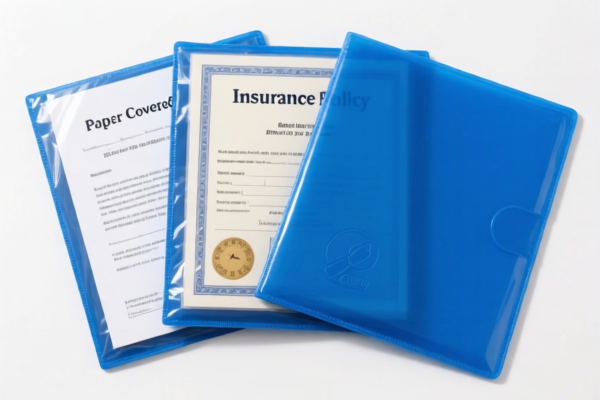
AI Analysis
📁 Plastic Paper Insurance Policy Folder (Plastic Folders for Packaging/Storage)
🌐 HS Code Reference & Customs Clearance Guide | 2026 Latest Tariff Analysis | Professional Strategy
📌 I. Product Definition & Classification: What is a "Plastic Folder"?
A Plastic Paper Insurance Policy Folder is a container or storage accessory made primarily of plastic, designed to hold, protect, and organize documents, such as insurance policies, contracts, or certificates. In international trade, these items are classified based on their material composition and functional specificity.
While they contain paper or serve paper-related functions, the primary material (plastic) usually dictates the classification under Chapter 39 (Plastics) rather than Chapter 48 (Paper).
⚠️ Key Distinction:
- If the item is a complete plastic container/holder with rigid or semi-rigid structure → Chapter 39 (Plastics)
- If it is purely paper/cardboard with minimal plastic coating → Chapter 48 (Not applicable in this data set, but note the difference)
- If it is a flexible plastic pouch/bag without rigid structure → Chapter 39 (Other plastics)
📦 II. HS Code Classification Details (2026 Latest Tariff Authority Comparison)
Based on the provided data, here are the precise HS Codes for Plastic Folders, categorized by structure and sub-heading.
| HS Code | Product Description | Application Scenario | Tax Rate (Total) |
|---|---|---|---|
3923.90.00.80 |
Plastic material, folders used for packaging or storing articles | General purpose plastic folders, rigid or semi-rigid holders for documents | 38.0% |
3923.10.90.00 |
Plastic material, boxes, cases, clips, and similar articles for conveying/goods | Sturdy plastic cases, clipboards with plastic frames, box-like folders | 38.0% |
4820.30.00.40 |
Plastic material, other folders excluding ring binders (Note: Data implies plastic component) | Specific sub-heading for folders not elsewhere specified; however, data shows "Plastic material" | 35.0% |
3926.90.87.00 |
Plastic material, flexible plastic product folders | Soft plastic sleeves, flexible document protectors, non-rigid folders | 40.3% |
3926.90.99.89 |
Plastic material, other plastic products not specified elsewhere | Unspecified plastic folders, generic plastic document holders | 22.8% |
🔍 Critical Note:
- All codes below involve Plastic Material.
- The tax burden varies significantly (22.8% – 40.3%) depending on the specific sub-heading and whether the folder is considered a "packaging article" (3923), "box/case" (3923.10), "flexible product" (3926.87), or "other" (3926.99).
- 3923.90.00.80 and 3923.10.90.00 are the most common for standard rigid/semi-rigid folders.
💰 III. 2026 Latest Tariff Rate Breakdown (Including Surtaxes)
✅ Applicable Country: United States (US)
✅ Origin: China (CN)
✅ Effective Date: Post-2025 policies (122 Clause + Section 301 + Section 232/IEEPA equivalents)
🎯 1. 3923.90.00.80 & 3923.10.90.00 —— Standard Plastic Folders/Cases
| Item | Detail |
|---|---|
| Base Tariff | 3.0% (Ad Valorem) |
| Surtax (Section 301) | +25.0% |
| Clause 122 Surtax | +10.0% |
| Total Tax Rate | 38.0% |
| Tax Calculation | CIF Value × 38% |
| De Minimis Exemption | ❌ NOT Eligible (High tariff threshold) |
| Legal Basis Path | HTSUS:3923.90.00 → Footnote:301 → Clause:122 |
📌 Explanation:
- Base (3%): Standard MFN rate for plastic articles.
- Section 301 (25%): Additional duty on Chinese plastic goods.
- Clause 122 (10%): Specific surcharge on certain packaging/storage plastics.
- Total: 38%. This is a high-cost category for standard plastic folders.
🎯 2. 3926.90.87.00 —— Flexible Plastic Folders
| Item | Detail |
|---|---|
| Base Tariff | 5.3% |
| Surtax (Section 301) | +25.0% |
| Clause 122 Surtax | +10.0% |
| Total Tax Rate | 40.3% |
| Tax Calculation | CIF Value × 40.3% |
| De Minimis Exemption | ❌ NOT Eligible |
| Legal Basis Path | HTSUS:3926.90.87 → Footnote:301 → Clause:122 |
📌 Note:
- Flexible plastic folders incur the highest base rate (5.3%) plus full surtaxes.
- Ensure the product is not misclassified as "paper" to avoid penalties.
🎯 3. 4820.30.00.40 —— Other Folders (Plastic Component)
| Item | Detail |
|---|---|
| Base Tariff | 0.0% |
| Surtax (Section 301) | +25.0% |
| Clause 122 Surtax | +10.0% |
| Total Tax Rate | 35.0% |
| Tax Calculation | CIF Value × 35.0% |
| De Minimis Exemption | ❌ NOT Eligible |
| Legal Basis Path | HTSUS:4820.30.00 → Footnote:301 → Clause:122 |
📌 Note:
- Despite being in Chapter 48 (Paper), the data specifies "Plastic Material". This may be a niche sub-heading for composite items.
- Saves 3% compared to3923.90.00.80, but still subject to high surtaxes.
🎯 4. 3926.90.99.89 —— Other Plastic Products (Unspecified Folders)
| Item | Detail |
|---|---|
| Base Tariff | 5.3% |
| Surtax (Section 301) | +7.5% |
| Clause 122 Surtax | +10.0% |
| Total Tax Rate | 22.8% |
| Tax Calculation | CIF Value × 22.8% |
| De Minimis Exemption | ❌ NOT Eligible |
| Legal Basis Path | HTSUS:3926.90.99 → Footnote:301 (Partial) → Clause:122 |
📌 Critical Advantage:
- This code has the lowest total tax rate (22.8%).
- Section 301 rate is reduced to 7.5% (instead of 25%).
- Strategy: If your folder can be classified under this "other unspecified plastic product" heading, you save 15-17.5% in taxes. However, classification must be defensible.
🛠️ IV. Customs Clearance Practical Advice (Avoid Pitfalls)
✅ 1. Documentation Checklist (Mandatory)
| Document | Required | Purpose |
|---|---|---|
| ✅ Product Specification Sheet | ✔️ | Confirm material: 100% Plastic vs. Paper-Plastic Composite |
| ✅ Photos (Open & Closed) | ✔️ | Show structure: Rigid box? Flexible sleeve? Clip mechanism? |
| ✅ Commercial Invoice | ✔️ | Clearly state: "Plastic Folder for Documents, HS Code: [Insert Code]" |
| ✅ Bill of Lading/Air Waybill | ✔️ | Ensure cargo description matches invoice |
| ✅ Original Certificate of Origin | ✔️ | Proves CN origin for surtax calculation |
✅ 2. Classification Strategy (Key Mnemonic)
🔥 "Material First, Structure Second, Tax Third!"
| Scenario | Recommended HS Code | Reason |
|---|---|---|
| Rigid/semi-rigid box-like folder | 3923.10.90.00 or 3923.90.00.80 |
Standard packaging/storage plastic article |
| Soft/Flexible plastic sleeve | 3926.90.87.00 |
Flexible plastic product |
| Generic/Unspecified plastic folder | 3926.90.99.89 |
Lowest Tax (22.8%) if defensible |
| Composite (Paper+Plastic) | 4820.30.00.40 |
Only if plastic is minor/component |
⚠️ Warning:
- Do NOT classify as Paper Folders (e.g., 4820.10) if the main structure is plastic. Customs will reclassify and impose penalties + back taxes.
-3926.90.99.89is the tax optimization target, but ensure the product does not fit more specific headings (like 3923.90).
✅ 3. Special Cases
| Case | Handling Advice |
|---|---|
| OEM Custom Folders with Logo | Same HS Code applies. Provide design sheet to prove it's a "folder," not a "promotional item" (which might have different rules). |
| Folded vs. Assembled | If sold flat, ensure description says "Flat-packed Plastic Folder" to avoid being classified as "assembly kit." |
| Mixed Containers | If packing boxes contain other plastic items, declare separately. Mixed shipments can trigger full inspection. |
🌍 V. Global Market Comparison (2026 Latest)
| Market | Recommended HS Code | Est. Tariff (China Origin) | Notes |
|---|---|---|---|
| 🇺🇸 USA | 3923.90.00.80 or 3926.90.99.89 |
22.8% – 40.3% | High surtaxes (301 + 122). Optimize via 3926.90.99.89 |
| 🇨🇳 China (Import) | 3923.90.00.80 |
~3% + VAT 13% | No Section 301. Much cheaper. |
| 🇪🇺 EU | 3923.90.00.00 |
0% – 6.5% | No punitive surtaxes. Lower cost. |
| 🇬🇧 UK | 3923.90.00.00 |
0% – 6.5% | Post-Brexit rules apply, but no US-style surtaxes. |
| 🇦🇺 Australia | 3923.90.00.00 |
5% | No 122 Clause. Moderate cost. |
📌 Conclusion:
- USA is the most expensive market for plastic folders due to Section 301 and Clause 122.
- EU/UK/Australia are significantly more cost-effective for this product.
📌 VI. Common Errors & Pitfalls (Lessons Learned)
❌ Error 1: Classifying Plastic Folders as "Paper Folders" (e.g., 4820.10)
👉 Consequence: Customs detects plastic material → Re-classifies to 3923/3926 → Back taxes + 25%+ surtax + Penalty.
❌ Error 2: Using vague description "Office Supplies"
👉 Consequence: Customs ambiguity → Delays, additional inspection, potential misclassification.
❌ Error 3: Ignoring Clause 122 Surtax (10%)
👉 Consequence: Underpaying duties → Debt accumulation + Interest. Always include the 10% surtax in cost calculations.
❌ Error 4: Assuming De Minimis ($800) applies
👉 Consequence: NO De Minimis for goods subject to Section 301/122 surtaxes. All duties apply from the first unit.
✅ Correct Practice:
"Plastic Document Folder, Polypropylene Material, Rigid Structure, for Insurance Policy Storage, HS Code: 3923.90.00.80"
🎯 VII. Conclusion: Professional Classification, Cost Control!
🎯 Key Takeaways:
🔹 "Plastic Material = Chapter 39 or 48. No Paper Classification!"
🔹 "Section 301 (25%) + Clause 122 (10%) = High Cost in USA"
🔹 "Target3926.90.99.89for 22.8% Tax if Defensible"
📌 Pro Tip:
If your volume is high, consider Advance Ruling (APA) with US CBP to confirm if
3926.90.99.89(22.8%) is applicable to your specific folder design. This can save 15%+ in duties.
📣 Immediate Action:
📞 Consult Customs Broker + Provide Product Specs + Verify HS Code
🚀 Avoid Misclassification, Optimize Tax, Ensure Smooth Clearance!
✨ Precision Classification Starts Here!
💼 Every Percent Saved is Profit Earned!
Customer Reviews
About HS Code Classification
The Harmonized System (HS) is an internationally standardized nomenclature developed by the World Customs Organization (WCO) to classify traded products. Over 200 countries use the HS system as the basis for customs tariffs, trade statistics, and import/export regulations.
Each HS code follows a hierarchical structure:
- Chapter (2 digits) — Broad category of goods (e.g., Chapter 84: Machinery and Mechanical Appliances)
- Heading (4 digits) — More specific grouping within the chapter
- Subheading (6 digits) — Internationally standardized breakdown, used by all WCO member countries
- National subdivisions (8-10 digits) — Country-specific extensions for further classification, such as US HTSUS 10-digit codes
Correct HS code classification is essential for smooth customs clearance, accurate duty payment, and compliance with trade regulations. Misclassification can lead to customs delays, overpayment of duties, or penalties.
When importing from CN to US, the applicable tariff rates may include:
- Most-Favored-Nation (MFN) rate — The standard duty rate applied to WTO members
- General rate — Applied to countries without trade agreements
- Trade remedy duties — Additional tariffs such as Section 301 (anti-dumping), Section 232 (national security), or countervailing duties
The information provided on this page is for reference purposes only. For official classification, please consult with your local customs authority or a licensed customs broker.