Plastic Paper Laminated Handbag
CN → US| HS Code | Tariff Rate | Origin | Destination | Doc |
|---|---|---|---|---|
| 4202221500 | 51.0% | CN | US | Official Doc |
| 3923210030 | 38.0% | CN | US | Official Doc |
| 4202929700 | 52.6% | CN | US | Official Doc |
Product Images
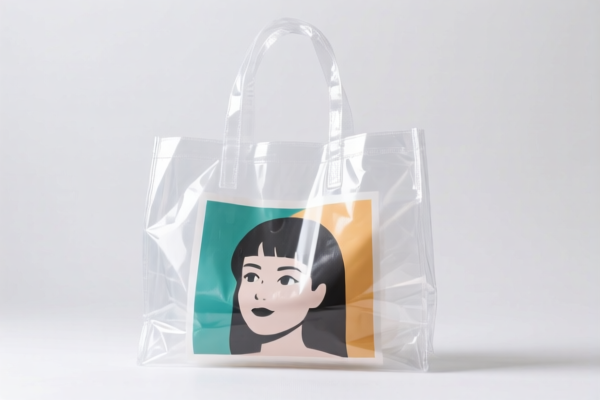
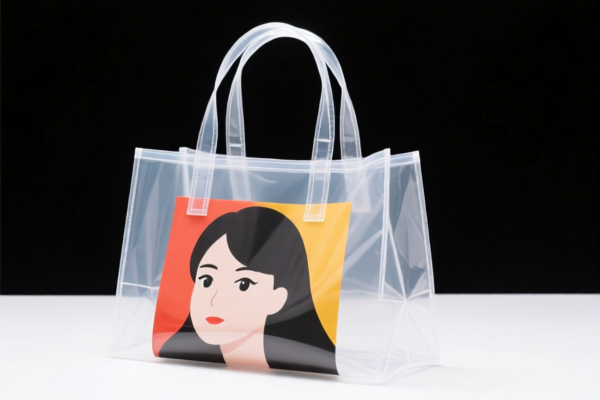
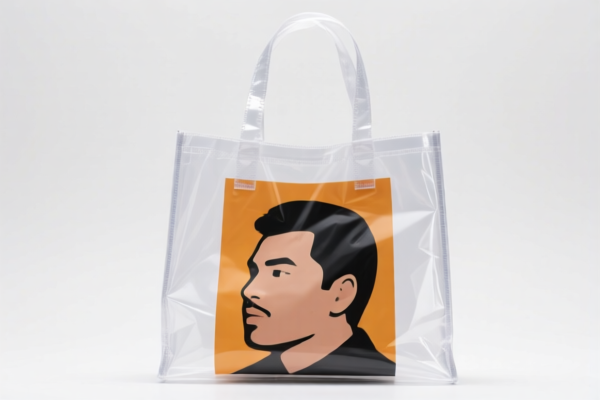
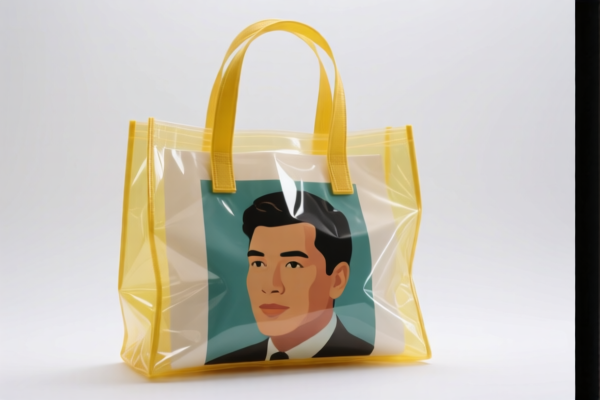
AI Analysis
👜 Plastic Paper Laminated Handbag (Laminated Plastic/Paper Bags)
🌐 HS Code Reference & Customs Clearance Guide | 2026 Latest Tariff Analysis | Professional Clearance Strategy
📌 I. Product Definition & Classification: What is a "Plastic Paper Laminated Handbag"?
This product is a composite packaging item, typically defined as a bag made from paper laminated with plastic films (such as PE or PP). In international trade, its classification depends heavily on the primary material or the outer surface material.
Key Distinction Logic: * If the outer surface is primarily Plastic: It falls under Chapter 42 (Articles of Leather; Related Articles), specifically handbags. * If the outer surface is primarily Paper/Textile: It often falls under Chapter 39 (Plastics and articles thereof) or Chapter 48 (Paper), depending on the specific binding agent and structure. * The "兜底" (Catch-all) Principle: Since the name "Plastic Paper Laminated Handbag" does not explicitly state which material is dominant, customs may use "Other" categories.
⚠️ Critical Clarification Point:
- If the bag is made of plastic sheets with paper lamination, it is often classified as a Plastic Handbag (Ch 42).
- If it is a plastic bag/closure type (e.g., a pouch) where plastic is the structural integrity, it may fall under Ch 39.
- The tax burden varies significantly between these interpretations (51% vs. 38% vs. 52.6%).
📦 II. HS Code Classification Details (2026 Latest Tariff Reference)
Based on the provided data, here are the three potential HS Codes for "Plastic Paper Laminated Handbag" and their corresponding tax logic.
| HS Code | Product Description | Classification Logic | Total Tax Rate (US Import from CN) |
|---|---|---|---|
| 4202.22.15.00 | Handbags with outer surface of plastic sheets | Material Match: Explicitly matches "outer surface is plastic sheet". Form Match: Matches "handbag/container". | 51.0% |
| 3923.21.00.30 | Sacks and bags, of polymers of ethylene | Material Match: Plastic/Ethylene polymers. Form Match: Bag/Sack. Catch-all: Since closure type is unspecified, it defaults to "Other". | 38.0% |
| 4202.92.97.00 | Other articles of luggage/handbags, of plastic sheets | Material Match: "Made of plastic sheets". Use Match: "Shopping bags, bottle bags, similar containers". Common Sense: Plastic bags are common containers. | 52.6% |
🔍 Key Insight:
- 4202.22.15.00 is the most direct match for a "Handbag" with a plastic exterior.
- 3923.21.00.30 offers the lowest tax rate but relies on the product being classified as a "bag/sack" rather than a "handbag," and assumes it fits the "Other" category due to lack of closure details.
- 4202.92.97.00 is a broader "Other" category for plastic articles in Chapter 42, potentially capturing bags not explicitly listed in 4202.22.
💰 III. 2026 Latest Tariff Rate Breakdown (Including Surtaxes & Policy Surcharges)
✅ Applicable Country: United States (US)
✅ Origin: China (CN)
✅ Effective Date: Post-November 2025 (Including Section 301 & IEEPA surcharges)
🎯 1. 4202.22.15.00 —— Handbags, with outer surface of plastic sheets
| Item | Detail |
|---|---|
| Base Tariff | 16.0% |
| Section 301 Surtax | +25.0% |
| IEEPA Surcharge (Section 122) | +10.0% |
| Total Tax Rate | 51.0% |
| Tax Calculation | CIF Value × 51.0% |
| De Minimis Exemption? | ❌ No (Not eligible for de minimis) |
| Legal Basis Path | USITC:4202.22.15.00 → FOOTNOTE:9903.88.01 (Sec 301) → IEEPA:9903.01.24 (Sec 122) |
📌 Explanation:
- The 16% base tariff is standard for plastic handbags.
- The 25% Section 301 tariff applies to most Chinese-made plastic goods.
- The 10% IEEPA surcharge is an additional layer for Chinese origin goods under current emergency powers.
- Total 51% is a high-cost entry barrier. Must be factored into pricing.
🎯 2. 3923.21.00.30 —— Sacks and bags, of polymers of ethylene
| Item | Detail |
|---|---|
| Base Tariff | 3.0% |
| Section 301 Surtax | +25.0% |
| IEEPA Surcharge (Section 122) | +10.0% |
| Total Tax Rate | 38.0% |
| Tax Calculation | CIF Value × 38.0% |
| De Minimis Exemption? | ❌ No |
| Legal Basis Path | USITC:3923.21.00.30 → FOOTNOTE:9903.88.01 → IEEPA:9901.25 → IEEPA:9903.01.24 |
📌 Note:
- This is the most cost-effective option if the customs authority accepts the classification as a "plastic bag/sack" rather than a "handbag."
- The 3% base tariff is significantly lower than Chapter 42 rates.
- Risk: If customs determines the item is a "fashion handbag" rather than a utilitarian bag, this classification may be rejected, leading to back taxes and penalties.
🎯 3. 4202.92.97.00 —— Other articles of luggage/handbags, of plastic sheets
| Item | Detail |
|---|---|
| Base Tariff | 17.6% |
| Section 301 Surtax | +25.0% |
| IEEPA Surcharge (Section 122) | +10.0% |
| Total Tax Rate | 52.6% |
| Tax Calculation | CIF Value × 52.6% |
| De Minimis Exemption? | ❌ No |
| Legal Basis Path | USITC:4202.92.97.00 → FOOTNOTE:9903.88.01 → IEEPA:9903.01.24 |
📌 Attention:
- This category is a "catch-all" for plastic articles in Chapter 42.
- The 17.6% base tariff is higher than 4202.22.15.00, likely due to it being a non-specific "other" item.
- Total 52.6% is the highest tax rate among the three options.
- Only use this if the product does not fit 4202.22.15.00 (e.g., if it's not strictly a "handbag" but a "container").
🛠️ IV. Customs Clearance Practical Advice (Real-World Pitfall Guide)
✅ 1. Required Documentation Checklist (Non-negotiable)
| Document | Required? | Description |
|---|---|---|
| ✅ Product Specification Sheet | ✔️ | Must detail material composition (e.g., "Paper core, PE laminate") and dimensions. |
| ✅ Product Photos | ✔️ | Clear images showing the outer surface material. Is it shiny (plastic) or matte (paper)? |
| ✅ Commercial Invoice | ✔️ | Description must be precise: "Plastic-Laminated Paper Handbag" vs. "Polyethylene Bag". |
| ✅ Packing List | ✔️ | Include weight and quantity. |
| ✅ Supply Chain Info | ✔️ | Proof of origin (China) to confirm surcharge applicability. |
✅ 2. Declaration Strategy (Key Mnemonics)
🔥 "Outer Surface Dictates, Base Tariff Drives, Surcharges are Fixed!"
| Scenario | Recommended HS Code | Tax Rate | Risk Level |
|---|---|---|---|
| Shiny, Plastic-feel Exterior | 4202.22.15.00 |
51.0% | ✅ Low (Most accurate for "Handbag") |
| Utilitarian Bag, No Handle/Structure | 3923.21.00.30 |
38.0% | ⚠️ Medium (Depends on "Bag" vs "Handbag" definition) |
| Indistinct/General Container | 4202.92.97.00 |
52.6% | ❌ High (Avoid if possible; highest tax) |
📌 Advice:
- If the bag has handles, structure, and fashion design, aim for 4202.22.15.00. It is defensible and clear.
- If the bag is a simple pouch or sack (like a grocery bag), try to argue for 3923.21.00.30 to save 13% in taxes. However, be prepared for customs scrutiny.
- Avoid 4202.92.97.00 unless necessary. It offers no tax advantage and has a higher base rate.
✅ 3. Special Cases
| Situation | Handling Advice |
|---|---|
| Mixed Material (50% Paper, 50% Plastic) | Customs often looks at the outer surface. If plastic is visible, Ch 42 is likely. |
| Sample vs. Bulk | Ensure samples match bulk declaration exactly. Discrepancies lead to delays. |
| Dropshipping | Ensure the supplier’s invoice matches your declaration. "Plastic Bag" vs. "Handbag" changes the code. |
🌍 V. Global Market Comparison (2026 Latest)
| Country/Region | Recommended HS Code | Base Tariff | Surcharges (China) | Total Tax | Notes |
|---|---|---|---|---|---|
| 🇺🇸 USA | 4202.22.15.00 |
16% | +35% (Sec 301+122) | 51.0% | High barrier. Consider Vietnam/MX origin for exemption. |
| 🇺🇸 USA | 3923.21.00.30 |
3% | +35% (Sec 301+122) | 38.0% | Lowest US tax, but classification risk. |
| 🇪🇺 EU | 4202.22.00 |
12% | 0% | 12% | No IEEPA/301 surcharges. Much more favorable. |
| 🇨🇳 China | 4202.22.00 |
20% | 0% | 20% | Domestic consumption tax may apply. |
📌 Conclusion:
- The US is the most expensive market due to the 35% total surcharge (25% + 10%).
- The EU is the most favorable with only base tariffs.
- For US imports, origin diversification (e.g., sourcing from Vietnam) is the only way to avoid the 35% surcharge, as these goods are not eligible for IEEPA exemptions.
📌 VI. Common Mistakes & Pitfall Guide (Lessons Learned)
❌ Mistake 1: Declaring as "Handbag" but using 3923.21.00.30 (Bag Code) without justification.
👉 Consequence: Customs may reject it as incorrect classification, leading to 51% tax + penalties.
❌ Mistake 2: Assuming "Paper" means Chapter 48.
👉 Consequence: If laminated with plastic, Ch 42 is often preferred. Misclassification leads to back taxes.
❌ Mistake 3: Ignoring the 10% IEEPA Surcharge.
👉 Consequence: Under-declaration by 10%. Seizure and fines upon audit.
✅ Correct Action:
"Laminated Paper Handbag, Outer Surface: Plastic (PE), Handle: Paper, Model: XYZ, Origin: China"
Use 4202.22.15.00 for safety and compliance.
🎯 VII. Conclusion: Professional Declaration, Cost Control, Efficiency!
🎯 Remember the Mnemonic:
🔹 "Outer Surface Rules, Base Tax Drives, Surcharges are 35%, Total 51 or 38!"
🔹 "Handbag = Ch 42 (High Tax), Bag = Ch 39 (Lower Tax), Choose Wisely!"
📌 Pro Tip:
If your handbags are originating from Vietnam, Mexico, Thailand, or Malaysia, you can apply for IEEPA & Section 301 Exemptions, reducing the surcharge to 0%.
- US Import from CN: 51% (4202.22.15.00)
- US Import from VN (Exempt): 16% (Base only)
Recommendation: Evaluate supply chain relocation for high-volume plastic handbags to the US market.
📣 Immediate Action:
📞 Consult a licensed Customs Broker + Provide Material Samples + Request HS Code Advance Ruling from CBP
🚀 Ensure your handbags clear customs smoothly, minimize costs, and maximize profit margins!
✨ Professional Clearance Starts with Accurate Classification!
💼 Every Cent of Tax Cost Deserves Precise Calculation!
Customer Reviews
About HS Code Classification
The Harmonized System (HS) is an internationally standardized nomenclature developed by the World Customs Organization (WCO) to classify traded products. Over 200 countries use the HS system as the basis for customs tariffs, trade statistics, and import/export regulations.
Each HS code follows a hierarchical structure:
- Chapter (2 digits) — Broad category of goods (e.g., Chapter 84: Machinery and Mechanical Appliances)
- Heading (4 digits) — More specific grouping within the chapter
- Subheading (6 digits) — Internationally standardized breakdown, used by all WCO member countries
- National subdivisions (8-10 digits) — Country-specific extensions for further classification, such as US HTSUS 10-digit codes
Correct HS code classification is essential for smooth customs clearance, accurate duty payment, and compliance with trade regulations. Misclassification can lead to customs delays, overpayment of duties, or penalties.
When importing from CN to US, the applicable tariff rates may include:
- Most-Favored-Nation (MFN) rate — The standard duty rate applied to WTO members
- General rate — Applied to countries without trade agreements
- Trade remedy duties — Additional tariffs such as Section 301 (anti-dumping), Section 232 (national security), or countervailing duties
The information provided on this page is for reference purposes only. For official classification, please consult with your local customs authority or a licensed customs broker.