Plastic Paper Laminated Power Bag
CN → US| HS Code | Tariff Rate | Origin | Destination | Doc |
|---|---|---|---|---|
| 4819400040 | 35.0% | CN | US | Official Doc |
| 4819300040 | 35.0% | CN | US | Official Doc |
| 3923210095 | 38.0% | CN | US | Official Doc |
| 3923290000 | 38.0% | CN | US | Official Doc |
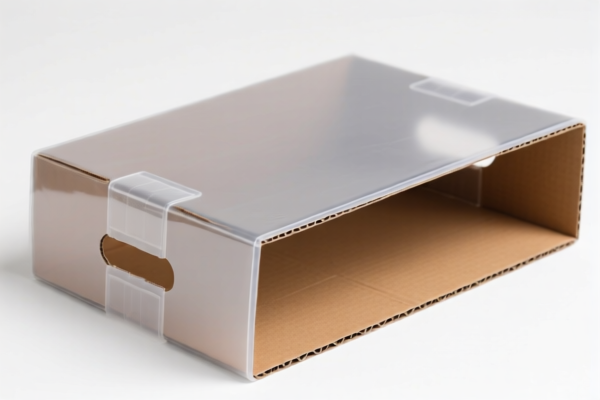
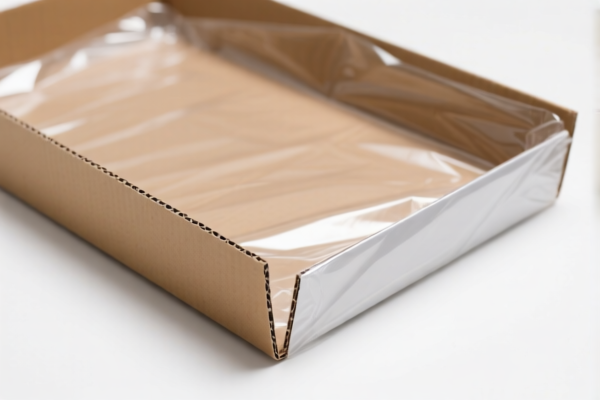
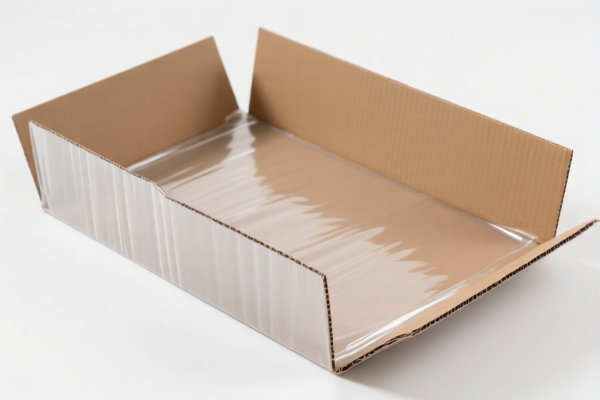
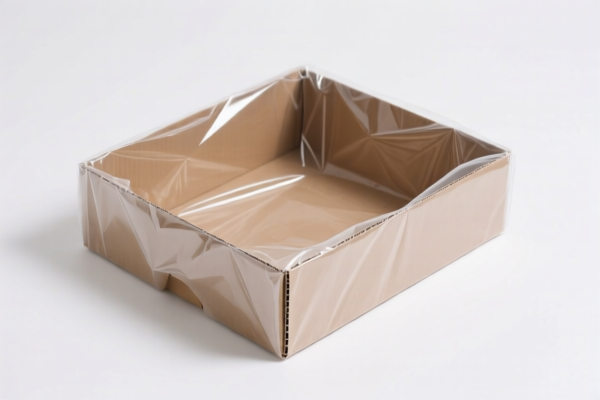
Product Images
AI Analysis
🛍️ Plastic-Paper Laminated Power Bags: The Packaging Dilemma
(Articles for the conveyance or packing of goods; Stoppers, lids, caps and other closures)
🌐 HS Code Reference & Customs Clearance Guide | 2026 Latest Tariff Analysis | Professional Clearance Strategy
📌 I. Product Definition & Classification: Do You Really Know Your "Power Bag"?
"Power Bags" in the context of packaging usually refer to heavy-duty sacks or bags designed for industrial goods, chemicals, foodstuffs, or construction materials. When you specify "Plastic and Paper Laminated," you are dealing with a composite material.
In international trade classification (HS Code), the key to correct classification lies in the essential character of the composite material. According to General Rule of Interpretation (GRI) 3(b), a mixture of materials is classified as if it consisted of the material or component which gives it its essential character.
⚠️ Critical Distinction:
- If the Plastic layer provides the structural integrity, waterproofing, and primary function → It falls under Chapter 39 (Plastics).
- If the Paper layer provides the structural integrity, printability, and primary function → It falls under Chapter 48 (Paper).
Note: The provided <DATA> only includes classifications for Pure Plastic Bags (Chapter 39) and Pure Paper Bags (Chapter 48). It does not explicitly list a specific HS code for "Laminated" goods. Therefore, we must determine whether the plastic or paper component dominates.
📦 II. HS Code Classification Details (Based on Provided <DATA>)
Since the <DATA> does not provide a specific "Laminated" HS code, we must analyze the two most likely scenarios based on the dominant material.
Scenario A: Dominant Material is PLASTIC (Most Common for "Power Bags")
If the bag is primarily plastic (e.g., woven polypropylene with a plastic liner, or PE-coated paper where plastic is key for moisture barrier), it falls under Chapter 39.
| HS Code | Product Description | Applicable Scenario | Key Feature |
|---|---|---|---|
3923.21.00.95 |
Articles for conveyance/packing, of plastics: Sacks and bags (including cones): Of polymers of ethylene | PP/PE laminated bags, where plastic is the essential character | ✅ Plastic Essential |
3923.29.00.00 |
Articles for conveyance/packing, of plastics: Sacks and bags: Of other plastics | Non-ethylene plastic laminated bags (e.g., PVC, PET layers) | ✅ Plastic Essential |
Scenario B: Dominant Material is PAPER
If the bag is primarily paper (e.g., kraft paper bag with a thin plastic laminate for moisture resistance, where paper provides the strength), it falls under Chapter 48.
| HS Code | Product Description | Applicable Scenario | Key Feature |
|---|---|---|---|
4819.30.00.40 |
Cartons, boxes, cases, bags... of paper: Sacks and bags, having a base of a width of < 40 cm | Paper bags with plastic laminate, narrow base | ✅ Paper Essential |
4819.40.00.40 |
Cartons, boxes, cases, bags... of paper: Other sacks and bags, including cones | Paper bags with plastic laminate, wider base or other types | ✅ Paper Essential |
🔍 Key Reminder:
- If the bag is laminated, customs may require a detailed description to determine the "essential character."
- Misclassification Risk: Declaring a plastic-dominated laminated bag as "Paper" to avoid high tariffs is a common violation.
- Check the Base: For paper bags, the base width (<40cm vs >40cm) determines the subheading under4819.
💰 III. 2026 Latest Tariff Rate Breakdown (Including Surcharges)
✅ Applicable Country: United States (US)
✅ Country of Origin: China (CN)
✅ Effective Date: Post-November 2025 (Current Context)
🎯 1. Plastic-Dominated Laminated Bags (Chapter 39)
Option 1: 3923.21.00.95 (Polymers of Ethylene)
| Item | Content |
|---|---|
| Basic Tariff | 3.0% |
| Section 301 Surcharge | +25.0% |
| Total Tax Rate | 28.0% |
| Tax Calculation | CIF Value × 28.0% |
| De Minimis Exemption? | ❌ NO (Not eligible for de minimis) |
Option 2: 3923.29.00.00 (Other Plastics)
| Item | Content |
|---|---|
| Basic Tariff | 0.0% |
| Section 301 Surcharge | 0.0% |
| Total Tax Rate | 0.0% |
| Tax Calculation | CIF Value × 0.0% |
| De Minimis Exemption? | ✅ YES (May be eligible if < $800, but subject to scrutiny) |
📌 Explanation:
-3923.21.00.95attracts 28% total duty because it is classified under "Polymers of Ethylene" (common PP/PE bags), which are subject to the 25% Section 301 surcharge.
-3923.29.00.00has 0% duty. This is a crucial distinction! If your laminated bag uses non-ethylene plastics (e.g., PET, PVC, or specific laminates where ethylene is not the primary polymer), you may qualify for the 0% rate.
- Warning: Customs may challenge the 0% rate if they deem the bag to be ethylene-based. Provide technical specs!
🎯 2. Paper-Dominated Laminated Bags (Chapter 48)
Option 1: 4819.30.00.40 (Base Width < 40 cm)
| Item | Content |
|---|---|
| Basic Tariff | 0.0% |
| Section 301 Surcharge | +25.0% |
| Total Tax Rate | 25.0% |
| Tax Calculation | CIF Value × 25.0% |
| De Minimis Exemption? | ❌ NO |
Option 2: 4819.40.00.40 (Other Sacks and Bags)
| Item | Content |
|---|---|
| Basic Tariff | 0.0% |
| Section 301 Surcharge | +25.0% |
| Total Tax Rate | 25.0% |
| Tax Calculation | CIF Value × 25.0% |
| De Minimis Exemption? | ❌ NO |
📌 Explanation:
- All paper-based sacks/bags from China are subject to the 25% Section 301 surcharge.
- The base width (<40cm) affects the HS code but not the tax rate in this dataset (both are 25%).
🛠️ IV. Customs Clearance Practical Advice (Pitfall Avoidance Guide)
✅ 1. Preparation Checklist (All Required)
| Document | Mandatory? | Description |
|---|---|---|
| ✅ Material Composition Statement | ✔️ | Must specify: % Plastic, % Paper, Lamination type (e.g., PP woven + PE liner) |
| ✅ Technical Spec Sheet | ✔️ | Include dimensions, weight capacity, base width (<40cm or >40cm) |
| ✅ Product Photos | ✔️ | Show cross-section if possible, to prove lamination structure |
| ✅ Commercial Invoice | ✔️ | Clearly state "Plastic-Paper Laminated Bag" and Material Dominance |
| ✅ Packing List | ✔️ | List quantity and net weight |
| ✅ Origin Certificate | ✔️ | If not from China, to avoid Section 301 |
✅ 2. Declaration Strategy (Key Mantra)
🔥 "Laminated is tricky: Prove dominance! If plastic rules, watch out for 28%. If paper rules, it's 25%. Don't guess!"
| Situation | Correct Declaration | Wrong Action |
|---|---|---|
| PP/PE Woven Bag + Plastic Liner | 3923.21.00.95 |
Misdeclare as Paper → 4819 → 25% (But customs may penalize if plastic is dominant) |
| Kraft Paper + Thin PE Coating | 4819.40.00.40 |
Misdeclare as Plastic → 3923.21 → 28% (Unnecessary higher tax) |
| Non-Ethylene Plastic Laminated | 3923.29.00.00 |
Declare as Ethylene → 3923.21 → 28% (Avoid extra 28% if possible) |
| Base Width Unknown | Provide exact cm measurement | Guessing → Wrong subheading → Delays |
✅ 3. Special Cases
| Case | Handling Advice |
|---|---|
| OEM Custom Bags | Provide design files to prove material choice |
| Bag with Handles/Straps | Still classified under "Sacks and Bags" if primary function is conveyance |
| Bag with Valve (Spout) | Consider if it falls under "Stoppers, Lids, Caps" (3923.30 or 3923.40) – Not in <DATA>, so stick to Bag codes if main function is sack |
| Biodegradable Plastic | Must provide certification; if not recognized as plastic, may be misclassified |
🌍 V. Global Market Comparison (2026 Update)
| Country/Region | Recommended HS Code | Tariff | Certification | Notes |
|---|---|---|---|---|
| 🇺🇸 USA | 3923.21.00.95 or 4819.40.00.40 |
25-28% | None specific | High Tariff Risk |
| 🇨🇳 China | 3923.21.00.95 or 4819.40.00.40 |
0-5% | None | Low Tariff |
| 🇪🇺 EU | 3923.29 or 4819 |
0-4.7% | REACH | Lower Tariffs |
| 🇬🇧 UK | 3923.29 or 4819 |
0-4.7% | UKCA | Post-Brexit Rules |
📌 Conclusion:
- The USA imposes Section 301 tariffs on both plastic and paper bags from China.
- Plastic bags (Ethylene): 28% total.
- Plastic bags (Non-Ethylene): 0% total (if correctly classified).
- Paper Bags: 25% total.
- Strategic Advice: If possible, redesign to use non-ethylene plastics (e.g., PET lamination) to achieve 0% duty under3923.29.00.00.
📌 VI. Common Mistakes & Pitfalls (Lessons Learned)
❌ Mistake 1: Declaring "Laminated Bag" without specifying material dominance
👉 Result: Customs assigns the highest applicable rate or holds shipment for classification review.
❌ Mistake 2: Assuming all plastic bags are 28%
👉 Result: Missing the 0% rate for 3923.29.00.00 (Other Plastics) if ethylene is not the main polymer.
❌ Mistake 3: Ignoring base width for paper bags
👉 Result: Wrong subheading under 4819, leading to documentation discrepancies.
❌ Mistake 4: Using "Bag" as the only description
👉 Result: Customs cannot distinguish between plastic, paper, or woven bags.
✅ Correct Description:
"Plastic-Paper Laminated Sack, 50kg Capacity, Base Width 45cm, Made of 70% Kraft Paper and 30% PE Lamination, for Industrial Use"
🎯 VII. Conclusion: Professional Declaration, Save Costs!
🎯 Remember the Mantra:
🔹 "Laminated? Check Dominance! Plastic Rules = 28% (or 0% if Non-Ethylene). Paper Rules = 25%. Be Specific!"
🔹 "HS Code Defines Tax, 28% vs 0% is Huge, Declare Right, Save Dollars!"
📌 Tip:
- If your laminated bag uses non-ethylene plastics (e.g., PET, PP non-woven with PE liner where PP is not ethylene polymer in the strict sense – Note: PP is polypropylene, not ethylene polymer, so it falls under 3923.29), you can claim 0% duty.
- Consult a customs broker to verify the polymer type before declaring 3923.29.00.00.
📣 Take Action Now:
📞 Contact a licensed customs broker + Provide material composition + Apply for Advance Ruling if unsure.
🚀 Let your bags pass smoothly, cut costs, and boost profits!
✨ Professional clearance starts with accurate classification!
💼 Every cent saved is a cent earned!
Customer Reviews
About HS Code Classification
The Harmonized System (HS) is an internationally standardized nomenclature developed by the World Customs Organization (WCO) to classify traded products. Over 200 countries use the HS system as the basis for customs tariffs, trade statistics, and import/export regulations.
Each HS code follows a hierarchical structure:
- Chapter (2 digits) — Broad category of goods (e.g., Chapter 84: Machinery and Mechanical Appliances)
- Heading (4 digits) — More specific grouping within the chapter
- Subheading (6 digits) — Internationally standardized breakdown, used by all WCO member countries
- National subdivisions (8-10 digits) — Country-specific extensions for further classification, such as US HTSUS 10-digit codes
Correct HS code classification is essential for smooth customs clearance, accurate duty payment, and compliance with trade regulations. Misclassification can lead to customs delays, overpayment of duties, or penalties.
When importing from CN to US, the applicable tariff rates may include:
- Most-Favored-Nation (MFN) rate — The standard duty rate applied to WTO members
- General rate — Applied to countries without trade agreements
- Trade remedy duties — Additional tariffs such as Section 301 (anti-dumping), Section 232 (national security), or countervailing duties
The information provided on this page is for reference purposes only. For official classification, please consult with your local customs authority or a licensed customs broker.