Plastic Paper Wrapped Pen Case
CN → US| HS Code | Tariff Rate | Origin | Destination | Doc |
|---|---|---|---|---|
| 3924104000 | 13.4% | CN | US | Official Doc |
| 3923109000 | 38.0% | CN | US | Official Doc |
| 3923900080 | 38.0% | CN | US | Official Doc |
| 3926909989 | 22.8% | CN | US | Official Doc |
| 3924905650 | 20.9% | CN | US | Official Doc |
Product Images
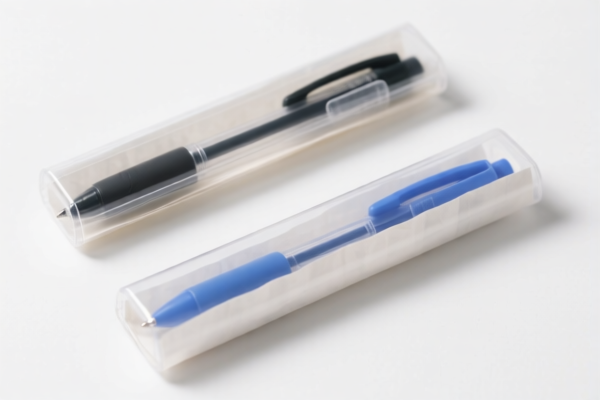
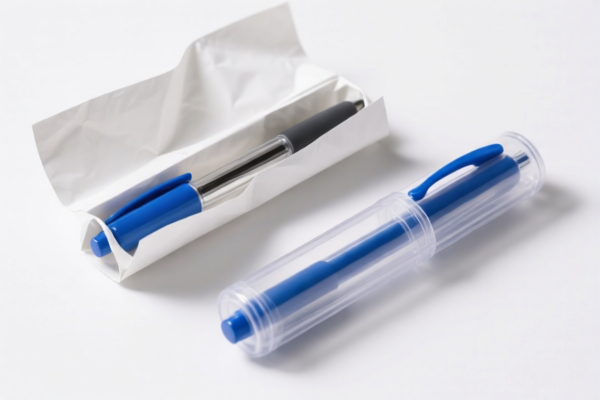
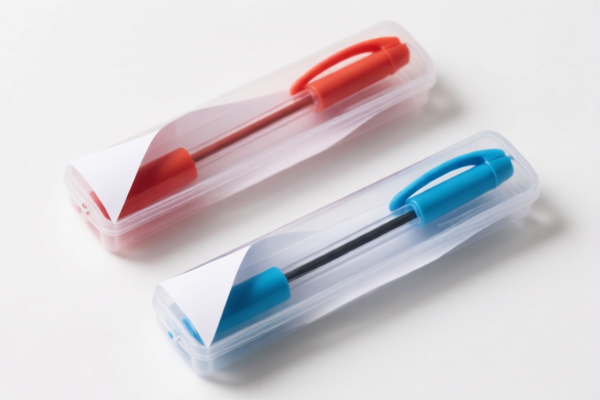
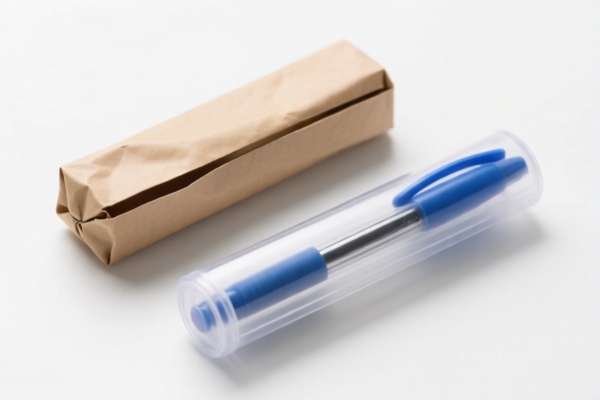
AI Analysis
🖊️ Plastic Paper Wrapped Pen Case (Stationery & Stationery Accessories)
🌐 HS Code Reference & Customs Clearance Guide | 2026 Latest Tariff Analysis | Professional Strategy
📌 I. Product Definition & Classification: Is it "Stationery" or "Plastic Packaging"?
A "Plastic Paper Wrapped Pen Case" is a dual-nature product. It consists of a plastic core (for holding pens) and a paper outer layer (for aesthetics/branding). In international trade, classification depends heavily on the essential character and specific description provided in the Harmonized System (HS) nomenclature.
Key Distinction:
1. General Plastic Articles: If the item is primarily a generic plastic container with only superficial paper decoration, it often falls under general plastic articles.
2. Specific Stationery/Household Items: If it is specifically designed as a "pen case" or "household storage," it may fall under specific subheadings for household or stationery items, potentially attracting lower base duties.
⚠️ Critical Classification Point:
- If the product is a general plastic container (not specifically for pens/pencils) with a paper wrap → Likely 3926.90.99.89 (Other plastic articles).
- If it is explicitly a pen case/pencil case but made of plastic → Could be 3926.10.00.00 (Finished consumer plastic goods) OR 3924.90.56.50 (if categorized under household收纳/organization).
- Note: Based on the provided data, we must select the most fitting HS Codes from the set. Since "Pen Case" is a specific use, but the data only offers broad categories, we analyze the best fit among the available options.
📦 II. HS Code Classification Details (Based on Provided Data)
Below are the applicable HS Codes from your dataset, mapped to the "Plastic Paper Wrapped Pen Case" based on its material (plastic) and function (container/storage).
| HS Code | Product Description | Relevance to "Pen Case" | Estimated Total Tax |
|---|---|---|---|
3924.10.40.00 |
Other plastic sanitary/household items | ✅ Best Fit for "Household/Organizational" Use Pen cases are often considered "household items" or "stationery accessories" for home/office use. |
13.4% |
3926.10.00.00 |
Finished consumer plastic goods (other) | ⚠️ Alternative for "Finished Consumer Good" If declared as a general "finished plastic consumer product" rather than a specific storage item. |
15.3% |
3926.90.99.89 |
Other plastic containers/articles | ❌ Less Favorable Used if the item is deemed a generic plastic article not specifically classified elsewhere. |
22.8% |
3923.10.90.00 |
Plastic packing boxes/cases for transport | ❌ Incorrect This is for shipping/packaging, not for consumer use. A pen case is a final product, not a transport box. |
38.0% |
3923.90.00.80 |
Other plastic packing supplies | ❌ Incorrect Same as above. Do not classify consumer goods as "packaging." |
38.0% |
🔍 Priority Selection:
- Primary Recommendation:3924.10.40.00(13.4% Total Tax).
Reason: This code covers "plastic sanitary/household items." Pen cases, pencil holders, and desk organizers are commonly classified here as "household organizational items."
- Secondary Option:3926.10.00.00(15.3% Total Tax).
Reason: If customs views it strictly as a "finished plastic consumer good" without a specific household subcategory, this applies.
💰 III. 2026 Latest Tariff Rate Breakdown (Detailed Tax Clauses)
✅ Applicable Country: USA (US)
✅ Origin: China (CN)
✅ Effective Date: Post-November 2025 (Current Policy)
🎯 1. Primary Recommendation: 3924.10.40.00 (Plastic Household/Stationery Items)
| Component | Rate | Explanation |
|---|---|---|
| Base Duty | 3.4% | Standard MFN (Most Favored Nation) rate for plastic household items. |
| Section 301 Duty | 0.0% | Crucial Benefit: Many plastic household items (including some stationery) are excluded from or have lower Section 301 tariffs compared to industrial plastics. |
| Section 122 Duty | 10.0% | Additional tariff under 122 Clause (applies to many Chinese imports). |
| Total Tax Rate | 13.4% | Sum of Base + Section 301 + Section 122. |
| De Minimis Exemption | ❌ No | Value must be declared; no $800 exemption for these categories in most B2B scenarios. |
📌 Why this is the best choice:
- The Section 301 rate is 0% for this specific subheading, saving you 25% compared to other plastic packaging codes.
- Total cost impact: Only 13.4%, making it significantly cheaper than3926.90.99.89(22.8%) or packaging codes (38.0%).
🎯 2. Alternative: 3926.10.00.00 (Finished Plastic Consumer Goods)
| Component | Rate | Explanation |
|---|---|---|
| Base Duty | 5.3% | Standard rate for other finished plastic articles. |
| Section 301 Duty | 0.0% | Like the above, many consumer plastic goods enjoy 0% Section 301. |
| Section 122 Duty | 10.0% | Applies to Chinese origin. |
| Total Tax Rate | 15.3% | Slightly higher than 3924.10.40.00. |
📌 When to use:
- If customs officers reject the "household item" classification and insist it is a "general plastic article," this code is the next best alternative.
🎯 3. High-Risk Codes to AVOID (Do Not Use)
| HS Code | Total Tax | Reason to Avoid |
|---|---|---|
3923.10.90.00 |
38.0% | This is for transport packaging. Classifying a consumer pen case as a shipping box is fraud. Penalties + 25% Section 301 + 10% Section 122. |
3923.90.00.80 |
38.0% | Same as above. Do not misdeclare consumer goods as packaging. |
3926.90.99.89 |
22.8% | Generic "Other Plastic Articles." Higher Section 301 (7.5%) and higher base duty (5.3%). Less optimal than 3924.10.40.00. |
🛠️ IV. Customs Clearance Practical Advice
✅ 1. Preparation Checklist
| Document | Required? | Notes |
|---|---|---|
| Product Photos | ✅ Yes | Show the pen case with pens inside to prove "consumer use," not "shipping packaging." |
| Material Declaration | ✅ Yes | Specify: "Outer: Paper; Inner: Plastic (PP/PE)." |
| Composition % | ✅ Yes | If paper weight > 50%, customs might question plastic classification. Usually, plastic core defines the HS code. |
| Commercial Invoice | ✅ Yes | Description must say: "Plastic Pencil Case with Paper Wrap" NOT "Plastic Shipping Box." |
| HTS Binding Ruling | ✅ Recommended | Apply for a pre-ruling if shipping large volumes. |
✅ 2. Naming & Description Strategy
🔥 Golden Rule:
"Consumer Use > Packaging Use"
"Household/Stationery > General Plastic"
| Scenario | Recommended Description | HS Code | Tax |
|---|---|---|---|
| Correct | "Plastic Pencil Case, for Desk Organization, Paper Exterior" | 3924.10.40.00 |
13.4% |
| Correct | "Finished Plastic Stationery Case, Consumer Use" | 3926.10.00.00 |
15.3% |
| WRONG | "Plastic Container for Shipping" | 3923.10.90.00 |
38.0% (Risk of Fraud) |
| WRONG | "Plastic Box" (Vague) | 3926.90.99.89 |
22.8% (Higher Tax) |
✅ 3. Special Considerations
- Section 122 Clauses: Note that 10% is applied to ALL these codes due to the 122 Clause. This is unavoidable for Chinese-origin plastic goods.
- Section 301 Exclusions: The key to minimizing tax is the 0% Section 301 rate for
3924.10.40.00and3926.10.00.00. Ensure your product description does not trigger "industrial plastic" classifications. - Paper Component: If the paper wrapping is the primary feature (e.g., a cardboard box with plastic lining), consider cardboard HS codes. But since it's a plastic case with paper wrap, plastic classification remains dominant.
🌍 V. Global Market Comparison (2026)
| Region | Recommended HS Code | Est. Tax | Notes |
|---|---|---|---|
| 🇺🇸 USA | 3924.10.40.00 |
13.4% | Best option. 0% Section 301. |
| 🇪🇺 EU | 3924.10 / 3926.90 | ~5-7% | No Section 122 or 301. Standard duties apply. |
| 🇨🇳 China | 3924.10 / 3926.90 | ~3-5% | Low import duties. Focus on VAT. |
📌 VI. Common Mistakes & Pitfalls
❌ Mistake 1: Declaring as "Plastic Packaging" (3923.xx)
👉 Result: 38% Tax + Potential Customs Fraud Investigation.
👉 Fix: Emphasize "Consumer Use" and "Stationery."
❌ Mistake 2: Using Generic "Plastic Container" (3926.90)
👉 Result: 22.8% Tax (7.5% Section 301).
👉 Fix: Use specific "Household/Stationery" codes (3924.10) for lower Section 301.
❌ Mistake 3: Ignoring the 122 Clause
👉 Result: Underestimating landed cost.
👉 Fix: Always add 10% to calculations for Chinese plastic imports.
🎯 VII. Conclusion: Maximize Profit, Minimize Duty
🎯 Final Recommendation:
Use 3924.10.40.00 (Plastic Household/Stationery Items).
- Tax: 13.4% (Lowest in dataset).
- Reason: Low base duty (3.4%) + 0% Section 301 + 10% Section 122.
💡 Pro Tip:
On the commercial invoice, use the phrase:
"Plastic Pencil Case for Office/Home Use, Paper Wrapped"
Avoid words like "Box," "Container," or "Packing Material."
✨ Clear Classification = Clear Savings!
💼 13.4% vs 38.0% = 24.6% Saved per item!
Customer Reviews
About HS Code Classification
The Harmonized System (HS) is an internationally standardized nomenclature developed by the World Customs Organization (WCO) to classify traded products. Over 200 countries use the HS system as the basis for customs tariffs, trade statistics, and import/export regulations.
Each HS code follows a hierarchical structure:
- Chapter (2 digits) — Broad category of goods (e.g., Chapter 84: Machinery and Mechanical Appliances)
- Heading (4 digits) — More specific grouping within the chapter
- Subheading (6 digits) — Internationally standardized breakdown, used by all WCO member countries
- National subdivisions (8-10 digits) — Country-specific extensions for further classification, such as US HTSUS 10-digit codes
Correct HS code classification is essential for smooth customs clearance, accurate duty payment, and compliance with trade regulations. Misclassification can lead to customs delays, overpayment of duties, or penalties.
When importing from CN to US, the applicable tariff rates may include:
- Most-Favored-Nation (MFN) rate — The standard duty rate applied to WTO members
- General rate — Applied to countries without trade agreements
- Trade remedy duties — Additional tariffs such as Section 301 (anti-dumping), Section 232 (national security), or countervailing duties
The information provided on this page is for reference purposes only. For official classification, please consult with your local customs authority or a licensed customs broker.