Plastic Parts
CN → US| HS Code | Tariff Rate | Origin | Destination | Doc |
|---|---|---|---|---|
| 3901105010 | 41.5% | CN | US | Official Doc |
| 3902100000 | 41.5% | CN | US | Official Doc |
| 3902900050 | 41.5% | CN | US | Official Doc |
| 3904100000 | 41.5% | CN | US | Official Doc |
| 3904210000 | 41.5% | CN | US | Official Doc |
Product Images
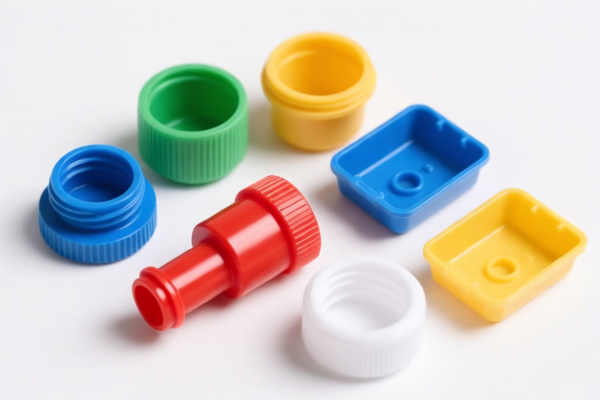
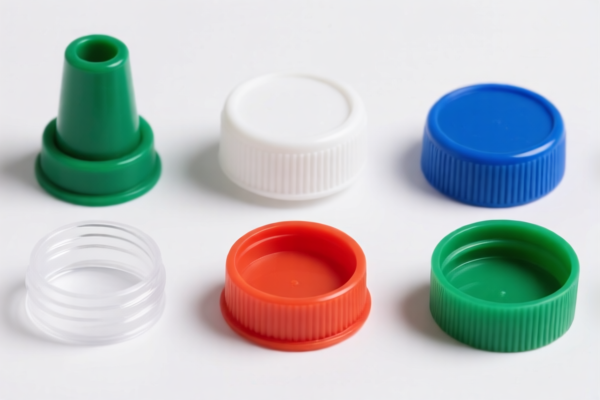
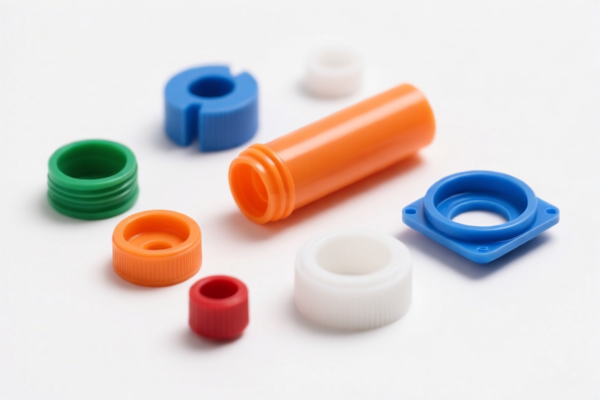
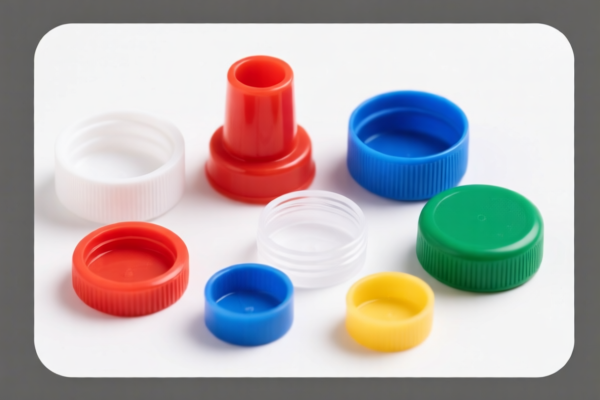
AI Analysis
🧱 Plastic Parts & Raw Materials (Polymer Resins)
🌐 HS Code Reference & Customs Clearance Guide | 2026 Latest Tariff Analysis | Strategic Import Strategy for US Market
📌 I. Product Definition & Classification: Are You Importing "Parts" or "Raw Materials"?
Plastic Parts is a broad term that often leads to incorrect customs classification. In international trade, specifically for raw polymer inputs, the distinction between finished/semi-finished parts and primary shape polymers (resins) is critical for tariff liability.
Based on the provided <DATA> and <TAX> constraints, the items listed are NOT finished plastic parts (like casings or connectors), but rather Primary Shape Polymers (Raw Plastic Resins). These are the foundational materials used to make plastic parts later.
⚠️ Critical Distinction:
- If you are importing finished components (e.g., plastic gears, casings, clips) → They do NOT fall under the HS Codes listed in<DATA>.
- If you are importing granules, powders, or pellets of Ethylene, Propylene, or PVC → They MUST fall under the HS Codes listed in<DATA>.The following analysis strictly adheres to the
<DATA>provided, which covers Primary Shape Polymers.
📦 II. HS Code Classification Details (2026 Latest Tariff Authority)
The <DATA> specifies five specific HS Codes for plastic raw materials. All share identical tariff structures due to US trade policies on Chinese-origin goods.
| HS Code | Product Description (Summary) | Chemical Basis | Physical Form |
|---|---|---|---|
3901.10.50.10 |
Plastic Raw Material, Ethylene Polymers, Primary Shape | PE (Polyethylene) | Granules/Pellets/Powder |
3902.10.00.00 |
Plastic Raw Material, Propylene/Alph-Olefin Polymers, Primary Shape | PP (Polypropylene) | Granules/Pellets/Powder |
3902.90.00.50 |
Plastic Raw Material, Propylene/Alph-Olefin Polymers, Primary Shape | PP/Other (Copolymer/Blends) | Granules/Pellets/Powder |
3904.10.00.00 |
Plastic Raw Material, Polyvinyl Chloride (PVC), Primary Shape | PVC (Unplasticized) | Granules/Powder |
3904.21.00.00 |
Plastic Raw Material, Polyvinyl Chloride (PVC), Primary Shape | PVC (Plasticized/Liquid) | Liquid/Slurry/Special Form |
🔍 Key Reminder:
- "Primary Shape" means the material is in its basic form (pellets, powders, liquids) ready for further processing (injection molding, extrusion).
- Do not use these codes for finished plastic items. Using these codes for finished parts may trigger suspicion of misclassification, leading to audits.
💰 III. 2026 Latest Tariff Rate Breakdown (Detailed Tax Clauses)
✅ Applicable Country: United States (US)
✅ Origin: China (CN) (Implied by "Section 122" and 10% tariff structure)
✅ Effective Date: Current 2026 Trade Policy
✅ Total Tax Rate: 41.5%
For ALL HS Codes listed in <DATA>, the tax structure is uniform. This is a high-tariff category driven by multiple layers of trade duties.
🎯 1. Unified Tariff Structure for All Listed Plastic Resins
| Tax Component | Rate | Description & Legal Basis |
|---|---|---|
| Base Duty | 6.5% | Standard Most Favored Nation (MFN) rate for Chapter 39 plastics. |
| Section 301 Duty | 25.0% | Added Tariff under US Trade Act Section 301. Targets Chinese imports of plastic materials and chemicals. |
| Section 122 Duty | 10.0% | Additional Tariff under "Section 122" authority (typically related to national security or specific commodity restrictions on Chinese goods). |
| TOTAL EFFECTIVE RATE | 41.5% | Sum of all components (6.5% + 25.0% + 10.0%). |
📌 Explanation of Tax Clauses:
- Base Duty (6.5%): This is the standard international trade duty. It is low because plastic resins are essential manufacturing inputs.
- Section 301 (25.0%): This is the most significant cost driver. It was imposed to counteract unfair trade practices. It applies broadly to Chinese-manufactured plastics.
- Section 122 (10.0%): This is a specific additive tariff. While less common than Section 301, it applies here as explicitly noted in the<DATA>tax detail.
- Cumulative Impact: The combination creates a 41.5% landed cost increase on the CIF (Cost, Insurance, Freight) value.
🛠️ IV. Customs Clearance Practical Advice (Pitfall Avoidance Guide)
✅ 1. Required Documentation Checklist
| Document | Mandatory? | Purpose |
|---|---|---|
| ✅ Commercial Invoice | ✔️ | Must clearly state "Polymer Resin" or "Plastic Raw Material," NOT "Plastic Parts." |
| ✅ Certificate of Origin | ✔️ | Crucial to prove origin. If from China, Section 301 & 122 apply. |
| ✅ Technical Data Sheet (TDS) | ✔️ | Confirms chemical composition (e.g., Pure PE vs. PP) to validate HS Code. |
| ✅ MSDS (Safety Data Sheet) | ✔️ | Required for shipping safety and customs hazard classification. |
| ✅ Bill of Lading | ✔️ | Matches invoice details exactly. |
✅ 2. Classification Strategy & Risk Mitigation
| Scenario | Correct Action | Risk of Error |
|---|---|---|
| Importing Pellets/Granules | Use 3901.10.50.10 (PE) or 3902.10.00.00 (PP). |
Low: Standard practice if documented correctly. |
| Importing Finished Plastic Housings | DO NOT use the codes above. Classify under Chapter 3904-3926 (Finished Articles). | High: Misclassification leads to penalties. Finished parts may have different duty rates (often lower base duty but still subject to Section 301). |
| Importing Recycled Plastic | Check if "Primary Shape" criteria are met. Recycled flakes may have different classification. | Medium: Requires careful technical justification. |
🔥 Pro Tip:
"Resin vs. Part: Know the Shape!"
- If it’s a powder, liquid, or pellet → It’s a Raw Material (Chapter 3901-3904).
- If it’s a molded, cut, or assembled item → It’s a Finished Part (Different HS Code).Using the wrong code for raw materials is less likely to cause revenue loss for customs (since 41.5% is high), but using it for finished parts might lead to an under-declaration if the finished part has a lower duty rate, or over-declaration if it’s higher. Always verify the physical form.
✅ 3. Special Considerations for "Section 122"
- Section 122 is a specific statutory authority (19 U.S.C. § 2102) that allows the President to modify duties for national security reasons.
- Impact: Even if you have a trade agreement with another country, if the goods are manufactured in China, this 10% surcharge applies.
- Mitigation:
- Can you source these resins from non-China origins (e.g., USA, Canada, Korea)?
- If yes, you can avoid the 25% (Sec 301) and 10% (Sec 122) tariffs, paying only the 6.5% base duty.
- Recommendation: Diversify supply chain to avoid the 35% premium (25% + 10%).
🌍 V. Global Market Comparison (2026 Latest)
| Market | HS Code Used | Base Duty | Additional Tariffs (China) | Total Effective Rate |
|---|---|---|---|---|
| 🇺🇸 USA | 3901.10.50.10 etc. |
6.5% | +25% (Sec 301) + 10% (Sec 122) | 41.5% |
| 🇨🇳 China (Export) | N/A | N/A | N/A | N/A |
| 🇪🇺 EU | 3901/3902 | 6.5% | No Sec 301/122 equivalent | ~6.5% |
| 🇯🇵 Japan | 3901/3902 | 6.0% | No Sec 301/122 equivalent | ~6.0% |
📌 Conclusion:
- The US is an exceptionally high-cost market for Chinese plastic resins due to the layered tariffs.
- European and Japanese markets have significantly lower barriers for the same goods.
- Strategic Advice: If your end-market is the US, consider transshipment (if legal/compliant) or sourcing from non-China regions to save ~35% in duties.
📌 VI. Common Mistakes & Pitfall Guide
❌ Mistake 1: Calling the product "Plastic Parts" on the Invoice when it is actually "Resin Pellets."
👉 Consequence: Customs may reject the description as misleading. Must use "Polyethylene Resin" or "Polypropylene Pellets."
❌ Mistake 2: Assuming "Plastic Parts" automatically means these HS Codes.
👉 Consequence: If you are importing finished items, you are using the wrong HS Code. Finished parts are not in the <DATA> list.
❌ Mistake 3: Ignoring the Section 122 10% tariff.
👉 Consequence: Underestimating landed cost by 10%. Your profit margin will be eaten up by unanticipated duties.
❌ Mistake 4: Not providing a Technical Data Sheet.
👉 Consequence: Customs cannot verify if it’s PE (3901) or PP (3902). This leads to hold-for-inspection, delaying clearance by weeks.
✅ Correct Approach:
"Specify the Polymer Type, Not the End Use."
- Example: "Polyethylene Granules, HDPE, Grade XYZ, Primary Shape for Injection Molding."
- Do NOT write: "Plastic Parts for Automotive."
🎯 VII. Conclusion: Professional Clearance Saves Money
🎯 Key Takeaway:
🔹 41.5% is the Floor: For Chinese-origin plastic resins entering the US, expect a 41.5% duty burden.
🔹 Verify Physical Form: Ensure you are importing Primary Shapes (pellets/powder). If you are importing Finished Parts, these HS Codes are WRONG.
🔹 Explore Alternatives: Investigate sourcing from Vietnam, Mexico, or India to avoid the 25% + 10% surcharges.
📌 Action Item:
- Confirm if your shipment is Resin (Raw) or Parts (Finished).
- If Raw: Use the exact HS Codes from
<DATA>.- If Finished: Request a new HS Code classification (not provided in
<DATA>).- Calculate landed cost with 41.5% duty before signing supplier contracts.
✨ Accurate Classification is the First Step to Profitability!
💼 Don't Let 41.5% Tariffs Erode Your Margins!
Customer Reviews
About HS Code Classification
The Harmonized System (HS) is an internationally standardized nomenclature developed by the World Customs Organization (WCO) to classify traded products. Over 200 countries use the HS system as the basis for customs tariffs, trade statistics, and import/export regulations.
Each HS code follows a hierarchical structure:
- Chapter (2 digits) — Broad category of goods (e.g., Chapter 84: Machinery and Mechanical Appliances)
- Heading (4 digits) — More specific grouping within the chapter
- Subheading (6 digits) — Internationally standardized breakdown, used by all WCO member countries
- National subdivisions (8-10 digits) — Country-specific extensions for further classification, such as US HTSUS 10-digit codes
Correct HS code classification is essential for smooth customs clearance, accurate duty payment, and compliance with trade regulations. Misclassification can lead to customs delays, overpayment of duties, or penalties.
When importing from CN to US, the applicable tariff rates may include:
- Most-Favored-Nation (MFN) rate — The standard duty rate applied to WTO members
- General rate — Applied to countries without trade agreements
- Trade remedy duties — Additional tariffs such as Section 301 (anti-dumping), Section 232 (national security), or countervailing duties
The information provided on this page is for reference purposes only. For official classification, please consult with your local customs authority or a licensed customs broker.