Plastic Pattern Scaling Ruler
CN → US| HS Code | Tariff Rate | Origin | Destination | Doc |
|---|---|---|---|---|
| 9017800000 | 40.3% | CN | US | Official Doc |
| 3926100000 | 15.3% | CN | US | Official Doc |
| 9017208080 | 39.6% | CN | US | Official Doc |
| 3926909989 | 22.8% | CN | US | Official Doc |
Product Images
AI Analysis
📏 Plastic Pattern Scaling Ruler (Scale Ruler)
🌐 HS Code Reference & Customs Clearance Guide | 2026 Latest Tariff Analysis | Professional Clearance Strategy
📌 I. Product Definition & Classification: What Exactly Is a "Plastic Pattern Scaling Ruler"?
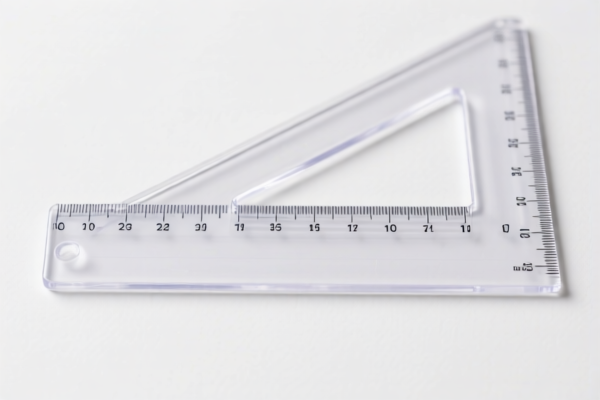
A Plastic Pattern Scaling Ruler is a specialized measuring tool used primarily in fashion design, drafting, architecture, and industrial modeling to convert measurements between different scales (e.g., 1:10, 1:50, 1:100). Unlike standard rigid rulers, it often features triangular profiles with multiple graduated edges.
In international trade, the classification hinges on two critical factors: 1. Material: Explicitly Plastic (as stated in the input). 2. Function/Purpose: Is it a scientific/technical measuring instrument (Chapter 90) or a general plastic stationery/supplier item (Chapter 39)?
⚠️ Critical Distinction:
- If the ruler is considered a specialized technical instrument for precise technical drawing or surveying → Chapter 90.
- If the ruler is considered a general office/school supply made of plastic → Chapter 39.
- Note: Customs authorities often scrutinize "rulers" heavily. The intent of use and precision level determine the chapter.
📦 II. HS Code Classification Details (Based on Provided Data)
Below are the four potential HS Codes derived from your data, ranked by relevance and tax implication. Each includes the matching logic and tax breakdown.
| HS Code | Product Description | Matching Logic & Summary | Total Tax Rate |
|---|---|---|---|
| 9017.80.00.00 | Instrumental Drawing Instruments (Protractors, Measuring Boards, Pattern Rulers) |
Primary Match: • Purpose: Specifically defined as "scale/measuring instruments" (比例尺/标线仪器). • Material: Plastic is acceptable. • Conflict: None. Fits the technical instrument definition perfectly. |
40.3% |
| 9017.20.80.80 | Other Drawing, Marking-out or Mathematical Calculating Instruments | Alternative Technical Match: • Purpose: Categorizes under "drawing, marking, or math calculation instruments." • Material: Plastic is allowed under "other" subcategories. • Logic: No material conflict. Fits general technical instruments. |
39.6% |
| 3926.90.99.89 | Other Articles of Plastics (General Plastic Goods) |
Material-First Match: • Material: Explicitly "Plastic." • Form: "Other article" (other制品). • Logic: Treats the ruler as a generic plastic item, ignoring its measuring function. No material conflict. |
22.8% |
| 3926.10.00.00 | Office/School Supplies of Plastics | Stationery Match: • Form: "Ruler" (尺) is classified as an office/school supply. • Material: Plastic. • Logic: Fits plastic stationery characteristics. Often used for low-precision plastic rulers. |
15.3% |
💰 III. 2026 Latest Tariff Rate Breakdown (Detailed Tax Clauses)
✅ Applicable Country: United States (US)
✅ Origin: China (CN)
✅ Effective Date: 2025-11-10 onwards
🎯 1. 9017.80.00.00 — Instrumental Drawing Instruments (Pattern Rulers)
Best for: Professional-grade, technical pattern makers with precise calibrations.
| Item | Detail |
|---|---|
| Base Tariff | 5.3% |
| Section 301 Tariff | 25.0% (Additional tariff on Chinese goods) |
| IEEPA Tariff (Clause 122) | 10.0% (Targeted on Chinese products) |
| Total Tax Rate | 40.3% |
| Calculation Basis | CIF Value × 40.3% |
| De Minimis Exemption | ❌ Not Eligible |
| Legal Reference Path | Base: 5.3% → 301: 25.0% → IEEPA: 10.0% |
📌 Explanation:
- This is the most technically accurate classification for a "Pattern Scaling Ruler" if it is used for professional drafting.
- The high tax (40.3%) is due to the combination of Section 301 and IEEPA tariffs.
- Key Point: If the ruler is marked with technical scales (e.g., 1:10, 1:20), customs may enforce this code.
🎯 2. 9017.20.80.80 — Other Drawing/Marking Instruments
Best for: General technical drawing tools not explicitly listed in 9017.80.
| Item | Detail |
|---|---|
| Base Tariff | 4.6% |
| Section 301 Tariff | 25.0% |
| IEEPA Tariff (Clause 122) | 10.0% |
| Total Tax Rate | 39.6% |
| Calculation Basis | CIF Value × 39.6% |
| De Minimis Exemption | ❌ Not Eligible |
| Legal Reference Path | Base: 4.6% → 301: 25.0% → IEEPA: 10.0% |
📌 Note:
- Slightly cheaper than 9017.80 by 0.7% (due to lower base rate).
- Still subject to full trade war tariffs.
- Use if the specific "pattern ruler" description does not fit 9017.80 but still falls under technical instruments.
🎯 3. 3926.90.99.89 — Other Plastic Articles
Best for: Low-precision, general-purpose plastic rulers sold as "craft supplies."
| Item | Detail |
|---|---|
| Base Tariff | 5.3% |
| Section 301 Tariff | 7.5% (Reduced rate for some plastic goods) |
| IEEPA Tariff (Clause 122) | 10.0% |
| Total Tax Rate | 22.8% |
| Calculation Basis | CIF Value × 22.8% |
| De Minimis Exemption | ❌ Not Eligible |
| Legal Reference Path | Base: 5.3% → 301: 7.5% → IEEPA: 10.0% |
📌 Risk Warning:
- Customs may challenge this code if the product is clearly a "measuring instrument."
- If audited, they may reclassify to Chapter 90, leading to back taxes + penalties.
- Use only if the ruler is simple, non-technical, and sold as a generic plastic item.
🎯 4. 3926.10.00.00 — Office/School Plastic Supplies
Best for: Plastic rulers sold in packs for schools or basic office use.
| Item | Detail |
|---|---|
| Base Tariff | 5.3% |
| Section 301 Tariff | 0.0% (Exempt from additional 301 tariff in this subcategory) |
| IEEPA Tariff (Clause 122) | 10.0% |
| Total Tax Rate | 15.3% |
| Calculation Basis | CIF Value × 15.3% |
| De Minimis Exemption | ❌ Not Eligible |
| Legal Reference Path | Base: 5.3% → 301: 0.0% → IEEPA: 10.0% |
📌 Strategic Advantage:
- Lowest Tax Rate (15.3%) among all options.
- No Section 301 Tariff applies here.
- Condition: Must be marketed and labeled strictly as "Office/Stationery Supplies" (文具/办公用品), NOT as "Technical Drawing Instruments."
- Risk: If the ruler has complex scales (e.g., architectural scales), customs may reject this code.
🛠️ IV. Customs Clearance Practical Advice (Avoiding Pitfalls)
✅ 1. Documentation Checklist (Essential)
| Document | Required? | Notes |
|---|---|---|
| ✅ Product Specification Sheet | ✔️ | Must clearly state Material: 100% Plastic. |
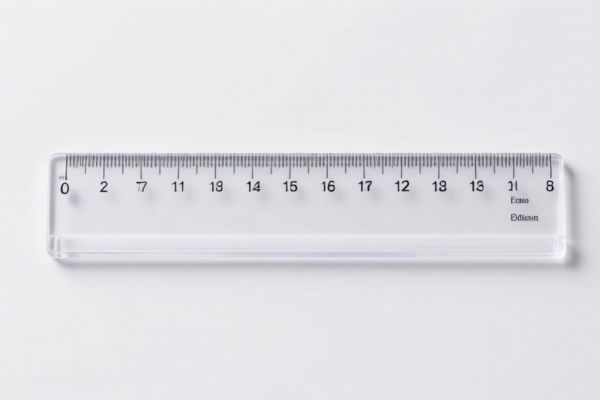
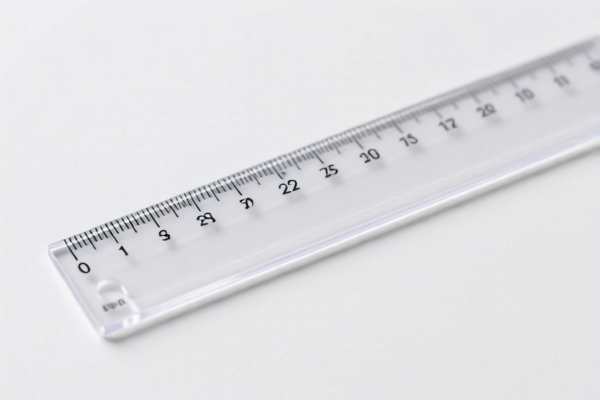
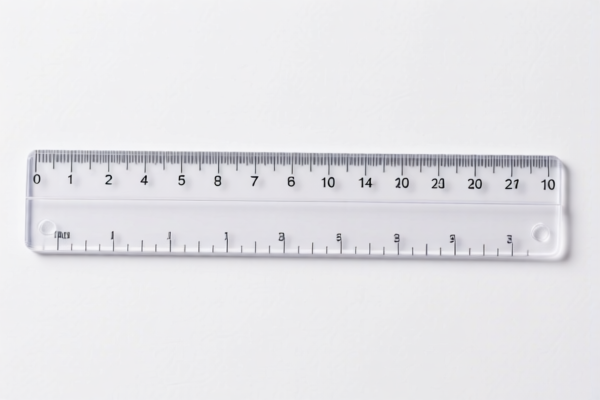
| ✅ Product Photos | ✔️ | Show the ruler's profile (triangular, flat) and scale markings. |
| ✅ Commercial Invoice | ✔️ | Crucial: Product Name should be "Plastic Ruler - Stationery" if claiming 3926.10.00.00. Avoid words like "Technical," "Surveying," or "Precision Instrument" if aiming for lower taxes. |
| ✅ Packing List | ✔️ | List units clearly. |
| ✅ Origin Certificate | ✔️ | Required for IEEPA determination. |
✅ 2. Declaration Strategy (Key Tactics)
🔥 Golden Rule:
"Describe by Function, Declare by Market Intent."
| Scenario | Recommended HS Code | Declaration Name | Tax Rate | Risk Level |
|---|---|---|---|---|
| Professional Pattern Maker | 9017.80.00.00 |
"Professional Pattern Scaling Ruler" | 40.3% | Low (Accurate) |
| School/Office Use | 3926.10.00.00 |
"Plastic Stationery Ruler" | 15.3% | Medium (Requires strict "stationery" labeling) |
| General Craft Item | 3926.90.99.89 |
"Plastic Measuring Tool" | 22.8% | Low-Medium |
| Technical Drafting | 9017.20.80.80 |
"Mathematical Drawing Instrument" | 39.6% | Low (Accurate) |
⚠️ Warning:
- Do NOT mix descriptions. If you declare it as "Plastic Ruler" but the invoice says "Architectural Scale Instrument," customs will likely apply Chapter 90 rates. - IEEPA 10% applies to ALL codes above for Chinese origin. Only Section 301 differs.
✅ 3. Special Cases & Mitigation
| Situation | Recommendation |
|---|---|
| Mixed Shipments | Separate "Stationery Rulers" (3926.10) from "Technical Instruments" (9017). Do not mix in one HS line. |
| Packaged as Set | If sold as "Artist’s Kit" including a ruler, declare the principal character (the kit itself) or split the value. If the ruler is minor, it may follow the kit’s code. |
| Customs Audit | Provide catalogs showing the product is marketed for general office/school use to support 3926.10.00.00. |
🌍 V. Global Market Comparison (2026)
| Market | Preferred HS Code | Est. Tax (China Origin) | Notes |
|---|---|---|---|
| 🇺🇸 USA | 3926.10.00.00 or 9017.80.00.00 |
15.3% or 40.3% | Critical: IEEPA 10% always applies. 301 tariff varies by code. |
| 🇨🇳 China | 9017.80.00 or 3926.10 |
5% - 10% | Lower base rates. No IEEPA/301 for imports. |
| 🇪🇺 EU | 9017.80 |
0% - 3% | No trade war tariffs. VAT applies separately. |
| 🇬🇧 UK | 9017.80 |
0% - 3% | Post-Brexit rules apply. No IEEPA. |
📌 VI. Common Errors & Pitfalls (Learn from Mistakes)
❌ Error 1: Using "Ruler" as the only description without specifying material or use.
👉 Result: Customs may default to highest duty or request additional info → Delay.
❌ Error 2: Declaring technical rulers as "Plastic Stationery" (3926.10) without evidence.
👉 Result: Audits, back taxes (diff between 15.3% and 40.3%), and penalties.
❌ Error 3: Ignoring IEEPA 10% clause.
👉 Result: All Chinese-origin goods are subject to IEEPA. Failing to include it causes immediate clearance failure.
✅ Correct Approach:
"Plastic Ruler, for Office Use, Triangular Shape, Metric/Imperial Scales, Model XYZ"
🎯 VII. Conclusion: Strategic Recommendation
🎯 For Lowest Tax (15.3%):
- Use 3926.10.00.00.
- Marketing Strategy: Label as "Plastic Stationery Ruler" or "Office Supply Ruler."
- Avoid: Words like "Professional," "Technical," "Surveying," or "Architectural" in the product title.
🎯 For Technical Accuracy (39.6% - 40.3%):
- Use 9017.80.00.00 or 9017.20.80.80.
- Marketing Strategy: Label as "Professional Pattern Scale Ruler" or "Drafting Instrument."
- Justification: Higher precision, specific scale markings (1:10, 1:50), and target audience (engineers/designers).
💡 Pro Tip:
If you sell to both general consumers and professionals, consider splitting shipments or using different SKUs with distinct naming conventions to optimize tax efficiency. However, always ensure the description matches the physical product to avoid fraud allegations.
📣 Immediate Action:
📞 Consult with a licensed customs broker in the US.
📄 Submit Product Images and Invoice Samples for pre-classification review.
🚀 Optimize your HS Code selection based on your target market and product positioning!
✨ Precision in Classification Saves Thousands in Duties!
💼 Don’t let tariff complexity scale up your costs!
Customer Reviews
About HS Code Classification
The Harmonized System (HS) is an internationally standardized nomenclature developed by the World Customs Organization (WCO) to classify traded products. Over 200 countries use the HS system as the basis for customs tariffs, trade statistics, and import/export regulations.
Each HS code follows a hierarchical structure:
- Chapter (2 digits) — Broad category of goods (e.g., Chapter 84: Machinery and Mechanical Appliances)
- Heading (4 digits) — More specific grouping within the chapter
- Subheading (6 digits) — Internationally standardized breakdown, used by all WCO member countries
- National subdivisions (8-10 digits) — Country-specific extensions for further classification, such as US HTSUS 10-digit codes
Correct HS code classification is essential for smooth customs clearance, accurate duty payment, and compliance with trade regulations. Misclassification can lead to customs delays, overpayment of duties, or penalties.
When importing from CN to US, the applicable tariff rates may include:
- Most-Favored-Nation (MFN) rate — The standard duty rate applied to WTO members
- General rate — Applied to countries without trade agreements
- Trade remedy duties — Additional tariffs such as Section 301 (anti-dumping), Section 232 (national security), or countervailing duties
The information provided on this page is for reference purposes only. For official classification, please consult with your local customs authority or a licensed customs broker.