Plastic Pearlized Film
CN → US| HS Code | Tariff Rate | Origin | Destination | Doc |
|---|---|---|---|---|
| 5903902500 | 42.5% | CN | US | Official Doc |
| 3921190090 | 41.5% | CN | US | Official Doc |
| 5903902000 | 35.0% | CN | US | Official Doc |
| 3921190010 | 41.5% | CN | US | Official Doc |
Product Images
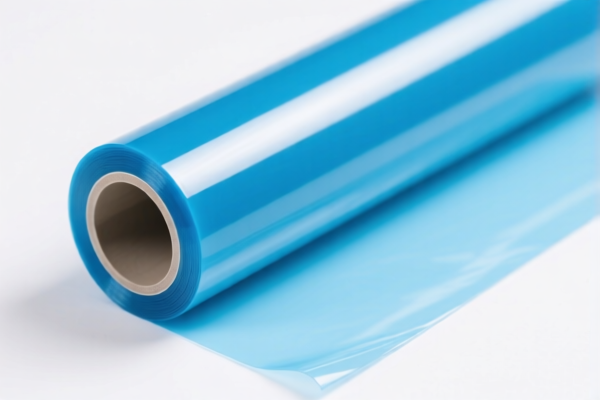
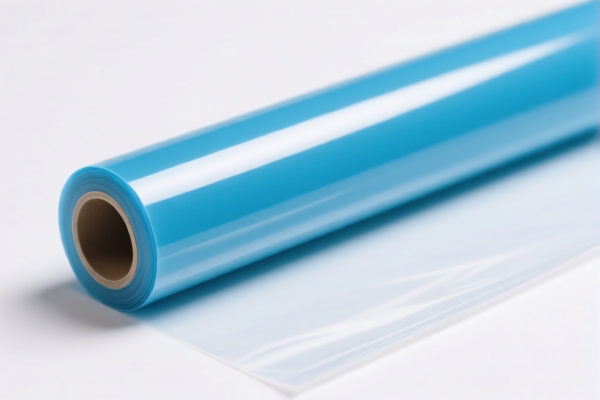
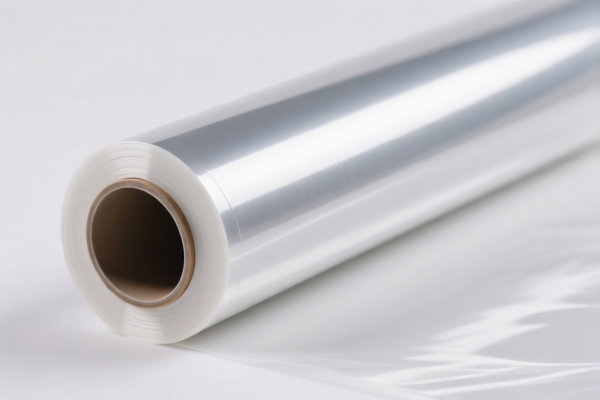
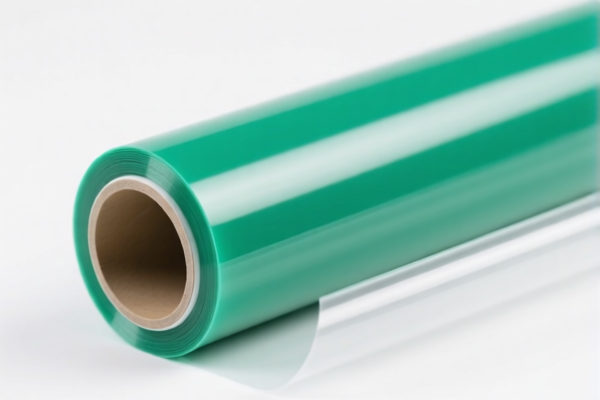
AI Analysis
🧶 Plastic Pearlized Film (Pearl Cotton Composite Membrane)
🌐 HS Code Classification & Customs Clearance Guide | 2026 Tariff Analysis for China-US Trade
📌 One, Product Definition: What is "Plastic Pearlized Film"?
"Plastic Pearlized Film" (often referred to in trade as Pearl Cotton or EPE Composite Film) is a versatile packaging material. It is not a single material but a composite structure.
- Core Material: Expanded Polyethylene (EPE), often called "Pearl Cotton," which provides cushioning, moisture resistance, and shock absorption.
- Outer Layer: A plastic film (often PE, PP, or laminated with other synthetic fibers) that provides a smooth surface for printing and structural integrity.
⚠️ Key Classification Challenge:
The classification depends heavily on which material dominates (by weight) and whether it is considered a "plastic sheet/film" (Chapter 39) or a "laminated textile/plastic composite" (Chapter 59). The following analysis is based strictly on the provided data for US imports from China.
📦 Two, HS Code Classification Details (2026 Latest Tariff对照)
Based on the provided data, four potential HS Codes are identified. The critical difference lies in the base duty rate, which significantly impacts the total tax burden.
| HS Code | Product Description | Material/Shape Logic | Total Tax Rate | Base Duty |
|---|---|---|---|---|
| 5903.90.25.00 | Other textiles impregnated/coated/laminated with plastics | "Composite Film" Logic: Classified under textile-like composites where the plastic layer is dominant or it’s viewed as a laminated fabric. | 42.5% | 7.5% |
| 3921.19.00.90 | Other plates, sheets, film, foil & strip, of plastics | "Foam Logic": Pearl cotton is a foam plastic (PE/PP). This code treats it as a rigid/semi-rigid plastic sheet/film. | 41.5% | 6.5% |
| 5903.90.20.00 | Other textiles impregnated/coated/laminated with plastics | "PU/Textile Logic": Interpreted as a textile base (e.g., synthetic fibers) with >70% plastic weight. | 35.0% | 0.0% |
| 3921.19.00.10 | Other plates, sheets, film, foil & strip, of plastics | "PE Film Logic": Specifically identifies the material as Polyethylene (PE) film, focusing on the "film" morphology. | 41.5% | 6.5% |
🔍 Critical Insight:
- Lowest Burden: 5903.90.20.00 offers the lowest total tax at 35.0% because the Base Duty is 0%. This requires proving the item fits the "Textile Composite" definition with specific plastic weight ratios.
- Standard Burden: 3921.19.00.90 and 3921.19.00.10 carry a 41.5% total rate due to a 6.5% Base Duty.
- Highest Burden: 5903.90.25.00 carries 42.5% total tax due to a 7.5% Base Duty.
💰 Three, 2026 Latest Tariff Rate Breakdown (Including Surtaxes & Policy Add-ons)
✅ Applicable Country: United States (US)
✅ Country of Origin: China (CN)
✅ Effective Date: Post-November 2025 (Current Regulatory Environment)
🎯 1. 3921.19.00.90 & 3921.19.00.10 — Plastic Sheets/Films (Foam/PE)
| Item | Content |
|---|---|
| Base Duty (MFN) | 6.5% |
| Section 301 Surtax (USITC) | +25.0% |
| IEEPA Surcharge (122 Clause) | +10.0% |
| Total Tax Rate | 41.5% |
| Calculation Basis | CIF Value × 41.5% |
| De Minimis Exemption | ❌ Not Eligible (Value > $800 threshold or restricted category) |
| Legal Pathway | Base: 3921.19 → 301: Footnote 9903.88.01 → IEEPA: 9903.01.24 |
📌 Explanation:
- These codes classify the product as Plastic Foam Sheets/Films.
- The 25% Section 301 tariff is the standard surtax for Chinese plastic products.
- The 10% IEEPA surcharge is an additional layer for specific Chinese imports.
- Base 6.5% adds up quickly on high-volume shipments.
🎯 2. 5903.90.25.00 — Laminated Textile/Plastic Composite
| Item | Content |
|---|---|
| Base Duty (MFN) | 7.5% |
| Section 301 Surtax (USITC) | +25.0% |
| IEEPA Surcharge (122 Clause) | +10.0% |
| Total Tax Rate | 42.5% |
| Calculation Basis | CIF Value × 42.5% |
| De Minimis Exemption | ❌ Not Eligible |
| Legal Pathway | Base: 5903.90 → 301: Footnote 9903.88.01 → IEEPA: 9903.01.24 |
📌 Explanation:
- This code views the product as a laminated material (Plastic on Textile/Synthetic Fiber).
- It has the highest base duty (7.5%), leading to the highest total rate (42.5%).
- Use this only if the product is clearly a textile composite and not a pure foam plastic.
🎯 3. 5903.90.20.00 — Low-Base Plastic Composite (Optimal Strategy?)
| Item | Content |
|---|---|
| Base Duty (MFN) | 0.0% |
| Section 301 Surtax (USITC) | +25.0% |
| IEEPA Surcharge (122 Clause) | +10.0% |
| Total Tax Rate | 35.0% |
| Calculation Basis | CIF Value × 35.0% |
| De Minimis Exemption | ❌ Not Eligible |
| Legal Pathway | Base: 5903.90.20 → 301: Footnote 9903.88.01 → IEEPA: 9903.01.24 |
📌 Explanation:
- This is the most cost-effective code if the product can be classified under this specific subheading.
- The 0% Base Duty eliminates the largest variable.
- Condition: Must meet the definition of "Other textiles impregnated/coated/laminated with plastics" where the plastic weight >70% but the structure is distinct from standard foam sheets.
- Risk: Customs may challenge this if the product is predominantly foam (Pearl Cotton) rather than a coated textile.
🛠️ Four, Customs Clearance Practical Advice (Avoiding Pitfalls)
✅ 1. Documentation Checklist (Must-Haves)
| Document | Required? | Purpose |
|---|---|---|
| Product Specification Sheet | ✅ | Must detail: Layer composition (e.g., PE Foam + PET Film), Weight %, and Dimensions. |
| Cross-Section Photo/Micrograph | ✅ | Crucial to prove if it’s Foam (3921) or Laminated Composite (5903). |
| Bill of Materials (BOM) | ✅ | Breakdown of material weights to justify the Base Duty argument. |
| Commercial Invoice | ✅ | Clear description: "Composite Film, EPE Foam Core with Plastic Laminate" |
| Packing List | ✅ | Standard packing details. |
| Origin Certificate | ✅ | Proof of China origin (triggers 301 + IEEPA). |
⚠️ Note: If you claim 5903.90.20.00 (0% base), you MUST provide evidence that the product is a composite laminate and not just a foam sheet. If Customs inspects and finds it’s 90% foam, they will reclassify to 3921, adding ~6.5% + penalties.
✅ 2. Declaration Strategy (Key Tips)
🔥 "Material Wins, Base Wins, Structure Defines!"
| Scenario | Recommended HS Code | Why? |
|---|---|---|
| Pure EPE Foam Roll | 3921.19.00.90 |
It’s clearly plastic foam. No textile base. |
| PE Film with Pearl Cotton Backing | 3921.19.00.10 |
If PE is the primary structural film. |
| Fabric-like Composite with Plastic Coating | 5903.90.20.00 |
If it looks/feels like a textile composite. Target this for 0% base. |
| Thick, Rigid Pearl Board | 3921.19.00.90 |
Treated as a plastic plate/sheet. |
✅ 3. Special Case Handling
| Situation | Advice |
|---|---|
| High Volume Shipments | Conduct a Pre-Ruling (ISF + Advance Ruling) to confirm 5903.90.20.00 eligibility. Saves thousands in duties. |
| Mixed Products | If shipping Pearl Cotton and standard Plastic Film together, split declarations. Do not mix under one HS Code to avoid misclassification flags. |
| Customs Audit Risk | For 5903.90.20.00, keep lab test reports showing the tensile strength and layer bonding to prove it’s a "composite" not a "foam." |
| De Minimis (Section 321) | ❌ Do NOT use. Pearl Cotton/Composite Films are excluded from the $800 de minimis exemption if classified under these specific codes (due to 301/IEEPA surcharges). Full duties apply. |
🌍 Five, Global Market Comparison (2026)
| Market | Recommended HS Code | Total Tax (CN Origin) | Key Requirement |
|---|---|---|---|
| 🇺🇸 USA | 5903.90.20.00 (Best) or 3921.19.00.90 |
35.0% or 41.5% | Strict evidence of composition. No de minimis. |
| 🇪🇺 EU | 3921.19.99 |
~6.5% + VAT | No Section 301 tariffs. Lower barrier. |
| 🇨🇳 China | 3921.19.90 |
5% | Standard import duty. Easy clearance. |
| 🇯🇵 Japan | 3921.19.00 |
0~6% | Depends on specific plastic type. |
📌 Conclusion:
- The US market is the most challenging due to Section 301 + IEEPA surcharges.
- Tax Savings Tip: If your Pearlized Film can be structurally classified as a Plastic-Textile Composite (5903.90.20.00), you save 6.5% in base duties compared to standard plastic foam codes.
- DO NOT rely on de minimis ($800 exemption) for these goods in the US; they are heavily taxed.
📌 Six, Common Errors & Pitfalls (Blood-Learned Lessons)
❌ Error 1: Declaring Pearl Cotton as "Packaging Material" (Generic)
👉 Consequence: Customs rejects generic descriptions. Delay, penalty, or reclassification to 3921.19.00.90.
❌ Error 2: Using 3921.19.00.90 when 5903.90.20.00 is applicable
👉 Consequence: Overpaying 6.5% base duty on high-value shipments. No error, but missed opportunity.
❌ Error 3: Assuming de minimis ($800) applies
👉 Consequence: Seizure or Forced Entry. These codes are explicitly subject to 301/IEEPA surcharges, which override de minimis rules for Chinese goods.
❌ Error 4: Ignoring Layer Composition in Docs
👉 Consequence: If Customs requests evidence for 5903.90.20.00 and you only have a photo, you will be forced to reclassify to 3921, paying back taxes + interest.
✅ Correct Declaration Example:
"Plastic Pearlized Composite Film, consisting of 70% Expanded Polyethylene (EPE) Foam Layer and 30% Laminated Polypropylene Film, used for packaging cushioning. HS 5903.90.20.00."
🎯 Seven, Conclusion: Precision Classification for Cost Control
🎯 Remember:
🔹 "Base Duty is King!" — A 0% base duty (5903.90.20.00) saves more than you think.
🔹 "Structure Matters!" — Is it Foam (3921) or Composite (5903)? Define it clearly.
🔹 "No De Minimis!" — Plan for full 35-42.5% tax burden in the US.
📌 Pro Tip:
If your Pearlized Film is exported to the US, invest in a Pre-Shipment Classification Audit. Confirm if your product’s lamination technique qualifies for the 0% base duty under 5903.90.20.00. This small investment can save 6.5% of the total CIF value in duties.
📣 Action Item:
📞 Step 1: Gather layer composition data.
📞 Step 2: Consult a customs broker to assess 5903.90.20.00 eligibility.
📞 Step 3: Prepare detailed specs for US CBP clearance.
🚀 Maximize Profit, Minimize Duty, Comply Fully!
✨ Professional Clearance Starts with Accurate Classification!
💼 Your Cost Control Depends on the First Two Digits of the HS Code!
Customer Reviews
About HS Code Classification
The Harmonized System (HS) is an internationally standardized nomenclature developed by the World Customs Organization (WCO) to classify traded products. Over 200 countries use the HS system as the basis for customs tariffs, trade statistics, and import/export regulations.
Each HS code follows a hierarchical structure:
- Chapter (2 digits) — Broad category of goods (e.g., Chapter 84: Machinery and Mechanical Appliances)
- Heading (4 digits) — More specific grouping within the chapter
- Subheading (6 digits) — Internationally standardized breakdown, used by all WCO member countries
- National subdivisions (8-10 digits) — Country-specific extensions for further classification, such as US HTSUS 10-digit codes
Correct HS code classification is essential for smooth customs clearance, accurate duty payment, and compliance with trade regulations. Misclassification can lead to customs delays, overpayment of duties, or penalties.
When importing from CN to US, the applicable tariff rates may include:
- Most-Favored-Nation (MFN) rate — The standard duty rate applied to WTO members
- General rate — Applied to countries without trade agreements
- Trade remedy duties — Additional tariffs such as Section 301 (anti-dumping), Section 232 (national security), or countervailing duties
The information provided on this page is for reference purposes only. For official classification, please consult with your local customs authority or a licensed customs broker.