Plastic Pet Bowl
CN → US| HS Code | Tariff Rate | Origin | Destination | Doc |
|---|---|---|---|---|
| 3924905650 | 20.9% | CN | US | Official Doc |
| 3924104000 | 13.4% | CN | US | Official Doc |
| 6912004810 | 19.8% | CN | US | Official Doc |
| 7323999030 | 88.4% | CN | US | Official Doc |
Product Images


AI Analysis
🍽️ Plastic Pet Bowl (Feeding & Watering Containers)
🌐 HS Code Reference & Clearance Guide | 2026 Latest Tariff Breakdown | Professional Customs Strategy
📌 I. Product Definition & Classification: Is It a Plastic Bowl or a Ceramic One?
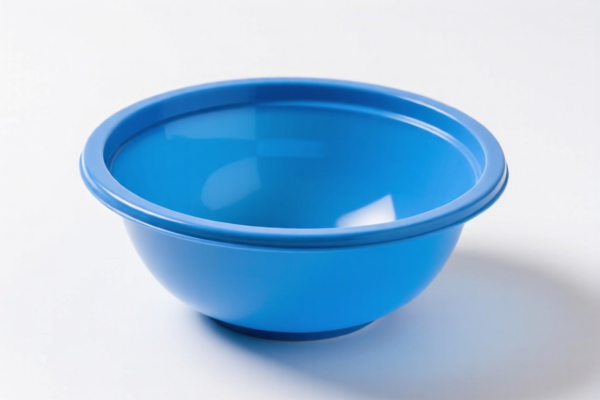
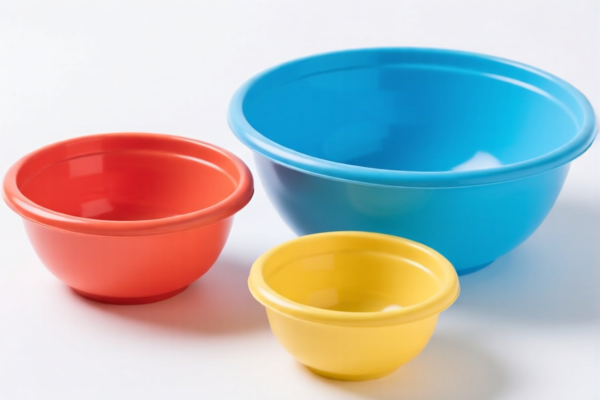
A Plastic Pet Bowl is a container designed specifically for holding food or water for domestic animals (dogs, cats, etc.). It is typically made of durable polymers (e.g., PP, PE, ABS) and falls under "Tableware" or "Household Articles."
Key Classification Logic: * Material: Must be Plastic (Polymer). If the material is unverified or ambiguous, it may be misclassified as ceramic (6912) or metal (7323), leading to massive tax jumps. * Function: Strictly for animal feeding. It is generally considered "Household articles" (Plastic) or "Tableware" (Plastic). * Risk Zone: If the bowl is actually Ceramic (mislabeled as plastic) or Metal (steel/iron), the tariff rates skyrocket due to specific "122 Section" or steel/aluminum duties.
⚠️ Critical Distinction:
- Plastic Material →归入 3924 (Lowest Tax)
- Ceramic Material →归入 6912 (Medium Tax)
- Steel/Iron Material →归入 7323 (Highest Tax: 88.4%)
❗ Do not misclassify a plastic bowl as metal to save weight; customs will test and penalize!
📦 II. HS Code Classification Details (2026 Latest Tariff Reference)
| HS Code | Product Description | Material/Use Logic | Total Tax Rate |
|---|---|---|---|
3924.10.40.00 |
Plastic Tableware (Bowls) | ✅ Correct Match: Explicitly Plastic + Tableware (Food Contact) | 13.4% |
3924.90.56.50 |
Plastic Household Articles (Non-Tableware) | ⚠️ Inferred Match: Plastic + Household/Kitchenware (General) | 20.9% |
6912.00.48.10 |
Ceramic Tableware | ❌ Risk: If material is actually Ceramic (not Plastic) | 19.8% |
7323.99.90.30 |
Steel/Iron Tableware | ❌ High Risk: If material is Metal (Steel/Iron) | 88.4% |
🔍 Deep Dive Analysis: 1.
3924.10.40.00(Best Case): This is the ideal code for Plastic Bowls. * Logic: "Plastic" material + "Tableware" (Bowl) function. * Tax: Base 3.4% + Section 301 (0%) + 122 Sec (10%) = 13.4%.
3924.90.56.50(General Household):
- Logic: If the bowl is not considered standard "tableware" but general "household articles."
- Tax: Base 3.4% + Section 301 (7.5%) + 122 Sec (10%) = 20.9%.
- Note: Customs often prefer
3924.10for bowls; use this only if the bowl is non-standard.
6912.00.48.10(Ceramic Risk):
- Logic: If the "plastic" bowl is actually ceramic or the material is unknown.
- Tax: Base 9.8% + 122 Sec (10%) = 19.8%.
7323.99.90.30(Metal Nightmare):
- Logic: If the bowl is made of Steel/Iron.
- Tax: Base 3.4% + Section 301 (25%) + Steel/Aluminum (50%) + 122 Sec (10%) = 88.4%.
- Warning: 88.4% is catastrophic! Do not ship metal bowls in plastic packaging without clear declaration.
💰 III. 2026 Latest Tariff Rate Breakdown (Detailed Policy)
✅ Applicable Market: USA (United States)
✅ Origin: China (CN)
✅ Effective Date: 2025–2026 (Current Enforcement)
🎯 1. The Ideal Path: 3924.10.40.00 (Plastic Tableware)
| Item | Detail |
|---|---|
| Base Tariff | 3.4% (MFN Rate for Plastic Tableware) |
| Section 301 (Added) | 0.0% (No additional 25% for this specific code) |
| Section 122 Tariff | 10.0% (Specific penalty on certain plastic products) |
| Total Tax Rate | 13.4% |
| De Minimis Exemption | ❌ No (Requires formal entry; cannot cross $800 tax-free for commercial goods) |
| Legal Basis | HTSUS: 3924.10.40.00 + Section 122 Notice |
📌 Explanation:
This is the most cost-effective route. The 10% "Section 122" tax applies to specific plastic articles, but you avoid the heavy 25% Section 301 tariff because it is classified as "Tableware" rather than general "Plastic Household Goods."
🎯 2. The Alternative Path: 3924.90.56.50 (Plastic Household)
| Item | Detail |
|---|---|
| Base Tariff | 3.4% |
| Section 301 (Added) | 7.5% (Higher surcharge for general household plastic) |
| Section 122 Tariff | 10.0% |
| Total Tax Rate | 20.9% |
| Difference | 7.5% higher than the tableware code! |
📌 Explanation:
If customs rejects3924.10and reclassifies as general household, you pay an extra 7.5%. Ensure your product description emphasizes "Tableware" or "Food Contact."
🚨 3. The Danger Zone: 7323.99.90.30 (Steel/Iron)
| Item | Detail |
|---|---|
| Base Tariff | 3.4% |
| Section 301 (Added) | 25.0% |
| Steel/Aluminum Duty | 50.0% (Section 232 on Steel/Aluminum) |
| Section 122 Tariff | 10.0% |
| Total Tax Rate | 88.4% |
| Impact | Prohibitive! |
📌 Explanation:
DO NOT misdeclare a metal bowl as plastic. The US government applies Section 232 (50%) on steel/aluminum imports. Combined with Section 301 and Section 122, the total hits 88.4%.
🛠️ IV. Customs Clearance实操建议 (Practical Tips & Pitfalls)
✅ 1. Preparation Checklist (Must-Haves)
| Document | Requirement | Why It Matters |
|---|---|---|
| ✅ Material Declaration | Must state "100% Food Grade Plastic (PP/PE)" | Proves it is NOT steel or ceramic. Critical for 3924 vs 7323/6912. |
| ✅ Product Photos | Show texture, flexibility, and lack of metallic shine | Visual proof of "Plastic" to avoid 88.4% tax. |
| ✅ Food Contact Cert | FDA (US) or EU LFGB test report | Confirms it is "Tableware" (3924.10), not just "Household" (3924.90). |
| ✅ HS Code Pre-Ruling | Request from CBP (Customs) | Get official confirmation before shipping. |
✅ 2. Declaration Strategy (The "Golden Rule")
🔥 Formula: "Plastic Pet Feeding Bowl + FDA Certified + Food Contact Surface"
| Scenario | Correct Declared Name | Incorrect Declaration | Consequence |
|---|---|---|---|
| Plastic Bowl | Plastic Pet Feeding Bowl, Food Grade, Model X |
Pet Bowl (Vague) |
Risk of reclassification to 3924.90 (20.9%) |
| Plastic Bowl | Plastic Pet Feeding Bowl |
Ceramic Pet Bowl |
Wrong HS Code 6912 (19.8%) |
| Metal Bowl | Stainless Steel Pet Bowl |
Plastic Pet Bowl |
Audit + 88.4% Tax + Penalty! |
✅ 3. Special Situations
- Mixed Materials: If the bowl has a plastic body but a metal base (e.g., anti-slip steel ring), customs may still classify it as Steel (
7323) → 88.4% Tax.- Solution: Declare as "Plastic with anti-slip base" and ensure plastic is the primary material (>51% by weight).
- OEM Customization: If the bowl has a specific shape for "Large Breed Dogs," ensure the description highlights "Food Contact" to secure
3924.10.
🌍 V. Global Market Comparison (2026)
| Country/Region | Recommended HS Code | Est. Tax (China Origin) | Key Requirement |
|---|---|---|---|
| 🇺🇸 USA | 3924.10.40.00 |
13.4% (Best) | FDA Compliance + Plastic Declaration |
| 🇨🇳 China | 3924.10.40.00 |
~8-10% (Varies) | CCC Certification (if applicable) |
| 🇪🇺 EU | 3924.10.00 |
0-4% (No Section 301) | LFGB / BfR Compliance |
| 🇬🇧 UK | 3924.10.00 |
0-5% | UKCA Marking |
📌 Conclusion:
USA is the most complex market due to Section 122 (10%) and potential Section 232 (50%) on misclassified metals.
Europe/UK is much friendlier (no Section 301/232).
📌 VI. Common Mistakes & Pitfalls (Lessons Learned)
❌ Mistake 1: Shipping Stainless Steel bowls but labeling as "Plastic".
👉 Result: Customs inspection reveals metal → 88.4% Tax + Seizure.
❌ Mistake 2: Declaring as "Plastic Household Article" (3924.90) instead of "Tableware" (3924.10).
👉 Result: Paying 20.9% instead of 13.4% (Unnecessary 7.5% loss).
❌ Mistake 3: Not providing FDA certificates.
👉 Result: Customs doubts "Food Contact" status → Rejection or forced reclassification.
✅ Correct Approach:
"Plastic Pet Bowl, Food Grade, FDA Compliant, 100% PP Material."
🎯 VII. Final Advice: Maximize Profit, Minimize Tax!
🎯 Remember the Strategy:
🔹 Material First: Prove it is Plastic, NOT Metal or Ceramic.
🔹 Function Second: Prove it is Tableware (Food Contact), not just "Household."
🔹 Tax Calculation: Target 13.4% (3924.10.40.00). Avoid 20.9% (3924.90) and 88.4% (7323).🔹 Tax Saver: "If it's plastic and for food, declare
3924.10and save 7.5%."
📌 Pro Tip:
If your product is 100% Plastic and Food Grade, request a CBP Binding Ruling before the first shipment to lock in the 13.4% rate permanently.
📣 Take Action Now:
📞 Verify Material Certificates → 📝 Update Invoice Description → 📦 Apply for Pre-Ruling
🚀 Smooth Clearance, 13.4% Tax, Happy Business!
✨ Professional Customs Clearance Starts with Accurate Classification!
💼 Every Percentage Point Counts in Your Profit Margin!
Customer Reviews
About HS Code Classification
The Harmonized System (HS) is an internationally standardized nomenclature developed by the World Customs Organization (WCO) to classify traded products. Over 200 countries use the HS system as the basis for customs tariffs, trade statistics, and import/export regulations.
Each HS code follows a hierarchical structure:
- Chapter (2 digits) — Broad category of goods (e.g., Chapter 84: Machinery and Mechanical Appliances)
- Heading (4 digits) — More specific grouping within the chapter
- Subheading (6 digits) — Internationally standardized breakdown, used by all WCO member countries
- National subdivisions (8-10 digits) — Country-specific extensions for further classification, such as US HTSUS 10-digit codes
Correct HS code classification is essential for smooth customs clearance, accurate duty payment, and compliance with trade regulations. Misclassification can lead to customs delays, overpayment of duties, or penalties.
When importing from CN to US, the applicable tariff rates may include:
- Most-Favored-Nation (MFN) rate — The standard duty rate applied to WTO members
- General rate — Applied to countries without trade agreements
- Trade remedy duties — Additional tariffs such as Section 301 (anti-dumping), Section 232 (national security), or countervailing duties
The information provided on this page is for reference purposes only. For official classification, please consult with your local customs authority or a licensed customs broker.