Plastic Picnic Baskets
CN → USProduct Images
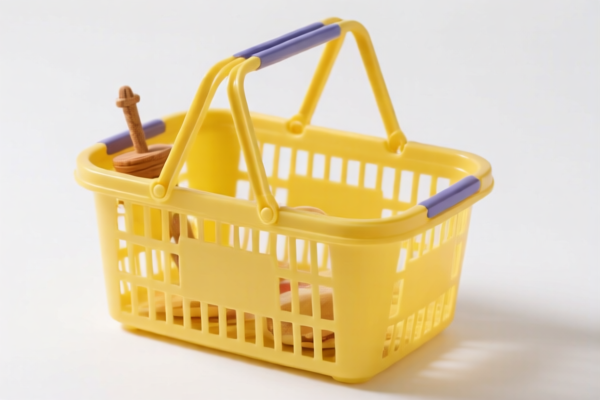
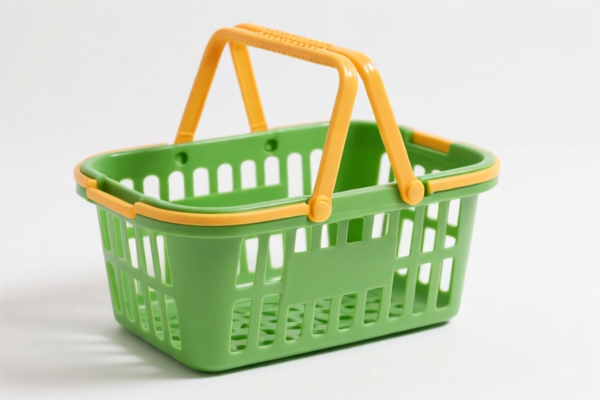
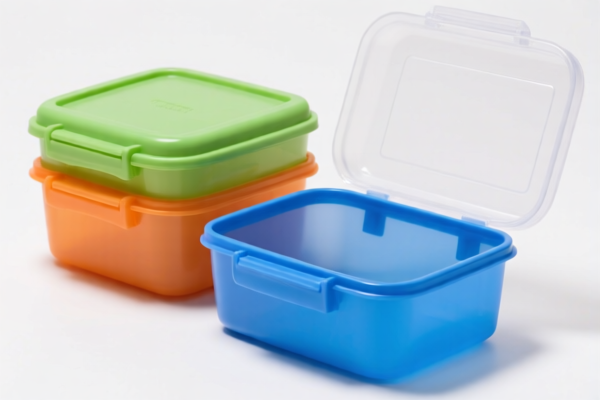
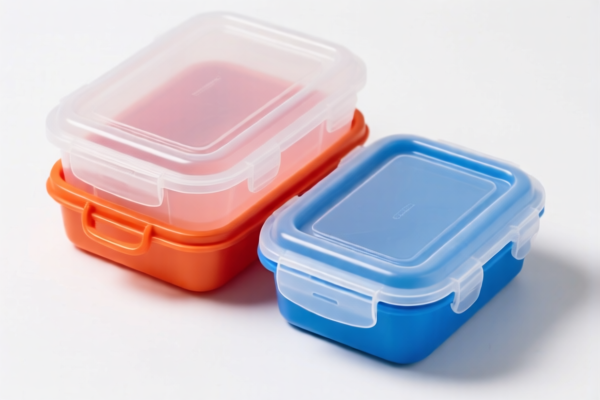
AI Analysis
🧺 Plastic Picnic Baskets (Plastic Containers for Food)
🌐 HS Code Reference & Customs Clearance Guide | 2026 Tariff Breakdown | Professional Strategy
📌 I. Product Definition & Classification: Do You Really Know "Plastic Picnic Baskets"?
A "Plastic Picnic Basket" is a versatile container designed for outdoor dining, storage, or transport of food items. In international trade, these items are often categorized based on their function, structure, and specific composition.
They are generally classified under Chapter 39 (Plastics) if they are simple containers, or potentially under Chapter 94 (Furniture) if they are large, complex, or designed as furniture. However, the vast majority fall under Chapter 39.
⚠️ Key Distinction:
- If it is a simple plastic container (basket, tub, tray) → 3924.
- If it is a large, complex piece of furniture (e.g., a folding picnic table with built-in storage) → 9403.
- If it contains glass/metal components (e.g., a basket with a glass insert or metal wire handle) → May require mixed material analysis (usually still 3924 if plastic is dominant).
📦 II. HS Code Classification Details (2026 Tariff Authority)
| HS Code | Product Description | Applicable Scenario | Plastic Type |
|---|---|---|---|
3924.10.00.00 |
Tableware & Kitchenware of plastics (including cutlery) | Cutlery trays, small picnic trays, bowls | Any (PP, PE, PS) |
3924.90.00.00 |
Other articles of plastics (Tableware not elsewhere specified) | Picnic Baskets, Storage Tubs, Cooler Boxes | Any (PP, PE, PS) |
4202.22.00.00 |
Trunks, suitcases, handbags, and similar containers | If made of plastic-coated fabric/leather (Not pure plastic) | N/A |
9403.20.00.00 |
Other wooden furniture | If made of wood with plastic inserts (Not pure plastic) | N/A |
3926.90.90.00 |
Other articles of plastics | Plastic parts only (handles, straps for other baskets) | Any |
🔍 Critical Note:
- Most pure plastic picnic baskets (even with metal hinges or rubber gaskets) are classified under 3924.90.00.00 ("Other articles of plastics").
- Do not classify under "Household articles" if they are primarily for outdoor transport.
- Do not classify under "Furniture" unless it is a large, stationary unit (e.g., a plastic picnic bench).
💰 III. 2026 Latest Tariff Rate Analysis (US Market Focus)
✅ Destination: United States (US)
✅ Origin: China (CN)
✅ Effective Date: November 10, 2025 (Current 2026 Tariff Rules)
🎯 1. 3924.90.00.00 —— Other Articles of Plastics (Picnic Baskets)
| Item | Content |
|---|---|
| Base Tariff | 5.3% (Ad valorem) |
| Section 301 (USITC) Surcharge | +25% |
| IEEPA (China) Surcharge | +10% |
| Total Tariff Rate | 40.3% |
| Tax Calculation | CIF Value × 40.3% |
| De Minimis Exemption? | ❌ No (Deny for Section 301 items) |
| Legal Path | USITC:3924.90.00.00 → Section 301 → IEEPA:9903.01.03 |
📌 Explanation:
- The Base 5.3% is the standard Most Favored Nation (MFN) rate for plastic household items.
- The +25% Section 301 is the major "China tariff" penalty.
- The +10% IEEPA is the specific add-on for Chinese-origin plastic goods.
- Total: 40.3% is very high. This makes pure plastic baskets expensive for US importers unless they have a low-cost strategy.
🎯 2. 3924.10.00.00 —— Tableware of Plastics (If Basket is a "Tray" or "Cutlery Holder")
| Item | Content |
|---|---|
| Base Tariff | 5.7% (Ad valorem) |
| Section 301 (USITC) Surcharge | +25% |
| IEEPA (China) Surcharge | +10% |
| Total Tariff Rate | 40.7% |
| Tax Calculation | CIF Value × 40.7% |
| De Minimis Exemption? | ❌ No |
📌 Note:
- Even if the basket is small (e.g., a lunch box style), if it's classified as "Tableware," the tariff is similar.
- Strategy: If the item is a large cooler box (insulated with foam), check if it can be classified under 3924.10.00 vs 3924.90.00. The rates are nearly identical, but the description matters for customs clearance.
🛠️ IV. Customs Clearance Practical Advice (Avoiding Pitfalls)
✅ 1. Required Documents Checklist
| Document | Must Provide? | Why? |
|---|---|---|
| Product Specification Sheet | ✅ | Must state: Material (e.g., PP, HDPE), Weight, Dimensions, Capacity. |
| Structure Diagram | ✅ | Show if there are metal hinges, rubber gaskets, or foam liners. |
| Photos (Labeled) | ✅ | Clear shots of the basket, handle, lid, and any internal components. |
| Material Declaration | ✅ | Confirm "100% Plastic" or "Plastic + X% Metal". |
| Commercial Invoice | ✅ | Must use "Plastic Picnic Basket" or "Plastic Storage Container" (not vague terms). |
| FCC/ROHS Report | ❌ | Usually not required for plastic baskets, but California Prop 65 is critical for food contact. |
| Origin Certificate | ✅ | If not from China (e.g., Vietnam), may reduce IEEPA surcharge. |
✅ 2. Declaring Tips (The "Golden Rule")
🔥 口诀: "Material First, Function Second, No Hidden Metal!"
| Scenario | Correct Declaration | Wrong Declaration |
|---|---|---|
| Pure Plastic Basket | 3924.90.00.00 - "Plastic Picnic Basket" |
9403 (Furniture) → Audit Risk! |
| Basket with Metal Handle | 3924.90.00.00 (Plastic is dominant) |
8302 (Base metal fittings) → Higher Tax! |
| Basket with Glass Insert | 4406 (Wood) or 7013 (Glass) |
3924 → Misclassification! |
| Basket with Insulation | 3924.90.00.00 (Insulation is part of the basket) |
8518 (Appliance) → Wrong! |
📌 Critical:
- Do not describe it as "Picnic Set" (implies cutlery/plates). If it's just the basket, call it "Plastic Picnic Container".
- Material Composition: If the basket contains >10% metal (e.g., heavy wire frame), it might be reclassified under Chapter 73 (Iron/Steel) or Chapter 44 (Wood), changing the tariff entirely!
✅ 3. Special Situations
| Situation | Handling Advice |
|---|---|
| Food Contact Safety | Must provide FDA 21 CFR 177 certification for plastics contacting food. |
| California Prop 65 | If sold in California, mandatory warning labels for BPA/Lead. |
| Recyclable Plastic | If made of Recycled Plastic (rPP), no tariff change, but may qualify for "Green" incentives. |
| Set with Plates | If basket + plates = "Set", classify as "Mixed Goods" (usually by dominant material) → 3924. |
🌍 V. Global Market Comparison (2026)
| Country/Region | Recommended HS Code | Tariff (China Origin) | Certification | Note |
|---|---|---|---|---|
| 🇺🇸 USA | 3924.90.00.00 |
40.3% | FDA + Prop 65 | High tax due to Section 301 |
| 🇪🇺 EU | 3924.10.00 or 3924.90.00 |
6.5% | LFGB + CE | No Section 301 |
| 🇯🇵 Japan | 3924.10.00 or 3924.90.00 |
8.0% | Shokuhin Eisei | Standard food safety |
| 🇦🇺 Australia | 3924.90.00 |
5.0% | Food Contact Safe | Low tariff |
| 🇨🇦 Canada | 3924.90.00 |
5.0% | Health Canada | No Section 301 |
📌 Conclusion:
- USA is the most expensive market for plastic picnic baskets due to Section 301 and IEEPA.
- EU/Japan/Australia are much cheaper alternatives for export if the US market is blocked.
- Vietnam/Mexico origin may avoid IEEPA (10%), but Section 301 (25%) often still applies if the product is "China-origin" (transshipment rules).
📌 VI. Common Mistakes & Pitfalls (Lessons Learned)
❌ Mistake 1: Declaring as "Furniture" (9403)
👉 Result: Customs may reject it (it's not furniture) or apply a different tax. Penalty Risk!
❌ Mistake 2: Declaring as "Cutlery Set" (3924.10) when it's just a basket
👉 Result: Audit failure. If it doesn't contain cutlery, it should be 3924.90.
❌ Mistake 3: Ignoring "Food Contact" Certification
👉 Result: Product seized at US border. FDA will block it if no 21 CFR 177 compliance.
❌ Mistake 4: Mixing Plastic + Metal in description
👉 Result: Customs may classify by the "metal" part if >10%, leading to higher duty.
✅ Correct Approach:
"Plastic Picnic Basket, 100% Polypropylene, with Metal Hinges (3%), FDA Certified, for Outdoor Food Storage."
🎯 VII. Conclusion: Strategic Declaring Saves Money!
🎯 Remember:
🔹 "Pure Plastic = 3924.90"
🔹 "US Tariff = 40.3% (High!)"
🔹 "Food Safety = FDA Mandatory"
🔹 "Metal Parts = Check Threshold!"
📌 Tips:
- If your plastic basket is small (under 10kg), consider using De Minimis (Section 321) for individual consumers (under $800), but not for commercial bulk imports.
- For large commercial shipments, pre-apply for a Binding Ruling from US Customs to avoid surprises.
📣 Action Plan:
📞 Contact a Customs Broker + Provide Material Composition Report
🚀 Optimize your supply chain (e.g., shift to Vietnam) to avoid 40.3% tax.
📦 Ensure FDA/Prop 65 compliance to prevent seizure.
✨ Professional Clearance Starts with Accurate Classification!
💼 Your Profit Margin Depends on Your Tariff Strategy!
Customer Reviews
About HS Code Classification
The Harmonized System (HS) is an internationally standardized nomenclature developed by the World Customs Organization (WCO) to classify traded products. Over 200 countries use the HS system as the basis for customs tariffs, trade statistics, and import/export regulations.
Each HS code follows a hierarchical structure:
- Chapter (2 digits) — Broad category of goods (e.g., Chapter 84: Machinery and Mechanical Appliances)
- Heading (4 digits) — More specific grouping within the chapter
- Subheading (6 digits) — Internationally standardized breakdown, used by all WCO member countries
- National subdivisions (8-10 digits) — Country-specific extensions for further classification, such as US HTSUS 10-digit codes
Correct HS code classification is essential for smooth customs clearance, accurate duty payment, and compliance with trade regulations. Misclassification can lead to customs delays, overpayment of duties, or penalties.
When importing from CN to US, the applicable tariff rates may include:
- Most-Favored-Nation (MFN) rate — The standard duty rate applied to WTO members
- General rate — Applied to countries without trade agreements
- Trade remedy duties — Additional tariffs such as Section 301 (anti-dumping), Section 232 (national security), or countervailing duties
The information provided on this page is for reference purposes only. For official classification, please consult with your local customs authority or a licensed customs broker.