Plastic Picnic Boxes
CN → US| HS Code | Tariff Rate | Origin | Destination | Doc |
|---|---|---|---|---|
| 3923102000 | 35.0% | CN | US | Official Doc |
| 3923109000 | 38.0% | CN | US | Official Doc |
Product Images
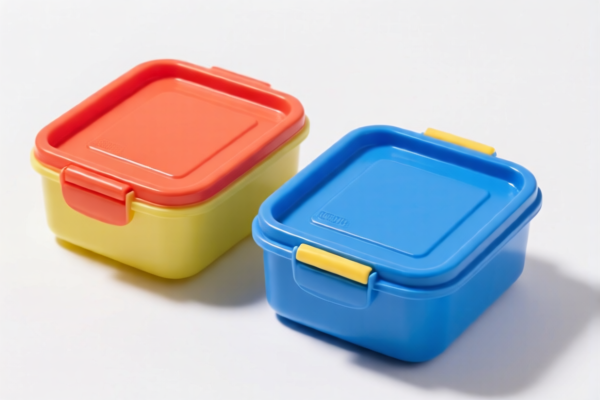
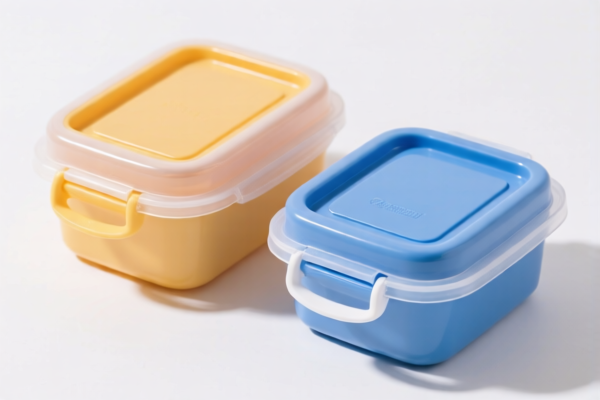
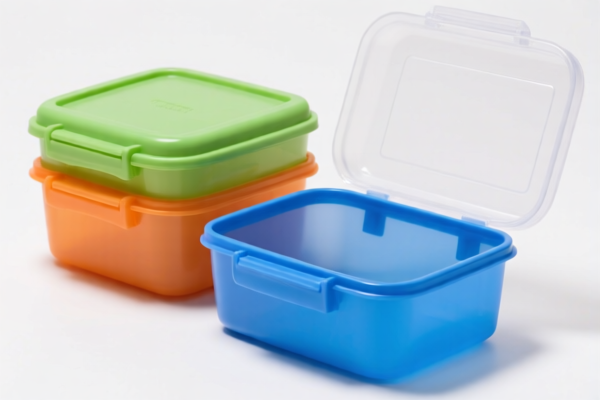
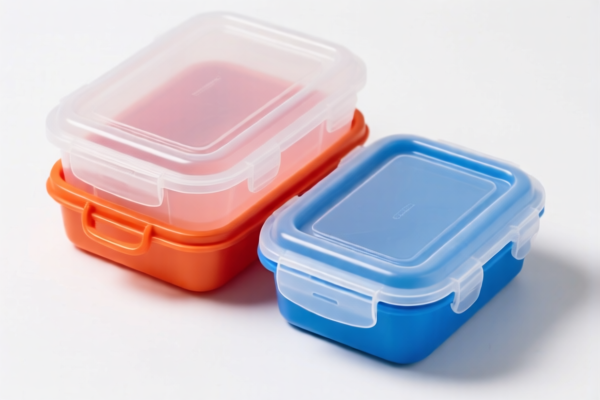
AI Analysis
🧺 Plastic Picnic Boxes (Articles of Plastics for Conveyance or Packing)
🌐 HS Code Reference & Customs Clearance Guide | 2026 Latest Tariff Analysis | Specialized Clearance Strategy
📌 I. Product Definition & Classification: What Exactly Is a "Plastic Picnic Box"?
Plastic picnic boxes fall under the broader category of Articles for the conveyance or packing of goods, of plastics (Chapter 39, Heading 3923). Specifically, they are classified as Boxes, cases, crates, and similar articles.
In international trade, these are generally considered generic packaging or reusable containers unless they possess specific features that elevate them to a specialized niche. The key distinction lies in whether the box is specially shaped/fitted for high-tech semiconductor equipment or if it is a standard utility box for general goods.
⚠️ Key Distinction Point:
- If the box is standard, generic, or designed for food/general use → It falls under "Other" (Subheading 90).
- If the box is specially shaped/fitted for semiconductor wafers, masks, or reticles (HS 3923.10 or 8486.90) → It falls under "Specially shaped..." (Subheading 20).
- Most "Picnic Boxes" are NOT semiconductor carriers. They are general-purpose containers. Therefore, they typically fall under 3923.10.90.00.
📦 II. HS Code Classification Details (2026 Latest Tariff Authority Comparison)
Based on the provided data, only two HS Codes are available for this chapter. Here is the mapping for Plastic Picnic Boxes:
| HS Code | Product Description | Applicability for Picnic Boxes | Special Features |
|---|---|---|---|
3923.10.20.00 |
Specially shaped or fitted for conveyance/packing of semiconductor wafers, masks, or reticles | ❌ Not Applicable | Requires specialized fit for chip manufacturing; too complex for picnic use |
3923.10.90.00 |
Other (Boxes, cases, crates, and similar articles) | ✅ Primary Candidate | Generic plastic boxes, including picnic baskets/boxes, storage crates, lunch boxes |
🔍 Critical Reminder:
- Do NOT classify standard plastic picnic boxes under3923.10.20.00. This subheading is exclusively for semiconductor industry packaging.
- Unless your "picnic box" is a custom-engineered, vacuum-formed tray specifically designed to hold silicon wafers or photomasks (highly unlikely for a picnic item), it must be classified under3923.10.90.00.
💰 III. 2026 Latest Tariff Rate Details (Detailed Breakdown)
✅ Applicable Country: United States (US)
✅ Origin: China (CN)
✅ Effective Time: Current rates as per provided data
🎯 1. 3923.10.90.00 —— Other Boxes, Cases, Crates (Standard Plastic Picnic Boxes)
| Item | Content |
|---|---|
| Base Tariff Rate | 3.0% (ad valorem) |
| Additional Tariff (Section 301) | +25.0% |
| Total Tariff Rate | 28.0% |
| Tax Calculation | CIF Value × 28% |
| De Minimis Exemption | ❌ Not Eligible (Section 301 goods are excluded from $800 de minimis relief in many contexts, or subject to strict scrutiny) |
| Legal Basis Path | USITC:3923.10.90.00 → SECTION 301: +25% |
📌 Explanation:
- The Base Rate of 3.0% is the standard Most Favored Nation (MFN) rate for general plastic packaging.
- The Additional 25% is applied due to the Section 301 Trade Action against Chinese goods.
- Total Effective Rate: 28%. This is a significant cost burden that must be factored into your pricing strategy.
🎯 2. 3923.10.20.00 —— Specially Shaped for Semiconductors (Hypothetical Misclassification)
| Item | Content |
|---|---|
| Base Tariff Rate | 0.0% |
| Additional Tariff (Section 301) | +25.0% |
| Total Tariff Rate | 25.0% |
| Tax Calculation | CIF Value × 25% |
| De Minimis Exemption | ❌ Not Eligible |
📌 Warning:
- While the total rate is 25% (lower than 28%), you CANNOT use this code for picnic boxes.
- Misclassification as a semiconductor carrier is a major customs violation. Penalties can include seizure of goods, fines, and future audits. Only use this if the product is physically engineered for wafer/mask transport.
🛠️ IV. Customs Clearance Practical Advice (Battle-Tested Pitfall Guide)
✅ 1. Required Documentation Checklist (Essential)
| Document | Must Provide | Notes |
|---|---|---|
| ✅ Commercial Invoice | ✔️ | Must clearly state: "Plastic Picnic Box" or "Plastic Storage Crate" |
| ✅ Product Photos | ✔️ | Clear images showing the box's structure, material, and lack of semiconductor-specific features |
| ✅ Material Declaration | ✔️ | Specify type of plastic (e.g., PP, PE, PVC) |
| ✅ Packing List | ✔️ | Detail quantities and packaging method |
💡 Pro Tip: Avoid vague terms like "Plastic Container." Use specific descriptions like "Injection-molded PP Plastic Picnic Basket" to prevent customs officers from questioning the classification.
✅ 2. Classification Strategy (Key Mantras)
🔥 "Generic Boxes = 28%; Wafer Trays = 25% but High Risk!"
| Scenario | Correct HS Code | Incorrect Action | Consequence |
|---|---|---|---|
| Standard Picnic Box / Lunch Box | 3923.10.90.00 (28%) |
Classify as 3923.10.20.00 |
Severe Penalty: Misdeclaration, potential fraud charges |
| Custom Semiconductor Carrier | 3923.10.20.00 (25%) |
Classify as 3923.10.90.00 |
Overpayment of 3% (minor error) |
| Non-Plastic Picnic Basket (Wicker) | N/A (Chapter 46 or 42) | Classify as 3923.10.90.00 |
Wrong Chapter, delay in clearance |
✅ 3. Special Case Handling
| Situation | Handling Advice |
|---|---|
| Food-Grade Certification | If marketed as food-safe, ensure the supplier provides FDA-compliant material certs. While not affecting HS Code, it helps clear customs faster. |
| Set of Picnic Items (Basket + Cutlery + Cup) | If sold as a set, classification may change to the "essential character" item. If the plastic box is the main component, keep 3923.10.90.00. |
| Origin Marking | Ensure the product itself is marked "Made in China" if required. Failure to mark can lead to detention. |
🌍 V. Global Market Clearance Comparison (2026 Latest)
| Country/Region | Recommended HS Code | Tariff Rate | Notes |
|---|---|---|---|
| 🇺🇸 USA | 3923.10.90.00 |
28% | Base 3% + 25% Section 301. High cost. |
| 🇨🇳 China | 3923.10.90.00 |
Varies | Import tariff may be lower. Check latest Chinese tariff book. |
| 🇪🇺 EU | 3923.10.90 |
~6.5% | Standard EU duty. No Section 301 equivalent. |
| 🇬🇧 UK | 3923.10.90 |
~6.5% | Post-Brexit tariff schedule applies. |
📌 Conclusion:
- The US market is the most expensive due to the additional 25% tariff.
- For US exports, consider value-added processing in a third country (if rules of origin allow) or absorb the cost in pricing.
📌 VI. Common Errors & Pitfalls (Blood Lessons)
❌ Error 1: Claiming a picnic box is a "Semiconductor Carrier" to save 3%.
👉 Consequence: Customs audit, fines, and loss of trust. Not worth the risk.
❌ Error 2: Using "Plastic Box" as a generic description.
👉 Consequence: Customs officer may classify it under a higher-duty or more restricted category if unsure. Be specific.
❌ Error 3: Ignoring the 25% Additional Tariff in cost calculations.
👉 Consequence: Profit margin erosion. Always factor in 28% for US imports.
✅ Correct Approach:
"Plastic Picnic Box, Polypropylene (PP), Food-Grade, Reusable, Model XYZ, Made in China"
🎯 VII. Conclusion: Professional Classification, Cost Optimization!
🎯 Remember the Mantra:
🔹 "Picnic Boxes are Generic, Not Wafer Trays."
🔹 "28% is the Real Cost for US Imports."
🔹 "Don't Risk Fraud for 3% Savings."
📌 Pro Tip:
If you are exporting to the US, consider negotiating DDP (Delivered Duty Paid) terms if you are the seller, or clearly state DAP (Delivered at Place) so the buyer understands the 28% duty burden.
📣 Immediate Action:
📞 Verify the exact material and use case.
🚀 Apply for an Advance Ruling from CBP if the box has unique features, to confirm3923.10.90.00is correct.
💼 Budget for 28% Duty to ensure accurate profit forecasting.
✨ Professional clearance starts with accurate classification!
💼 Every dollar of duty counts!
Customer Reviews
About HS Code Classification
The Harmonized System (HS) is an internationally standardized nomenclature developed by the World Customs Organization (WCO) to classify traded products. Over 200 countries use the HS system as the basis for customs tariffs, trade statistics, and import/export regulations.
Each HS code follows a hierarchical structure:
- Chapter (2 digits) — Broad category of goods (e.g., Chapter 84: Machinery and Mechanical Appliances)
- Heading (4 digits) — More specific grouping within the chapter
- Subheading (6 digits) — Internationally standardized breakdown, used by all WCO member countries
- National subdivisions (8-10 digits) — Country-specific extensions for further classification, such as US HTSUS 10-digit codes
Correct HS code classification is essential for smooth customs clearance, accurate duty payment, and compliance with trade regulations. Misclassification can lead to customs delays, overpayment of duties, or penalties.
When importing from CN to US, the applicable tariff rates may include:
- Most-Favored-Nation (MFN) rate — The standard duty rate applied to WTO members
- General rate — Applied to countries without trade agreements
- Trade remedy duties — Additional tariffs such as Section 301 (anti-dumping), Section 232 (national security), or countervailing duties
The information provided on this page is for reference purposes only. For official classification, please consult with your local customs authority or a licensed customs broker.