Plastic Pipe
CN → US| HS Code | Tariff Rate | Origin | Destination | Doc |
|---|---|---|---|---|
| 3917290090 | 38.1% | CN | US | Official Doc |
| 3926909987 | 22.8% | CN | US | Official Doc |
| 3917210000 | 38.1% | CN | US | Official Doc |
| 3926909989 | 22.8% | CN | US | Official Doc |
| 3916200020 | 40.8% | CN | US | Official Doc |
Product Images
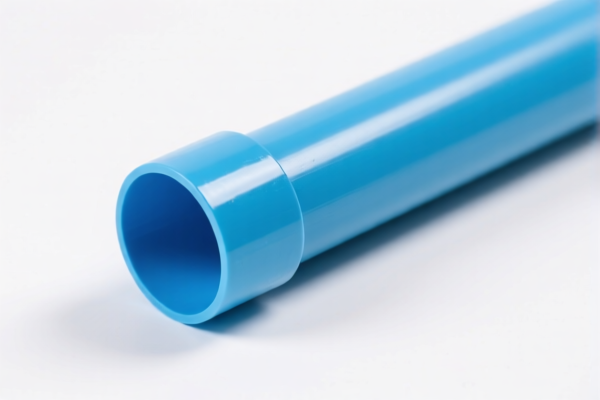
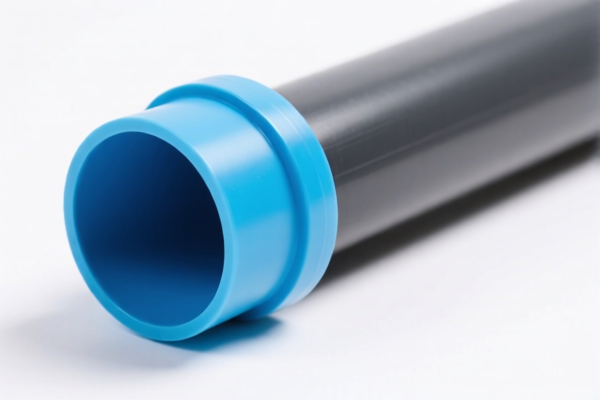
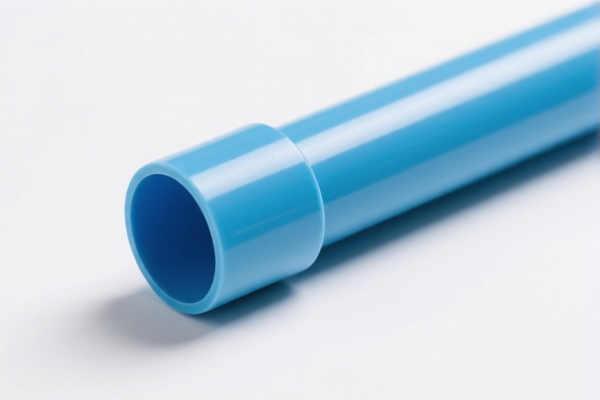
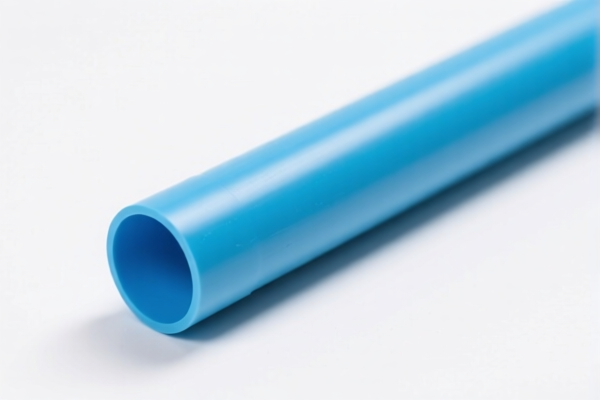
AI Analysis
🏗️ Plastic Pipes (Polymer Tubing for Industrial & Construction Use)
🌐 HS Code Reference & Customs Clearance Guide | 2026 Latest Tariff Analysis | Strategic Entry for Plastic Tubing
📌 I. Product Definition & Classification: What Exactly is "Plastic Pipe"?
Plastic pipes are rigid or flexible conduits made primarily of polymer materials, widely used in construction, industrial fluid transport, and infrastructure. In international trade, they are classified based on material composition, physical form (hollow vs. profile), and specific application.
Key Distinction Criteria: - Hollow Pipes/Tubes: Specifically designed to convey fluids/gases (e.g., water, oil, air). These fall under Chapter 3917. - Plastic Profiles/Extruded Shapes: General-purpose plastic shapes (e.g., window frames, handrails, molding strips) that may look like pipes but are intended for structural or aesthetic purposes. These fall under Chapter 3916 or 3926.
⚠️ Critical Classification Trap:
- If the item is explicitly a pipe/tube for fluid transport → Use 3917.xxxx codes.
- If the item is a plastic profile (even if cylindrical) used for construction (windows, doors) → Use 3916.20.
- If the item is a general plastic fitting or unspecified plastic part → Use 3926.90 (Catch-all).
📦 II. HS Code Classification Matrix (2026 Latest Tariff Data)
| HS Code | Product Description | Key Matching Logic | Tax Rate |
|---|---|---|---|
| 3917.29.00.90 | Plastic Pipes, Tubing, and Hoses: Other | Matches material (plastic) and form (pipe). Used for unspecified lengths, including construction applications where specific sub-headings don't apply. | 38.1% |
| 3926.90.99.87 | Other Articles of Plastic: Plastic Pipes/Hard Pipes | Matches material (plastic) and form (pipe). Classified as "Hard Pipes" under the catch-all category for plastic articles. | 22.8% |
| 3917.21.00.00 | Plastic Pipes, Tubing, and Hoses: Rigid Pipes | Direct match for material (plastic) and form (rigid pipe). Successful classification for standard rigid plastic pipes. | 38.1% |
| 3926.90.99.89 | Other Articles of Plastic: Plastic Pipes (Unspecified Form) | Matches material (plastic). Although form is not explicitly defined in the name, inferred as plastic articles/pipes. No conflict. | 22.8% |
| 3916.20.00.20 | Plastic Profiles for Construction | Material: Plastic. Form: Pipe-like (Profile). Use: Construction (windows, doors, railings). Note: Misclassified as "pipe" if used for structural building elements rather than fluid transport. | 40.8% |
🔍 Key Insight:
- 3917.21 and 3917.29 are for functional pipes (fluid/gas transport).
- 3916.20 is for structural profiles (building materials).
- 3926.90 is the fallback/catch-all for plastic articles not specifically described elsewhere.
💰 III. Detailed Tariff Breakdown (Including Surtaxes & Policy Surcharges)
✅ Applicable Country: United States (US)
✅ Origin: China (CN)
✅ Effective Date: 2025/2026 Current Rates
🎯 1. High-Tariff Category: 3917.21.00.00 & 3917.29.00.90
Classification: Rigid Pipes & Other Plastic Pipes/Tubing
Total Tax Rate: 38.1%
| Item | Detail |
|---|---|
| Base Tariff | 3.1% (Standard MFN rate for Chapter 3917) |
| Section 301 Surtax | +25.0% (USITC Footnote for Chinese plastic products) |
| Section 122 Surcharge | +10.0% (Specific trade policy surcharge) |
| Total Effective Rate | 38.1% |
| Calculation | CIF Value × 38.1% |
📌 Explanation:
- The 25% Section 301 tariff applies broadly to plastic pipes and profiles from China.
- The 10% Section 122 surcharge is an additional policy-driven levy.
- Base rate is low (3.1%), but surcharges dominate the cost.
🎯 2. Moderate-Tariff Category: 3926.90.99.87 & 3926.90.99.89
Classification: Other Plastic Articles (Catch-all for Pipes)
Total Tax Rate: 22.8%
| Item | Detail |
|---|---|
| Base Tariff | 5.3% (Standard MFN rate for Chapter 3926) |
| Section 301 Surtax | +7.5% (Lower surtax tier for certain plastic articles) |
| Section 122 Surcharge | +10.0% |
| Total Effective Rate | 22.8% |
| Calculation | CIF Value × 22.8% |
📌 Explanation:
- If the pipe is misclassified or falls under "other plastic articles" rather than specific "pipes" (3917), the Section 301 rate drops to 7.5%.
- Total 22.8% is significantly lower than 38.1%.
- Risk: Customs may challenge this classification if the product is clearly a "pipe" (3917) rather than a general "plastic article."
🎯 3. Highest-Tariff Category: 3916.20.00.20
Classification: Plastic Profiles for Construction (Misnamed as Pipe)
Total Tax Rate: 40.8%
| Item | Detail |
|---|---|
| Base Tariff | 5.8% (Standard MFN rate for Chapter 3916) |
| Section 301 Surtax | +25.0% (Same high tier as 3917) |
| Section 122 Surcharge | +10.0% |
| Total Effective Rate | 40.8% |
| Calculation | CIF Value × 40.8% |
📌 Explanation:
- This code is for plastic profiles (e.g., window frames, handrails).
- If you declare a "pipe" but it’s used for construction structure (not fluid transport), it may be forced into this category.
- 40.8% is the highest rate in this dataset. Avoid this classification unless the product is truly a structural profile.
🛠️ IV. Customs Clearance Practical Advice (Avoiding Pitfalls)
✅ 1. Documentation Checklist (Non-Negotiable)
| Document | Required? | Notes |
|---|---|---|
| Product Specification Sheet | ✔️ | Must state material (e.g., PVC, PE, PP), diameter, wall thickness, and intended use (fluid transport vs. structural). |
| Technical Data Sheet | ✔️ | Includes pressure rating, temperature tolerance, and compliance standards (ASTM, ISO). |
| Photos (With Scale) | ✔️ | Show cross-section, length, and end-fittings. Clarify if it’s hollow (pipe) or solid/semi-solid (profile). |
| Commercial Invoice | ✔️ | Clearly state "Plastic Pipe for Water/Gas Transport" or "Plastic Profile for Construction." |
| Origin Certificate | ✔️ | Required for Section 301 determination. |
| Declaration of Use | ✔️ | Critical for distinguishing between 3917 (pipes) and 3916 (profiles). |
✅ 2. Classification Strategy (Key Mantra)
🔥 “Fluid Transport = 3917 (38.1%) | Structural Profile = 3916 (40.8%) | Unclear/Catch-all = 3926 (22.8%) – But Risky!”
| Scenario | Recommended HS Code | Tax Rate | Risk Level |
|---|---|---|---|
| Standard Water/Gas Pipe (PVC/PE) | 3917.21.00.00 (Rigid) or 3917.29.00.90 |
38.1% | ✅ Low (Accurate) |
| Plastic Profile (Window Frame, Handrail) | 3916.20.00.20 |
40.8% | ✅ Low (Accurate) |
| Unclear/General Plastic Tube | 3926.90.99.87 / .89 |
22.8% | ⚠️ High (May be reclassified by Customs) |
| Misdeclared Pipe as Profile | 3916.20.00.20 |
40.8% | ❌ High (Penalty Risk) |
📌 Strategic Note:
- 3926.90 (22.8%) is cheaper but carries a high risk of audit. If Customs determines the item is a "pipe" (3917), you will owe back taxes at 38.1% plus penalties.
- Only use 3926 if the product is truly ambiguous or a minor plastic fitting not covered by 3917/3916.
✅ 3. Special Considerations
| Situation | Recommendation |
|---|---|
| OEM Custom Pipes | Provide customer design specs. If designed for fluid flow, insist on 3917. |
| Plastic Pipes with Fittings | Declare together. If fittings are plastic, they fall under 3917 or 3926 depending on type. |
| Construction Use | If used for drainage/water supply, use 3917. If used for window frames/railings, use 3916. |
| Material Composition | Ensure material is clearly stated (e.g., "PVC," "HDPE"). Mixed materials may require different codes. |
🌍 V. Global Market Comparison (2026 Snapshot)
| Country/Region | Recommended HS Code | Approx. Tax Rate | Notes |
|---|---|---|---|
| 🇺🇸 USA | 3917.21.00.00 |
38.1% | High Section 301 + Section 122 |
| 🇨🇳 China | 3917.21.00.00 |
~5-13% | Lower base rates, no surcharges |
| 🇪🇺 EU | 3917.21.00 |
~0-6.5% | No Section 301/122 equivalents |
| 🇬🇧 UK | 3917.21.00 |
~0-6.5% | Post-Brexit tariffs align with EU for many goods |
📌 Conclusion:
- USA imposes the highest effective duty (38.1%) on plastic pipes from China.
- Consider supply chain diversification (e.g., Vietnam, Mexico) to avoid US surcharges if volume is high.
📌 VI. Common Errors & Pitfalls (Lessons Learned)
❌ Error 1: Declaring a structural plastic profile (e.g., window frame) as a "Plastic Pipe"
👉 Consequence: Customs may reclassify to 3916.20.00.20 (40.8%) or reject if misuse is suspected.
❌ Error 2: Using 3926.90 (22.8%) for obvious water pipes
👉 Consequence: Audit risk. If found to be a pipe, back taxes of 15.3% difference + penalties apply.
❌ Error 3: Ignoring Section 122 Surcharge
👉 Consequence: Unexpected 10% additional tax at clearance, delaying release.
❌ Error 4: Mixing fluid transport pipes with structural profiles in one shipment without clear separation
👉 Consequence: Complex classification, potential for higher overall tax if not declared correctly.
✅ Correct Declaration Example:
"PVC Plastic Pipes, Rigid, 2-inch Diameter, for Water Supply, ASTM D1785, HS Code 3917.21.00.00, Origin China"
🎯 VII. Conclusion: Precise Classification Saves Money!
🎯 Remember:
🔹 "Fluid Transport = 3917 (38.1%) | Structure = 3916 (40.8%) | Ambiguous = 3926 (22.8%) – but verify!"
🔹 "HS Code determines tax. A 15% difference is huge on large shipments."
📌 Pro Tip:
If your plastic pipes are originating from non-China countries (e.g., Thailand, Germany), you may avoid Section 301 (25%) and Section 122 (10%) surcharges, reducing total tax to just the base rate (3.1%–5.8%).
📣 Immediate Action:
📞 Consult a licensed customs broker before shipment.
📄 Prepare detailed specs to justify 3917 vs. 3926.
🚀 Optimize logistics to mitigate 38.1% duty impact.
✨ Precision in Classification = Profit Protection!
💼 Every percentage point matters in international trade.
Customer Reviews
About HS Code Classification
The Harmonized System (HS) is an internationally standardized nomenclature developed by the World Customs Organization (WCO) to classify traded products. Over 200 countries use the HS system as the basis for customs tariffs, trade statistics, and import/export regulations.
Each HS code follows a hierarchical structure:
- Chapter (2 digits) — Broad category of goods (e.g., Chapter 84: Machinery and Mechanical Appliances)
- Heading (4 digits) — More specific grouping within the chapter
- Subheading (6 digits) — Internationally standardized breakdown, used by all WCO member countries
- National subdivisions (8-10 digits) — Country-specific extensions for further classification, such as US HTSUS 10-digit codes
Correct HS code classification is essential for smooth customs clearance, accurate duty payment, and compliance with trade regulations. Misclassification can lead to customs delays, overpayment of duties, or penalties.
When importing from CN to US, the applicable tariff rates may include:
- Most-Favored-Nation (MFN) rate — The standard duty rate applied to WTO members
- General rate — Applied to countries without trade agreements
- Trade remedy duties — Additional tariffs such as Section 301 (anti-dumping), Section 232 (national security), or countervailing duties
The information provided on this page is for reference purposes only. For official classification, please consult with your local customs authority or a licensed customs broker.