Plastic Pipe Fitting
CN → US| HS Code | Tariff Rate | Origin | Destination | Doc |
|---|---|---|---|---|
| 3917400010 | 40.3% | CN | US | Official Doc |
| 3926909987 | 22.8% | CN | US | Official Doc |
| 3917400095 | 40.3% | CN | US | Official Doc |
| 3926909989 | 22.8% | CN | US | Official Doc |
| 8481909040 | 35.0% | CN | US | Official Doc |
Product Images
AI Analysis
🔌 Plastic Pipe Fittings: The Ultimate HS Code Classification & US Customs Clearance Guide (2026)
🌐 HS Code Reference & Clearance Strategy | Latest Tariff Analysis | Professional Compliance Guide
📌 Product Focus: Plastic Pipe Fittings (Plastic Oil Pipe Fittings)
🏭 1. Product Definition & Classification Logic: What Are We Talking About?
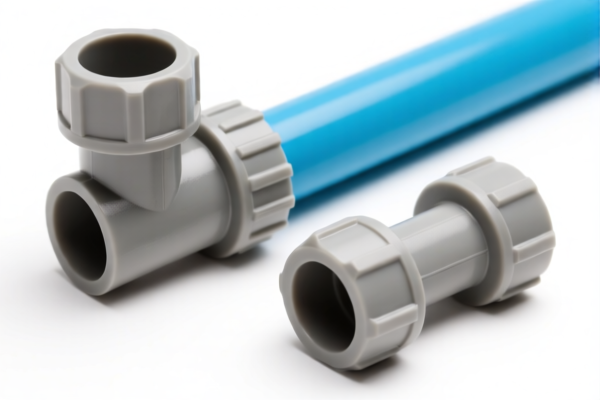
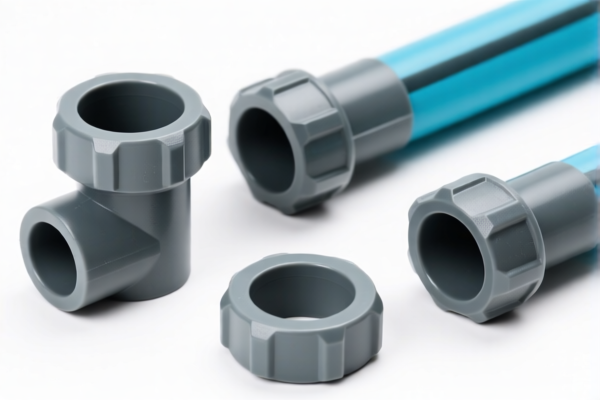
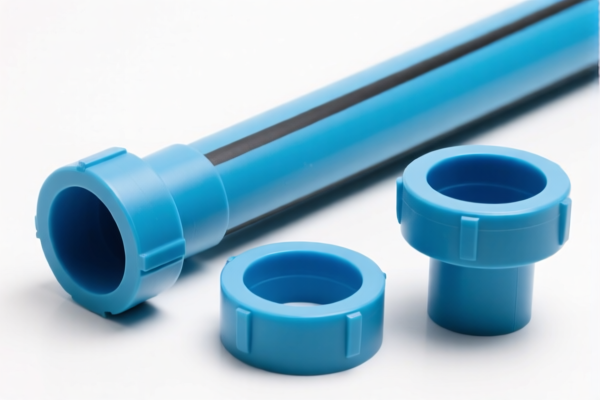
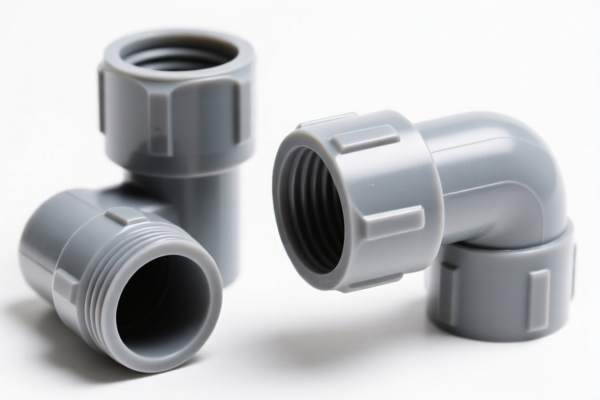
Plastic Pipe Fittings are specialized components used to connect, terminate, change direction, or tap into a pipe system. In the context of international trade (specifically imports to the US), these are typically classified based on two key factors: 1. Material: Primarily plastics (PE, PP, PVC, ABS, etc.). 2. Function: Whether they are considered parts of pipes/tubes (Chapter 39) or parts of valves/pressure-regulating devices (Chapter 84).
⚠️ Critical Distinction:
- If the fitting is merely a connecting piece (elbow, tee, coupler) for a plastic pipe system → Chapter 39.
- If the fitting is integral to a valve, tap, cock, or similar appliance → Chapter 84.
- Misclassification here can lead to drastic tariff differences (from 22.8% to 40.3% or more).
📦 2. HS Code Classification Matrix (US HTS 2026)
Based on the provided data, here are the four primary HS Code classifications for plastic pipe fittings, along with their tax details.
| HS Code | Classification Logic | Total Tax Rate | Tax Breakdown |
|---|---|---|---|
| 3917.40.00.10 | Plastic Fittings for Pipes/Tubes Specifically identified as "plastic oil pipe fittings" treated as accessories/parts of tubes. |
40.3% | Base: 5.3% Sec 301: 25.0% 122 Clause: 10% |
| 3926.90.99.87 | Plastic Fittings as General Accessories Classified as plastic accessories/parts, directly matching plastic material. |
22.8% | Base: 5.3% Sec 301: 7.5% 122 Clause: 10% |
| 3917.40.00.95 | Plastic Fittings for Pipes/Tubes (Other) Plastic material corresponding to pipe/tube accessories. |
40.3% | Base: 5.3% Sec 301: 25.0% 122 Clause: 10% |
| 8481.90.90.40 | Parts of Valves/Pressure Appliances Considered parts of valves/piping systems, plastic material does not conflict. |
35.0% | Base: 0.0% Sec 301: 25.0% 122 Clause: 10% |
🔍 Key Insight:
- 3917 Series (40.3%): Highest duty for standard plastic pipe fittings.
- 3926 Series (22.8%): Lowest duty, often used if the fitting is viewed as a general plastic accessory rather than a specific pipe part.
- 8481 Series (35.0%): Intermediate rate, applied if the fitting is deemed a part of a valve or pressure device rather than a simple pipe connector.
💰 3. Detailed Tax Clause Explanation (US Imports from China)
All tariffs below apply to goods originating in China and imported into the United States.
🎯 A. HS Code 3917.40.00.10 & 3917.40.00.95
Tax Rate: 40.3%
| Component | Rate | Legal Basis |
|---|---|---|
| Base Duty | 5.3% | Standard US HTS duty for plastic pipe fittings. |
| Section 301 Tariff | 25.0% | USTR List 4A (China-specific punitive tariff). |
| 122 Clause Tariff | 10.0% | Additional duty under Section 122 of the Trade Act (national security). |
| Total | 40.3% | Sum of Base + 301 + 122. |
📌 Why this rate?
These codes fall under Heading 3917, which specifically covers "Tubes, pipes and hoses, and fittings therefor, of plastics." Customs often applies the higher 25% Section 301 rate to these specific pipe accessories due to their industrial nature.
🎯 B. HS Code 3926.90.99.87
Tax Rate: 22.8%
| Component | Rate | Legal Basis |
|---|---|---|
| Base Duty | 5.3% | Standard US HTS duty for other plastic articles. |
| Section 301 Tariff | 7.5% | USTR List 4C (lower punitive tariff for certain plastic articles). |
| 122 Clause Tariff | 10.0% | Additional duty under Section 122 of the Trade Act. |
| Total | 22.8% | Sum of Base + 301 + 122. |
📌 Why this rate?
Code3926covers "Other articles of plastics." If Customs accepts your fitting as a general plastic accessory rather than a dedicated pipe fitting, it may qualify for the lower 7.5% Section 301 rate. This is a critical optimization point.
🎯 C. HS Code 8481.90.90.40
Tax Rate: 35.0%
| Component | Rate | Legal Basis |
|---|---|---|
| Base Duty | 0.0% | Parts of valves, taps, cocks, and similar appliances often have 0% base duty. |
| Section 301 Tariff | 25.0% | USTR List 4A (applied to parts of industrial equipment). |
| 122 Clause Tariff | 10.0% | Additional duty under Section 122 of the Trade Act. |
| Total | 35.0% | Sum of Base + 301 + 122. |
📌 Why this rate?
If the plastic fitting is used in a valve assembly or pressure-regulating system, it may be classified under Heading 8481. While the base duty is 0%, the 25% Section 301 tariff remains high because it’s seen as an industrial component.
🛠️ 4. Customs Clearance Practical Advice
✅ 1. Document Preparation Checklist
| Document | Requirement | Purpose |
|---|---|---|
| Product Description | Must specify: Material (e.g., HDPE, PVC), Type (Elbow, Tee, Coupler), Size, Pressure Rating. | Ensures accurate HS Code classification. |
| Technical Drawing | Show if the fitting is a simple connector or part of a valve assembly. | Determines if it falls under 3917 (pipe) or 8481 (valve). |
| Commercial Invoice | Clearly state "Plastic Pipe Fitting" or "Plastic Oil Pipe Fitting." | Avoid vague terms like "Plastic Parts." |
| Origin Certificate | Confirm China origin. | Triggers applicable Section 301 and 122 tariffs. |
| Photo Evidence | Show the fitting in context (e.g., connected to a pipe). | Helps prove it is a pipe accessory (3917) vs. a valve part (8481). |
✅ 2. Classification Strategy & Risk Mitigation
| Scenario | Recommended HS Code | Risk Level | Notes |
|---|---|---|---|
| Standard Pipe Connectors (Elbows, Tails, Couplers) | 3917.40.00.10 or 3917.40.00.95 | Medium | High tariff (40.3%). Ensure description emphasizes "for pipes/tubes." |
| General Plastic Accessories (Non-specific) | 3926.90.99.87 | Low | Lowest tariff (22.8%). Risk: Customs may reclassify if clearly a pipe fitting. |
| Valve Components (Part of a valve assembly) | 8481.90.90.40 | Medium | Intermediate tariff (35.0%). Only use if part of a valve system. |
🔥 Pro Tip:
- If you can argue that the fitting is a general plastic article (not specifically designed for pipes), try 3926.90.99.87 to save 17.5% in duties.
- However, if the product is unmistakably a pipe fitting (e.g., labeled "Oil Pipe Fitting"), Customs will likely insist on 3917.40.00, making the savings risky.
- 3917.40.00.10 and 3917.40.00.95 are very similar; check if your specific product type aligns better with one sub-heading.
✅ 3. Common Pitfalls & How to Avoid Them
❌ Pitfall 1: Using vague terms like "Plastic Part"
👉 Consequence: Customs may assign the highest general duty rate or reclassify to 3917.
✅ Fix: Use precise terms: "Plastic Elbow Fitting for HDPE Pipe."
❌ Pitfall 2: Confusing 3917 (Pipe Fittings) with 3926 (Other Plastic Articles)
👉 Consequence: Audit risk if documentation doesn’t support 3926.
✅ Fix: Only use 3926 if the fitting has alternative uses beyond piping systems.
❌ Pitfall 3: Ignoring the 122 Clause Tariff
👉 Consequence: Unexpected 10% duty addition.
✅ Fix: Always include the 122 Clause in your cost calculation, regardless of HS Code.
🌍 5. Global Market Comparison (Quick Reference)
| Market | Typical HS Code | Est. Duty (China Origin) | Notes |
|---|---|---|---|
| 🇺🇸 United States | 3917 / 3926 / 8481 | 22.8% – 40.3% | Includes Section 301 + 122 Clause. |
| 🇨🇳 China | 3917 | 5% – 10% | Lower base duties, no punitive tariffs. |
| 🇪🇺 European Union | 3917 | 4% – 6% | No Section 301 or 122 Clause. |
| 🇯🇵 Japan | 3917 | 5% – 10% | Generally lower tariffs than US. |
📌 Conclusion:
The US market is the most challenging due to the combination of Base Duty + Section 301 + 122 Clause. Always optimize your HS Code classification to minimize the 301 tariff component where legally permissible.
📌 6. Final Recommendations
- Pre-Classification: Before shipping, request a Binding Tariff Ruling from US Customs and Border Protection (CBP) if the volume is high.
- Documentation Precision: Ensure your invoice and packing list clearly describe the item as a "Plastic Pipe Fitting" to avoid ambiguity.
- Cost Calculation: Factor in the 122 Clause (10%) for all scenarios, as it is a consistent addition.
- Strategic Sourcing: If possible, consider sourcing from countries with FTAs (Free Trade Agreements) with the US to avoid Section 301 tariffs entirely.
🎯 Final Takeaway:
🔹 For Standard Plastic Pipe Fittings: Expect 40.3% duty under 3917.
🔹 For General Plastic Accessories: Aim for 22.8% under 3926 if applicable.
🔹 For Valve Parts: Use 35.0% under 8481.
🔹 Always include the 10% 122 Clause Tariff in your financial planning.
✨ Professional Clearance, Precision Classification, Cost Efficiency!
💼 Don’t let unclear HS Codes cost you 17.5% in avoidable duties!
Customer Reviews
About HS Code Classification
The Harmonized System (HS) is an internationally standardized nomenclature developed by the World Customs Organization (WCO) to classify traded products. Over 200 countries use the HS system as the basis for customs tariffs, trade statistics, and import/export regulations.
Each HS code follows a hierarchical structure:
- Chapter (2 digits) — Broad category of goods (e.g., Chapter 84: Machinery and Mechanical Appliances)
- Heading (4 digits) — More specific grouping within the chapter
- Subheading (6 digits) — Internationally standardized breakdown, used by all WCO member countries
- National subdivisions (8-10 digits) — Country-specific extensions for further classification, such as US HTSUS 10-digit codes
Correct HS code classification is essential for smooth customs clearance, accurate duty payment, and compliance with trade regulations. Misclassification can lead to customs delays, overpayment of duties, or penalties.
When importing from CN to US, the applicable tariff rates may include:
- Most-Favored-Nation (MFN) rate — The standard duty rate applied to WTO members
- General rate — Applied to countries without trade agreements
- Trade remedy duties — Additional tariffs such as Section 301 (anti-dumping), Section 232 (national security), or countervailing duties
The information provided on this page is for reference purposes only. For official classification, please consult with your local customs authority or a licensed customs broker.