Plastic Pipe Fitting Conductive Material
CN → US| HS Code | Tariff Rate | Origin | Destination | Doc |
|---|---|---|---|---|
| 8481805090 | 38.0% | CN | US | Official Doc |
| 3926909987 | 22.8% | CN | US | Official Doc |
| 3926305000 | 22.8% | CN | US | Official Doc |
| 8481805040 | 38.0% | CN | US | Official Doc |
| 3917290090 | 38.1% | CN | US | Official Doc |
Product Images
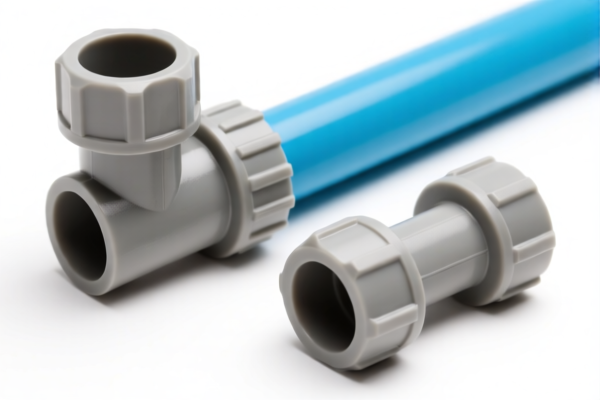
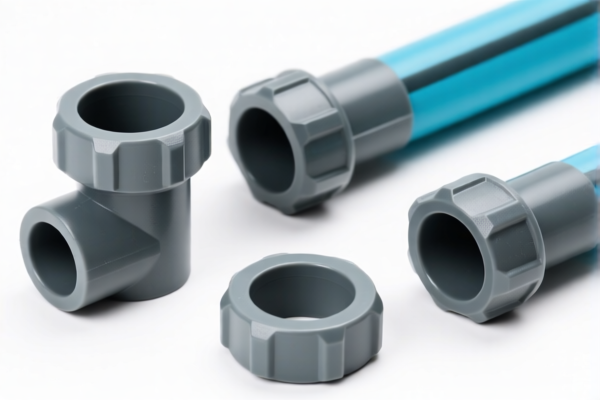
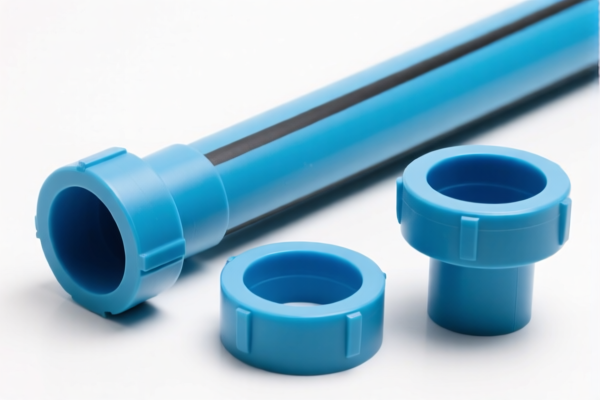
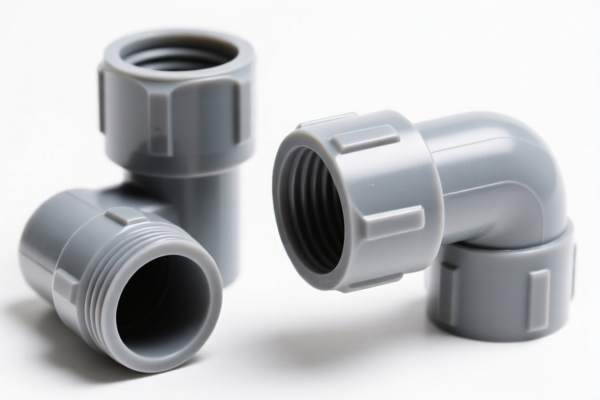
AI Analysis
🖱️ Plastic Pipe Fitting Conductive Material (Conductive Plastic Pipe Fittings)
🌐 HS Code Reference & Customs Clearance Guide | 2026 Latest Tariff Analysis | Professional-Level Clearance Strategy
📌 I. Product Definition & Classification: Do You Really Understand "Conductive Plastic Pipe Fittings"?
Plastic pipe fittings are critical components in fluid transport systems (water, gas, chemicals, industrial pipelines). In international trade, they are classified based on material, function, and structure.
Key Distinction for "Conductive" Materials:
- Conductive Properties: The term "conductive" implies the plastic is modified (e.g., with carbon fiber, metal fibers, or conductive polymers) to allow static dissipation or electrical conductivity.
- Classification Logic:
- If the fitting is primarily a pipe connection device (valves, taps, flanges, couplings), it may fall under Chapter 84 (Machinery/Plumbing Hardware).
- If it is a generic plastic fitting without complex mechanical function, it may fall under Chapter 39 (Plastics and Articles Thereof).
- ⚠️ Critical Note: The conductivity itself does not automatically move the product to Chapter 85 (Electrical Machinery). It is still considered a "pipe fitting" unless it includes electrical control components.
📦 II. HS Code Classification Details (2026 Latest Tariff Authoritative Comparison)
Based on the provided data, here are the possible HS Codes for Plastic Pipe Fitting Conductive Material:
| HS Code | Product Description | Applicable Scenario | Total Tax Rate |
|---|---|---|---|
8481.80.50.90 |
Plastic Pipe Fitting Connector: Form matches pipe connection devices, material is plastic, used for pipe connection. | High-pressure fluid systems, industrial plumbing, valve-like connectors | 38.0% |
3926.90.99.87 |
Plastic Pipe Fitting Connector: Material is plastic, form is a connector, belongs to extended applications of plastic products. | Generic plastic connectors, non-mechanical fittings, consumer-grade plumbing | 22.8% |
3926.30.50.00 |
Plastic Pipe Fitting Connector: Material is plastic, form and use are pipe fittings, fully consistent with classification. | Standard plastic pipe joints, elbows, tees, couplings | 22.8% |
8481.80.50.40 |
Plastic Pipe Fitting Connector: Form is a connector, material is plastic, aligns with the tendency to classify as parts. | Specialized conductive fittings with mechanical locking features | 38.0% |
3917.29.00.90 |
Plastic Pipe: Material is plastic, form is a pipe, aligns with "other categories" logic with no length limit. | Conductive plastic pipes or hose-like fittings, not solid connectors | 38.1% |
🔍 Key Analysis:
- Chapter 84 (8481.80.xxxx): Higher tax rate (38.0%). Applied when the fitting is considered a mechanical device or valve/connector with specific hydraulic/pneumatic function.
- Chapter 39 (3926.xxxx): Lower tax rate (22.8%). Applied when the fitting is considered a simple plastic article without complex mechanical function.
- Chapter 39 (3917.29.00.90): Highest tax rate (38.1%). Specifically for pipes/hoses, not fittings. If your product is a solid connector, avoid this code.
💰 III. 2026 Latest Tariff Rate Breakdown (Including Surcharges, Policy Add-ons)
✅ Applicable Country: United States (US)
✅ Origin: China (CN)
✅ Effective Date: From November 10, 2025 (including subsequent imports)
🎯 1. 8481.80.50.90 & 8481.80.50.40 —— Plastic Pipe Fitting Connectors (Mechanical/Valve-like)
| Item | Details |
|---|---|
| Base Tariff | 3.0% (Ad Valorem) |
| Section 301 Surcharge | +25.0% (China-origin goods) |
| Section 122 Tariff | +10.0% (Specific to certain industrial goods) |
| Total Tax Rate | 38.0% |
| Tax Calculation | CIF Value × 38.0% |
| De Minimis Exemption | ❌ Not Eligible (deny_de_minimis) |
| Legal Basis Path | Section 301:9903.88.01 → Section 122 → USITC:8481.80.50.90 |
📌 Explanation:
- The 3.0% base tariff is the standard MFN rate for pipe fittings in Chapter 84.
- The 25% Section 301 tariff is the primary trade war surcharge on Chinese goods.
- The 10% Section 122 tariff applies to specific industrial components, including some plumbing parts.
- Total 38.0% is a high tariff. Must be factored into cost modeling.
🎯 2. 3926.90.99.87 & 3926.30.50.00 —— Plastic Pipe Fitting Connectors (Generic Plastic Articles)
| Item | Details |
|---|---|
| Base Tariff | 5.3% (Ad Valorem) |
| Section 301 Surcharge | +7.5% (Reduced 301 rate for some plastic articles) |
| Section 122 Tariff | +10.0% |
| Total Tax Rate | 22.8% |
| Tax Calculation | CIF Value × 22.8% |
| De Minimis Exemption | ❌ Not Eligible (deny_de_minimis) |
| Legal Basis Path | Section 301:9903.01.24 → Section 122 → USITC:3926.90.99.87 |
📌 Explanation:
- The 5.3% base tariff is higher than some electronics but lower than Chapter 84 mechanical parts.
- The 7.5% Section 301 tariff is significantly lower than the 25% for Chapter 84, making this a preferred classification if technically justifiable.
- The 10% Section 122 tariff still applies.
- Total 22.8% is a moderate-high tariff. Still requires careful planning.
🎯 3. 3917.29.00.90 —— Plastic Pipe (Hose-like)
| Item | Details |
|---|---|
| Base Tariff | 3.1% (Ad Valorem) |
| Section 301 Surcharge | +25.0% |
| Section 122 Tariff | +10.0% |
| Total Tax Rate | 38.1% |
| Tax Calculation | CIF Value × 38.1% |
| De Minimis Exemption | ❌ Not Eligible (deny_de_minimis) |
| Legal Basis Path | Section 301:9903.01.25 → Section 122 → USITC:3917.29.00.90 |
📌 Explanation:
- This code is for pipes/hoses, not solid fittings.
- If your product is a conductive plastic pipe (flexible hose), use this code.
- Total 38.1% is the highest tariff. Avoid if your product is a solid connector.
🛠️ IV. Customs Clearance Practical Advice (Battle-Tested Pitfall Avoidance Guide)
✅ 1. Documentation Checklist (Missing = Delay/Rejection)
| Document | Required? | Notes |
|---|---|---|
| ✅ Product Specification Sheet | ✔️ | Must include material composition (e.g., "PP with 15% Carbon Fiber") and conductivity rating (Ohm/cm). |
| ✅ Technical Data Sheet (TDS) | ✔️ | Prove it is a "pipe fitting" (connection function) vs. "pipe" (fluid transport). |
| ✅ Product Photos (Clear) | ✔️ | Show threads, joints, and overall shape. Distinguish from straight pipes. |
| ✅ Commercial Invoice | ✔️ | Describe as "Plastic Pipe Fitting Connector, Conductive, Model XYZ". Do NOT use "Pipe". |
| ✅ Packing List | ✔️ | List items clearly as "Fittings" not "Pipes". |
| ✅ Origin Certificate (CO) | ✔️ | Required for tariff determination. |
| ✅ Third-Party Test Report | ✔️ | Conductivity test report to prove "conductive" nature (if relevant for safety standards). |
✅ 2. Declaration Tips (Key Mantra)
🔥 "Fit is not Pipe, Conductive is not Electrical, Chapter 39 saves cost if mechanical function is minimal!"
| Scenario | Correct Declaration | Wrong Practice |
|---|---|---|
| Solid Connector (Elbow, Tee, Coupling) | 3926.90.99.87 or 3926.30.50.00 (22.8%) |
Declare as 8481 (38.0%) unnecessarily |
| Valve-like Connector (with moving parts) | 8481.80.50.90 (38.0%) |
Declare as 3926 → Customs Risk |
| Flexible Conductive Hose | 3917.29.00.90 (38.1%) |
Declare as "Fitting" → Misclassification |
| Conductive Plastic Pipe (Rigid) | 3917.29.00.90 (38.1%) |
Use 3926 → Rejection |
✅ 3. Special Situation Handling
| Situation | Handling Advice |
|---|---|
| OEM Custom Conductive Fittings | Provide client order + design drawing to prove "connector" function. |
| Conductive for Static Dissipation | Emphasize "static dissipation" in description, not "electrical wiring". |
| Mixed Shipment (Fittings + Pipes) | Declare separately! Fittings under 3926, Pipes under 3917. |
| High-Pressure Industrial Fittings | Likely falls under 8481 (38.0%). Justify with pressure rating and mechanical design. |
🌍 V. Global Main Market Clearance Comparison (2026 Latest)
| Country/Region | Recommended HS Code | Tariff | Certification Requirements | Notes |
|---|---|---|---|---|
| 🇺🇸 USA | 3926.90.99.87 / 8481.80.50.90 |
22.8% / 38.0% | FCC (if conductive), RoHS | Highest Tariff Market |
| 🇨🇳 China | 3926.90.99.87 |
5.0% - 10.0% | CCC (if applicable) | No Section 301/122 |
| 🇪🇺 EU | 3926.90.99.87 |
4.0% - 6.0% | CE, REACH | No Section 122/301 |
| 🇦🇺 Australia | 3926.90.99.87 |
5.0% | RCM (if conductive) | No Section 301 |
| 🇯🇵 Japan | 3926.90.99.87 |
3.0% - 5.0% | PSE (if electrical) | No Section 301 |
📌 Conclusion:
- USA is the most challenging market due to Section 301 (25% or 7.5%) and Section 122 (10%).
- EU/Asia markets have lower tariffs and no punitive surcharges.
- Conductivity does not reduce US tariffs; it may even increase scrutiny.
📌 VI. Common Errors & Pitfall Avoidance (Lessons Learned)
❌ Error 1: Declaring solid fittings as 3917 (Pipes)
👉 Consequence: Customs rejects for misclassification → Demurrage + Delay.
❌ Error 2: Declaring valve-like fittings as 3926 (Plastic Articles)
👉 Consequence: Customs reclassifies to 8481 → Back-tax 15.2% + Penalty.
❌ Error 3: Ignoring Section 122 Tariff (10%)
👉 Consequence: Underpayment → Audit + Interest.
❌ Error 4: Using "Conductive" to claim "Electrical" classification
👉 Consequence: Wrong Chapter (85) → Complete Rejection.
✅ Correct Approach:
"Plastic Pipe Fitting Connector, Conductive, Carbon Fiber Reinforced, Model ABC, Used for Static Dissipation in Fluid Systems"
🎯 VII. Conclusion: Professional Declaration, Save Time, Reduce Costs!
🎯 Remember the Mantra:
🔹 "Fit is not Pipe, Connector is not Valve, Chapter 39 is cheaper if no moving parts!"
🔹 "US Tariffs are High: 22.8% for Plastic, 38.0% for Mechanical. Plan Ahead!"
🔹 "HS Code Determines Tax, 15% Difference is Huge. Declare Accurately!"
📌 Pro Tip:
If your conductive plastic fittings are shipped from Vietnam, Mexico, or Thailand, you may qualify for IEEPA Exemptions or FTA Benefits, reducing tariffs to 0%~5%.
✅ Recommendation: Apply for Advance Ruling (CBP Ruling) before shipment to lock in the correct HS Code and avoid surprises.
📣 Immediate Action:
📞 Contact Professional Customs Broker + Provide Product Photos + Apply for HS Code Advance Ruling
🚀 Let your conductive plastic fittings clear smoothly, export efficiently, and maximize profits!
✨ Professional Clearance Starts with Accurate Classification!
💼 Every Penny Saved is Profit Gained!
Customer Reviews
About HS Code Classification
The Harmonized System (HS) is an internationally standardized nomenclature developed by the World Customs Organization (WCO) to classify traded products. Over 200 countries use the HS system as the basis for customs tariffs, trade statistics, and import/export regulations.
Each HS code follows a hierarchical structure:
- Chapter (2 digits) — Broad category of goods (e.g., Chapter 84: Machinery and Mechanical Appliances)
- Heading (4 digits) — More specific grouping within the chapter
- Subheading (6 digits) — Internationally standardized breakdown, used by all WCO member countries
- National subdivisions (8-10 digits) — Country-specific extensions for further classification, such as US HTSUS 10-digit codes
Correct HS code classification is essential for smooth customs clearance, accurate duty payment, and compliance with trade regulations. Misclassification can lead to customs delays, overpayment of duties, or penalties.
When importing from CN to US, the applicable tariff rates may include:
- Most-Favored-Nation (MFN) rate — The standard duty rate applied to WTO members
- General rate — Applied to countries without trade agreements
- Trade remedy duties — Additional tariffs such as Section 301 (anti-dumping), Section 232 (national security), or countervailing duties
The information provided on this page is for reference purposes only. For official classification, please consult with your local customs authority or a licensed customs broker.