Plastic Pipe Fitting Filter
CN → US| HS Code | Tariff Rate | Origin | Destination | Doc |
|---|---|---|---|---|
| 8421290040 | 35.0% | CN | US | Official Doc |
| 8421290015 | 35.0% | CN | US | Official Doc |
| 3926902500 | 24.0% | CN | US | Official Doc |
| 3926305000 | 22.8% | CN | US | Official Doc |
| 3926909989 | 22.8% | CN | US | Official Doc |
| 8481909085 | 85.0% | CN | US | Official Doc |
Product Images
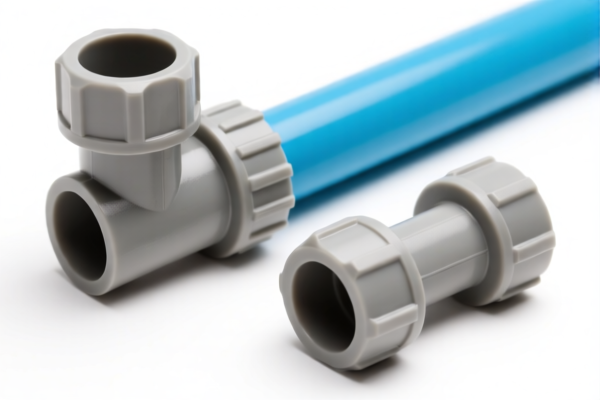
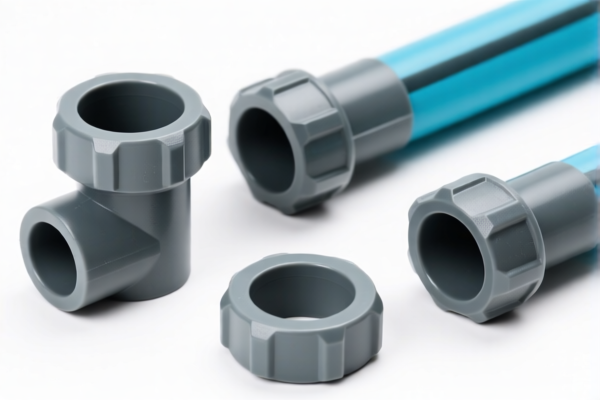
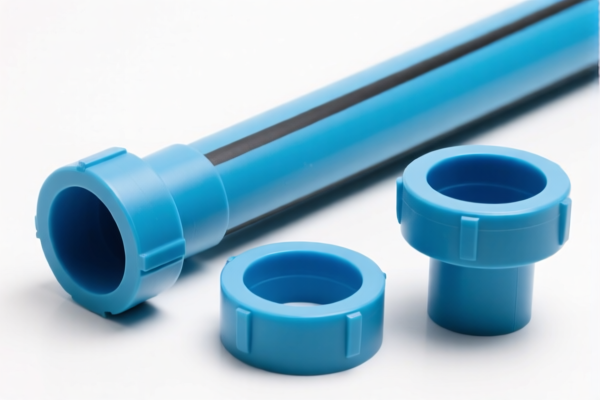
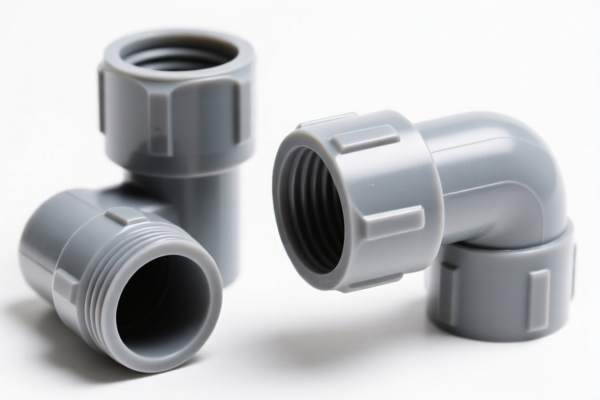
AI Analysis
🛢️ Plastic Pipe Fitting & Filters: The "Hidden" Customs Nightmare
🌐 HS Code Reference & Clearance Guide | 2026 Latest Tariff Analysis | Professional Clearance Strategy for Plastic Components
📌 I. Product Definition & Classification: Are You Sure It’s Just a "Fitting"?
Plastic pipe fittings and filters are the veins of industrial and domestic fluid systems. However, in international trade, their classification depends entirely on function, material, and structural completeness. Misclassification here leads to catastrophic tariff spikes (up to 85% vs. 24%).
The Core Distinction:
Filters (Liquid/Filtration Devices): Classified under Chapter 84 because they perform a specific mechanical/technical function (filtration).
Fittings/Joints (Connection/Transmission): Classified under Chapter 39 (Plastics) or Chapter 84 (Valve Parts) depending on whether they are standalone plastic parts or specialized valve components.
⚠️ Critical Warning:
- If it filters liquid → Go to Chapter 84 (Higher tax burden due to Section 301/122).
- If it connects/joins pipes → Go to Chapter 39 (Generally lower tax, but watch out for "Valve Parts" traps).
- If it is a part of a valve specifically → Go to 8481 (Extreme tax risk: 85%).
📦 II. HS Code Classification Details (2026 Latest Tariff Authority Mapping)
Based on the provided data, here is the precise mapping for Plastic Pipe Fittings and Filters.
| HS Code | Product Description | Key Attributes | Classification Logic |
|---|---|---|---|
| 8421.29.00.40 | Plastic Filters | Material: Plastic Use: Filtration Device |
Classified as a Liquid Filtration Device. Fits the technical definition of a filter unit. |
| 8421.29.00.15 | Plastic Filters | Material: Plastic Function: Filtration |
Classified under "Other" Liquid Filtration Devices. Used when it doesn't fit specific sub-categories but is clearly a filter. |
| 3926.90.25.00 | Plastic Conversion Fittings | Material: Plastic | Classified as a Plastic Article Not Specified Elsewhere. A generic catch-all for plastic fittings that don't fit valve/part definitions. |
| 3926.30.50.00 | Plastic Conversion Fittings | Material: Plastic | Classified as Plastic Articles for Connecting/Jointing Uses. Specifically for pipe connectors/joints. |
| 3926.90.99.89 | Plastic Conversion Fittings | Material: Plastic | Classified as Other Plastic Articles/Manufactures. Another generic bucket for miscellaneous plastic fittings. |
| 8481.90.90.85 | Plastic Conversion Fittings | Material: Plastic | Classified as Parts of Valves and Similar Devices. HIGH RISK: If deemed a valve component, not a standalone fitting. |
🔍 Key Insight:
- 8421.xx items are taxed at 35% (Base 0% + Add. 25% + 122 Clause 10%).
- 3926.xx items are taxed at 22.8% - 24.0% (Base ~5-6.5% + Add. 7.5% + 122 Clause 10%).
- 8481.xx items are taxed at 85.0% (Base 0% + Add. 25% + 122 Clause 10% + Steel/Aluminum/Copper surcharge logic applies broadly or specific high-risk classification).
Note: The 85% rate for 8481.90.90.85 suggests a punitive classification, possibly treating it as a high-value valve part or triggering additional surcharges not fully detailed in the standard 35% filter bracket.
💰 III. 2026 Latest Tariff Rate Breakdown (Including Surcharges & Policy Add-ons)
✅ Applicable Country: United States (US)
✅ Origin: China (CN)
✅ Effective Date: Current regulations (Section 301 + 122 Clause)
🎯 1. Filters (Chapter 84) – The "Functional" Trap
| HS Code | Product Description | Total Tax Rate | Tax Composition Breakdown |
|---|---|---|---|
| 8421.29.00.40 | Plastic Filters (Liquid Filtration) | 35.0% | • Base: 0.0% • Section 301 Add-on: 25.0% • 122 Clause Tariff: 10.0% |
| 8421.29.00.15 | Plastic Filters (Other Liquid Filter) | 35.0% | • Base: 0.0% • Section 301 Add-on: 25.0% • 122 Clause Tariff: 10.0% |
📌 Explanation:
- Why 35%? Plastic filters fall under Chapter 84, which attracts the full 25% Section 301 tariff PLUS the 10% 122 Clause tariff.
- No Base Tariff: The base MFN rate is 0%, but the add-ons make it expensive.
- Risk: If customs decides your "filter" is actually a "part of a filter," rates may shift, but 35% is the standard for the finished filtration device.
🎯 2. Plastic Fittings/Joints (Chapter 39) – The "Generic" Route
| HS Code | Product Description | Total Tax Rate | Tax Composition Breakdown |
|---|---|---|---|
| 3926.90.25.00 | Plastic Conversion Fittings (Niche) | 24.0% | • Base: 6.5% • Section 301 Add-on: 7.5% • 122 Clause Tariff: 10.0% |
| 3926.30.50.00 | Plastic Conversion Fittings (Connecting) | 22.8% | • Base: 5.3% • Section 301 Add-on: 7.5% • 122 Clause Tariff: 10.0% |
| 3926.90.99.89 | Plastic Conversion Fittings (Other) | 22.8% | • Base: 5.3% • Section 301 Add-on: 7.5% • 122 Clause Tariff: 10.0% |
📌 Explanation:
- Why ~23-24%? These are classified as general plastic articles. They attract a lower Section 301 rate (7.5%) compared to machinery parts (25%).
- Base Tariff: You pay 5.3% or 6.5% on top.
- 122 Clause: Still applies the 10% surcharge.
- Savings: Choosing 3926 over 8421 saves ~11-12% in tariffs if the product is purely a connector.
🎯 3. The Danger Zone: Valve Parts (Chapter 84) – Avoid at All Costs!
| HS Code | Product Description | Total Tax Rate | Tax Composition Breakdown |
|---|---|---|---|
| 8481.90.90.85 | Plastic Conversion Fittings (Valve Parts) | 85.0% | • Base: 0.0% • Section 301 Add-on: 25.0% • 122 Clause Tariff: 10.0% • Steel/Aluminum/Copper Surcharge: 50%* |
📌 CRITICAL WARNING:
- Why 85%? This code is for parts of valves. If your plastic fitting is deemed a "part of a valve" (even if plastic), it triggers the punitive 50% surcharge listed in the data (likely due to cross-referencing with metal valve part surcharges or specific high-risk trade policy logic applied to 8481).
- Avoidance: You MUST classify plastic pipe joints as 3926 (Plastic Articles), NOT 8481 (Valve Parts). Do NOT describe them as "valve components" in your invoice.
🛠️ IV. Clearance Practical Advice (Battle-Tested Tips)
✅ 1. Documentation Checklist (Non-Negotiable)
| Document | Mandatory? | Why It Matters |
|---|---|---|
| ✅ Product Specification Sheet | Yes | Must clearly state: "Plastic Pipe Joint/Connector" OR "Plastic Liquid Filter". Do not use vague terms like "Accessory". |
| ✅ Material Declaration | Yes | Explicitly state "100% Plastic (PP/PVC/ABS)". Prevents misclassification into metal/valve surcharge categories. |
| ✅ Functional Description | Yes | - For 3926: "Used for connecting pipes; does not control flow." - For 8421: "Used for filtering liquids; contains filter media." |
| ✅ Photos (Internal & External) | Yes | Show threads, interior surface. If it has a filter mesh/screen inside, it MUST be 8421. If it’s hollow, it’s likely 3926. |
| ✅ Commercial Invoice | Yes | Item description must match HS Code logic. E.g., "Plastic Elbow Fitting" vs. "Plastic Filter Cartridge". |
✅ 2. Naming & Describing Tricks (Key Mnemonics)
🔥 "No Control, No Filter = Plastic (39). Control or Filter = Chapter 84 (35-85%)."
| Scenario | Correct HS Code | Wrong HS Code | Consequence of Error |
|---|---|---|---|
| Plastic Elbow/Tee/Joint (Hollow, no moving parts) |
3926.30.50.00 or 3926.90.99.89 | 8481.90.90.85 | Tax jumps from 22.8% to 85%! ❌ |
| Plastic Filter Housing (Contains filter element) |
8421.29.00.40 or .15 | 3926.xx | Tax jumps from 24% to 35%. Acceptable if it is a filter. |
| Plastic Valve Body (Has handle, controls flow) |
8481.80.xx (Not in data, but likely high) | 3926.xx | Misclassification risk. If it's a "part" only, see 8481.90.90.85 (85%). |
✅ 3. Special Case Handling
| Situation | Strategy |
|---|---|
| Product is a "Filter + Housing" | Declare as 8421. The functional element (filtration) drives the classification. Do not try to split it to save tax. |
| Product is a "Connector + O-Ring" | Declare as 3926. The O-ring is an accessory. The main function is connection. |
| Customs Questions "Is it a Valve Part?" | Answer NO. State: "This is a plastic pipe fitting used for fluid transmission. It does not regulate, control, or distribute flow. It is not a part of a valve." |
| Material is Mixed (e.g., Plastic + Metal Spring) | HIGH RISK. If metal content is significant, it may fall under 8481 (Valve Part) or 73/74/76 (Metal). Stick to 100% Plastic for 3926. |
🌍 V. Global Market Clearance Comparison (2026)
| Country/Region | Recommended HS Code | Tariff Impact | Key Certification | Note |
|---|---|---|---|---|
| 🇺🇸 USA | 3926.xx (for fittings) 8421.xx (for filters) |
22.8-24% (Fittings) 35% (Filters) |
FDA (if water contact), NSF | Avoid 8481! It costs 85%. |
| 🇨🇳 China | 3926 / 8421 | Low (0-5%) | CCC (if applicable) | Standard import duties. |
| 🇪🇺 EU | 3926 / 8421 | Low (0-3%) | REACH, RoHS | No Section 301 equivalent. |
| 🇨🇦 Canada | 3926 / 8421 | Low (0-6.5%) | Health Canada (if potable) | CUSMA free if Canadian origin. |
📌 Conclusion:
- USA is the critical market. The difference between 22.8% and 85% is a profit-killer.
- Always push for 3926 for plastic fittings unless they are explicitly defined as "valve parts."
- Filters inevitably go to 8421. There is no way around the 35% tax for functional filters from China.
📌 VI. Common Mistakes & Pitfalls (Blood-Tested Lessons)
❌ Mistake 1: Calling a plastic pipe joint a "Valve Component"
👉 Result: Customs classifies it as 8481.90.90.85 → 85% Tax.
👉 Fix: Describe as "Plastic Pipe Connector" or "Pipe Fitting". Emphasize it is not part of a valve assembly.
❌ Mistake 2: Labeling a Filter as a "Plastic Container"
👉 Result: Customs rejects the 3926 classification because it performs a technical function. Re-classifies to 8421.
👉 Fix: Be honest. It is a filter. Pay the 35%. Attempting fraud leads to penalties.
❌ Mistake 3: Ignoring the "122 Clause" (10%)
👉 Result: Surprise bill at customs.
👉 Fix: All items from China currently face this 10% surcharge. Plan for it in your cost model.
❌ Mistake 4: Mixing Metal and Plastic without declaration
👉 Result: If a plastic fitting has a brass insert, it may be classified as 8481 (Metal/Valve part).
👉 Fix: Ensure product is 100% Plastic for 3926 eligibility.
✅ Correct Practice:
"Plastic Pipe Elbow Fitting, 2-inch, PVC, for Water Transmission. Not a Valve Part. No Flow Control."
HS Code:3926.30.50.00
Tax: 22.8%
🎯 VII. Conclusion: Precision Classification Saves Millions
🎯 Remember the Mantra:
🔹 "Connectors are Plastic (3926). Filters are Machinery (8421). Valve Parts are Death (8481)."
🔹 "22% vs 85%: The difference is in the description. Don't call a joint a valve part!"
🔹 "35% is the Filter Tax. 24% is the Fitting Tax. Know your product's function."
📌 Pro Tip:
If your product is originating from Vietnam or Mexico, you may be exempt from Section 301/122 tariffs entirely. However, ensure Rule of Origin documentation is flawless.
For China-origin goods, Pre-Classification Ruling is highly recommended if the product is borderline between "Fitting" and "Valve Part."
📣 Immediate Action:
📞 Review your current Invoice Descriptions.
🚫 Remove words like "Valve," "Control," "Regulator."
✅ Use words like "Connector," "Joint," "Fitting," "Filtration Device."
🚀 Clearance starts with the right word.
✨ Professional Clearance, Start with Accurate Classification!
💼 Every percentage point saved is pure profit!
Customer Reviews
About HS Code Classification
The Harmonized System (HS) is an internationally standardized nomenclature developed by the World Customs Organization (WCO) to classify traded products. Over 200 countries use the HS system as the basis for customs tariffs, trade statistics, and import/export regulations.
Each HS code follows a hierarchical structure:
- Chapter (2 digits) — Broad category of goods (e.g., Chapter 84: Machinery and Mechanical Appliances)
- Heading (4 digits) — More specific grouping within the chapter
- Subheading (6 digits) — Internationally standardized breakdown, used by all WCO member countries
- National subdivisions (8-10 digits) — Country-specific extensions for further classification, such as US HTSUS 10-digit codes
Correct HS code classification is essential for smooth customs clearance, accurate duty payment, and compliance with trade regulations. Misclassification can lead to customs delays, overpayment of duties, or penalties.
When importing from CN to US, the applicable tariff rates may include:
- Most-Favored-Nation (MFN) rate — The standard duty rate applied to WTO members
- General rate — Applied to countries without trade agreements
- Trade remedy duties — Additional tariffs such as Section 301 (anti-dumping), Section 232 (national security), or countervailing duties
The information provided on this page is for reference purposes only. For official classification, please consult with your local customs authority or a licensed customs broker.