Plastic Pipe Fitting Gasket
CN → US| HS Code | Tariff Rate | Origin | Destination | Doc |
|---|---|---|---|---|
| 3926904590 | 38.5% | CN | US | Official Doc |
| 3926904510 | 38.5% | CN | US | Official Doc |
| 4016935010 | 37.5% | CN | US | Official Doc |
| 3917400050 | 40.3% | CN | US | Official Doc |
| 3917400095 | 40.3% | CN | US | Official Doc |
Product Images


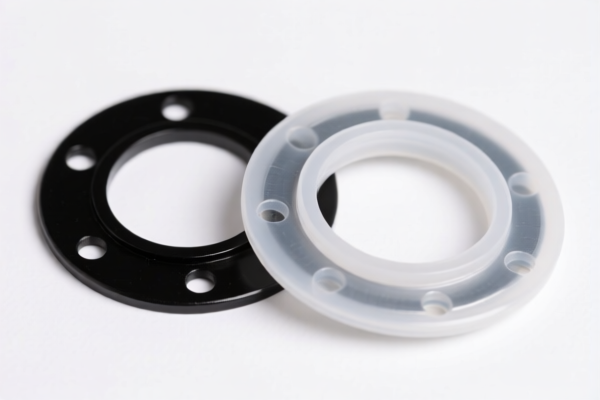

AI Analysis
🔩 Plastic Pipe Fitting Gasket
🌐 HS Code Reference & Clearance Guide | 2026 Latest Tariff Analysis | Professional Customs Strategy
📌 I. Product Definition & Classification: Understanding the "Plastic Gasket"
Plastic gaskets (seals) are critical components in fluid and gas transmission systems, used primarily for sealing joints in pipes, valves, and fittings. In international trade, classification depends on material composition, function, and specific application.
⚠️ Key Distinction:
- If made of Rubber/Elastomer → Often falls under Chapter 40 (Articles of Rubber);
- If made of Plastic (e.g., PVC, PP, PE) → Falls under Chapter 39 (Articles of Plastics);
- Critical Note: The provided data specifies "Plastic Material", so we strictly follow Chapter 39 or related plumbing accessory codes, NOT Chapter 40.
📦 II. HS Code Classification Details (Based on Provided Data)
| HS Code | Product Description | Classification Logic | Total Tax Rate* |
|---|---|---|---|
3926.90.45.90 |
Plastic Gaskets | Explicitly matches "Gaskets and other sealing devices" under plastic articles | 38.5% |
3926.90.45.10 |
Plastic Gaskets/Seals | Classified as "Gaskets and other sealing devices" for plastic materials | 38.5% |
4016.93.50.10 |
Plastic Gasket (General Use) | Classified under "Other articles of vulcanized rubber/plastic" based on universality | 37.5% |
3917.40.00.50 |
Plastic Pipe Fitting Accessory | Classified as "Tube, pipe & hose fittings" accessories for drainage/ventilation | 40.3% |
3917.40.00.95 |
Plastic Pipe Fitting Accessory | Classified as "Other tube, pipe & hose fittings" fittings | 40.3% |
* All tax rates include Base Duty + Section 301 Duty (25%) + Section 301/IEEPA Additional Duty (10%).
💰 III. Detailed Tariff Rate Analysis (US Market, China Origin)
✅ Applicable Country: United States (US)
✅ Country of Origin: China (CN)
✅ Effective Date: Post-2025 Trade Policy Adjustments
🎯 1. 3926.90.45.90 & 3926.90.45.10 — Plastic Gaskets (Sealing Articles)
| Item | Detail |
|---|---|
| Base Duty | 3.5% (Ad Valorem) |
| Section 301 Duty | +25.0% (Retaliatory tariff on Chinese plastic goods) |
| Additional Duty (122/IEEPA) | +10.0% (Specific clause for Chinese plastic components) |
| Total Effective Rate | 38.5% |
| De Minimis Exemption | ❌ Not Eligible (Section 301 tariffs apply regardless of value) |
| Legal Path | HTS:3926.90.45 → USITC:301-List → Section-301:25% → Section-122:10% |
📌 Explanation:
- These codes specifically cover gaskets and sealing devices made of plastic.
- The 38.5% rate is high due to the cumulative effect of base duties and trade war tariffs.
- Note: Code3926.90.45.10and3926.90.45.90have identical tax structures in this dataset.
🎯 2. 4016.93.50.10 — Plastic Gasket (General Purpose)
| Item | Detail |
|---|---|
| Base Duty | 2.5% (Ad Valorem) |
| Section 301 Duty | +25.0% |
| Additional Duty (122/IEEPA) | +10.0% |
| Total Effective Rate | 37.5% |
| De Minimis Exemption | ❌ Not Eligible |
| Legal Path | HTS:4016.93.50 → USITC:301-List → Section-301:25% → Section-122:10% |
📌 Explanation:
- Although4016starts with "Rubber," it includes plastic articles for general use if not specifically classified elsewhere.
- Savings: This code saves 1.0% compared to the dedicated plastic gasket codes (38.5%vs37.5%).
- Risk: Must prove "general use" and compatibility with rubber/plastic standards to justify this classification.
🎯 3. 3917.40.00.50 & 3917.40.00.95 — Plastic Pipe Fitting Accessories
| Item | Detail |
|---|---|
| Base Duty | 5.3% (Ad Valorem) |
| Section 301 Duty | +25.0% |
| Additional Duty (122/IEEPA) | +10.0% |
| Total Effective Rate | 40.3% |
| De Minimis Exemption | ❌ Not Eligible |
| Legal Path | HTS:3917.40.00 → USITC:301-List → Section-301:25% → Section-122:10% |
📌 Explanation:
- These codes classify the gasket as a part of a pipe fitting (e.g., PVC connector accessory).
- Highest Cost: At 40.3%, this is the most expensive classification.
- Use Case: Only use if the gasket is sold exclusively as part of a pipe fitting set and not as a standalone seal.
🛠️ IV. Customs Clearance Practical Advice
✅ 1. Recommended Strategy: Optimize Tax Liability
| Strategy | Action | Expected Tax |
|---|---|---|
| Best Option | Use 4016.93.50.10 (General Plastic Article) |
37.5% |
| Standard Option | Use 3926.90.45.90 (Plastic Gasket) |
38.5% |
| Avoid | Use 3917.40.00.50/95 (Pipe Fitting Accessory) |
40.3% |
💡 Tip:
- If the gasket is standardized (e.g., O-ring, flat gasket), argue for4016.93.50.10based on "universal sealing function."
- If the gasket is custom-molded for a specific plastic pipe system, use3926.90.45.90for precise description.
- Avoid3917unless the gasket is bundled and sold exclusively with pipe fittings.
✅ 2. Documentation Requirements
| Document | Requirement |
|---|---|
| Product Description | Specify material (e.g., "PVC Gasket," "PE Sealing Ring"), dimensions, and hardness. |
| Material Certificate | Proof of plastic composition (e.g., MSDS, material safety data). |
| Usage Declaration | State: "Used for sealing connections in plumbing systems." |
| HS Code Justification | Provide reasoning for chosen HS code (e.g., "General sealing device, not exclusive to pipe fittings"). |
✅ 3. Common Pitfalls & Risk Management
| Mistake | Consequence | Solution |
|---|---|---|
| Misclassifying as Rubber | Using 4016 for non-rubber plastic |
Provide material test report proving it’s plastic, not vulcanized rubber. |
| Over-classifying as Pipe Fitting | Using 3917 unnecessarily |
Declare as standalone gasket; do not bundle with fittings in invoice unless physically attached. |
| Ignoring Section 301 | Assuming de minimis applies | Never assume $800 de minimis exemption; Section 301 taxes apply regardless of value. |
🌍 V. Global Market Comparison (2026)
| Market | Recommended HS Code | Tax Rate (China Origin) | Notes |
|---|---|---|---|
| 🇺🇸 USA | 4016.93.50.10 or 3926.90.45.90 |
37.5% – 38.5% | High tariffs due to trade war. |
| 🇨🇳 China | 3926.90.90.90 |
5% – 8% | No Section 301. |
| 🇪🇺 EU | 4016.93 or 3926.90 |
3.5% – 6.5% | No Section 301; lower base rates. |
| 🇦🇺 Australia | 3926.90 |
5% – 10% | Moderate tariffs. |
📌 Conclusion:
- The US market has the highest tax burden due to Section 301 + 122 clauses.
- Consider supply chain diversification (e.g., produce in Vietnam/Mexico) to avoid high tariffs if volume is large.
📌 VI. Final Recommendations
- Prefer
4016.93.50.10if the gasket is a standardized plastic seal not exclusive to plastic pipes. It offers the lowest tax rate (37.5%). - Use
3926.90.45.90if the gasket is specifically designed for plastic piping systems and sold as a sealing component. Tax: 38.5%. - Avoid
3917.40.00.50/95unless the gasket is integrated into a pipe fitting assembly. Tax: 40.3% (highest). - Always declare material clearly as "Plastic (PVC/PE/PP)" to avoid misclassification penalties.
- Plan for Tariffs: Factor in 37.5%–40.3% total landed cost for US shipments from China.
📣 Action Item:
📞 Contact Customs Broker with product samples and material specs to confirm HS Code.
📄 Request Advance Ruling if importing large volumes to ensure classification stability.
✨ Precision in Classification = Savings in Taxes!
💼 Every 1% difference in duty can mean significant profit margin protection.
Customer Reviews
About HS Code Classification
The Harmonized System (HS) is an internationally standardized nomenclature developed by the World Customs Organization (WCO) to classify traded products. Over 200 countries use the HS system as the basis for customs tariffs, trade statistics, and import/export regulations.
Each HS code follows a hierarchical structure:
- Chapter (2 digits) — Broad category of goods (e.g., Chapter 84: Machinery and Mechanical Appliances)
- Heading (4 digits) — More specific grouping within the chapter
- Subheading (6 digits) — Internationally standardized breakdown, used by all WCO member countries
- National subdivisions (8-10 digits) — Country-specific extensions for further classification, such as US HTSUS 10-digit codes
Correct HS code classification is essential for smooth customs clearance, accurate duty payment, and compliance with trade regulations. Misclassification can lead to customs delays, overpayment of duties, or penalties.
When importing from CN to US, the applicable tariff rates may include:
- Most-Favored-Nation (MFN) rate — The standard duty rate applied to WTO members
- General rate — Applied to countries without trade agreements
- Trade remedy duties — Additional tariffs such as Section 301 (anti-dumping), Section 232 (national security), or countervailing duties
The information provided on this page is for reference purposes only. For official classification, please consult with your local customs authority or a licensed customs broker.