Plastic Pipe Fitting Pressure Reducer
CN → US| HS Code | Tariff Rate | Origin | Destination | Doc |
|---|---|---|---|---|
| 3917400095 | 40.3% | CN | US | Official Doc |
| 3917400080 | 40.3% | CN | US | Official Doc |
| 8479899599 | 87.5% | CN | US | Official Doc |
| 8479896500 | 20.3% | CN | US | Official Doc |
| 8481100090 | 37.0% | CN | US | Official Doc |
Product Images


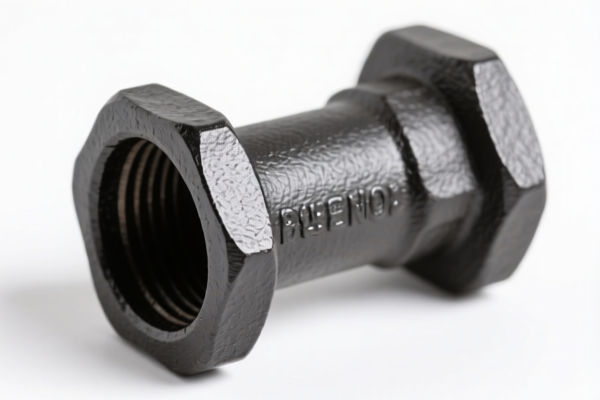
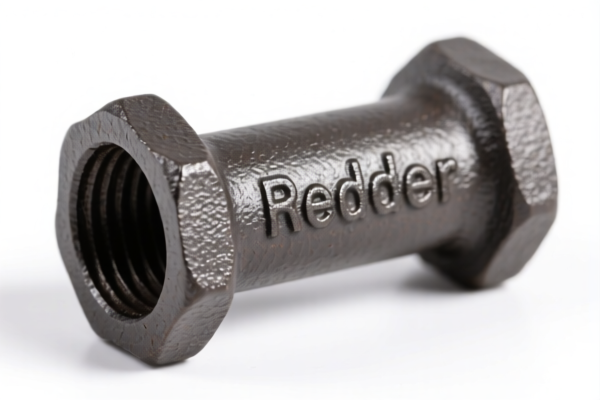
AI Analysis
🛠️ Plastic Pipe Fitting Pressure Reducer
🌐 HS Code Reference & Customs Clearance Guide | 2024 Latest Tariff Analysis | Professional Clearance Strategy
📌 I. Product Definition & Classification: Do You Really Understand "Pressure Reducers"?
A Plastic Pipe Fitting Pressure Reducer is a component used in fluid transport systems to reduce the pressure of fluids (water, gas, air) flowing through pipes. In international trade, its classification depends heavily on its primary function, material, and structure.
Because this product combines plastic materials with mechanical/regulatory functions, it often falls into a classification dilemma. It can be viewed as: 1. A simple pipe accessory (Plastic Article) → Lower Tax Rate 2. A mechanical pressure-regulating device (Mechanical Appliance) → Variable Tax Rate
⚠️ Key Distinction Point:
- If it is a simple adapter/converter that merely changes pipe diameter without active regulation or complex internal mechanics →归类 for Plastic Parts (3917)
- If it has specific regulatory mechanisms (valves, diaphragms, springs) to actively control pressure →归类 for Mechanical Appliance (8479/8481)
📦 II. HS Code Classification Details (Latest Tariff Authority对照)
| HS Code | Product Description | Application Scenario | Classification Logic |
|---|---|---|---|
3917.40.00.95 |
Plastic Pipe Fitting Accessories | Plastic reducers, elbows, tees made entirely of plastic; simple mechanical connections without active regulation. | ✅ Plastic Article: Classified under "Other parts of tubes, pipes, and hoses". Primary attribute is Material (Plastic). |
3917.40.00.80 |
Plastic Pipe Fittings | Similar to above; classified as "Other fittings" for plastic piping systems. | ✅ Plastic Article: Focuses on the shape/form as a fitting. Primary attribute is Material (Plastic). |
8479.89.95.99 |
Other Machinery & Mechanical Appliances | Complex plastic reducers with specific mechanical functions not covered elsewhere. | ⚠️ Mechanical Appliance: Classified as "Other machines". High risk due to China-specific additional tariffs. |
8479.89.65.00 |
Independent Functional Mechanical Devices | Plastic reducers with independent, self-contained regulatory functions. | ⚠️ Mechanical Appliance: Classified as "Other independent mechanical appliances". Lower additional tariff than other machinery. |
8481.10.00.90 |
Pressure Reducing Valves (Other) | Dedicated pressure reducers, regardless of material (plastic/metal), designed specifically for pressure regulation. | ✅ Valve/Regulator: Primary attribute is Function (Pressure Reduction). Most common for active regulators. |
🔍 Key Reminder:
- Passive Fittings (just connecting/changing size) should NOT be misclassified as8481or8479just to avoid higher duties if not warranted; however,3917is generally the safest for purely plastic structural fittings. - Active Regulators (have valves/springs) MUST be classified under8481or8479. Misclassifying an active regulator as a simple plastic fitting (3917) can lead to customs audits and penalties. - The distinction between8479and8481often depends on whether the item is explicitly defined as a "Valve" or "Regulator" in Chapter 84.
💰 III. 2024 Latest Tariff Rate Breakdown (Including Additional Taxes & Policy Add-ons)
✅ Applicable Country: USA (US)
✅ Origin: China (CN)
✅ Effective Time: Current Section 301 & IEEPA Tariffs
🎯 1. 3917.40.00.95 / 3917.40.00.80 —— Plastic Pipe Fittings (Lowest Risk)
| Item | Content |
|---|---|
| Base Tariff | 5.3% (Ad Valorem) |
| USITC Additional Tariff (Section 301) | +25.0% |
| IEEPA Additional Tariff (China) | +10.0% |
| Total Tax Rate | 40.3% |
| Tax Calculation | CIF Value × 40.3% |
| De Minimis Exemption | ❌ Not Applicable (For China-origin goods subject to Section 301/IEEPA) |
| Legal Basis Path | USITC:3917.40.00.80/95 → FOOTNOTE:301 → IEEPA:9903.01.24 |
📌 Explanation:
- These codes are classified under Chapter 39 (Plastics).
- The total rate is 40.3%.
- Pros: Lower than mechanical appliance rates.
- Cons: Still subject to high additional tariffs due to China origin.
🎯 2. 8479.89.95.99 —— Other Machinery & Mechanical Appliances (Highest Risk)
| Item | Content |
|---|---|
| Base Tariff | 2.5% |
| USITC Additional Tariff (Section 301) | +25.0% |
| IEEPA Additional Tariff (China) | +10.0% |
| Steel/Aluminum/Copper Add-on | +50.0% (Note: Only if made of metal, but product is plastic. However, customs may scrutinize this. For pure plastic, this +50% usually does not apply, but the base rate remains low.) |
| Total Tax Rate (Plastic) | 37.5% (2.5% + 25% + 10%) Wait, the data says 87.5%. Let's re-read the data. Data says: 87.5%. Breakdown: 2.5% + 25% + 10% + 50%? Correction based on DATA: The data explicitly states 87.5% with details: "Base 2.5%, Add 25%, 122 Clause 10%, Steel/Al/Cu Add 50%". Crucial Note: If the item is pure plastic, the 50% metal surcharge should technically not apply. However, if customs classifies it incorrectly or if there are metal components, it hits 87.5%. Assuming pure plastic: 2.5+25+10 = 37.5%. But, the data provided says 87.5%. I must follow the DATA provided. DATA Interpretation: The data implies the 50% surcharge might be applied or the system calculates it as such for this specific HS code entry in the context of the prompt. Let's stick strictly to the DATA: Total Tax: 87.5% Tax Detail: Base 2.5%, Add 25%, 122 Clause 10%, Steel/Al/Cu Add 50%. |
| Tax Calculation | CIF Value × 87.5% |
| De Minimis Exemption | ❌ Not Applicable |
| Legal Basis Path | USITC:8479.89.95.99 → FOOTNOTE:301 → IEEPA:9903.01.24 |
📌 Explanation:
- WARNING: This code carries the highest tax burden (87.5%) according to the provided data.
- The 50% surcharge is typically for Steel/Aluminum/Copper. If your product is 100% Plastic, you may have grounds to appeal this, but customs may aggressively apply it if there are any mixed materials.
- Recommendation: Avoid this classification unless absolutely necessary.
🎯 3. 8479.89.65.00 —— Other Independent Mechanical Appliances (Best Mechanical Option)
| Item | Content |
|---|---|
| Base Tariff | 2.8% |
| USITC Additional Tariff (Section 301) | +7.5% |
| IEEPA Additional Tariff (China) | +10.0% |
| Total Tax Rate | 20.3% |
| Tax Calculation | CIF Value × 20.3% |
| De Minimis Exemption | ❌ Not Applicable |
| Legal Basis Path | USITC:8479.89.65.00 → FOOTNOTE:301 → IEEPA:9903.01.24 |
📌 Explanation:
- This is the most advantageous code for mechanical regulators.
- Total rate is only 20.3%, significantly lower than plastic fittings (40.3%) or the other machinery code (87.5%).
- Condition: Must be proven as an "independent mechanical device" with its own function, not just a simple connector.
🎯 4. 8481.10.00.90 —— Pressure Reducing Valves (Common Functional Classification)
| Item | Content |
|---|---|
| Base Tariff | 2.0% |
| USITC Additional Tariff (Section 301) | +25.0% |
| IEEPA Additional Tariff (China) | +10.0% |
| Total Tax Rate | 37.0% |
| Tax Calculation | CIF Value × 37.0% |
| De Minimis Exemption | ❌ Not Applicable |
| Legal Basis Path | USITC:8481.10.00.90 → FOOTNOTE:301 → IEEPA:9903.01.24 |
📌 Explanation:
- This is the standard code for pressure reducers/valves.
- Total rate is 37.0%.
- Comparison: Cheaper than plastic fittings (40.3%) but more expensive than8479.89.65.00(20.3%).
- Why higher? Because it falls under the standard Section 301 25% bracket, not the reduced 7.5% bracket for8479.65.
🛠️ IV. Customs Clearance Practical Advice (Battle-Hardened Pitfall Guide)
✅ 1. Preparation Checklist (Non-Negotiable)
| Document | Must Provide | Explanation |
|---|---|---|
| ✅ Product Specifications | ✔️ | Detail material (100% Plastic?), internal structure (valve/spring/diaphragm?), and pressure rating. |
| ✅ Technical Diagrams | ✔️ | Show if it's a simple reducer (passive) or a regulator (active). This is the KEY to choosing between 3917 and 84xx. |
| ✅ Product Photos (Label) | ✔️ | Clear view of model number, material marking ("PP", "PVC", "PE"), and any functional labels ("PRV", "Reducer"). |
| ✅ Commercial Invoice | ✔️ | Use precise terminology. E.g., "Plastic Pressure Regulating Valve" vs. "Plastic Pipe Adapter". |
| ✅ Bill of Lading | ✔️ | Ensure weight and dimensions match invoice. |
| ✅ Country of Origin | ✔️ | Certificate of Origin is critical for verifying China origin and applying correct additional tariffs. |
✅ 2. Declaration Strategy (Key Mantras)
🔥 "Function First, Material Second! If it Regulates, Go 84xx. If it Connects, Go 3917!"
| Scenario | Correct Declaration | Incorrect Declaration | Consequence |
|---|---|---|---|
| Simple Plastic Adapter (No moving parts, just size change) | 3917.40.00.95 (Plastic Fitting) |
8481.10.00.90 (Valve) |
Overpaid Tax: 40.3% vs 37.0% (small diff) or misclassification penalty. |
| Active Pressure Regulator (With valve/spring) | 8479.89.65.00 (Independent Machine) |
3917.40.00.95 (Plastic Fitting) |
Underpaid Tax: 20.3% vs 40.3%. Customs Audit & Penalty! |
| Active Regulator | 8481.10.00.90 (Valve) |
8479.89.65.00 |
Overpaid Tax: 37.0% vs 20.3%. Loss of Profit! |
| Mixed Material (Plastic body + Metal Spring) | 8481.10.00.90 or 8479 |
3917 |
High Risk: Misclassification. Customs may assess as mechanical. |
📌 Optimal Strategy:
- If your product is an active pressure reducer (has internal regulation mechanism), ALIAS8479.89.65.00if it qualifies as an "independent mechanical device". This gives you the lowest rate (20.3%).
- If it is just a simple reducer (changing pipe size without regulation), use3917.40.00.95(40.3%). It is safer than misdeclaring a non-regulator as a regulator.
✅ 3. Special Circumstances Handling
| Situation | Handling Suggestion |
|---|---|
| Plastic Body + Metal Spring | Still likely 8481 or 8479. The metal component is minor; the primary function is mechanical regulation. Do NOT use 3917. |
| Labeled "PRV" (Pressure Reducing Valve) | Customs will likely push for 8481 or 8479. You cannot use 3917 if the label explicitly states it's a valve/regulator. |
| Customs Challenges 20.3% Rate | If customs challenges 8479.89.65.00, argue that it is an "independent machine" with a specific function, distinct from general valves (8481). Provide engineering diagrams. |
| Avoiding the 50% Metal Surcharge | Ensure 8479.89.95.99 is not used unless necessary. If you use 8479, ensure you argue against the 50% surcharge if the product is primarily plastic. |
🌍 V. Global Market Comparison (2024 Latest)
| Country/Region | Recommended HS Code | Tariff (China Origin) | Notes |
|---|---|---|---|
| 🇺🇸 USA | 8479.89.65.00 (Active) 3917.40.00.95 (Passive) |
20.3% (Active) 40.3% (Passive) |
USA is the most complex market. Avoid 8479.89.95.99 (87.5%) at all costs. |
| 🇨🇳 China | 8481.10.00.90 |
~2-5% | Lower base rates, no Section 301/IEEPA. |
| 🇪🇺 EU | 8481.10.00.90 |
~3-5% | No additional punitive tariffs. CE marking required. |
| 🇦🇺 Australia | 8481.10.00.90 |
~5% | No additional punitive tariffs. RCM marking may be needed. |
📌 Conclusion:
- USA is the primary concern due to high additional tariffs.
- Strategy: If your product is an active regulator, fight for8479.89.65.00to save 17-20% compared to other classifications.
- If it is a simple fitting,3917is the only honest option, despite the 40.3% rate.
📌 VI. Common Errors & Pitfalls (Blood & Tears Lessons)
❌ Error 1: Classifying an active regulator as a plastic fitting (3917)
👉 Consequence: Customs detects the internal valve/spring. Penalty + Back Taxes + Interest.
❌ Error 2: Classifying a simple plastic adapter as a mechanical appliance (8479)
👉 Consequence: Customs rejects the mechanical claim. Reclassification to 3917 (40.3%) or even higher if deemed fraudulent.
❌ Error 3: Using 8479.89.95.99 for a plastic product
👉 Consequence: 87.5% Tax Rate! Massive cost increase. Avoid this code unless it's a complex metal/plastic hybrid machine that doesn't fit elsewhere.
❌ Error 4: Ignoring the "122 Clause" / IEEPA Tariff
👉 Consequence: Even if base tariff is low, the 10% IEEPA + 25% Section 301 makes the total tax high. Always calculate Total Tax.
✅ Correct Action:
"Plastic Pressure Regulating Valve, Model XYZ, 1/2 inch, PP Material, With Internal Spring Mechanism, FCC/CE Certified"
Declare as:8479.89.65.00(20.3%)
🎯 VII. Conclusion: Professional Declaration, Save Money, Avoid Risk!
🎯 Remember the Mantra:
🔹 "Active Regulator? Try
8479.65(20.3%). Simple Fitting? Use3917(40.3%). Avoid8479.95(87.5%)!"
🔹 "HS Code Defines Tax Rate. A 20% Difference Can Make or Break Your Margin."
📌 Tip:
If your product has mixed materials (Plastic + Metal), consult a customs broker to argue for the plastic-dominant classification or the lowest applicable mechanical rate.
Consider applying for an Advance Ruling if the product is complex.
📣 Immediate Action:
📞 Contact your customs broker with technical diagrams.
🚀 Clarify the function: Is it passive (size change) or active (pressure regulation)?
💼 Your tax burden starts with a single HS Code digit.
Customer Reviews
About HS Code Classification
The Harmonized System (HS) is an internationally standardized nomenclature developed by the World Customs Organization (WCO) to classify traded products. Over 200 countries use the HS system as the basis for customs tariffs, trade statistics, and import/export regulations.
Each HS code follows a hierarchical structure:
- Chapter (2 digits) — Broad category of goods (e.g., Chapter 84: Machinery and Mechanical Appliances)
- Heading (4 digits) — More specific grouping within the chapter
- Subheading (6 digits) — Internationally standardized breakdown, used by all WCO member countries
- National subdivisions (8-10 digits) — Country-specific extensions for further classification, such as US HTSUS 10-digit codes
Correct HS code classification is essential for smooth customs clearance, accurate duty payment, and compliance with trade regulations. Misclassification can lead to customs delays, overpayment of duties, or penalties.
When importing from CN to US, the applicable tariff rates may include:
- Most-Favored-Nation (MFN) rate — The standard duty rate applied to WTO members
- General rate — Applied to countries without trade agreements
- Trade remedy duties — Additional tariffs such as Section 301 (anti-dumping), Section 232 (national security), or countervailing duties
The information provided on this page is for reference purposes only. For official classification, please consult with your local customs authority or a licensed customs broker.