Plastic Pipe Fitting with Internal Thread
CN → US| HS Code | Tariff Rate | Origin | Destination | Doc |
|---|---|---|---|---|
| 3917400095 | 40.3% | CN | US | Official Doc |
| 3917400010 | 40.3% | CN | US | Official Doc |
| 3926305000 | 22.8% | CN | US | Official Doc |
| 3926909987 | 22.8% | CN | US | Official Doc |
Product Images
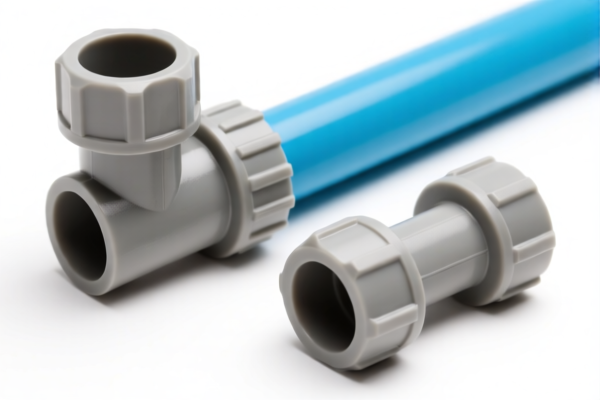
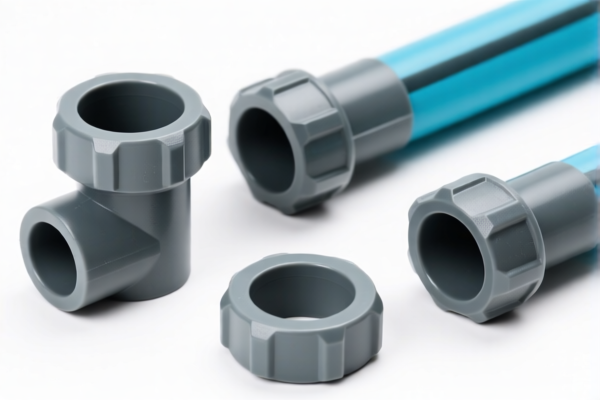
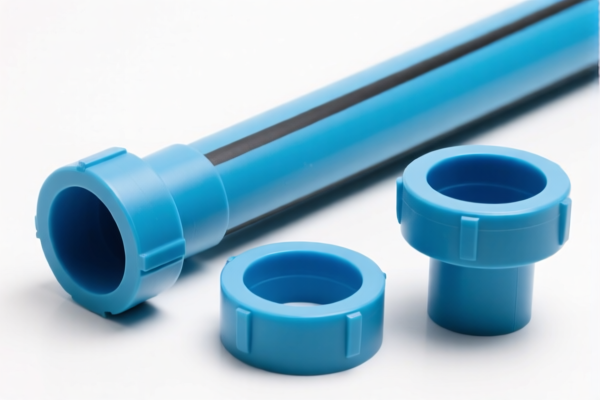
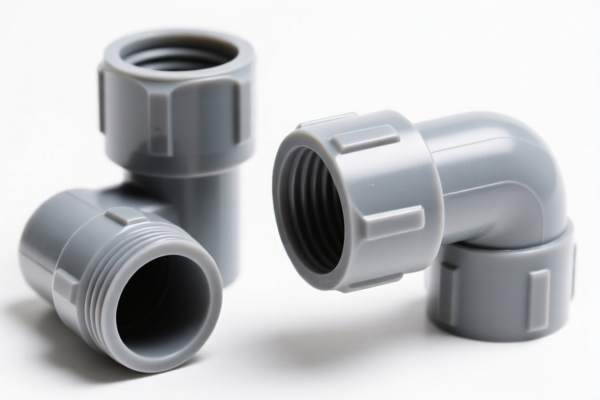
AI Analysis
🔩 Plastic Pipe Fitting with Internal Thread
🌐 HS Code Reference & Customs Clearance Guide | 2026 Latest Tariff Analysis | Professional Compliance Strategy
📌 Part 1: Product Definition & Classification: Do You Really Understand "Plastic Fittings"?
Plastic pipe fittings with internal threads are essential components in fluid and gas transport systems, including plumbing, industrial piping, and HVAC installations. In international trade, these items fall under Chapter 39 (Plastics and Articles Thereof), but specific classification depends heavily on the application and specific function of the fitting.
There are two main categories for plastic fittings: 1. General Piping Fittings: Used for water, air, gas, or general industrial fluids. 2. Specific Application Fittings: Such as those for vehicle brake systems.
⚠️ Key Distinction Point:
- If the fitting is for general use (water/gas pipes, electrical conduit, furniture) → It falls under 3917.40 or 3926.30/3926.90.
- If the fitting is specifically designed for vehicle brake hoses (e.g., for trucks or buses) → It falls under 3917.40.00.10.
- Misclassification can lead to severe penalties, as the HS codes have distinct descriptions despite similar physical forms.
📦 Part 2: HS Code Classification Details (2026 Latest Tariff Authority Comparison)
Based on the provided data, here are the four applicable HS Codes for "Plastic Pipe Fittings with Internal Thread":
| HS Code | Product Description | Application Scenario | Key Differentiator |
|---|---|---|---|
3917.40.00.95 |
Tubes, pipes and hoses and fittings therefor, of plastics: Fittings Other | General purpose plumbing, HVAC, industrial piping | General category for fittings not specified elsewhere. Most common for standard threaded fittings. |
3917.40.00.10 |
...: Fittings For brake hoses for vehicles of subheadings 8701.21–8701.29 or headings 8702, 8703, 8704, 8705 or 8711 | Vehicle brake systems (heavy trucks, buses) | Specific automotive application. Only applies if explicitly designed for brake hoses on specified vehicle types. |
3926.30.50.00 |
Other articles of plastics...: Fittings for furniture, coachwork or the like: Other | Furniture assembly, cabinet hardware | Not a pipe fitting. Use only if the "threaded plastic part" is a furniture connector, not for fluid/gas transport. |
3926.90.99.87 |
Other articles of plastics...: Other: Other Rigid tubes or pipes suitable for use as electrical conduit | Electrical conduit systems | Not a fitting. Use only if the item is a rigid tube/pipe for electricity, not a connector/fitting. |
🔍 Important Reminder:
- For standard plumbing or industrial threaded fittings, the correct code is almost certainly3917.40.00.95.
- Do NOT use3926.30.50.00unless it is literally a furniture hinge or bracket, even if it looks like a plastic screw.
- Do NOT use3926.90.99.87unless it is a rigid conduit pipe itself, not a connector.
💰 Part 3: 2026 Latest Tariff Rate Details (Including Additional Taxes)
✅ Applicable Country: United States (US)
✅ Origin: China (CN)
✅ Effective Date: 2025-11-10 (and subsequent imports)
🎯 1. 3917.40.00.95 — Plastic Pipe Fittings (General/Other)
| Item | Content |
|---|---|
| Base Tariff Rate | 0.0% (ad valorem) |
| Section 301 Additional Tariff | 0.0% |
| IEEPA Additional Tariff | 0.0% |
| Total Tax Rate | 0.0% |
| Tax Calculation | CIF Value × 0% = $0 |
| De Minimis Eligibility | ✅ Yes (If value ≤ $800 per person per day, though plastic items are often low-value) |
| Legal Basis Path | USITC:3917.40.00.95 |
📌 Explanation:
- Unlike electronics or steel, general plastic piping fittings currently face 0% total tariffs from China to the US.
- This is a highly competitive category for cost-sensitive exports.
- However, ensure the product is not classified under other sections (like textiles or specific machinery parts) that might have higher duties.
🎯 2. 3917.40.00.10 — Brake Hose Fittings for Vehicles
| Item | Content |
|---|---|
| Base Tariff Rate | 0.0% |
| Section 301 Additional Tariff | 0.0% |
| IEEPA Additional Tariff | 0.0% |
| Total Tax Rate | 0.0% |
| Tax Calculation | CIF Value × 0% = $0 |
| De Minimis Eligibility | ✅ Yes |
| Legal Basis Path | USITC:3917.40.00.10 |
📌 Note:
- Even for automotive-specific brake fittings, the tariff remains 0%.
- Critical Warning: Misclassifying general fittings as "brake fittings" (or vice versa) is a customs violation. Only use3917.40.00.10if the product is specifically engineered and marketed for brake systems of heavy vehicles or buses (headings 8701-8711).
🎯 3. 3926.30.50.00 — Furniture Fittings
| Item | Content |
|---|---|
| Base Tariff Rate | 0.0% |
| Section 301 Additional Tariff | 0.0% |
| IEEPA Additional Tariff | 0.0% |
| Total Tax Rate | 0.0% |
| Tax Calculation | CIF Value × 0% = $0 |
📌 Context:
- If your "plastic pipe fitting" is actually a furniture connector (e.g., a plastic cam lock or screw for IKEA-style furniture), it falls here.
- Do not declare it as a pipe fitting if it doesn't connect to pipes.
🎯 4. 3926.90.99.87 — Electrical Conduit Tubes
| Item | Content |
|---|---|
| Base Tariff Rate | 0.0% |
| Section 301 Additional Tariff | 0.0% |
| IEEPA Additional Tariff | 0.0% |
| Total Tax Rate | 0.0% |
| Tax Calculation | CIF Value × 0% = $0 |
📌 Context:
- This code is for rigid tubes/pipes for electricity, not fittings.
- If you are exporting conduit connectors, they should likely go under3917.40.00.95(as fittings for pipes), not as the pipe itself.
🛠️ Part 4: Customs Clearance Practical Advice (Battle-Tested Pitfall Avoidance Guide)
✅ 1. Documentation Checklist (Non-negotiable)
| Document | Mandatory? | Description |
|---|---|---|
| ✅ Product Specification Sheet | ✔️ | Must specify material (PPR, PVC, PE), thread type (NPT, BSP, Metric), and application (water, air, brake). |
| ✅ Product Photos (Clear) | ✔️ | Show the internal thread, overall structure, and any packaging labels. |
| ✅ Commercial Invoice | ✔️ | Clearly state: "Plastic Pipe Fitting with Internal Thread, for [Specific Use]." |
| ✅ Packing List | ✔️ | Detail weight and dimensions per carton. |
| ✅ Certificate of Origin (CO) | ❌ (Optional) | Not required for 0% tariff, but may be needed for preferential treatment in other countries or customer requirements. |
✅ 2. Declaration Tips (Key Mantra)
🔥 "Correct Use, Correct Code; Misuse, Penalty Ride!"
| Scenario | Correct Declaration | Wrong Practice | Consequence |
|---|---|---|---|
| Standard Water/Gas Fitting | 3917.40.00.95 "Plastic Pipe Fitting" |
Labeling as "Brake Fitting" | False Declaration → Audit & Penalties |
| Furniture Connector | 3926.30.50.00 "Furniture Fitting" |
Labeling as "Pipe Fitting" | Wrong Classification → Delayed Release |
| Electrical Conduit Connector | 3917.40.00.95 (as fitting) |
Labeling as "Conduit Tube" (3926.90.99.87) |
Wrong Classification → Potential Dispute |
| Vehicle Brake Hose Fitting | 3917.40.00.10 "Brake Hose Fitting" |
General declaration | Missed Verification → Customs Inquiry |
✅ 3. Special Handling Scenarios
| Situation | Recommendation |
|---|---|
| Mixed Shipment | If packing general pipe fittings with brake fittings in one container, declare separately. Do not lump them under one HS Code unless clearly separated in the invoice. |
| Thread Standards | Specify thread type (e.g., NPT, G, M) in the description. This helps customs verify the "fitting" nature vs. a "screw" or "bolt" (which may fall under Chapter 73 or 74). |
| Plastic Material | Specify the plastic type (e.g., PVC, ABS, PPR). While all are Chapter 39, some specific subheadings may vary by material, though for fittings, 3917.40 is generally material-agnostic. |
| Samples vs. Bulk | For samples under $800, you can use De Minimis (Section 321). Ensure the commercial invoice clearly marks it as "Sample - No Commercial Value" if applicable, but still declare the correct HS Code. |
🌍 Part 5: Global Market Clearance Comparison (2026 Latest)
| Country/Region | Recommended HS Code | Tariff Rate | Certification Required | Notes |
|---|---|---|---|---|
| 🇺🇸 USA | 3917.40.00.95 |
0.0% | No specific FCC/UL for pipes | Most straightforward; 0% duty. |
| 🇨🇳 China | 3917.40.00.95 |
0.0% | CCC (if applicable for specific uses) | Import duty is 0% for many plastic fittings. |
| 🇪🇺 EU | 3917.40.90 |
0.0% - 2.5% | REACH Compliance | Varies by member state; generally low. |
| 🇬🇧 UK | 3917.40.00 |
0.0% | UKCA (post-Brexit rules) | Check for specific UKNI marking if CE no longer accepted. |
| 🇦🇺 Australia | 3917.40.00 |
5.0% | ACCC Compliance | Higher than US; check for specific standards. |
📌 Conclusion:
- The USA offers the best tariff advantage (0%) for plastic pipe fittings from China.
- Ensure your product is genuinely a fitting (connector, elbow, tee, coupler) and not a standalone pipe or a mechanical fastener like a screw/bolt.
📌 Part 6: Common Errors & Pitfall Guide (Lessons Learned)
❌ Error 1: Classifying a brake hose fitting as a general pipe fitting (3917.40.00.95).
👉 Consequence: While tax is 0% in both, it creates a record discrepancy. If audited, customs may question why a vehicle part is declared as plumbing.
✅ Fix: Use 3917.40.00.10 for brake components.
❌ Error 2: Declaring a furniture plastic screw as a pipe fitting.
👉 Consequence: Wrong HS Code (3917.40 vs 3926.30). Customs may detain the shipment for re-classification.
✅ Fix: Declare accurately as "Furniture Fitting" if it's for assembly, not fluid transport.
❌ Error 3: Ignoring thread standard in description.
👉 Consequence: Customs may confuse the item with a metal screw/bolt (Chapter 73/76), which has different duties.
✅ Fix: Explicitly state "Plastic Pipe Fitting, NPT Thread" in the commercial invoice.
❌ Error 4: Assuming all plastic items are 0% tariff.
👉 Consequence: While these specific codes are 0%, if misclassified as a "Plastic Article" under a different chapter, duties could rise.
✅ Fix: Stick to the specific 3917.40 subheadings for fittings.
🎯 Part 7: Conclusion: Precise Classification, Zero Risk, Maximum Profit!
🎯 Remember the Mantra:
🔹 "Pipe Fitting = 3917.40.95 (General)"
🔹 "Brake Fitting = 3917.40.10 (Specific)"
🔹 "Furniture Part = 3926.30.50 (Not Pipe)"
🔹 "Electric Tube = 3926.90.99 (Not Fitting)"
📌 Pro Tip:
Since the total tariff is 0.0% for all the listed HS Codes in the provided data for US imports, the biggest risk is customs detention due to misclassification, not cost.
- Always provide clear product photos and technical specifications (thread type, material, intended use).
- For high-volume shipments, consider requesting a Customs Ruling from US CBP to lock in the classification.
📣 Immediate Action:
📞 Contact your freight forwarder with the Product Spec Sheet.
📝 Ensure the Invoice Description reads: "Plastic Pipe Fitting, Internal Thread, [Material], for [Use]".
🚀 Ship with confidence – 0% Duty! But 100% Accuracy Required!
✨ Professional Customs Clearance Starts with Precise Classification!
💼 Your Cost is Saved, Your Risk is Managed!
Customer Reviews
About HS Code Classification
The Harmonized System (HS) is an internationally standardized nomenclature developed by the World Customs Organization (WCO) to classify traded products. Over 200 countries use the HS system as the basis for customs tariffs, trade statistics, and import/export regulations.
Each HS code follows a hierarchical structure:
- Chapter (2 digits) — Broad category of goods (e.g., Chapter 84: Machinery and Mechanical Appliances)
- Heading (4 digits) — More specific grouping within the chapter
- Subheading (6 digits) — Internationally standardized breakdown, used by all WCO member countries
- National subdivisions (8-10 digits) — Country-specific extensions for further classification, such as US HTSUS 10-digit codes
Correct HS code classification is essential for smooth customs clearance, accurate duty payment, and compliance with trade regulations. Misclassification can lead to customs delays, overpayment of duties, or penalties.
When importing from CN to US, the applicable tariff rates may include:
- Most-Favored-Nation (MFN) rate — The standard duty rate applied to WTO members
- General rate — Applied to countries without trade agreements
- Trade remedy duties — Additional tariffs such as Section 301 (anti-dumping), Section 232 (national security), or countervailing duties
The information provided on this page is for reference purposes only. For official classification, please consult with your local customs authority or a licensed customs broker.