Plastic Pipe Fittings
CN → US| HS Code | Tariff Rate | Origin | Destination | Doc |
|---|---|---|---|---|
| 3917210000 | 38.1% | CN | US | Official Doc |
| 3926909989 | 22.8% | CN | US | Official Doc |
| 3917290090 | 38.1% | CN | US | Official Doc |
| 3926909987 | 22.8% | CN | US | Official Doc |
| 3917400050 | 15.3% | CN | US | Official Doc |
Product Images
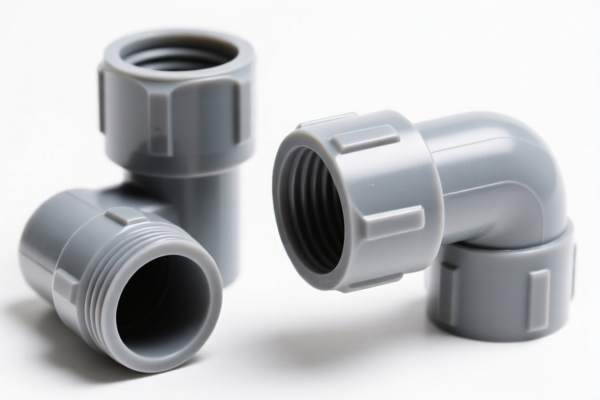
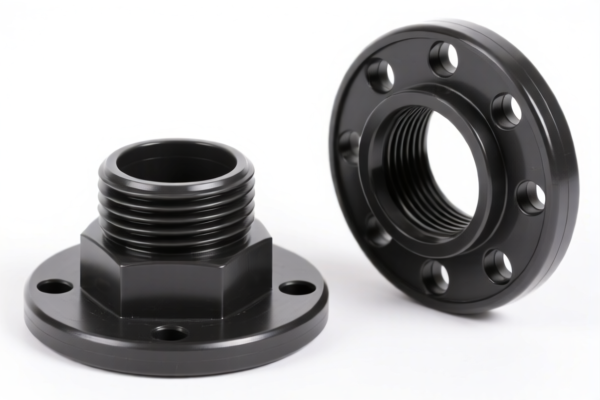
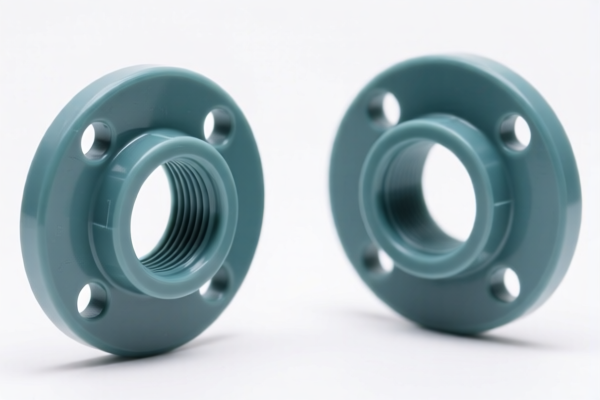
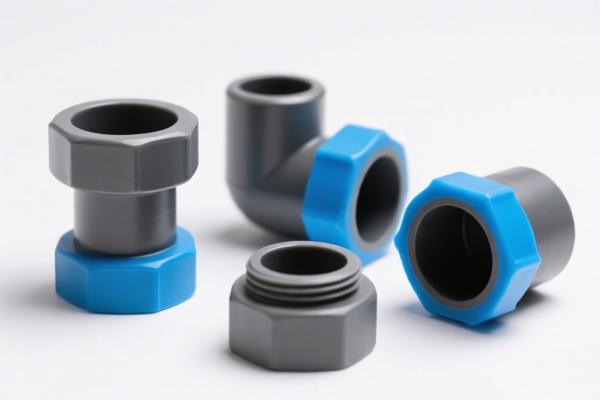
AI Analysis
🛢️ Plastic Pipe Fittings & Tubing (The Ultimate 2026 Import Guide)
🌐 HS Code & Duty Decoded | 2026 Tariff Masterclass | Smart Customs Strategy
📌 One Product, Multiple Classifications: Why "Plastic Pipe" isn't Just One Thing!
Plastic pipe fittings and tubing are the backbone of modern infrastructure, from residential plumbing to industrial chemical transport. However, in international trade, shape, length, and end-use dictate your tax bill. A simple misunderstanding can turn a 15% duty into a 38% nightmare!
⚠️ The Golden Rule of Classification:
- Is it a long pipe (continuous length)? → Likely 3917.21 / 3917.29 (Higher Tax!)
- Is it a short fitting (elbow, flange, connector)? → Likely 3926.90 (Lower Tax!)
- Is it a Flange Fitting? → Likely 3917.40 (Sweet Spot!)
📦 II. Detailed HS Code Breakdown & Duty Analysis (2026 China-USA Trade Data)
Based on current 2026 tariff schedules for US Imports from China, here is the precise breakdown of your Plastic Pipe Fittings.
| HS Code | Product Description | Key Characteristics | Total Duty (China Origin) |
|---|---|---|---|
| 3917.21.00.00 | Plastic Pipes | Rigid tubes, primarily for fluid/gas transport. Standard industrial form. | 38.1% 🔴 |
| 3917.29.00.90 | Other Plastic Pipes | Flexible or other rigid tubes, length不限 (unlimited length). | 38.1% 🔴 |
| 3926.90.99.89 | Plastic Tubing / Fittings (General) | "Other" plastic articles; includes short fittings not classified as pipe. | 22.8% 🟠 |
| 3926.90.99.87 | Plastic Fittings (Other) | Specific subset of plastic articles; short forms, connectors, non-pipe shapes. | 22.8% 🟠 |
| 3917.40.00.50 | Plastic Flange Fittings | Crucial Distinction: Pipe ends with flanges for bolted connections. | 15.3% 🟢 |
💰 III. The Math Behind the Tax (Deep Dive into the 38.1% vs. 15.3%)
Let's break down exactly why the tax rates differ so drastically.
🎯 Scenario A: The High-Tax Trap (3917.21 & 3917.29)
Total Tax: 38.1%
| Component | Rate | Legal Source |
|---|---|---|
| Base Duty | 3.1% | Standard MFN Rate |
| Section 301 (Add-on) | 25.0% | "Made in China" specific penalty (Trade War) |
| Section 122 (Add-on) | 10.0% | New 2024/2025 "122 Clause" Tariff |
| 💣 Total | 38.1% | 3.1 + 25.0 + 10.0 |
💡 Why so high?
These codes classify the product as "Pipes". The US government views long pipes as competitive industrial goods subject to the full weight of Section 301 and the new 122 Clause. Do not ship long rolls of plastic tubing here!
🎯 Scenario B: The "Fitting" Strategy (3926.90)
Total Tax: 22.8%
| Component | Rate | Legal Source |
|---|---|---|
| Base Duty | 5.3% | Standard MFN Rate (Higher base for non-pipe items) |
| Section 301 (Add-on) | 7.5% | Reduced Section 301 rate for general plastic articles |
| Section 122 (Add-on) | 10.0% | Still applies (122 Clause is broad) |
| 💣 Total | 22.8% | 5.3 + 7.5 + 10.0 |
💡 Why cheaper?
Classified as "Other Plastic Articles" (Fittings). While Section 122 still hits you with 10%, the Section 301 penalty is significantly lower (7.5% vs 25%). Saving: 15.3% on the CIF value!
🎯 Scenario C: The "Flange" Sweet Spot (3917.40)
Total Tax: 15.3% 🟢
| Component | Rate | Legal Source |
|---|---|---|
| Base Duty | 5.3% | Standard MFN Rate |
| Section 301 (Add-on) | 0.0% | NO Section 301 penalty for Flanges! |
| Section 122 (Add-on) | 10.0% | Section 122 Clause applies |
| 💣 Total | 15.3% | 5.3 + 0.0 + 10.0 |
🏆 The Winner:
Plastic Flange Fittings are the ONLY category in this list exempt from the crushing 25% (or 7.5%) Section 301 tariff. If your product has flanges, this is the ONLY code you should use!
🛠️ IV. Customs Clearance Strategy: How to Avoid the 38.1% Trap
✅ 1. Product Definition & Declaration (The "Look" Test)
- If it looks like a pipe: Long, continuous, flexible or rigid tube, sold by the roll or meter.
- Risk: High (3917.21/29).
- Advice: Only use this if you have no other choice. Try to segment into short lengths.
- If it looks like a connector: Short, bent, threaded, or flanged.
- Risk: Medium (3926.90).
- Advice: Use 3926.90.99.89 or .87.
- If it has a Flange: Flat rim with bolt holes.
- Risk: Low (3917.40).
- Advice: Mandatory use of 3917.40.00.50. This saves you 22.8% in duties!
✅ 2. Critical Declaration Tips
| ❌ Bad Practice | ✅ Good Practice |
|---|---|
| "Plastic Tube" (Vague) | "Plastic Pipe, 10mm, 100ft Length" → 3917 |
| "Plastic Parts" (Too broad) | "Plastic Elbow Fitting, 2-inch, PP Material" → 3926 |
| "Plastic Pipe with Flanges" | "Plastic Flange Fitting, 2-inch, PP, Bolted End" → 3917.40 |
📌 Pro Tip: If you ship a mix of pipes and fittings in one container, separate them on the Bill of Lading. Do not lump them together under "Plastic Pipes" to save the 3926 tax; the 3917 rate will apply to the entire shipment if misdeclared!
✅ 3. Documentation Checklist (2026 Standard)
- Technical Drawing: Must clearly show the Flange or the Fitting shape (not just a straight line).
- Commercial Invoice: Must explicitly state "Fitting" or "Flange" in the description. Avoid generic terms like "Pipe".
- Material Certificate: Prove it is plastic (PP, PVC, PE) to rule out metal fittings (which have different tariffs).
- Section 122 Exemption Check: Verify if your specific plastic type qualifies for any minor exemptions (rare, but worth checking).
🌍 V. Global Market Snapshot (China -> USA Focus)
| Country | HS Code Strategy | Estimated Duty | Notes |
|---|---|---|---|
| 🇺🇸 USA | 3917.40.00.50 (Flanges) | 15.3% | Best Option |
| 🇺🇸 USA | 3926.90.99.89 (Other Fittings) | 22.8% | Second Best |
| 🇺🇸 USA | 3917.21.00.00 (Pipes) | 38.1% | Avoid if possible |
| 🇪🇺 EU | Varies (3917/3926) | ~1.5% - 6% | No 301, but strict CE rules |
| 🇨🇦 Canada | Varies | ~0% - 5% | CUSMA free trade if eligible |
🚀 The Bottom Line for US Importers:
If your product is a Flange, use 3917.40.00.50. You save 15.3% to 22.8% compared to pipes!
If your product is a Fitting (Elbow, Coupling, Tee), use 3926.90.99.89.
Never declare a fitting as a "Pipe" unless it is actually a long tube.
⚠️ VI. Common Pitfalls & How to Fix Them
❌ Pitfall 1: "The All-in-One Container"
Scenario: You pack long pipes and flanges together in one box and declare it all as "Plastic Pipe".
Result: Customs may assess the 38.1% tax on the entire shipment, including the cheap flanges.
Fix: Split the shipment or declare separate line items with specific HS Codes.
❌ Pitfall 2: "Missing Flange Description"
Scenario: You ship flange fittings but write "Plastic Pipe" on the invoice to sound generic.
Result: You get the 38.1% tax instead of 15.3%. You paid double for nothing!
Fix: Boldly state "Flange Fitting" on every document.
❌ Pitfall 3: "Length Confusion"
Scenario: Selling short 2-inch plastic tubes as "pipes".
Result: If they are < 1 meter and not sold by length, they are 3926 (Fittings), not 3917 (Pipes).
Fix: Check the length and sales unit (piece vs. meter).
🎯 VII. Final Action Plan: Your 2026 Checklist
- Identify the Shape: Is it a Flange? -> 3917.40.00.50 (15.3%).
Is it a short connector? -> 3926.90.99.89 (22.8%).
Is it a long tube? -> 3917.21.00.00 (38.1%). - Update Invoice: Ensure the description matches the HS Code exactly.
- Calculate Savings: For a $10,000 shipment:
- Flanges: $1,530 duty.
- Pipes: $3,810 duty.
- Savings: $2,280 (22.8% of value).
- Consult a Broker: Ask them specifically about Section 301 exemptions for Flanges.
✨ Your Takeaway:
Don't pay 38.1% if you can pay 15.3%!
The difference between "Pipe" and "Flange Fitting" is the difference between profit and loss in the current 2026 trade environment.
📌 Ready to ship?
✅ Verify Shape → ✅ Select HS Code → ✅ Declare Accurately → ✅ Save Thousands!
🚀 Get your Customs Brochure & HS Code Pre-Ruling Today!
Don't let a misclassified "Flange" cost you your margin.
Customer Reviews
About HS Code Classification
The Harmonized System (HS) is an internationally standardized nomenclature developed by the World Customs Organization (WCO) to classify traded products. Over 200 countries use the HS system as the basis for customs tariffs, trade statistics, and import/export regulations.
Each HS code follows a hierarchical structure:
- Chapter (2 digits) — Broad category of goods (e.g., Chapter 84: Machinery and Mechanical Appliances)
- Heading (4 digits) — More specific grouping within the chapter
- Subheading (6 digits) — Internationally standardized breakdown, used by all WCO member countries
- National subdivisions (8-10 digits) — Country-specific extensions for further classification, such as US HTSUS 10-digit codes
Correct HS code classification is essential for smooth customs clearance, accurate duty payment, and compliance with trade regulations. Misclassification can lead to customs delays, overpayment of duties, or penalties.
When importing from CN to US, the applicable tariff rates may include:
- Most-Favored-Nation (MFN) rate — The standard duty rate applied to WTO members
- General rate — Applied to countries without trade agreements
- Trade remedy duties — Additional tariffs such as Section 301 (anti-dumping), Section 232 (national security), or countervailing duties
The information provided on this page is for reference purposes only. For official classification, please consult with your local customs authority or a licensed customs broker.