Plastic Pipe Fittings Transparent Pipe
CN → US| HS Code | Tariff Rate | Origin | Destination | Doc |
|---|---|---|---|---|
| 3917210000 | 38.1% | CN | US | Official Doc |
| 3926909989 | 22.8% | CN | US | Official Doc |
| 3917290090 | 38.1% | CN | US | Official Doc |
| 3926909987 | 22.8% | CN | US | Official Doc |
Product Images
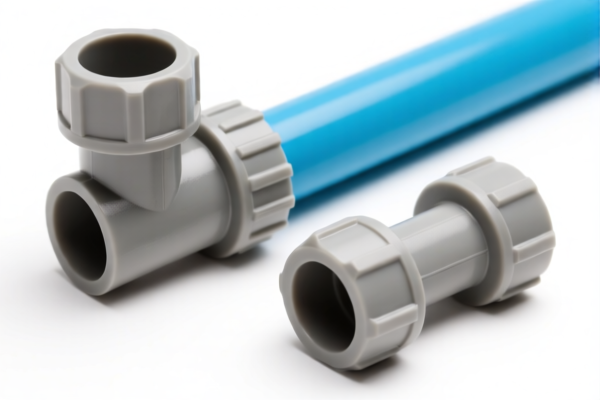
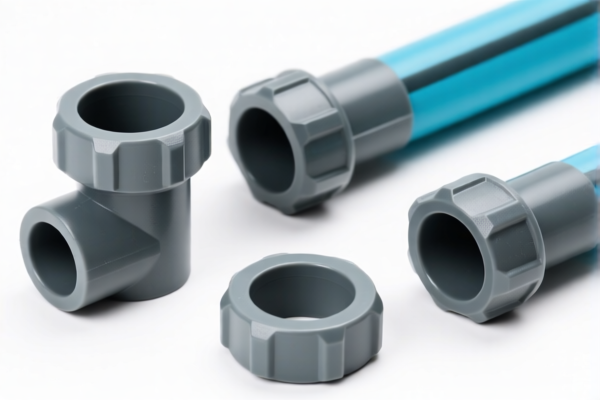
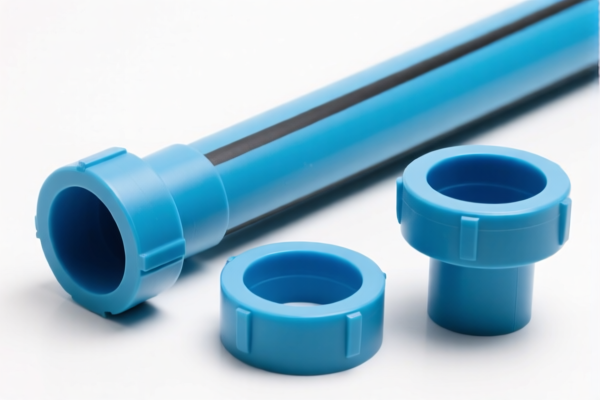
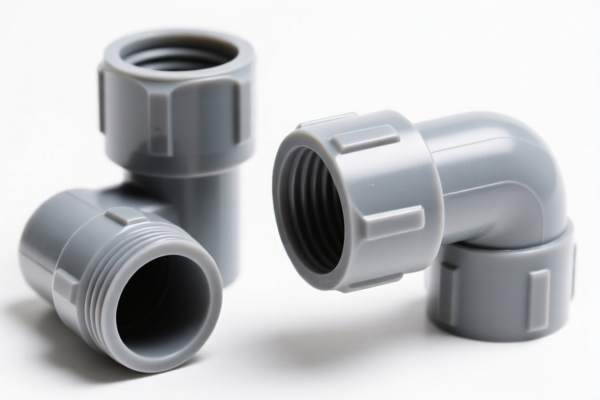
AI Analysis
💧 Plastic Pipe Fittings: Transparent Pipe
🌐 HS Code Reference & Customs Clearance Guide | 2026 Tariff Analysis | Professional Customs Strategy
📌 I. Product Definition & Classification: What Exactly Are "Transparent Plastic Pipes"?
In international trade, "Plastic Pipe Fittings" and "Transparent Pipes" are broadly categorized under Chapter 39 (Plastics and Articles Thereof). However, the specific HS Code depends heavily on the material properties (e.g., PVC, PE, PP) and the physical form (e.g., rigid, flexible, hard).
⚠️ Critical Distinction for Customs: - Rigid Pipes (Hard Tubes): Typically fall under 3917 (Hard tubes, pipes, and hoses). - Fittings/Accessories: Often fall under 3926 (Other articles of plastics), unless they are specifically classified as parts of pipes under 3917. - Transparency: Being "transparent" does not change the HS Code classification itself but confirms the material is likely clear PVC, PE, or PP. It must be declared clearly to avoid confusion with glass or acrylic (Chapter 70 or 3920).
📦 II. HS Code Classification Details (Based on Provided Data)
The following HS Codes are derived from the provided dataset. Note that there are two main tax tiers based on the specific sub-heading classification (3917 vs. 3926).
| HS Code | Summary Description | Key Characteristics | Total Tax Rate |
|---|---|---|---|
3917.21.00.00 |
Plastic Pipes (Transparent/Rigid) | Material: Plastic; Form: Tube; Transparent | 38.1% |
3917.29.00.90 |
Other Plastic Pipes | Material: Plastic; Form: Tube; Other/Unspecified Length | 38.1% |
3926.90.99.89 |
Other Plastic Articles | Material: Plastic; Form: Pipe/Fitting | 22.8% |
3926.90.99.87 |
Plastic Hard Pipes/Tubes | Material: Plastic; Form: Hard Pipe/Tube | 22.8% |
🔍 Key Insight: - The 3917 codes carry a higher tax burden (38.1%). - The 3926 codes carry a lower tax burden (22.8%). - Misclassification Risk: Declaring a rigid hard pipe as a general "plastic article" (3926) to save tax can lead to customs audits if the physical characteristics strictly match 3917 (Hard Tubes).
💰 III. 2026 Latest Tariff Rate Breakdown (Detailed Policy)
✅ Applicable Country: United States (US) ✅ Country of Origin: China (CN) ✅ Effective Date: Ongoing (Includes Section 301 and 122 Tariffs)
🎯 1. Higher Tax Tier: HS Code 3917.21.00.00 & 3917.29.00.90
| Item | Details |
|---|---|
| Base Tariff | 3.1% (Ad Valorem) |
| Section 301 Tariff | +25.0% (Trade Remedy Duties) |
| Section 122 Tariff | +10.0% (Specific Import Restrictions) |
| Total Tariff Rate | 38.1% |
| Calculation Basis | CIF Value × 38.1% |
| De Minimis Exemption | ❌ Not Applicable |
📌 Explanation: - These codes fall under HTSUS 3917, which covers "Hard tubes, pipes and hoses." - The 25% Section 301 duty is the standard penalty for Chinese-manufactured plastics in this category. - The 10% Section 122 duty applies to specific trade remedy cases. - Total Cost Impact: High. This tariff structure significantly reduces profit margins for transparent rigid pipes.
🎯 2. Lower Tax Tier: HS Code 3926.90.99.89 & 3926.90.99.87
| Item | Details |
|---|---|
| Base Tariff | 5.3% (Ad Valorem) |
| Section 301 Tariff | +7.5% (Reduced Section 301 Rate for Specific Items) |
| Section 122 Tariff | +10.0% (Specific Import Restrictions) |
| Total Tariff Rate | 22.8% |
| Calculation Basis | CIF Value × 22.8% |
| De Minimis Exemption | ❌ Not Applicable |
📌 Explanation: - These codes fall under HTSUS 3926, which covers "Other articles of plastics." - The 7.5% Section 301 rate is lower than the standard 25%, likely due to specific exclusions or sub-classifications for certain plastic fittings/articles. - Total Cost Impact: Moderate. This is a 15.3% lower total tax rate compared to the 3917 category.
🛠️ IV. Customs Clearance Practical Advice (Avoiding Pitfalls)
✅ 1. Preparation Checklist (All Items Required)
| Document | Mandatory? | Notes |
|---|---|---|
| ✅ Product Specification Sheet | ✔️ | Must detail material (e.g., PVC, PE), transparency, diameter, wall thickness, and pressure rating. |
| ✅ Material Safety Data Sheet (MSDS) | ✔️ | If the plastic involves chemical additives or is part of a fluid system. |
| ✅ Commercial Invoice | ✔️ | Clearly state "Plastic Pipes/Fittings," Material Type, and HS Code. |
| ✅ Packing List | ✔️ | Indicate gross/net weight and dimensions. |
| ✅ Certification | ✔️ | NSF/ANSI 61 (if for drinking water) or UL/CSA certifications add credibility. |
| ✅ Country of Origin Certificate | ✔️ | Essential for verifying US/China trade status. |
✅ 2. Declaration Strategy
🔥 Rule of Thumb:
"Be Precise: 'Hard Tube' vs. 'Plastic Article' can mean a 15% tax difference!"
| Scenario | Recommended HS Code | Risk |
|---|---|---|
| Rigid, Transparent PVC/PE Pipe | 3917.21.00.00 |
High Tax (38.1%) - Correct Classification |
| Plastic Fittings (Elbows, Tees, Couplings) | 3926.90.99.89 |
Lower Tax (22.8%) - Often Correct |
| Flexible Clear Tubing | Check HTSUS | May fall under 3917.30/40 - Verify |
| Mixed Shipment (Pipes + Fittings) | Declare Separately | ❌ Do NOT bundle under one code if they differ |
✅ 3. Critical Warnings
- Transparency is NOT a Classification Factor: Do not assume "transparent" changes the code. It is a descriptive feature.
- Hard vs. Flexible: If the pipe is rigid (cannot be bent by hand without force), it strongly points to 3917 or 3926.87. If it is flexible tubing, it may fall under 3917.30 or 3917.40, which have different rates.
- Section 122 Impact: The 10% Section 122 tariff applies to both tax tiers. Ensure your accounting software includes this in the landed cost calculation.
- De Minimis (Section 321): Shipments under $800 DO NOT qualify for de minimis exemption for these HS codes from China due to the high tariffs and trade restrictions.
🌍 V. Global Market Comparison (2026)
| Country | Recommended HS Code | Base Duty | US Section 301 | Total Estimate (China Origin) |
|---|---|---|---|---|
| 🇺🇸 USA | 3917.21.00.00 or 3926.90.99.89 |
3.1% or 5.3% | +25% or +7.5% | 38.1% or 22.8% |
| 🇨🇳 China | 3917.21.00.00 |
6.5% | N/A | 6.5% |
| 🇪🇺 EU | 3917.21.00 |
6.5% | N/A | 6.5% |
| 🇯🇵 Japan | 3917.21.00 |
7.5% | N/A | 7.5% |
📌 Conclusion: The USA imposes significantly higher duties due to trade remedies. Exporters must price in the 38.1% or 22.8% total tariff. Competitiveness in the US market requires either cost absorption, supply chain relocation, or careful HS Code optimization where legally permissible.
📌 VI. Common Errors & Pitfalls (Lessons Learned)
❌ Error 1: Declaring all plastic items under 3926.90.99.89 to avoid the 38.1% rate.
👉 Consequence: Customs audit, penalty for misclassification, and back-tariffs. Only use 3926 if the item is truly an "article" or "fitting" not covered by 3917.
❌ Error 2: Ignoring the 10% Section 122 Tariff. 👉 Consequence: Underpayment of duties, leading to seizures or liens on the shipment.
❌ Error 3: Confusing "Transparent Pipe" with "Acrylic Pipe" (PMMA). 👉 Consequence: If it is Acrylic, it may fall under 3920.49 or 3926.90, which have different rates. Always specify the polymer type (PVC, PE, PP, etc.).
✅ Best Practice:
"Clear PVC Rigid Pipe, 1/2 inch OD, Schedule 40, US/China Origin, NSF Certified" + "Plastic Pipe Fitting, Elbow, PVC, Clear, US/China Origin"
🎯 VII. Conclusion: Strategic Sourcing & Compliance
🎯 Remember:
🔹 "Rigid Pipe = 3917 (38.1%)" 🔹 "Plastic Fitting/Article = 3926 (22.8%)" 🔹 "Transparency = Description Only"
📌 Pro Tip: If your product is a pipe fitting (elbow, tee, connector), argue for 3926.90.99.89 to save 15.3% in tariffs. If it is a straight pipe, it likely falls under 3917, and you must budget for 38.1%.
🚀 Action Plan: 1. Verify Material: Confirm PVC, PE, or PP. 2. Determine Form: Rigid (Pipe) vs. Accessory (Fitting). 3. Calculate Landed Cost: Include 38.1% or 22.8% + Shipping + Insurance. 4. Pre-Alert Customs: Provide detailed specs to avoid hold-ups.
✨ Precise Classification Saves Money! 💼 Every percentage point of duty impacts your bottom line.
Customer Reviews
About HS Code Classification
The Harmonized System (HS) is an internationally standardized nomenclature developed by the World Customs Organization (WCO) to classify traded products. Over 200 countries use the HS system as the basis for customs tariffs, trade statistics, and import/export regulations.
Each HS code follows a hierarchical structure:
- Chapter (2 digits) — Broad category of goods (e.g., Chapter 84: Machinery and Mechanical Appliances)
- Heading (4 digits) — More specific grouping within the chapter
- Subheading (6 digits) — Internationally standardized breakdown, used by all WCO member countries
- National subdivisions (8-10 digits) — Country-specific extensions for further classification, such as US HTSUS 10-digit codes
Correct HS code classification is essential for smooth customs clearance, accurate duty payment, and compliance with trade regulations. Misclassification can lead to customs delays, overpayment of duties, or penalties.
When importing from CN to US, the applicable tariff rates may include:
- Most-Favored-Nation (MFN) rate — The standard duty rate applied to WTO members
- General rate — Applied to countries without trade agreements
- Trade remedy duties — Additional tariffs such as Section 301 (anti-dumping), Section 232 (national security), or countervailing duties
The information provided on this page is for reference purposes only. For official classification, please consult with your local customs authority or a licensed customs broker.