Plastic Pipe Fittings and Pipe Connectors
CN → US| HS Code | Tariff Rate | Origin | Destination | Doc |
|---|---|---|---|---|
| 3919102055 | 40.8% | CN | US | Official Doc |
| 3917400095 | 40.3% | CN | US | Official Doc |
| 3919102010 | 40.8% | CN | US | Official Doc |
| 3926906090 | 39.2% | CN | US | Official Doc |
| 3917400050 | 40.3% | CN | US | Official Doc |
Product Images
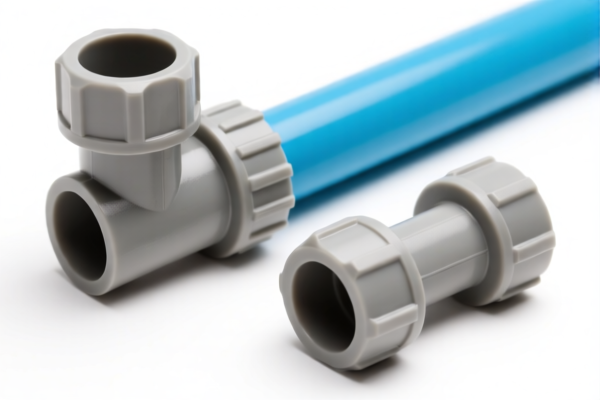
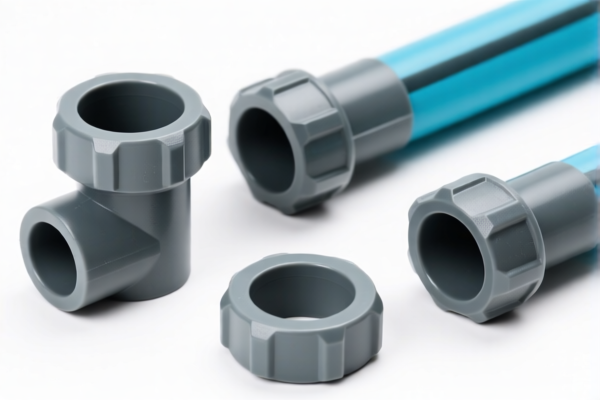
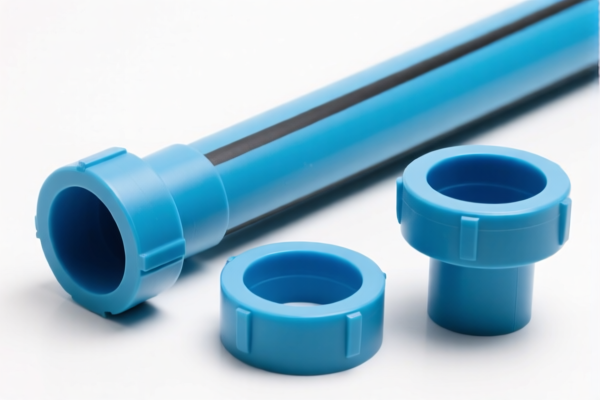
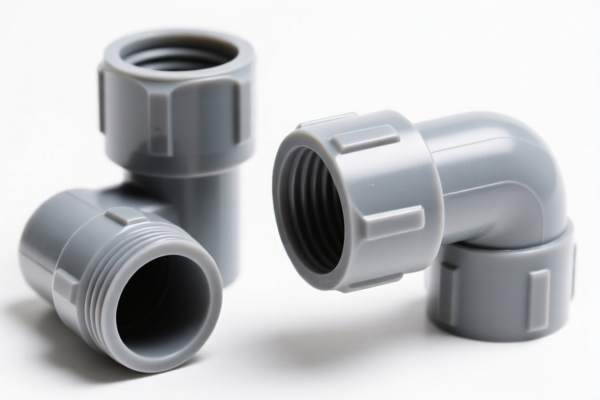
AI Analysis
🔌 Plastic Pipe Fittings & Connectors (The "Hidden" Logistics of Plumbing)
🌐 HS Code Reference & Customs Clearance Guide | 2026 Latest Tariff Analysis | Professional Clearance Strategy
📌 Part 1: Product Definition & Classification: What Exactly Are You Shipping?
Plastic pipe fittings and connectors are the critical junction points in fluid transport systems. In international trade, they are not a monolithic category. Their classification hinges entirely on their physical form and functional specificity.
1. Tape-like/Flexible Connectors (Plastic Tapes/Strips):
- Flat, flexible shapes often used for sealing, wrapping, or specific connection needs.
- Key characteristic: Flat/Strip shape (HS Chapter 39.19 territory).
2. Rigid Pipe Fittings (Joints/Couplings):
- Rigid components designed to join rigid pipes.
- Key characteristic: Pipe Accessories/Joints (HS Chapter 39.17 territory).
3. General Plastic Articles (The "Catch-All"):
- Items that are plastic but don’t fit neatly into specific pipe or tape categories.
- Key characteristic: Miscellaneous plastic articles (HS Chapter 39.26 territory).
⚠️ Critical Distinction Point:
- If the item is flat, self-adhesive, or tape-like → It falls under 3919 (Self-adhesive plates/sheets/film/tape).
- If the item is a rigid joint/coupling/connector for pipes → It falls under 3917 (Plastic pipes and fittings).
- If it’s a generic plastic strip/joint that doesn’t clearly fit the above → It may fall under 3926 (Other plastic articles).
📦 Part 2: HS Code Classification Details (2026 Authoritative对照)
| HS Code | Product Description | Application Scenario | Shape/Form Characteristic |
|---|---|---|---|
3919.10.20.55 |
Other self-adhesive plates, sheets, film, foil, tape, strip and other flat shapes, of plastics | General plastic strips/tapes, non-specific flat shapes | Flat/Strip (Generic/Fallback category) |
3917.40.00.95 |
Tubes, pipes and hoses, and fittings therefor (e.g., joints, elbows, flanges), of plastics | Pipe fittings, connectors, joints, adapters | Pipe Accessory/Joint (Other) |
3919.10.20.10 |
Self-adhesive plates, sheets, film, foil, tape, strip and other flat shapes, of plastics | Self-adhesive tapes, flat plastic strips | Flat/Strip (Self-adhesive specific) |
3926.90.60.90 |
Other articles of plastics and articles of other materials of headings 39.01 to 39.14 | Plastic joints, "joint tapes," generic plastic mechanical parts | Plastic Article (General) |
3917.40.00.50 |
Tubes, pipes and hoses, and fittings therefor (e.g., joints, elbows, flanges), of plastics | Pipe fittings, connectors, joints, adapters | Pipe Accessory/Joint (Standard) |
🔍 Key Reminder:
- "Joint Tape" (接头带): If it is flat and used for connection, it might be classified as a tape (3919) or a general article (3926), depending on whether it’s self-adhesive.
- Rigid Connectors (接头): Must be classified under 3917 (Fittings for pipes).
- Generic Plastic Shapes: If the specific function isn't clearly a pipe fitting or tape, 3926 is the fallback.
💰 Part 3: 2026 Tariff Rate Breakdown (Including Surcharge, Policy Add-ons)
✅ Applicable Country: United States (US)
✅ Origin: China (CN)
✅ Effective Time: 2025 November 10 onwards (including subsequent imports)
🎯 1. 3919.10.20.55 & 3919.10.20.10 —— Plastic Tapes/Strips (Flat Shapes)
| Item | Content |
|---|---|
| Base Tariff | 5.8% (Ad Valorem) |
| USITC Surcharge | +25.0% (Section 301) |
| 122 Clause Tariff | +10.0% (Specific US Policy) |
| Total Rate | 40.8% |
| Tax Calculation | CIF Value × 40.8% |
| De Minimis Exemption | ❌ Not Eligible (High risk of audit) |
| Legal Path | Base: 5.8% → Section 301: 25% → 122 Clause: 10% |
📌 Explanation:
- Base 5.8%: Standard MFN rate for plastic tapes.
- 25% Surcharge: Section 301 duties on Chinese plastics.
- 10% Clause: Additional policy tariff.
- Total 40.8%: A significant cost burden. Precision in declaring "Tape" vs. "Fitting" is critical.
🎯 2. 3917.40.00.95 & 3917.40.00.50 —— Pipe Fittings & Connectors (Joints)
| Item | Content |
|---|---|
| Base Tariff | 5.3% (Ad Valorem) |
| USITC Surcharge | +25.0% (Section 301) |
| 122 Clause Tariff | +10.0% (Specific US Policy) |
| Total Rate | 40.3% |
| Tax Calculation | CIF Value × 40.3% |
| De Minimis Exemption | ❌ Not Eligible |
| Legal Path | Base: 5.3% → Section 301: 25% → 122 Clause: 10% |
📌 Explanation:
- Base 5.3%: Slightly lower base rate for pipe fittings compared to tapes.
- Surcharges: Identical 25% + 10% structure.
- Total 40.3%: The lowest total rate among all options, but requires correct classification as "Pipe Fitting."
🎯 3. 3926.90.60.90 —— General Plastic Articles (e.g., Joint Tapes)
| Item | Content |
|---|---|
| Base Tariff | 4.2% (Ad Valorem) |
| USITC Surcharge | +25.0% (Section 301) |
| 122 Clause Tariff | +10.0% (Specific US Policy) |
| Total Rate | 39.2% |
| Tax Calculation | CIF Value × 39.2% |
| De Minimis Exemption | ❌ Not Eligible |
| Legal Path | Base: 4.2% → Section 301: 25% → 122 Clause: 10% |
📌 Explanation:
- Base 4.2%: Lowest base rate, categorized as "Other Plastic Articles."
- Surcharges: Same 25% + 10% structure.
- Total 39.2%: The absolute lowest total rate.
- Risk: High risk of misclassification. Must prove it is not a pipe fitting (3917) or tape (3919).
🛠️ Part 4: Customs Clearance Practical Advice (Pitfall Avoidance Guide)
✅ 1. Documentation Checklist (Essential for All HS Codes)
| Document | Required | Description |
|---|---|---|
| ✅ Product Specification Sheet | ✔️ | Detail material (PP, PVC, PE, etc.), dimensions, pressure rating. |
| ✅ Technical Drawing/Structure | ✔️ | Show if it’s rigid (fittings) or flexible (tapes). |
| ✅ Product Photos | ✔️ | Clear images showing connections, threads, or adhesive sides. |
| ✅ Commercial Invoice | ✔️ | Accurate description matching HS code (e.g., "Plastic Pipe Coupling" vs. "Plastic Tape"). |
| ✅ Packing List | ✔️ | Separate items if mixed (e.g., don’t mix tapes and rigid joints in one SKU if possible). |
✅ 2. Declaration Tips (Key Mnemonics)
🔥 “Shape Dictates Code: Flat is Tape (3919), Joint is Pipe (3917), Misc is Other (3926).”
| Scenario | Correct Declaration | Incorrect Declaration |
|---|---|---|
| Self-adhesive sealing tape | 3919.10.20.10 |
Declare as "Pipe Fitting" → Higher scrutiny |
| Rigid PVC Elbow/Coupling | 3917.40.00.50 |
Declare as "Plastic Toy Part" → Rejection |
| "Joint Tape" (Ambiguous) | 3926.90.60.90 or 3919.10.20.55 |
Declare as 3917 → Risk of downgrade to 40.3% or 40.8% |
| General Plastic Strip | 3919.10.20.55 |
Declare as 3926 → Risk of base rate change |
✅ 3. Special Cases Handling
| Scenario | Handling Advice |
|---|---|
| "Joint Tape" (接头带) | This is the most contentious item. If it’s self-adhesive, lean towards 3919. If it’s a mechanical clamp/strip, consider 3926. Provide photos! |
| Mixed Packages | Do not mix rigid fittings and tapes in one HS code declaration. Separate SKUs to avoid confusion. |
| OEM Custom Parts | Provide blueprints. If it’s a custom joint for a specific pipe, 3917 is safer. |
| High-Pressure Fittings | Ensure specs are clear. Low-pressure fittings might be classified differently, but with surcharges, the base rate difference is minimal. |
🌍 Part 5: Global Market Clearance Comparison (2026)
| Country/Region | Recommended HS Code | Tariff (China Origin) | Certification | Notes |
|---|---|---|---|---|
| 🇺🇸 USA | 3917.40.00.50 (Fittings) / 3919.10.20.10 (Tapes) |
40.3% - 40.8% | None specific | High Surcharge Risk |
| 🇨🇳 China | 3917 / 3919 |
5.3% - 5.8% | CCC (if applicable) | No US surcharges |
| 🇪🇺 EU | 3917 / 3919 |
0% - 4% | CE/REACH | No Section 301/122 |
| 🇦🇺 Australia | 3917 / 3919 |
5% | RCM | Moderate rate |
| 🇯🇵 Japan | 3917 / 3919 |
0% - 5% | PSE | Low rate |
📌 Conclusion:
- USA is the only market with punitive surcharges (35% total extra).
- 3926 (39.2%) is the cheapest US duty, but misclassification risk is highest.
- 3917 (40.3%) is the standard for pipe fittings.
- 3919 (40.8%) is for tapes.
📌 Part 6: Common Mistakes & Pitfall Guide (Blood & Tears Lessons)
❌ Mistake 1: Calling a rigid joint a "plastic part" and declaring under 3926 to get 39.2%.
👉 Consequence: Customs audits the shape. If it’s clearly a pipe joint, they reclassify to 3917 → Back taxes + Penalties.
❌ Mistake 2: Calling a self-adhesive tape a "pipe fitting" under 3917.
👉 Consequence: Wrong HS code. Base rate is 5.3% vs 5.8%. Minor difference, but inconsistency triggers audits.
❌ Mistake 3: "Joint Tape" (接头带) ambiguity.
👉 Consequence: If it’s not self-adhesive, 3919 is wrong. If it’s not a rigid joint, 3917 is wrong. 3926 is the safe fallback, but requires strong evidence it’s not a fitting.
❌ Mistake 4: Ignoring 122 Clause Tariff (10%).
👉 Consequence: Underestimating total landed cost by 10%. Budget accordingly!
✅ Correct Action:
"Be Specific: 'Plastic Pipe Coupling, PVC, 1-inch' for
3917. 'Self-Adhesive Plastic Tape, 20mm' for3919. Provide photos for 'Joint Tape' to justify3926."
🎯 Part 7: Conclusion: Precision Saves Money!
🎯 Remember the Mnemonic:
🔹 "Flat is Tape (3919, 40.8%), Joint is Pipe (3917, 40.3%), Misc is Other (3926, 39.2%)."
🔹 "Shape is King: 40% Tax in USA, 3% Difference in Code, 100% Difference in Compliance Risk."
📌 Pro Tip:
If you are shipping small quantities (< $800), US de minimis does not apply to these high-tariff items (due to 301/122 clauses). Declare accurately.
Consider Advance Ruling from US Customs (CBP) if your "Joint Tape" is ambiguous. It’s cheaper than a penalty.
📣 Immediate Action:
📞 Contact Customs Broker + Provide Product Photos + Define Exact Shape (Flat vs. Rigid)
🚀 Clear Customs Smoothly, Avoid 40% Shock, Protect Your Margin!
✨ Professional Clearance Starts with Accurate Classification!
💼 Every Percent of Tariff Matters!
Customer Reviews
About HS Code Classification
The Harmonized System (HS) is an internationally standardized nomenclature developed by the World Customs Organization (WCO) to classify traded products. Over 200 countries use the HS system as the basis for customs tariffs, trade statistics, and import/export regulations.
Each HS code follows a hierarchical structure:
- Chapter (2 digits) — Broad category of goods (e.g., Chapter 84: Machinery and Mechanical Appliances)
- Heading (4 digits) — More specific grouping within the chapter
- Subheading (6 digits) — Internationally standardized breakdown, used by all WCO member countries
- National subdivisions (8-10 digits) — Country-specific extensions for further classification, such as US HTSUS 10-digit codes
Correct HS code classification is essential for smooth customs clearance, accurate duty payment, and compliance with trade regulations. Misclassification can lead to customs delays, overpayment of duties, or penalties.
When importing from CN to US, the applicable tariff rates may include:
- Most-Favored-Nation (MFN) rate — The standard duty rate applied to WTO members
- General rate — Applied to countries without trade agreements
- Trade remedy duties — Additional tariffs such as Section 301 (anti-dumping), Section 232 (national security), or countervailing duties
The information provided on this page is for reference purposes only. For official classification, please consult with your local customs authority or a licensed customs broker.