Plastic Pipe Fittings and Valves
CN → US| HS Code | Tariff Rate | Origin | Destination | Doc |
|---|---|---|---|---|
| 3917400050 | 40.3% | CN | US | Official Doc |
| 3917400095 | 40.3% | CN | US | Official Doc |
| 8481909085 | 85.0% | CN | US | Official Doc |
| 8481805090 | 38.0% | CN | US | Official Doc |
| 8481805040 | 38.0% | CN | US | Official Doc |
| 3926305000 | 22.8% | CN | US | Official Doc |
Product Images
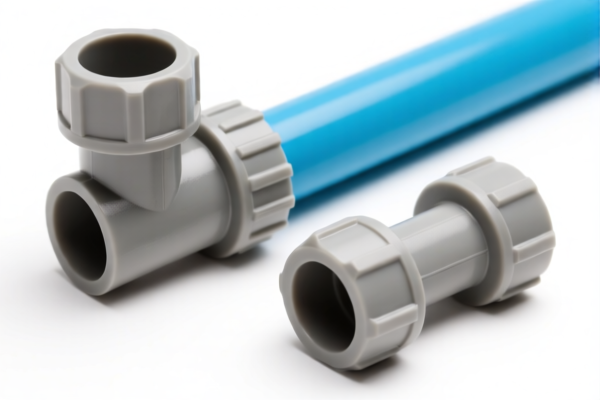
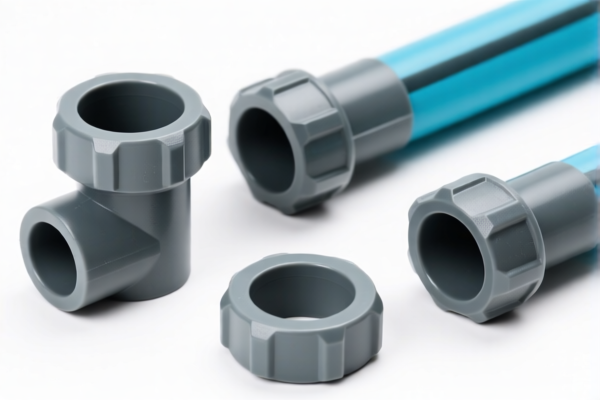
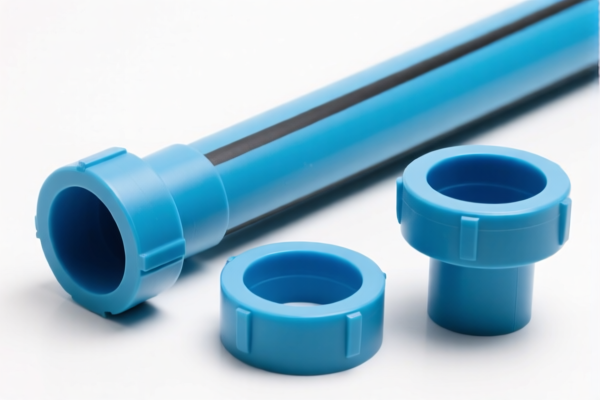
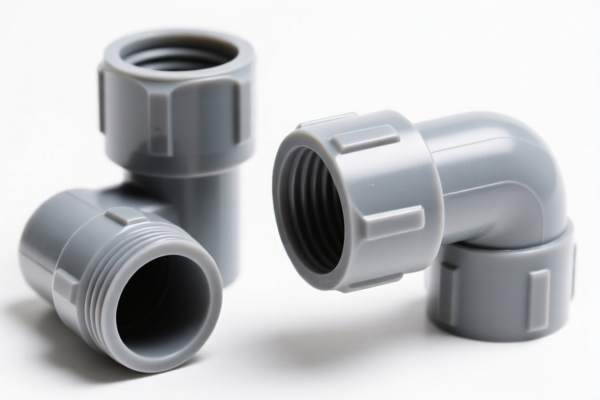
AI Analysis
🚰 Plastic Pipe Fittings & Valves: HS Code Classification, Tax Breakdown & Customs Clearance Guide | 2026 Edition
🌐 HS Code Reference & Customs Clearance Strategy | Latest Tax Rules for Plastic Piping Components | Professional-Level Compliance Guide
📌 I. Product Definition & Classification: What Exactly Are "Plastic Pipe Fittings and Valves"?
In international trade, Plastic Pipe Fittings and Valves are critical components used to connect, control, or modify the flow of fluids (water, gas, chemicals) in piping systems. Unlike metal counterparts, plastic variants are valued for corrosion resistance, lightweight properties, and cost-efficiency.
The classification depends heavily on two key factors: 1. Function: Is it a simple connector (elbow, tee, coupling) or a flow-control device (valve)? 2. Material Composition: Primarily plastic (PPR, PVC, PE, ABS, etc.).
⚠️ Critical Distinction:
- If the item is purely a connector/adapter without flow-control mechanisms → Often classified under Chapter 39 (Plastics) or 8481.80 (if considered a part of a valve).
- If the item is a valve (regulates flow, pressure, or direction) → Must be classified under Chapter 84 (Machinery), specifically 8481 (Tap, Cock, Valve).
- Misclassification Risk: Declaring a plastic valve as a simple "plastic part" (Chapter 39) can lead to severe penalties due to significantly different duty rates.
📦 II. HS Code Classification Details (2026 Latest Tariff Schedule)
Below are the six most relevant HS Codes based on the provided data, categorized by functional attributes:
| HS Code | Product Description | Key Characteristics | Primary Classification Logic |
|---|---|---|---|
3917.40.00.50 |
Plastic Pipe Fittings (Valves/Form) | Material: Plastic; Form: Fittings; Use: Consistent with pipe accessories | Classified under Chapter 39 as plastic pipe fittings. "Valve" form is treated as a fitting variant. |
3917.40.00.95 |
Plastic Pipe Fittings (Valves) | Material: Plastic; Sub-category: Valve-type within plastic pipe accessories | Classified under Chapter 39 as other plastic pipe fittings. Emphasizes the "valve form" but lacks specific valve machinery classification. |
8481.90.90.85 |
Plastic Pipe Fittings (Valve Parts) | Material: Plastic; Use: Valve function; Classification: As a Part of a valve | Classified under Chapter 84 as a part of valves. High tax burden due to "part" status under machinery chapters. |
8481.80.50.90 |
Plastic Valves (Other Materials) | Material: Plastic; Form: Valve; Category: Other materials (non-metal) | Classified under Chapter 84 as valves made of plastic. Direct functional classification. |
8481.80.50.40 |
Plastic Pipe Connectors (Parts) | Material: Plastic; Form: Connector; Classification: Tendency towards parts | Classified under Chapter 84 as a part of valves/connectors, despite being a connector. |
3926.30.50.00 |
Plastic Pipe Connectors | Material: Plastic; Form & Use: Consistent with plastic articles/connectors | Classified under Chapter 39 as other plastic articles. Best for simple, non-mechanical connectors. |
🔍 Key Insight:
- Chapter 39 (3917/3926): Lower duties (22.8%-40.3%). Suitable for simple fittings/connectors.
- Chapter 84 (8481): Higher duties (38.0%-85.0%). Required if the item is strictly defined as a "valve" or its "part" in machinery context.
- Why the Gap? Customs authorities view 8481 as industrial machinery components, attracting higher "Section 301" and "122 Clause" tariffs compared to basic plastic goods.
💰 III. 2026 Latest Tariff Rate Breakdown (Detailed Tax Analysis)
✅ Applicable Country: United States (US)
✅ Origin: China (CN)
✅ Effective Time: Current rates apply (including Section 301, Section 232, and Section 122 tariffs)
🎯 1. 3917.40.00.50 & 3917.40.00.95 — Plastic Pipe Fittings (Chapter 39)
| Item | Details |
|---|---|
| Base Duty | 5.3% (ad valorem) |
| Section 301 Additional Duty | +25.0% |
| Section 122 Clause Duty | +10.0% |
| Total Tax Rate | 40.3% |
| Calculation | CIF Value × 40.3% |
| De Minimis Eligibility | ❌ No (Below $800 threshold does not apply for Chinese origin goods subject to these tariffs) |
| Legal Basis | HTSUS 3917.40.00 + USITC Footnotes + IEEPA Orders |
📌 Explanation:
- These codes treat the product as a plastic article rather than a mechanical valve.
- The 40.3% rate is a combination of standard MFN (5.3%), Section 301 (25%), and the newer Section 122 (10%).
- Strategy: If your product is a simple connector or a "valve-like fitting" without complex mechanical internals, argue for Chapter 39 to avoid higher machinery duties.
🎯 2. 8481.90.90.85 — Plastic Fittings/Valve Parts (Chapter 84 - Parts)
| Item | Details |
|---|---|
| Base Duty | 0.0% |
| Section 301 Additional Duty | +25.0% |
| Section 122 Clause Duty | +10.0% |
| Steel/Aluminum/Copper Surcharge | +50.0% (If applicable parts are metallic) |
| Total Tax Rate | 85.0% (for pure plastic) |
| Calculation | CIF Value × 85.0% |
| De Minimis Eligibility | ❌ No |
| Legal Basis | HTSUS 8481.90 + USITC Footnotes |
📌 Explanation:
- This is the highest risk code. Being classified as a "part" of a valve triggers the full stack of punitive tariffs.
- The 0% base duty is misleading; the 25% + 10% + 50% (if mixed material) surcharges make this extremely costly.
- Warning: Do not use this code unless the item is strictly a spare part for a larger valve assembly and cannot be classified as a standalone fitting.
🎯 3. 8481.80.50.90 — Plastic Valves (Chapter 84 - Valves)
| Item | Details |
|---|---|
| Base Duty | 3.0% (ad valorem) |
| Section 301 Additional Duty | +25.0% |
| Section 122 Clause Duty | +10.0% |
| Total Tax Rate | 38.0% |
| Calculation | CIF Value × 38.0% |
| De Minimis Eligibility | ❌ No |
| Legal Basis | HTSUS 8481.80 + USITC Footnotes |
📌 Explanation:
- Slightly lower than Chapter 39 fittings (38.0% vs 40.3%) due to a lower base duty (3.0% vs 5.3%).
- However, the classification burden is higher. You must prove the item is a functional valve.
- Strategy: If you have a complex valve, compare 38.0% (8481) vs 40.3% (3917). 8481 is cheaper, but requires robust functional documentation.
🎯 4. 8481.80.50.40 — Plastic Connectors (Classified as Parts)
| Item | Details |
|---|---|
| Base Duty | 3.0% |
| Section 301 Additional Duty | +25.0% |
| Section 122 Clause Duty | +10.0% |
| Total Tax Rate | 38.0% |
| Calculation | CIF Value × 38.0% |
| De Minimis Eligibility | ❌ No |
📌 Explanation:
- This code is ambiguous. It classifies a "connector" as a "part" under Chapter 84.
- Same rate as8481.80.50.90but different legal rationale.
- Risk: High audit risk because connectors are usually Chapter 39 goods. Using this code may trigger customs inquiries about misclassification.
🎯 5. 3926.30.50.00 — Plastic Pipe Connectors (Chapter 39 - Other Articles)
| Item | Details |
|---|---|
| Base Duty | 5.3% |
| Section 301 Additional Duty | +7.5% |
| Section 122 Clause Duty | +10.0% |
| Total Tax Rate | 22.8% |
| Calculation | CIF Value × 22.8% |
| De Minimis Eligibility | ❌ No |
| Legal Basis | HTSUS 3926.30 + USITC Footnotes |
📌 Explanation:
- Lowest Duty Rate (22.8%).
- Ideal for simple plastic connectors (elbows, tees, couplings) that have no moving parts or flow-control mechanisms.
- Crucial: You must prove the item is NOT a valve and NOT a part of a valve. It must be a standalone plastic article.
🛠️ IV. Customs Clearance Practical Advice (Real-World Pitfall Avoidance)
✅ 1. Documentation Checklist (Non-Negotiable)
| Document | Requirement | Purpose |
|---|---|---|
| ✅ Product Specification Sheet | ✔️ Include material type (PVC, PPR, PE), pressure rating, dimensions | Determines if it's a simple fitting or a pressure-regulating valve |
| ✅ Technical Drawing | ✔️ Highlight internal structure | Proves presence/absence of moving parts (key for Chapter 39 vs 84) |
| ✅ Product Photos | ✔️ Clear images of the item, label, and packaging | Visual proof of "fitting" vs "valve" |
| ✅ Commercial Invoice | ✔️ Detailed description: "Plastic Pipe Fitting, Elbow, PPR, No Moving Parts" | Avoid vague terms like "Plastic Valve" if it's just a connector |
| ✅ Original Packaging | ✔️ With labels and instructions | Supports declared usage and specifications |
✅ 2. Declaration Strategy (Key Mantra)
🔥 "Simple Connector? Chapter 39! Complex Valve? Chapter 84! Don't Mix!"
| Scenario | Correct HS Code | Why? |
|---|---|---|
| Simple Elbow/Tee/Coupling (No moving parts) | 3917.40.00.50 or 3926.30.50.00 |
Chapter 39 covers plastic articles. Lower duty (22.8%-40.3%). |
| Ball Valve/Gate Valve (Has stem, handle, moving parts) | 8481.80.50.90 |
Chapter 84 covers valves. Duty 38.0%. |
| Valve Spare Part (e.g., stem, seat) | 8481.90.90.85 |
Chapter 84 covers parts. Duty 85.0% (High Risk). |
| Connector + Gasket Set | 3926.30.50.00 |
Still a plastic article if gasket is minor. |
📌 Critical Tip:
- If you declare a valve as a fitting (3917.40.00.50) to save taxes, customs may audit you. If found, you will face back duties + penalties.
- If you declare a simple connector as a valve part (8481.90.90.85), you overpay taxes unnecessarily.
✅ 3. Special Case Handling
| Case | Recommendation |
|---|---|
| OEM Custom Fittings | Provide design drawings to prove no mechanical function. |
| Mixed Material (Plastic + Metal Threads) | If metal parts are integral, customs may reclassify to Chapter 84. Check if metal portion is >50% by weight/value. |
| High-Pressure Valves | Must declare as valves (8481.80). Do not misclassify as fittings. |
| Low-Pressure Connectors | Safe to use Chapter 39 codes (3917 or 3926). |
🌍 V. Global Market Comparison (2026 Latest)
| Country/Region | Recommended HS Code | Approx. Duty Rate | Key Certification | Note |
|---|---|---|---|---|
| 🇺🇸 USA | 3917.40.00.50 (Fitting) |
40.3% | None specific | High tariffs due to Section 301/122. |
| 🇺🇸 USA | 8481.80.50.90 (Valve) |
38.0% | None specific | Slightly lower rate but higher classification risk. |
| 🇨🇳 China | 3917.40.00.00 |
5.3% | CCC (if applicable) | No additional punitive tariffs. |
| 🇪🇺 EU | 3917.29.00 |
0% - 2.7% | CE, REACH | Low duties. Stringent chemical compliance. |
| 🇯🇵 Japan | 3917.29.00 |
0% - 3.0% | JIS, PSE | Low duties. Focus on quality standards. |
📌 Conclusion:
- USA is the most expensive market for plastic fittings due to layered tariffs.
- EU and Japan offer significantly lower duties but require strict compliance with chemical and safety standards.
📌 VI. Common Errors & Pitfalls (Lessons Learned)
❌ Error 1: Declaring a Ball Valve as a "Plastic Connector"
👉 Consequence: Customs reclassifies to 8481.80.50.90 → Pay 38.0% instead of 40.3%? No, wait. Actually, if misclassified, you face penalties + back duties. If you paid 22.8% (3926), you owe the difference + 20% penalty.
❌ Error 2: Using 8481.90.90.85 for Complete Valves
👉 Consequence: You pay 85.0% duty. This code is for parts only. Using it for complete valves is incorrect and expensive.
❌ Error 3: Ignoring Section 122 Clause
👉 Consequence: The 10% additional tariff applies to all Chinese-origin goods subject to Section 301. Failing to account for it leads to underpayment.
❌ Error 4: Vague Description "Plastic Pipe Fitting"
👉 Consequence: Customs officers will inspect physically. If it has a handle/stem, they will reclassify to Chapter 84.
✅ Correct Approach:
"PPR Plastic Pipe Elbow, 20mm, PN20, No Moving Parts, For Water Supply" →
3917.40.00.50
"PVC Ball Valve, 1/2\", With Handle, Flow Control" →8481.80.50.90
🎯 VII. Conclusion: Precision Matters in Customs Clearance
🎯 Remember the Mantra:
🔹 "Simple Fitting? Chapter 39! Valve? Chapter 84! Parts? 85% Duty! Don't Mix!"
🔹 "HS Code Determines Duty. A 15% Difference Means Huge Savings!"
📌 Pro Tip:
If your products are original from Vietnam, Malaysia, or Thailand, you may qualify for preferential tariffs (e.g., EVFTA, RCEP).
Recommend applying for an Advance Ruling from US Customs (CBP) to confirm the correct HS Code before shipment.
📣 Immediate Action:
📞 Consult with a licensed customs broker + Provide Product Images + Apply for HS Code Pre-Ruling
🚀 Ensure Smooth Customs Clearance, Efficient Export, and Maximized Profit!
✨ Professional Customs Clearance Starts with Accurate Classification!
💼 Every Penny of Cost Should Be Precisely Calculated!
Customer Reviews
About HS Code Classification
The Harmonized System (HS) is an internationally standardized nomenclature developed by the World Customs Organization (WCO) to classify traded products. Over 200 countries use the HS system as the basis for customs tariffs, trade statistics, and import/export regulations.
Each HS code follows a hierarchical structure:
- Chapter (2 digits) — Broad category of goods (e.g., Chapter 84: Machinery and Mechanical Appliances)
- Heading (4 digits) — More specific grouping within the chapter
- Subheading (6 digits) — Internationally standardized breakdown, used by all WCO member countries
- National subdivisions (8-10 digits) — Country-specific extensions for further classification, such as US HTSUS 10-digit codes
Correct HS code classification is essential for smooth customs clearance, accurate duty payment, and compliance with trade regulations. Misclassification can lead to customs delays, overpayment of duties, or penalties.
When importing from CN to US, the applicable tariff rates may include:
- Most-Favored-Nation (MFN) rate — The standard duty rate applied to WTO members
- General rate — Applied to countries without trade agreements
- Trade remedy duties — Additional tariffs such as Section 301 (anti-dumping), Section 232 (national security), or countervailing duties
The information provided on this page is for reference purposes only. For official classification, please consult with your local customs authority or a licensed customs broker.