Plastic Pipe Fittings with Internal Threads
CN → US| HS Code | Tariff Rate | Origin | Destination | Doc |
|---|---|---|---|---|
| 3926305000 | 22.8% | CN | US | Official Doc |
| 3926909987 | 22.8% | CN | US | Official Doc |
| 3917400080 | 40.3% | CN | US | Official Doc |
| 3917400095 | 40.3% | CN | US | Official Doc |
Product Images
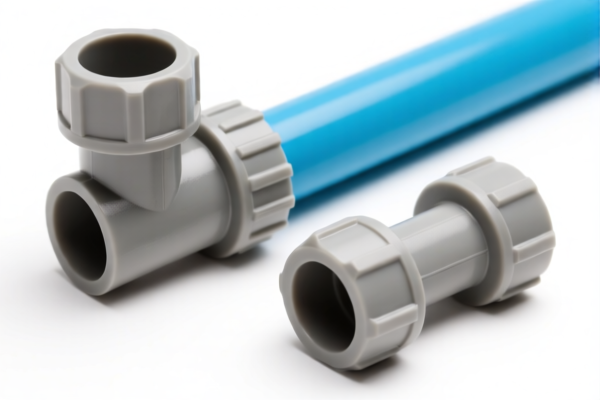
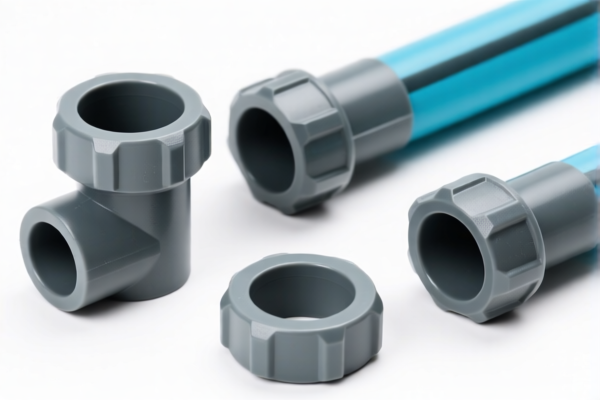
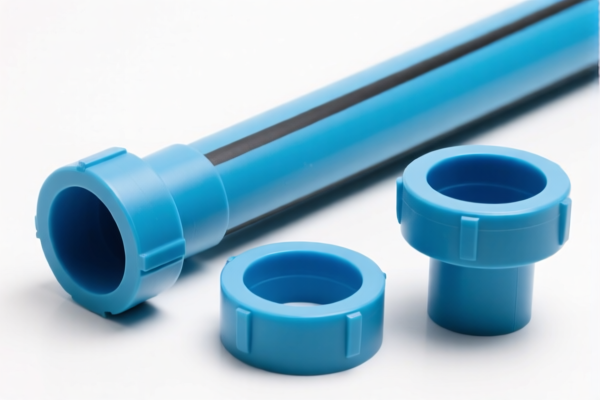
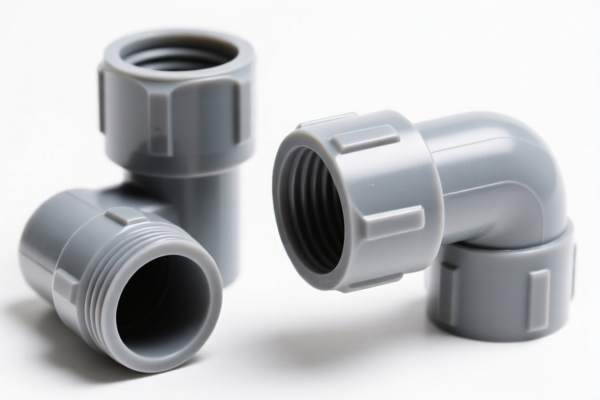
AI Analysis
🛠️ Plastic Pipe Fittings with Internal Threads: HS Code Classification & U.S. Customs Clearance Guide (2026 Update)
🌐 HS Code Reference & Clearance Strategy | 2026 Latest Tariff Analysis | Professional Compliance Guide
📌 I. Product Definition & Classification: What Exactly Are "Plastic Pipe Fittings"?
Plastic pipe fittings with internal threads are essential components in fluid transportation systems (water, gas, chemicals, HVAC). They are used to connect plastic pipes, change direction, branch off, or reduce diameter. In international trade, classification depends heavily on the specific function and structural characteristics of the fitting.
Key Distinction Logic: 1. General Plastic Articles (3926): If the fitting is considered a generic plastic article or connector not specifically described elsewhere (e.g., simple connectors, clamps, or non-pipe-specific plastic parts), it may fall under 3926.30. 2. Parts of Tubes/Pipes (3926.90): If the item is clearly identified as a "part" of a tube or pipe system but doesn't fit the specific definition of a joint/connector, it may fall under 3926.90. 3. Pipe Joints/Connectors (3917.40): If the item is specifically a joint or connector for pipes (like elbows, tees, couplings, adapters with internal threads), it is most accurately classified under 3917.40.
⚠️ Critical Compliance Point:
- "Joint/Connector" (3917.40) implies a functional link between two pipes. High tariff risk.
- "General Article/Part" (3926/3926.90) is broader. Lower tariff risk.
- Misclassification is a high-risk area. Customs may audit based on product images and technical datasheets.
📦 II. HS Code Classification Details (2026 Tariff Schedule)
| HS Code | Product Description | Application Scenario | Classification Logic |
|---|---|---|---|
3926.30.50.00 |
Plastic Articles, Other | Generic plastic connectors, non-specific pipe fittings, simple plastic links | Classified as "Other plastic articles". Lower tariff base. |
3926.90.99.87 |
Parts of Plastic Articles | Parts of tubes/pipes not specifically elsewhere (e.g., simple sleeves, generic plastic pipe components) | Classified as "Parts of tubes/pipe-like products". Lower tariff base. |
3917.40.00.80 |
Plastic Pipe Joints/Connectors | Elbows, tees, couplings, adapters with internal threads specifically for joining pipes | High Tariff Risk. Specifically defined as pipe joints. |
3917.40.00.95 |
Plastic Pipe Joints/Connectors (Other) | Other plastic pipe joints not specifically described (e.g., complex multi-port adapters) | High Tariff Risk. Specifically defined as pipe joints. |
🔍 重点提醒 (Key Reminder):
-3917.40(Joints) carries the highest tariff burden due to specific inclusion.
-3926.30&3926.90are broader categories and typically attract lower additional tariffs.
- Do NOT assume all plastic pipe parts are "Joints." If the product is a simple connector without specific pipe-joint functionality, argue for3926classification.
💰 III. 2026 U.S. Tariff Rate Breakdown (Including Section 301 & 122)
✅ Applicable Country: United States (US)
✅ Origin: China (CN)
✅ Effective Time: Current tariffs apply (Section 301 & Section 122)
🎯 1. 3926.30.50.00 & 3926.90.99.87 – Lower Tariff Path
| Item | Content |
|---|---|
| Base Duty Rate | 5.3% (Ad Valorem) |
| Section 301 Additional Duty | +7.5% (List 1/2/3/4b specific rates) |
| Section 122 Duty | +10% (On imports from China, subject to quota/limits) |
| Total Effective Rate | 22.8% |
| Tax Calculation | CIF Value × 22.8% |
| De Minimis Eligibility | ❌ Not Eligible (Section 301 duties apply even under $800) |
| Legal Basis Path | HTSUS:3926.30.50.00 → Section 301: 7.5% → Section 122: 10% |
📌 Explanation:
- This classification is strategically favorable if the product can be argued as a "general plastic article" rather than a "pipe joint."
- 22.8% is significantly lower than the 40.3% rate for pipe joints.
🎯 2. 3917.40.00.80 & 3917.40.00.95 – Higher Tariff Path (Pipe Joints)
| Item | Content |
|---|---|
| Base Duty Rate | 5.3% (Ad Valorem) |
| Section 301 Additional Duty | +25.0% (List 4A specific rate for pipe joints) |
| Section 122 Duty | +10% (On imports from China) |
| Total Effective Rate | 40.3% |
| Tax Calculation | CIF Value × 40.3% |
| De Minimis Eligibility | ❌ Not Eligible (Section 301 duties apply) |
| Legal Basis Path | HTSUS:3917.40.00.80 → Section 301: 25.0% → Section 122: 10% |
📌 Explanation:
- 40.3% is a very high tariff. This reflects the U.S. policy of restricting specific industrial pipe components from China.
- Section 301 at 25% is the major driver here.
- Must justify why the product is NOT a "pipe joint" if aiming for the lower3926rate.
🛠️ IV. Customs Clearance Practical Advice (Avoiding Pitfalls)
✅ 1. Required Documentation Checklist
| Document | Mandatory? | Description |
|---|---|---|
| ✅ Product Specification Sheet | ✔️ | Must clearly state material (e.g., PVC, PP, PEX), thread type (NPT, BSP, Metric), and dimensions. |
| ✅ Technical Drawing/Photo | ✔️ | Show the internal thread and connection mechanism. Critical for proving it's a "fitting" not a "joint." |
| ✅ Commercial Invoice | ✔️ | Description must be precise: "Plastic Pipe Fitting - Connector" vs. "Plastic Pipe Joint." |
| ✅ Bill of Lading | ✔️ | Ensure no conflicting descriptions. |
| ✅ Country of Origin Certificate | ✔️ | Essential for Section 122 and 301 duty calculation. |
| ✅ Third-Party Test Report | ✔️ | (If applicable) Pressure rating, temperature resistance, material composition. |
✅ 2. Classification Strategy (The "Golden Rule")
🔥 "Function Over Form: Argue 'Fitting/Connector' (3926), Avoid 'Joint' (3917)"
| Scenario | Recommended HS Code | Tariff Rate | Risk Level |
|---|---|---|---|
| Simple Adapter/Connector (e.g., reducing bushing) | 3926.30.50.00 |
22.8% | 🟢 Low |
| Generic Pipe Sleeve/Part | 3926.90.99.87 |
22.8% | 🟢 Low |
| Elbow/Tee/Coupling (Standard Joint) | 3917.40.00.80 |
40.3% | 🔴 High |
| Complex Multi-Port Adapter | 3917.40.00.95 |
40.3% | 🔴 High |
📌 Strategy:
- If the product is a simple connector (e.g., a threaded bushing that screws into a pipe), argue it is a "Plastic Article" (3926).
- If it is a complex joint (e.g., a 90-degree elbow, a tee, a multi-port manifold), it is likely a "Pipe Joint" (3917).
- Do NOT use "Joint" in the product name if you are classifying under 3926. Use "Connector," "Fitting," or "Adapter."
✅ 3. Special Case Handling
| Situation | Handling Advice |
|---|---|
| OEM Custom Fittings | Provide design files. If unique, argue for 3926.90.99.87 as "Other parts of plastic articles." |
| Mixed Shipments | Ensure each item is correctly classified. Don't group 3917 items under 3926 to save duty – this is fraud. |
| Section 122 Quota | Monitor U.S. CBP announcements on Section 122 quotas. If exceeded, rates may change. |
| Pre-Ruling | Strongly Recommend: Apply for a Binding Ruling from CBP if the product is borderline. This provides legal certainty. |
🌍 V. Global Market Comparison (2026)
| Country/Region | Recommended HS Code | Base Duty | Additional Duties (China) | Total Est. Rate | Remarks |
|---|---|---|---|---|---|
| 🇺🇸 USA | 3926.30.50.00 |
5.3% | +7.5% (301) +10% (122) | 22.8% | Optimal if classified as generic article. |
| 🇺🇸 USA | 3917.40.00.80 |
5.3% | +25% (301) +10% (122) | 40.3% | High risk for standard pipe joints. |
| 🇨🇳 China | 3917.40.00 |
5.3% | None | 5.3% | Export to China is duty-free on most plastics. |
| 🇪🇺 EU | 3917.40 |
4.7% | None (if not under trade barriers) | 4.7% | EU tariffs are lower; focus on CE certification. |
| 🇯🇵 Japan | 3917.40 |
6.0% | None | 6.0% | Stable tariffs. |
📌 Conclusion:
- USA is the most challenging market due to Section 301 and 122 tariffs.
- EU and Japan offer lower tariff barriers, but require strict compliance with safety standards (CE, JIS).
- Strategic Sourcing: Consider sourcing from non-China origins if targeting the US to avoid 301/122 duties.
📌 VI. Common Errors & Pitfalls (Lessons Learned)
❌ Error 1: Classifying all plastic pipe fittings as 3917.40 without justification.
👉 Consequence: Paying 40.3% duty instead of 22.8%.
✅ Fix: Analyze if the product is a "general article" (3926) rather than a specific "joint."
❌ Error 2: Using "Joint" in the invoice description for 3926 classification.
👉 Consequence: Customs rejects the classification due to contradictory terminology.
✅ Fix: Use terms like "Connector," "Fitting," "Adapter," or "Link."
❌ Error 3: Ignoring Section 122.
👉 Consequence: Underpayment of 10% duty, leading to penalties.
✅ Fix: Always calculate 10% Section 122 for Chinese-origin plastic goods.
❌ Error 4: Assuming De Minimis ($800) applies.
👉 Consequence: Seizure or penalty. Section 301 duties apply even to low-value shipments.
✅ Fix: Budget for all duties regardless of shipment value.
🎯 VII. Conclusion: Strategic Compliance for Profitability
🎯 Key Takeaway:
🔹 "Classify Smart: 3926 saves you 17.5% vs. 3917."
🔹 "Section 301 is unavoidable; Section 122 is mandatory."
🔹 "Documentation is your best defense against misclassification."
📌 Pro Tip:
- If your product is a simple threaded bushing or reducer, push for
3926.30.50.00.- If it is a complex multi-way valve or elbow, accept
3917.40.00.80.- Apply for a CBP Binding Ruling if the product is unique. This provides legal protection and cost certainty.
📣 Immediate Action:
📞 Contact a Licensed Customs Broker + Provide Product Photos + Request Pre-Ruling
🚀 Optimize Your Supply Chain to Minimize Tariff Burden!
✨ Professional Classification = Cost Savings + Compliance Assurance
💼 Every Percent Matters in Global Trade!
Customer Reviews
About HS Code Classification
The Harmonized System (HS) is an internationally standardized nomenclature developed by the World Customs Organization (WCO) to classify traded products. Over 200 countries use the HS system as the basis for customs tariffs, trade statistics, and import/export regulations.
Each HS code follows a hierarchical structure:
- Chapter (2 digits) — Broad category of goods (e.g., Chapter 84: Machinery and Mechanical Appliances)
- Heading (4 digits) — More specific grouping within the chapter
- Subheading (6 digits) — Internationally standardized breakdown, used by all WCO member countries
- National subdivisions (8-10 digits) — Country-specific extensions for further classification, such as US HTSUS 10-digit codes
Correct HS code classification is essential for smooth customs clearance, accurate duty payment, and compliance with trade regulations. Misclassification can lead to customs delays, overpayment of duties, or penalties.
When importing from CN to US, the applicable tariff rates may include:
- Most-Favored-Nation (MFN) rate — The standard duty rate applied to WTO members
- General rate — Applied to countries without trade agreements
- Trade remedy duties — Additional tariffs such as Section 301 (anti-dumping), Section 232 (national security), or countervailing duties
The information provided on this page is for reference purposes only. For official classification, please consult with your local customs authority or a licensed customs broker.