Plastic Pipes and Fittings
CN → US| HS Code | Tariff Rate | Origin | Destination | Doc |
|---|---|---|---|---|
| 3917400050 | 15.3% | CN | US | Official Doc |
| 3917400095 | 40.3% | CN | US | Official Doc |
| 8481909085 | 85.0% | CN | US | Official Doc |
| 8481805090 | 38.0% | CN | US | Official Doc |
Product Images
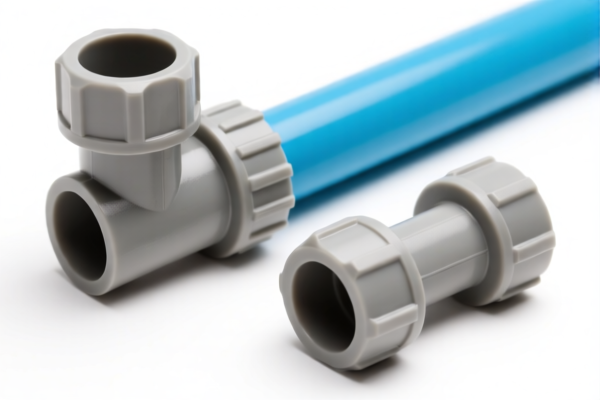
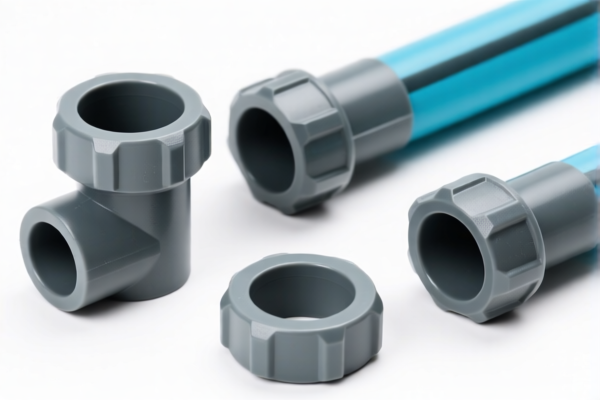
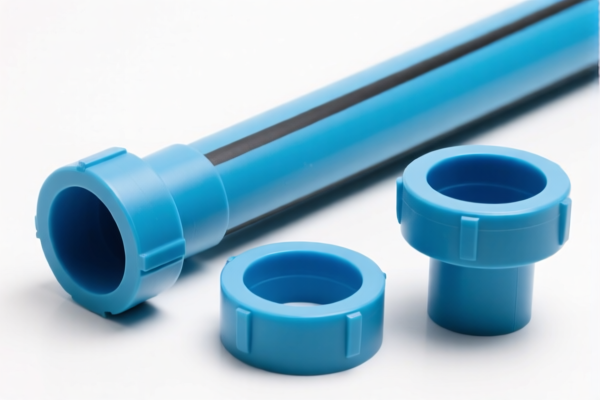
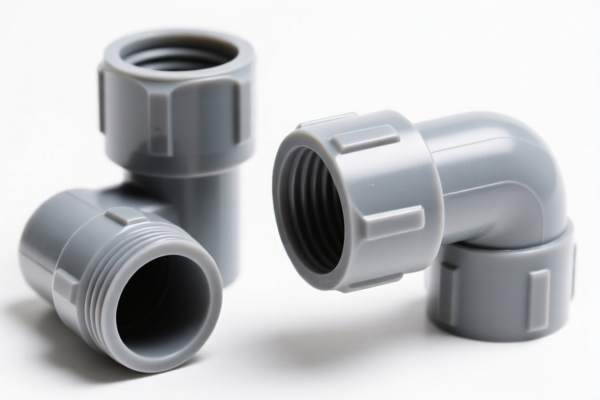
AI Analysis
🏗️ Plastic Pipes and Fittings (Plastic Pipe Fittings)
🌐 HS Code Reference & Customs Clearance Guide | 2026 Latest Tariff Analysis | Professional Clearance Strategy
📌 I. Product Definition and Classification: Do You Really Understand "Plastic Pipe Fittings"?
Plastic pipe fittings are essential components in fluid transport systems, used to connect, change direction, or control the flow of liquids and gases in plumbing, industrial, and agricultural applications. In international trade, they are primarily classified based on their material (plastic) and function (pipe fittings vs. valves).
Key Distinction:
- Pipe Fittings (Connectors): Elbows, tees, couplings, reducers, etc., used to join pipes.
- Valves: Devices that control, regulate, or stop flow (e.g., ball valves, gate valves).
⚠️ Critical Classification Point:
- If the item is a connector/joint (no moving parts for flow control) → Likely HS 3917.
- If the item is a valve (has a mechanism to open/close/restrict flow) → Likely HS 8481.
- Misclassification Risk: Declaring a valve as a fitting (or vice versa) leads to significant duty differences.
📦 II. HS Code Classification Details (2026 Latest Tariff Authority Comparison)
| HS Code | Product Description | Applicable Scenario | Tax Rate (China Origin) |
|---|---|---|---|
3917.40.00.50 |
Plastic pipe fittings, connectors, and accessories | Elbows, tees, couplings, pipe joints; no flow control function | 15.3% |
3917.40.00.95 |
Other plastic pipe fittings (valve applications within fittings category) | Plastic fittings classified under valve applications but not mechanical valves | 40.3% |
8481.90.90.85 |
Parts of valves, not elsewhere specified | Plastic parts of valves (e.g., handles, bodies if classified as valve parts) | 85.0% |
8481.80.50.90 |
Other valves, plastic material | Plastic valves (ball, gate, check valves with plastic bodies) | 38.0% |
3917.40.00.50 |
(Duplicate) Plastic pipe fittings, connectors, accessories | Same as above | 15.3% |
🔍 Key Reminder:
- HS 3917.40.00.50 is the most favorable for standard plastic pipe connectors (elbows, tees, etc.).
- HS 8481 codes apply only if the item is a valve or a valve part.
- HS 3917.40.00.95 is a catch-all for plastic pipe fittings that don’t fit the main connector subheading, often attracting higher duties due to ambiguous classification.
💰 III. 2026 Latest Tariff Rate Breakdown (Including Additional Taxes & Policy Surcharges)
✅ Applicable Country: United States (US)
✅ Country of Origin: China (CN)
✅ Effective Date: November 10, 2025 onwards (including subsequent imports)
🎯 1. 3917.40.00.50 —— Plastic Pipe Fittings (Connectors, Elbows, Tees)
| Item | Content |
|---|---|
| Base Tariff | 5.3% (ad valorem) |
| Section 301 Surcharge | 0.0% (Exempt under current 122-section exemption for certain plastic pipe fittings) |
| Section 122 Tariff | 10% (Targeted surcharge on specific plastic products) |
| Total Tax Rate | 15.3% |
| Tax Calculation | CIF Value × 15.3% |
| De Minimis Eligibility | ❌ No (deny_de_minimis applies to most plastic pipe fittings from China) |
| Legal Basis Path | HTSUS: 3917.40.00.50 → USITC Footnote 122 |
📌 Explanation:
- This is the lowest duty rate for plastic pipe fittings.
- The 0% Section 301 rate is a special exemption for standard pipe connectors.
- The 10% Section 122 tariff is a targeted surcharge on plastic goods.
- Total: 15.3%, which is relatively manageable for bulk shipments.
🎯 2. 3917.40.00.95 —— Other Plastic Pipe Fittings (Valve Applications)
| Item | Content |
|---|---|
| Base Tariff | 5.3% |
| Section 301 Surcharge | 25.0% (Standard 301 tariff applies here) |
| Section 122 Tariff | 10% |
| Total Tax Rate | 40.3% |
| Tax Calculation | CIF Value × 40.3% |
| De Minimis Eligibility | ❌ No |
| Legal Basis Path | HTSUS: 3917.40.00.95 → USITC Footnote 301 → USITC Footnote 122 |
📌 Note:
- This code is used for plastic fittings that are classified under valve applications but are not mechanical valves.
- The 25% Section 301 tariff significantly increases the cost.
- High duty risk if the product is misclassified as a "valve-related fitting" instead of a standard connector.
🎯 3. 8481.90.90.85 —— Parts of Valves (Plastic)
| Item | Content |
|---|---|
| Base Tariff | 0.0% |
| Section 301 Surcharge | 25.0% |
| Section 122 Tariff | 10% |
| Steel/Aluminum/Copper Surcharge | 50% (If applicable, but not for plastic) |
| Total Tax Rate | 85.0% |
| Tax Calculation | CIF Value × 85.0% |
| De Minimis Eligibility | ❌ No |
| Legal Basis Path | HTSUS: 8481.90.90.85 → USITC Footnote 301 → USITC Footnote 122 |
📌 Warning:
- This code is for valve parts made of plastic.
- Extremely high duty (85%) due to the combination of Section 301 and 122 tariffs.
- Avoid this classification unless the item is strictly a non-mechanical valve part.
🎯 4. 8481.80.50.90 —— Plastic Valves
| Item | Content |
|---|---|
| Base Tariff | 3.0% |
| Section 301 Surcharge | 25.0% |
| Section 122 Tariff | 10% |
| Total Tax Rate | 38.0% |
| Tax Calculation | CIF Value × 38.0% |
| De Minimis Eligibility | ❌ No |
| Legal Basis Path | HTSUS: 8481.80.50.90 → USITC Footnote 301 → USITC Footnote 122 |
📌 Note:
- This code is for plastic valves (e.g., PVC ball valves, gate valves).
- 38% duty is moderate but higher than standard fittings.
- Correct classification is critical: If it’s a valve, it must be declared as such.
🛠️ IV. Customs Clearance Practical Advice (Real-World Pitfall Avoidance Guide)
✅ 1. Documentation Checklist (All Required)
| Document | Mandatory | Description |
|---|---|---|
| ✅ Product Specification Sheet | ✔️ | Material (PVC, PE, PP), size, pressure rating, connection type |
| ✅ Product Photos (with labels) | ✔️ | Clear view of the item, showing if it’s a connector or valve |
| ✅ Commercial Invoice | ✔️ | Must clearly state "Plastic Pipe Fitting" or "Plastic Valve" with HS Code |
| ✅ Packing List | ✔️ | Itemize components; avoid bundling valves with fittings if possible |
| ✅ Material Safety Data Sheet (MSDS) | ✔️ | For chemical compatibility if applicable |
| ✅ Certificate of Origin (CO) | ✔️ | If shipped from non-China countries to benefit from lower tariffs |
✅ 2. Declaration Strategy (Key Mnemonic)
🔥 "Connectors are fittings, Valves are valves; Misclassification costs double!"
| Scenario | Correct Declaration | Wrong Practice |
|---|---|---|
| Elbow, Tee, Coupling | 3917.40.00.50 (15.3%) |
Declare as valve → 38%+ |
| PVC Ball Valve | 8481.80.50.90 (38%) |
Declare as fitting → 15.3% (Risky, will be audited) |
| Valve Handle (Plastic) | 8481.90.90.85 (85%) |
Declare as fitting → 15.3% (High risk of penalty) |
| Mixed Shipment (Fittings + Valves) | Separate lines in invoice | Bundle together → Higher overall duty |
✅ 3. Special Case Handling
| Scenario | Handling Advice |
|---|---|
| OEM Custom Fittings | Provide design drawings to prove no valve mechanism → Use 3917.40.00.50 |
| Valves with Plastic Bodies | Must declare under 8481.80.50.90; do not use fitting codes |
| Mixed Materials (Plastic + Metal) | If metal parts are functional (e.g., metal valve stem), may classify under 8481 |
| Small Parts (Fasteners) | If included with fittings, declare separately as "Plastic Fasteners" (different HS Code) |
🌍 V. Global Customs Clearance Comparison (2026 Latest)
| Country/Region | Recommended HS Code | Tariff (China Origin) | Certification Requirements | Notes |
|---|---|---|---|---|
| 🇺🇸 USA | 3917.40.00.50 |
15.3% | None | High risk for valves (38%-85%) |
| 🇨🇳 China | 3917.40.00.50 |
5.3% | CCC (if applicable) | No Section 301/122 tariffs |
| 🇪🇺 EU | 3917.40.00.50 |
3.5% (approx.) | CE (if plumbing certified) | No surcharge tariffs |
| 🇬🇧 UK | 3917.40.00.50 |
3.5% (approx.) | UKCA (if applicable) | Post-Brexit tariffs similar to EU |
| 🇦🇺 Australia | 3917.40.00.50 |
5% | RCM | No surcharge tariffs |
📌 Conclusion:
- The US is the most challenging market for plastic pipe fittings due to Section 301 and 122 tariffs.
- China origin goods face 15.3% for fittings, but 38%-85% for valves.
- EU, UK, Australia, and China offer much lower duties (3.5%-5.3%), making them more cost-effective destinations.
📌 VI. Common Mistakes & Pitfall Guide (Lessons Learned)
❌ Mistake 1: Declaring a plastic valve as a pipe fitting (3917.40.00.50)
👉 Consequence: Customs audit → Underpayment of duties (up to 70% difference) → Penalties + seizure.
❌ Mistake 2: Bundling valves and fittings in one line item
👉 Consequence: Customs may apply the highest duty rate to the entire shipment.
❌ Mistake 3: Using vague descriptions like "Plastic Parts"
👉 Consequence: Customs classification uncertainty → Delay in clearance → Demurrage fees.
❌ Mistake 4: Ignoring Section 122 Tariff
👉 Consequence: Even if Section 301 is 0%, 10% Section 122 still applies → Higher than expected costs.
✅ Correct Practice:
"PVC Pipe Fitting, Elbow 90°, 2-inch, ASTM D2466, No Valve Mechanism, Model XYZ"
vs.
"PVC Ball Valve, 2-inch, Full Port, Model ABC"
🎯 VII. Conclusion: Professional Declaration, Time-Saving, Cost-Effective!
🎯 Remember the Mnemonic:
🔹 "Fittings 15%, Valves 38%, Parts 85%; Misclassify and Pay Plenty!"
🔹 "HS Code Determines Duty, Wrong Code Costs Double, Declaration Accuracy Saves Dollars!"
📌 Pro Tip:
If your plastic pipe fittings or valves are shipped from Vietnam, Malaysia, or Thailand, you may qualify for IEEPA exemptions or lower tariffs.
Recommendation: Apply for a Pre-Ruling (Advance Ruling) from US Customs to confirm the correct HS Code and duty rate before shipment.
📣 Take Action Now:
📞 Contact a Professional Customs Broker + Provide Product Photos + Apply for HS Code Pre-Ruling
🚀 Ensure your plastic pipe fittings and valves clear customs smoothly, reduce costs, and maximize profit!
✨ Professional Customs Clearance Starts with Accurate Classification!
💼 Every Dollar of Cost Deserves to be Precisely Calculated!
Customer Reviews
About HS Code Classification
The Harmonized System (HS) is an internationally standardized nomenclature developed by the World Customs Organization (WCO) to classify traded products. Over 200 countries use the HS system as the basis for customs tariffs, trade statistics, and import/export regulations.
Each HS code follows a hierarchical structure:
- Chapter (2 digits) — Broad category of goods (e.g., Chapter 84: Machinery and Mechanical Appliances)
- Heading (4 digits) — More specific grouping within the chapter
- Subheading (6 digits) — Internationally standardized breakdown, used by all WCO member countries
- National subdivisions (8-10 digits) — Country-specific extensions for further classification, such as US HTSUS 10-digit codes
Correct HS code classification is essential for smooth customs clearance, accurate duty payment, and compliance with trade regulations. Misclassification can lead to customs delays, overpayment of duties, or penalties.
When importing from CN to US, the applicable tariff rates may include:
- Most-Favored-Nation (MFN) rate — The standard duty rate applied to WTO members
- General rate — Applied to countries without trade agreements
- Trade remedy duties — Additional tariffs such as Section 301 (anti-dumping), Section 232 (national security), or countervailing duties
The information provided on this page is for reference purposes only. For official classification, please consult with your local customs authority or a licensed customs broker.