Plastic Pipes and Tubes
CN → US| HS Code | Tariff Rate | Origin | Destination | Doc |
|---|---|---|---|---|
| 3917290090 | 38.1% | CN | US | Official Doc |
| 3926909987 | 22.8% | CN | US | Official Doc |
| 3917210000 | 38.1% | CN | US | Official Doc |
| 3926909989 | 22.8% | CN | US | Official Doc |
| 3917230000 | 38.1% | CN | US | Official Doc |
Product Images
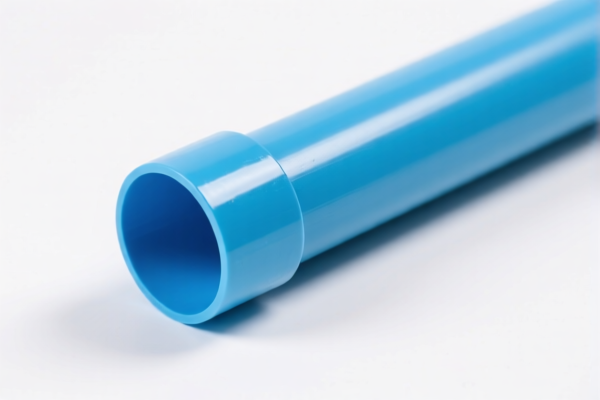
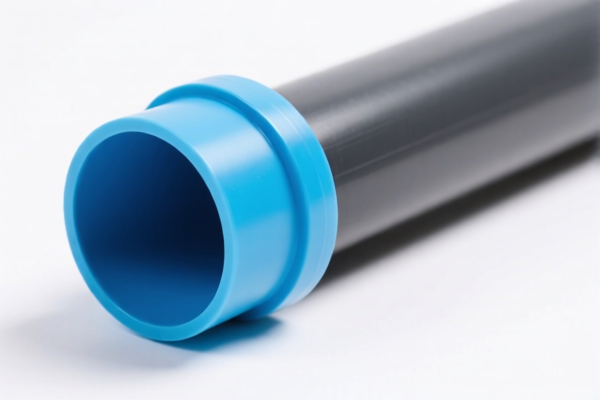
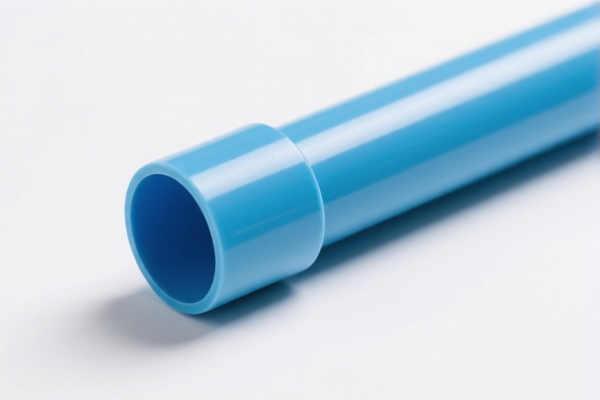

AI Analysis
🏗️ Plastic Pipes & Tubes: The Ultimate HS Code Guide for 2026 | Tax Breakdown & Clearance Strategy
🌐 HS Code Reference & Clearance Guide | 2026 Latest Tariff Analysis | Professional Customs Clearance Strategy
📌 1. Product Definition & Classification: Are You Sure What "Plastic Pipe" Is?
In international trade, "Plastic Pipes and Tubes" are not a single entity. They are strictly categorized based on Material, Physical Form (Hardness), and End Use. Misclassification here leads to massive tax discrepancies (up to 15% difference!).
Key Distinction: * Flexible Pipes/Tubes (Chapter 3917): Often used for fluid transport, irrigation, or pneumatic systems. Classification depends heavily on the type of plastic (e.g., PVC, PE, PP) and whether they have fittings. * Rigid Pipes/Tubes (Chapter 3926): Often used for construction, structural support, or hard tubing. If they don't fit specific sub-headings in 3917, they fall into the "Other Articles of Plastics" (3926) bucket.
⚠️ Critical Judgment Point: - If the pipe is flexible and made of specific thermoplastics (like PVC/PE) → Likely 3917 series. - If the pipe is rigid or doesn't fit the specific 3917 sub-codes → Likely 3926.90. - End Use Matters: Construction-grade pipes often face stricter scrutiny than general-purpose industrial tubing.
📦 2. HS Code Classification Details (2026 Latest Tariff Authority Mapping)
Based on the provided data, here is the breakdown of the 5 possible HS Codes for Plastic Pipes, their logic, and tax implications.
| HS Code | Product Description & Logic | Tax Rate (Total) | Tax Composition Detail |
|---|---|---|---|
| 3917.29.00.90 | Plastic Pipes (General/Flexible): Matches material and form; length unlimited; suitable for construction. | 38.1% | Base: 3.1% + Additional (Sec 301): 25.0% + Section 122 Tariff: 10% |
| 3926.90.99.87 | Plastic Pipes (Rigid/Other): Matches material/form; classified as "Rigid Pipes/Tubes" under "Other Plastic Articles" (Fallback Category). | 22.8% | Base: 5.3% + Additional (Sec 301): 7.5% + Section 122 Tariff: 10% |
| 3917.21.00.00 | Plastic Pipes (Specific Plastic Type): Matches material/form; meets classification requirements for plastic pipes (likely specific resin type like PVC/PE). | 38.1% | Base: 3.1% + Additional (Sec 301): 25.0% + Section 122 Tariff: 10% |
| 3926.90.99.89 | Plastic Pipes (General Fallback): Matches plastic material; no conflict in material or form. Generic "Other Plastic Articles" fallback. | 22.8% | Base: 5.3% + Additional (Sec 301): 7.5% + Section 122 Tariff: 10% |
| 3917.23.00.00 | Plastic Pipes (Construction Specific): Matches material, form, AND Construction Use. Strictly defined for building infrastructure. | 38.1% | Base: 3.1% + Additional (Sec 301): 25.0% + Section 122 Tariff: 10% |
🔍 Key Insight: - The 3917 Series (Codes 3917.29, 3917.21, 3917.23) carries a 38.1% total tax rate. This is significantly higher due to the 25% Section 301 Additional Duty. - The 3926 Series (Codes 3926.90...) carries a 22.8% total tax rate. While still high due to the 10% Section 122 tariff, the Section 301 duty is lower (7.5%). - Decision Factor: Can your pipe be classified under the specific "Pipes/Tubes" headings in 3917? If yes, you pay 38.1%. If it’s considered "Other Plastic Articles" (e.g., rigid profiles not fitting 3917 specs), you might qualify for the 22.8% rate under 3926.
💰 3. 2026 Latest Tariff Rate Details (Including Surtaxes & Policy Add-ons)
✅ Applicable Country: USA (US)
✅ Origin: China (CN)
✅ Effective Date: Post-2025 Policy (Includes Sec 301 & Sec 122)
🎯 1. 3917.29.00.90 / 3917.21.00.00 / 3917.23.00.00 — The "High Tax" Cluster (38.1%)
| Item | Content |
|---|---|
| Base Duty Rate | 3.1% (Ad Valorem) |
| Section 301 Additional Duty | +25.0% (High-sensitivity goods) |
| Section 122 Tariff | +10.0% (Specific trade remedy/add-on) |
| Total Effective Rate | 38.1% |
| Calculation | CIF Value × 38.1% |
| De Minimis Exemption? | ❌ NO (Denied for China-origin goods under these codes) |
| Legal Basis Path | HTSUS:3917.29/21/23 → USITC:301_Trade_Remarks → EO:122 |
📌 Explanation: - These codes fall under Chapter 3917, which is targeted by the 25% Section 301 tariff. - The 10% Section 122 tariff is an additional layer applied to specific industrial inputs. - Total Burden: 38.1% is a heavy cost. You must ensure the product description explicitly matches the 3917 definition to avoid misclassification penalties.
🎯 2. 3926.90.99.87 / 3926.90.99.89 — The "Alternative" Cluster (22.8%)
| Item | Content |
|---|---|
| Base Duty Rate | 5.3% (Ad Valorem) |
| Section 301 Additional Duty | +7.5% (Lower tier for "Other Articles") |
| Section 122 Tariff | +10.0% (Still applies) |
| Total Effective Rate | 22.8% |
| Calculation | CIF Value × 22.8% |
| De Minimis Exemption? | ❌ NO |
| Legal Basis Path | HTSUS:3926.90 → USITC:301_Trade_Remarks → EO:122 |
📌 Strategic Note: - If your plastic pipe does not fit the specific "Pipe/Tube" definitions in 3917 (e.g., it's a rigid profile, a non-circular shape, or lacks specific flexibility), it may qualify for 3926. - Savings: 15.3% lower tax rate compared to 3917 codes. - Risk: Customs may challenge this if the product is clearly a standard pipe. You need strong technical documentation (cross-section, material datasheet) to justify the "Other Article" classification.
🛠️ 4. Customs Clearance Practical Advice (Pitfall Avoidance Guide)
✅ 1. Documentation Checklist (Non-Negotiable)
| Document | Mandatory? | Purpose |
|---|---|---|
| ✅ Product Spec Sheet | ✔️ | Must detail: Material (PVC/PE/PP), Diameter, Wall Thickness, Flexibility/Rigidity. |
| ✅ Cross-Section Diagram | ✔️ | Critical to prove if it's a "Pipe" (3917) or "Other Article" (3926). |
| ✅ Usage Declaration | ✔️ | State clearly: "For Construction," "For Fluid Transport," or "General Industrial." |
| ✅ Certificate of Origin | ✔️ | Confirm CN origin to apply correct 301/122 rates. |
| ✅ Commercial Invoice | ✔️ | Must match HS Code description exactly. Avoid generic "Plastic Tube." |
| ✅ Photos (Real Product) | ✔️ | Show ends, fittings, and labels. |
✅ 2. Classification Strategy (The "Golden Rule")
🔥 "Specific vs. General: 3917 is Specific (High Tax), 3926 is General (Lower Tax)"
| Scenario | Recommended HS Code | Tax Rate | Why? |
|---|---|---|---|
| Standard Flexible PVC/PE Pipe | 3917.21.00.00 or 3917.29.00.90 |
38.1% | Fits specific "Plastic Pipes" definition. High accuracy required. |
| Pipe used specifically for Building/Construction | 3917.23.00.00 |
38.1% | Explicitly for construction. Must provide project/end-use proof. |
| Rigid Plastic Profile / Non-standard Tube | 3926.90.99.87 or 89 |
22.8% | Does not fit 3917 "Pipe" definition. Argue as "Other Plastic Article." |
| Generic Plastic Tubing (Ambiguous) | 3926.90.99.89 |
22.8% | Fallback option. Riskier; may be challenged by CBP. |
✅ 3. Special Cases & Pro Tips
| Situation | Handling Advice |
|---|---|
| Flexible vs. Rigid | If it bends easily without breaking → Lean towards 3917. If it snaps → Lean towards 3926. |
| Construction Use | If used in plumbing/electrical conduits in buildings → 3917.23.00.00. Ensure invoice says "Construction Grade." |
| Mixed Shipments | Do not mix 3917 and 3926 items in one line item. Declare separately. |
| Labeling | Ensure product labels state material composition (e.g., "100% PVC"). Mismatched labels = Customs Hold. |
🌍 5. Global Market Clearance Comparison (2026 Snapshot)
| Country/Region | Recommended HS Code | Est. Tax Rate | Key Certification | Notes |
|---|---|---|---|---|
| 🇺🇸 USA | 3917.29.00.90 / 3926.90.99.87 |
22.8% – 38.1% | No specific CE, but FTC labeling | High tariffs due to 301/122. Pre-clearance essential. |
| 🇨🇳 China | 3917.29.00.90 |
~5-9% | CCC (if applicable) | Lower base tax. No Section 301. |
| 🇪🇺 EU | 3917.29 / 3926.90 |
6.5% | REACH, RoHS | No Section 122/301. Standard MFN rates. |
| 🇬🇧 UK | 3917.29 / 3926.90 |
6.5% | UKCA | Post-Brexit standards apply. |
📌 Conclusion: - The USA is the most expensive market for plastic pipes due to the cumulative 38.1% tax burden for standard pipes. - Strategy: If possible, justify classification under 3926.90 to save 15.3% in duty. This requires robust technical documentation proving the product doesn't fit the strict "Pipe" definition of 3917.
📌 6. Common Errors & Pitfalls (Blood & Tears Lessons)
❌ Error 1: Declaring all plastic tubes as 3926 to save tax.
👉 Consequence: CBP challenges, audits, and back-taxes of 38.1% + penalties.
❌ Error 2: Ignoring the "Construction Use" tag for 3917.23.
👉 Consequence: If not for construction, it may fall to 3917.29, but mislabeling causes delays.
❌ Error 3: Vague Description: "Plastic Pipe." 👉 Consequence: Customs cannot determine material/form. Shipment Holded.
❌ Error 4: Confusing "Fittings" with "Pipes." 👉 Consequence: Fittings may have different codes. Split lines if necessary.
✅ Correct Approach:
"PVC Plastic Pipe, Rigid, 2-inch Diameter, for Industrial Fluid Transport, Model XYZ, Material: Polyvinyl Chloride." OR "Flexible PE Tubing, 1/2-inch, for Pneumatic Systems, Non-Conductive."
🎯 7. Conclusion: Precision Saves Money!
🎯 Remember the Mantra:
🔹 "3917 is Specific, 38.1% Tax Hit." 🔹 "3926 is General, 22.8% Savings Potential." 🔹 "Prove the Shape, Prove the Material, Avoid the Audit Trail!"
📌 Pro Tip:
If your plastic pipes are manufactured in Vietnam, Mexico, or Thailand, you may qualify for IEEPA Exemptions or lower Section 301 rates. Action: Always apply for an Advance Ruling if your product sits on the borderline between 3917 and 3926.
📣 Immediate Action Required:
📞 Contact your customs broker with Cross-Section Diagrams + Material Data Sheets. 🚀 Clearance Starts with Classification! Don't Let 15% Tax Difference Eat Your Profit!
✨ Professional Clearance, Starts with Accurate Coding! 💼 Every Percent Matters in the Age of Trade Wars!
Customer Reviews
About HS Code Classification
The Harmonized System (HS) is an internationally standardized nomenclature developed by the World Customs Organization (WCO) to classify traded products. Over 200 countries use the HS system as the basis for customs tariffs, trade statistics, and import/export regulations.
Each HS code follows a hierarchical structure:
- Chapter (2 digits) — Broad category of goods (e.g., Chapter 84: Machinery and Mechanical Appliances)
- Heading (4 digits) — More specific grouping within the chapter
- Subheading (6 digits) — Internationally standardized breakdown, used by all WCO member countries
- National subdivisions (8-10 digits) — Country-specific extensions for further classification, such as US HTSUS 10-digit codes
Correct HS code classification is essential for smooth customs clearance, accurate duty payment, and compliance with trade regulations. Misclassification can lead to customs delays, overpayment of duties, or penalties.
When importing from CN to US, the applicable tariff rates may include:
- Most-Favored-Nation (MFN) rate — The standard duty rate applied to WTO members
- General rate — Applied to countries without trade agreements
- Trade remedy duties — Additional tariffs such as Section 301 (anti-dumping), Section 232 (national security), or countervailing duties
The information provided on this page is for reference purposes only. For official classification, please consult with your local customs authority or a licensed customs broker.