Plastic Planters
CN → US| HS Code | Tariff Rate | Origin | Destination | Doc |
|---|---|---|---|---|
| 3924905650 | 20.9% | CN | US | Official Doc |
| 3926400090 | 15.3% | CN | US | Official Doc |
| 3926400010 | 15.3% | CN | US | Official Doc |
| 6702104000 | 13.4% | CN | US | Official Doc |
| 6702102000 | 18.4% | CN | US | Official Doc |
Product Images
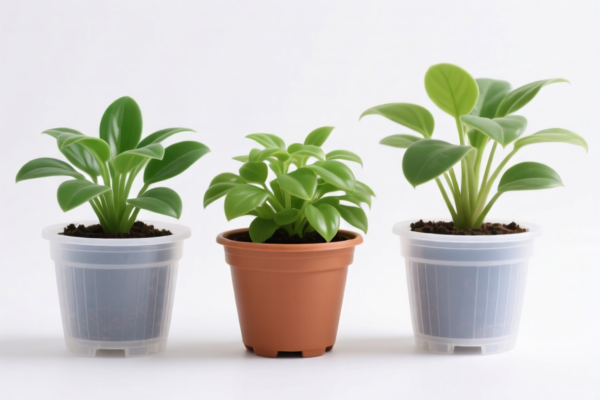

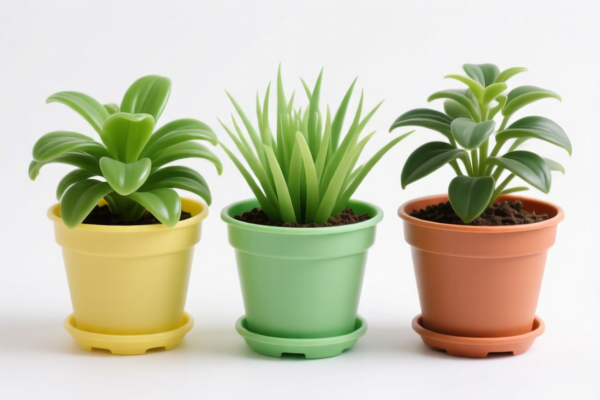
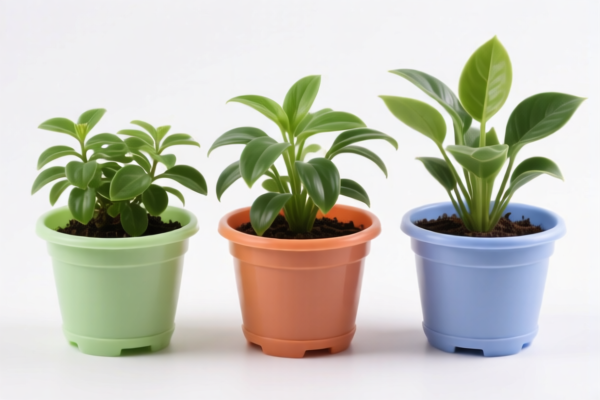
AI Analysis
🌿 Plastic Planters (Decorative & Household Use)
🌐 HS Code Reference & Customs Clearance Guide | 2026 Latest Tariff Analysis | Professional Entry Strategy
📌 I. Product Definition & Classification: Understanding "Plastic Planters"
Plastic planters are versatile household and decorative items made primarily from polymer materials. In international trade, their classification depends heavily on specific design, primary function, and completeness (e.g., with/without drainage holes, integrated saucers, or decorative elements).
Generally, they fall into two main categories: 1. Household Articles of Plastics: Functional items like standard flower pots, often with drainage features. 2. Decorative Plastic Articles: Items where aesthetic value exceeds functional utility, or those classified as artificial flora accessories.
⚠️ Key Distinction Point:
- If the item is a functional pot for holding soil and plants → Usually 3924 or 3926.
- If the item is purely decorative (e.g., artificial flower vase, ornamental holder) → Often 3926.
- If it is specifically a tray/mat under the pot → 3924.90.
📦 II. HS Code Classification Details (2026 Latest Tariff Authority)
Based on the provided data, here are the relevant HS Codes for Plastic Planters and related items:
| HS Code | Product Description | Key Features & Usage | Total Tax Rate (China to US) |
|---|---|---|---|
3924.90.56.50 |
Plastic Planter Saucers/Pads | Material: Plastic. Use: Household items & plastic products. Specifically refers to trays, mats, or pads placed under planters. | 20.9% |
3926.40.00.90 |
Plastic Decorative Articles | Material: Plastic. Use: Decorative products. Includes ornamental planters where decoration is the primary purpose. | 15.3% |
3926.40.00.10 |
Plastic Decorative Products | Material: Plastic. Use: Decorative category. Similar to above, often used for general ornamental plastic goods. | 15.3% |
6702.10.40.00 |
Plastic Artificial Flowers | Material: Plastic. Form: Flowers. Note: Not a planter itself, but often sold in bundles. Must not be confused with the pot. | 13.4% |
6702.10.20.00 |
Plastic Artificial Flowers | Material: Plastic. Item: Artificial flowers. Note: Same as above, different subheading for specific flower types. | 18.4% |
🔍 Important Reminder:
- A plain, functional plastic flower pot is most commonly classified under 3924.90.56.50 if it includes a saucer/tray, or potentially 3926.90 (general plastics) if strictly a container without decorative emphasis.
- However, based strictly on the provided dataset,3924.90.56.50is the most direct match for "planter-related" household items (saucers/pads).
- Purely decorative ornamental pots fall under3926.40.
💰 III. 2026 Latest Tariff Rate Breakdown (Including Surcharges & Policy Add-ons)
✅ Applicable Country: United States (US)
✅ Origin: China (CN)
✅ Effective Time: Current as per 2026 tariff structure (Section 301 & IEEPA)
🎯 1. 3924.90.56.50 —— Plastic Planter Saucers / Household Plastic Items
| Item | Detail |
|---|---|
| Base Tariff | 3.4% |
| Section 301 Surcharge | 7.5% |
| Section 122 Tariff (USMCA/Retaliation) | 10.0% |
| Total Effective Tax Rate | 20.9% |
| Calculation Method | CIF Value × 20.9% |
| De Minimis Exemption | ❌ Not Applicable (Section 301 goods are excluded from de minimis relief) |
| Legal Basis Path | HTSUS:3924.90.56.50 → Section 301: 7.5% → Section 122: 10% |
📌 Explanation:
- The 3.4% is the standard Most Favored Nation (MFN) rate.
- The 7.5% is the Section 301 additional duty on Chinese plastic household goods.
- The 10% is the Section 122 duty, often applied to counter trade practices or as part of broader retaliatory measures.
- Total 20.9% is a significant cost factor for exporters.
🎯 2. 3926.40.00.90 / 3926.40.00.10 —— Plastic Decorative Articles
| Item | Detail |
|---|---|
| Base Tariff | 5.3% |
| Section 301 Surcharge | 0.0% (Note: Some decorative plastics may be exempt or lower in Section 301 lists; per data, it is 0%) |
| Section 122 Tariff | 10.0% |
| Total Effective Tax Rate | 15.3% |
| Calculation Method | CIF Value × 15.3% |
| De Minimis Exemption | ❌ Not Applicable (If subject to Section 122) |
| Legal Basis Path | HTSUS:3926.40.00.90 → Section 122: 10% |
📌 Explanation:
- Decorative plastic articles often have a higher base rate (5.3%) but benefit from 0% Section 301 surcharge in this specific dataset.
- However, they are still subject to the 10% Section 122 tariff, bringing the total to 15.3%.
- This is 5.6% cheaper than the functional planter/saucer category (3924.90.56.50).
🛠️ IV. Customs Clearance Practical Advice (Avoiding Pitfalls)
✅ 1. Documentation Checklist (Essential)
| Document | Required | Notes |
|---|---|---|
| ✅ Product Specifications | ✔️ | Clearly state material (e.g., PP, PE, ABS), dimensions, and whether it includes a saucer. |
| ✅ Product Photos | ✔️ | Must show the item clearly. If it’s a pot with a tray, label it as such. If decorative, show ornamental details. |
| ✅ Commercial Invoice | ✔️ | Description must match HS Code. Use terms like "Plastic Planter Saucer" or "Plastic Decorative Planter." |
| ✅ Packing List | ✔️ | Ensure quantity matches invoice. |
| ✅ Origin Certificate | ❌ (Usually not required for US) | US does not require COO for duty preference in this context, but helpful for record-keeping. |
| ✅ Third-Party Reports | ✔️ | If sold in EU/UK,需提供 RoHS/REACH. For US, FTC labeling (Made in China) is mandatory. |
✅ 2. Declaration Strategy (Key Tips)
🔥 “Describe Accurately, Classify Correctly, Avoid Confusion!”
| Scenario | Correct Declaration | Risk of Misclassification |
|---|---|---|
| Plain Pot with Saucer | 3924.90.56.50 (Plastic Planter Saucer) |
If declared as "Decorative," rate drops to 15.3%, but if inspected and found functional, back taxes + penalties. |
| Ornamental, Non-Functional Pot | 3926.40.00.90 |
Must prove it’s not for actual planting (e.g., no drainage holes, purely for display). |
| Artificial Flowers + Pot Bundle | Split Declaration: 6702.10.xxxx for flowers, 3924.90.56.50 or 3926.40.00.90 for pot |
Do not lump them together! Different HTS codes and tax rates. |
| Planters with Soil/Drainage | 3924.90.56.50 |
Soil content may require phytosanitary certificates. Ensure pot is clean. |
✅ 3. Special Cases
| Case | Handling Advice |
|---|---|
| Bundle Sales (Pot + Artificial Flower) | Declare Separately. Artificial flowers (6702.10) have different rates (13.4% or 18.4%) vs. Planters (15.3%-20.9%). Mixing them can cause customs delays. |
| Custom Printed Planters | Ensure artwork doesn’t infringe trademarks. Provide IP authorization if needed. |
| Large Industrial Planters | May fall under different chapters (e.g., 3926.90). Confirm with broker. |
🌍 V. Global Market Comparison (2026 Latest)
| Country/Region | Recommended HS Code | Estimated Duty (China Origin) | Key Certification | Notes |
|---|---|---|---|---|
| 🇺🇸 USA | 3924.90.56.50 or 3926.40.00.90 |
15.3% - 20.9% | FTC Labeling (Made in China) | High Section 122/301 duties. |
| 🇨🇳 China | 3924.90.56.50 or 3926.40.00.90 |
5% - 7% (Import Duty) | CCC (if applicable) | Lower base rates, no Section 301/122. |
| 🇪🇺 EU | 3924.90 or 3926.40 |
0% - 6.5% | REACH, RoHS | No Section 301/122. CE marking not required for non-electronic plastics. |
| 🇬🇧 UK | 3924.90 or 3926.40 |
0% - 6.5% | UKCA (if applicable) | Post-Brexit rules apply. |
📌 Conclusion:
- USA is the most expensive market due to Section 301 and Section 122 tariffs.
- Decorative Planters (3926.40) are cheaper to import into the US than Functional Planters/Saucers (3924.90) due to 0% Section 301 surcharge.
- Diversify Sourcing: If possible, consider manufacturing in Vietnam, Thailand, or Mexico to avoid Section 301/122 duties (verify country-specific rules).
📌 VI. Common Mistakes & Pitfalls (Lessons Learned)
❌ Mistake 1: Declaring a functional planter with drainage as "Decorative" to get 15.3% instead of 20.9%
👉 Consequence: Customs inspection reveals drainage holes → Rejected, back taxes, and penalties.
❌ Mistake 2: Lumping artificial flowers and planters into one HS Code
👉 Consequence: Mixed rates (13.4%/18.4% vs 15.3%/20.9%) → Audit risk, delays, and potential misdeclaration fines.
❌ Mistake 3: Ignoring Section 122 Tariff
👉 Consequence: All plastic planters/decorative items are subject to 10% Section 122 duty. Failing to account for this affects pricing strategy.
❌ Mistake 4: Poor Product Description on Invoice
👉 Consequence: "Plastic Item" is too vague. Use specific terms: "Polypropylene Planter Saucer" or "Decorative Plastic Flower Vase."
✅ Best Practice:
"Plastic Planter Saucer, PP Material, Black, 10 Inch Diameter, With Drainage Holes, Made in China"
🎯 VII. Conclusion: Precision Classification, Cost Efficiency
🎯 Remember the Key Rule:
🔹 Functional Pots/Saucers →
3924.90.56.50→ 20.9% (Base 3.4% + 301 7.5% + 122 10%)
🔹 Decorative Planters →3926.40.00.90→ 15.3% (Base 5.3% + 301 0% + 122 10%)
🔹 Artificial Flowers →6702.10.40.00→ 13.4% OR6702.10.20.00→ 18.4%🔹 "Classify by Function, Declare by Detail, Split Bundles, Save on Duties!"
🔹 "Section 122 applies to all, Section 301 varies. Know the difference."
📌 Pro Tip:
If your plastic planters are exported to Vietnam, Thailand, or Mexico, verify if they can be re-exported to the US under USMCA (for Mexico) or Generalized System of Preferences (GSP) (if applicable). However, note that Section 301 and 122 duties often apply regardless of transshipment if the substantial transformation test is not met.
📣 Immediate Action:
📞 Consult a licensed customs broker to pre-classify your specific planters.
📸 Provide clear photos of drainage holes, saucers, and decorative elements.
🚀 Optimize packaging to declare functional vs. decorative items separately if sold as kits.
✨ Professional Customs Clearance Starts with Accurate Classification!
💼 Your Profit Margin Depends on Precise Tariff Calculation!
Customer Reviews
About HS Code Classification
The Harmonized System (HS) is an internationally standardized nomenclature developed by the World Customs Organization (WCO) to classify traded products. Over 200 countries use the HS system as the basis for customs tariffs, trade statistics, and import/export regulations.
Each HS code follows a hierarchical structure:
- Chapter (2 digits) — Broad category of goods (e.g., Chapter 84: Machinery and Mechanical Appliances)
- Heading (4 digits) — More specific grouping within the chapter
- Subheading (6 digits) — Internationally standardized breakdown, used by all WCO member countries
- National subdivisions (8-10 digits) — Country-specific extensions for further classification, such as US HTSUS 10-digit codes
Correct HS code classification is essential for smooth customs clearance, accurate duty payment, and compliance with trade regulations. Misclassification can lead to customs delays, overpayment of duties, or penalties.
When importing from CN to US, the applicable tariff rates may include:
- Most-Favored-Nation (MFN) rate — The standard duty rate applied to WTO members
- General rate — Applied to countries without trade agreements
- Trade remedy duties — Additional tariffs such as Section 301 (anti-dumping), Section 232 (national security), or countervailing duties
The information provided on this page is for reference purposes only. For official classification, please consult with your local customs authority or a licensed customs broker.