Plastic Pneumatic Hose
CN → US| HS Code | Tariff Rate | Origin | Destination | Doc |
|---|---|---|---|---|
| 3917320050 | 38.1% | CN | US | Official Doc |
| 3917390050 | 38.1% | CN | US | Official Doc |
| 3917290090 | 38.1% | CN | US | Official Doc |
| 3926909987 | 22.8% | CN | US | Official Doc |
| 3917210000 | 38.1% | CN | US | Official Doc |
Product Images
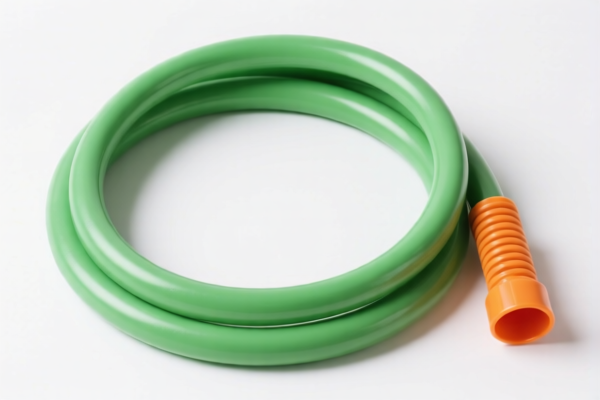
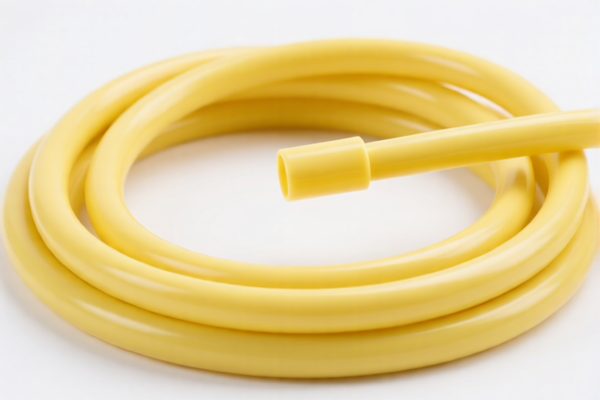

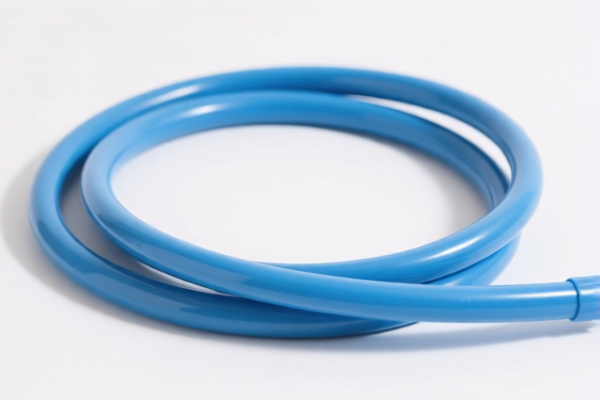
AI Analysis
💨 Plastic Pneumatic Hose (Pneumatic Tubing)
🌐 HS Code Reference & Clearance Guide | 2026 Latest Tariff Rules | Professional Customs Strategy
📌 I. Product Definition & Classification: Are You Using the Right "Tube"?
Plastic pneumatic hoses are critical components in industrial automation, manufacturing, and HVAC systems. In international trade, they are classified under Chapter 39 (Plastics and Articles Thereof). However, the specific HS Code depends heavily on the material composition and hardness/shape of the tube.
⚠️ Key Distinction Point:
- If the tube is made of Polyethylene (PE) or Polypropylene (PP) → Often falls under 3917.2x or 3917.21/29.
- If the tube is made of Other Plastics (PVC, PU, Nylon, etc.) → Often falls under 3917.32, 3917.39, or even the residual code 3926.90.
- Hardness Matters: Rigid pipes often fall under different sub-headings than flexible hoses.
📦 II. HS Code Classification Matrix (2026 Latest Tariff Authority)
| HS Code | Product Description | Applicable Scenario | Material/Shape Logic |
|---|---|---|---|
3917.32.00.50 |
Tubes, pipes & hoses of plastics, with one or more laminations with metal | Plastic pneumatic tubes, laminated with metal | Metal-plastic composite tubes |
3917.39.00.50 |
Tubes, pipes & hoses of plastics, not elsewhere specified or included | General plastic pneumatic tubes (non-metal laminated) | Standard plastic tubes without metal lamination |
3917.29.00.90 |
Other tubes, pipes & hoses of plastics, of polyethylene | Plastic tubes, unspecified length, PE material | Polyethylene-based tubing |
3926.90.99.87 |
Other articles of plastics and articles of other materials of heading 3901 to 3914 | Residual category for plastic tubes fitting general article definition | Hard plastic tubes or residual classification |
3917.21.00.00 |
Tubes, pipes & hoses of plastics, of polyethylene, rigid | Rigid polyethylene pipes | Rigid PE pipes |
🔍 Critical Reminder:
- Most common pneumatic hoses (PVC, PU, Nylon) typically fall under 3917.39.00.50 or 3917.32.00.50 if laminated.
- Polyethylene (PE) specific tubes go to 3917.29.00.90 or 3917.21.00.00.
- Misclassification Risk: Declaring a general plastic tube as "Residual" (3926.90) may trigger scrutiny if it clearly fits a more specific "tube" heading (3917).
💰 III. 2026 Latest Tariff Rate Breakdown (Including Surtaxes & Policy Add-ons)
✅ Applicable Country: United States (US)
✅ Country of Origin: China (CN)
✅ Effective Date: From November 10, 2025 (and subsequent imports)
🎯 1. 3917.32.00.50 & 3917.39.00.50 & 3917.29.00.90 & 3917.21.00.00
These codes share the same tariff structure due to similar policy classifications for plastic tubes/pipes.
| Item | Content |
|---|---|
| Base Tariff | 3.1% (ad valorem) |
| Section 301 Surcharge | +25.0% (Additional duty under USITC Footnote) |
| Section 122 Tariff | +10.0% (Specific duty clause for certain industrial goods) |
| Total Tariff Rate | 38.1% |
| Tax Calculation | CIF Value × 38.1% |
| De Minimis Eligibility | ❌ Not Eligible (deny_de_minimis) |
| Legal Path | Base: 3.1% → 301: 25.0% → 122: 10.0% |
📌 Explanation:
- The 3.1% is the standard Most Favored Nation (MFN) rate for plastic tubes.
- The 25.0% is the Section 301 tariff imposed on Chinese goods to address trade imbalances.
- The 10.0% is the Section 122 tariff (often related to national security or specific industrial protection measures).
- Total Cost: Importers must budget for a 38.1% tax burden, which is extremely high for low-margin goods like pneumatic tubing.
🎯 2. 3926.90.99.87 (Residual Plastic Articles)
This code has a different, lower tax structure.
| Item | Content |
|---|---|
| Base Tariff | 5.3% (ad valorem) |
| Section 301 Surcharge | +7.5% (Reduced additional duty) |
| Section 122 Tariff | +10.0% |
| Total Tariff Rate | 22.8% |
| Tax Calculation | CIF Value × 22.8% |
| De Minimis Eligibility | ❌ Not Eligible (deny_de_minimis) |
| Legal Path | Base: 5.3% → 301: 7.5% → 122: 10.0% |
📌 Note:
- This rate is significantly lower (22.8% vs 38.1%).
- Strategic Implication: If the product can technically be classified under this residual code (e.g., if it’s a specific type of plastic article not strictly defined as a "tube" in other sub-headings), it could save 15.3% in duties.
- Caution: Customs may challenge this classification if the item is clearly a "tube" under Heading 3917. Only use if the product characteristics (e.g., rigid shape, specific material) justify the "other article" classification.
🛠️ IV. Customs Clearance Practical Advice (Avoid Pitfalls)
✅ 1. Documentation Checklist (Mandatory)
| Document | Required | Notes |
|---|---|---|
| ✅ Product Specification Sheet | ✔️ | Must specify material (PVC, PU, PE, Nylon), inner/outer diameter, wall thickness, pressure rating. |
| ✅ Material Safety Data Sheet (MSDS) | ✔️ | Especially for chemical resistance claims. |
| ✅ Product Photos | ✔️ | Clear images of the hose, ends, and any markings. |
| ✅ Commercial Invoice | ✔️ | Describe as "Plastic Pneumatic Tubing/Hose" – do not use vague terms like "Plastic Part". |
| ✅ Packing List | ✔️ | Show quantity and dimensions. |
| ✅ Certificate of Origin (CO) | ✔️ | Essential for proving Chinese origin (and thus applicability of surtaxes). |
✅ 2. Classification Strategy & Tips
🔥 "Material First, Shape Second, Specific Over General!"
| Scenario | Correct Declaration | Risk of Error |
|---|---|---|
| Standard Flexible Plastic Hose (PVC/PU) | 3917.39.00.50 (38.1%) |
Misclassifying as 3926 could lead to audit/back taxes. |
| Polyethylene (PE) Tube | 3917.29.00.90 or 3917.21.00.00 (38.1%) |
Must prove material is PE via test reports. |
| Metal-Laminated Hose | 3917.32.00.50 (38.1%) |
Clearly state "Laminated with Metal". |
| Rigid Plastic Pipe (Non-hose) | Consider 3926.90.99.87 (22.8%) |
Only if it doesn't fit "tubes/pipes/hoses" definitions perfectly. High risk. |
✅ 3. Special Case Handling
| Case | Advice |
|---|---|
| OEM Custom Hoses | Provide customer drawings and material specs to avoid ambiguity. |
| Food-Grade Pneumatic Tubing | Add "Food Grade" to description; may require FDA compliance docs. |
| High-Pressure Industrial Tubes | Ensure pressure rating is documented; misclassification as "low-pressure" is a common error. |
🌍 V. Global Market Comparison (2026)
| Country/Region | Recommended HS Code | Tariff (China Origin) | Key Requirements |
|---|---|---|---|
| 🇺🇸 USA | 3917.39.00.50 |
38.1% (High Risk) | Strict 301/122 surtax application. No de minimis. |
| 🇨🇳 China | 3917.39.00.50 |
5.3% (Import) | No surtaxes. CCC certification if applicable. |
| 🇪🇺 EU | 3917.39.00 |
0% - 4% | CE marking, REACH compliance. No Section 301. |
| 🇬🇧 UK | 3917.39.00 |
0% - 4% | UKCA marking, Post-Brexit rules. |
| 🇨🇦 Canada | 3917.39.00 |
0% (Most Cases) | CUSMA benefits if manufactured in North America. |
📌 Conclusion:
- USA is the most expensive market for Chinese plastic pneumatic hoses due to the 38.1% combined tariff.
- Diversification Strategy: Consider sourcing from Vietnam, Mexico, or Thailand to mitigate US tariffs (check rules of origin carefully).
- Alternative Classification: If the product is rigid and not clearly a "tube," explore3926.90.99.87(22.8%) with legal counsel, but be prepared for audits.
📌 VI. Common Errors & Pitfalls (Blood & Tears)
❌ Error 1: Declaring "Plastic Hose" without specifying material.
👉 Consequence: Customs may assign the highest default rate or request additional info, causing delays.
👉 Fix: Always state "PVC Pneumatic Hose" or "PU Air Tube".
❌ Error 2: Ignoring the Section 122 (10%) tariff.
👉 Consequence: Underpayment of duties by 10% → Back taxes + Penalties.
👉 Fix: Include 10% in all cost models for US imports from China.
❌ Error 3: Using 3926.90.99.87 (22.8%) for standard flexible hoses to save money.
👉 Consequence: High audit risk. If Customs determines it’s a "tube," they will reclassify to 38.1% and issue a Notice of Debt.
👉 Fix: Only use residual codes if the product clearly does not fit Heading 3917 definitions.
✅ Correct Declaration Example:
"Polyurethane (PU) Pneumatic Tubing, Flexible, ID 6mm, OD 10mm, Blue Color, for Industrial Air Compressors, Made in China"
🎯 VII. Conclusion: Precision is Profit!
🎯 Remember These Key Points:
🔹 "38.1% is the standard rate for Chinese plastic pneumatic hoses entering the US."
🔹 "Material matters: PE, PVC, and PU may fall under different 3917 sub-headings, but the surtax is the same."
🔹 "De Minimis does NOT apply. Every single tube is taxed."
🔹 "Consider alternative origins (Vietnam/Mexico) to save ~15-38% in duties."
📌 Pro Tip:
If your plastic pneumatic hose is rigid and not used for fluid/gas transport in a traditional "hose" sense, consult a customs broker about 3926.90.99.87 (22.8%). However, for flexible air lines, stick to 3917.39.00.50 to ensure compliance.
📣 Immediate Action:
📞 Engage a Licensed Customs Broker
📄 Prepare Detailed Material Specs
🌏 Evaluate Supply Chain Relocation to reduce tariff exposure.
✨ Professional Clearance Starts with Accurate Classification!
💼 Every Percent of Tax Saved is Pure Profit!
Customer Reviews
About HS Code Classification
The Harmonized System (HS) is an internationally standardized nomenclature developed by the World Customs Organization (WCO) to classify traded products. Over 200 countries use the HS system as the basis for customs tariffs, trade statistics, and import/export regulations.
Each HS code follows a hierarchical structure:
- Chapter (2 digits) — Broad category of goods (e.g., Chapter 84: Machinery and Mechanical Appliances)
- Heading (4 digits) — More specific grouping within the chapter
- Subheading (6 digits) — Internationally standardized breakdown, used by all WCO member countries
- National subdivisions (8-10 digits) — Country-specific extensions for further classification, such as US HTSUS 10-digit codes
Correct HS code classification is essential for smooth customs clearance, accurate duty payment, and compliance with trade regulations. Misclassification can lead to customs delays, overpayment of duties, or penalties.
When importing from CN to US, the applicable tariff rates may include:
- Most-Favored-Nation (MFN) rate — The standard duty rate applied to WTO members
- General rate — Applied to countries without trade agreements
- Trade remedy duties — Additional tariffs such as Section 301 (anti-dumping), Section 232 (national security), or countervailing duties
The information provided on this page is for reference purposes only. For official classification, please consult with your local customs authority or a licensed customs broker.