Plastic Printed Curtain
CN → US| HS Code | Tariff Rate | Origin | Destination | Doc |
|---|---|---|---|---|
| 5903102090 | 35.0% | CN | US | Official Doc |
| 3920991000 | 41.0% | CN | US | Official Doc |
| 3926909989 | 22.8% | CN | US | Official Doc |
| 3920995000 | 40.8% | CN | US | Official Doc |
| 3925200020 | 22.8% | CN | US | Official Doc |
Product Images
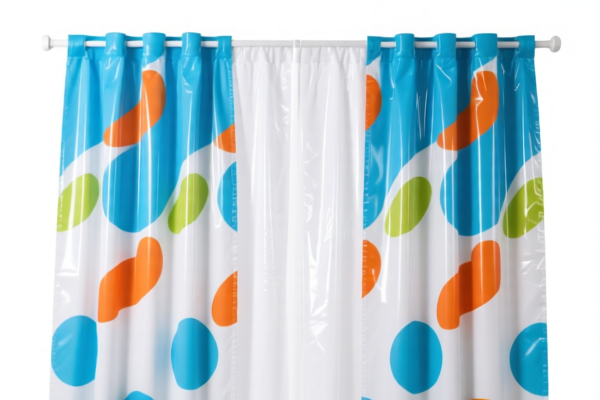
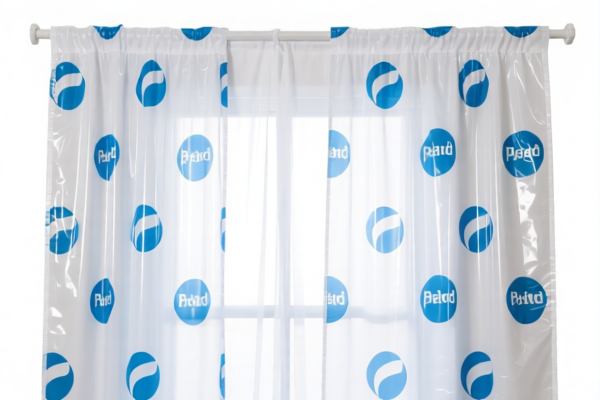
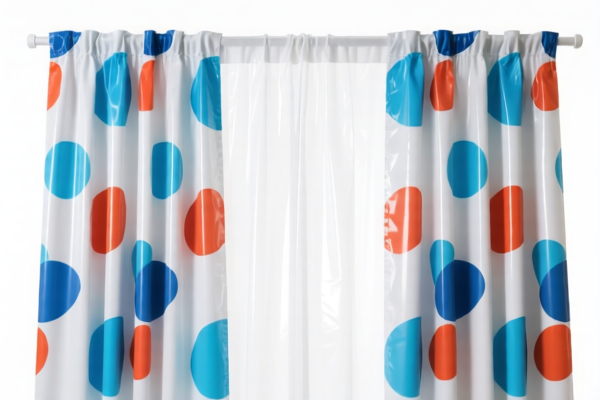
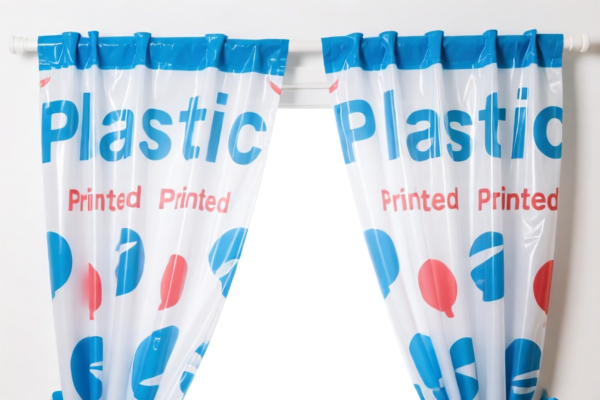
AI Analysis
🪟 Plastic Printed Curtains (Blinds/Shades)
🌐 HS Code Reference & Customs Clearance Guide | 2026 Latest Tariff Analysis | Professional-Level Strategy
📌 I. Product Definition & Classification: Do You Really Understand "Plastic Printed Curtains"?
Plastic printed curtains (often referred to as blinds or shades) are window coverings made primarily of plastic materials. In international trade, they are not a single monolithic product but are classified based on their structural form and material composition. The classification determines whether they are treated as raw textile-like materials, finished window components, or general plastic articles.
⚠️ Key Distinction Points:
- If the product is a finished curtain with slats/blinds structure intended for hanging → Likely 3926.90 or 5903.10.
- If the product is rigid plastic window frames/shutters integrated with the curtain mechanism → Likely 3925.20.
- If the product is sold as rolls of plastic sheeting/film intended to be fabricated into blinds later → Likely 3920.99.
📦 II. HS Code Classification Details (2026 Latest Tariff Authority Comparison)
| HS Code | Product Description | Application Scenario | Structural Nature |
|---|---|---|---|
5903.10.20.90 |
Plastic curtains/coatings on textile base, plastic-impregnated | Soft plastic blinds, fabric-like plastic shades | ✅ Textile-like/Impregnated Fabric |
3920.99.10.00 |
Other plates, sheets, film, foil, and strip (Composite/Laminated) | Plastic blind slats sold as continuous strips or laminated sheets | ✅ Semi-finished/Laminated Sheet |
3926.90.99.89 |
Other articles of plastics (Specific end-use item) | Finished plastic blind systems, individual slats, or assembled shades | ✅ Finished Plastic Article |
3920.99.50.00 |
Other plates, sheets, film, foil, and strip (Other plastic articles) | Pure plastic plastic films/sheets for curtain manufacturing | ✅ Semi-finished Plastic Sheet |
3925.20.00.20 |
Plastic windows and shutters, and parts thereof | Rigid plastic window shutters or integrated curtain/window frames | ✅ Construction/Window Component |
🔍 Key Reminder:
- "Finished" vs. "Semi-finished": If the item is already cut, shaped, and ready for installation (e.g., individual slats or assembled blinds), it leans toward 3926. If it is a roll or large sheet to be processed, it leans toward 3920.
- "Textile-like" vs. "Pure Plastic": If the plastic is coated/impregnated onto a backing to mimic fabric curtains, 5903 may apply. Pure rigid or semi-rigid plastic structures fall under 3920 or 3926.
💰 III. 2026 Latest Tariff Rate Breakdown (Including Surtaxes & Policy Surcharges)
✅ Applicable Country: United States (US)
✅ Origin: China (CN)
✅ Effective Date: November 10, 2025 (and subsequent imports)
🎯 1. 5903.10.20.90 —— Plastic Curtains (Textile-like/Impregnated)
| Item | Details |
|---|---|
| Base Tariff | 0.0% (ad valorem) |
| Section 301 Surtax | +25.0% (USITC Footnote 9903.88.01 equivalent logic) |
| IEEPA Surtax | +10.0% (Targeting China/HK products, effective Nov 10, 2025) |
| Total Rate | 35.0% |
| Tax Calculation | CIF Value × 35% |
| De Minimis Eligibility | ❌ Not Eligible (deny_de_minimis) |
| Legal Path | Base: 0% → Section 301: +25% → IEEPA: +10% → Total: 35% |
📌 Explanation:
- Although the base rate is 0%, the 25% Section 301 tariff is the primary burden.
- The 10% IEEPA tariff is a new layer for Chinese goods, bringing the total to 35%.
- This code is suitable if the curtain resembles fabric (e.g., vinyl-coated polyester) rather than rigid plastic slats.
🎯 2. 3920.99.10.00 —— Plastic Sheets/Films (Composite/Laminated)
| Item | Details |
|---|---|
| Base Tariff | 6.0% |
| Section 301 Surtax | +25.0% |
| IEEPA Surtax | +10.0% |
| Total Rate | 41.0% |
| Tax Calculation | CIF Value × 41% |
| De Minimis Eligibility | ❌ Not Eligible (deny_de_minimis) |
| Legal Path | Base: 6% → Section 301: +25% → IEEPA: +10% → Total: 41% |
📌 Note:
- This code applies if the product is classified as a laminated plastic sheet or composite material before final assembly into blinds.
- Higher base rate (6%) makes this the most expensive option among the choices if the product is indeed a finished item misclassified here.
🎯 3. 3926.90.99.89 —— Other Plastic Articles (Finished Blinds/Components)
| Item | Details |
|---|---|
| Base Tariff | 5.3% |
| Section 301 Surtax | +7.5% (Note: Specific footnote application for general plastics) |
| IEEPA Surtax | +10.0% |
| Total Rate | 22.8% |
| Tax Calculation | CIF Value × 22.8% |
| De Minimis Eligibility | ❌ Not Eligible (deny_de_minimis) |
| Legal Path | Base: 5.3% → Section 301: +7.5% → IEEPA: +10% → Total: 22.8% |
📌 Critical Insight:
- This is the most cost-effective option for finished plastic blinds or individual slats.
- The Section 301 rate is lower (7.5% vs 25%) because general plastic articles often fall under different subheadings with reduced retaliation rates compared to specific polymer sheets or textiles.
- Recommendation: If your product is a finished blind system, strive to classify here.
🎯 4. 3920.99.50.00 —— Other Plastic Plates/Sheets
| Item | Details |
|---|---|
| Base Tariff | 5.8% |
| Section 301 Surtax | +25.0% |
| IEEPA Surtax | +10.0% |
| Total Rate | 40.8% |
| Tax Calculation | CIF Value × 40.8% |
| De Minimis Eligibility | ❌ Not Eligible (deny_de_minimis) |
| Legal Path | Base: 5.8% → Section 301: +25% → IEEPA: +10% → Total: 40.8% |
📌 Note:
- Similar to3920.99.10.00, this high rate applies to semi-finished plastic sheets.
- Only use this if you are importing raw plastic sheets to manufacture blinds domestically in the US.
🎯 5. 3925.20.00.20 —— Plastic Windows and Shutters
| Item | Details |
|---|---|
| Base Tariff | 5.3% |
| Section 301 Surtax | +7.5% |
| IEEPA Surtax | +10.0% |
| Total Rate | 22.8% |
| Tax Calculation | CIF Value × 22.8% |
| De Minimis Eligibility | ❌ Not Eligible (deny_de_minimis) |
| Legal Path | Base: 5.3% → Section 301: +7.5% → IEEPA: +10% → Total: 22.8% |
📌 Note:
- This code is for rigid plastic window shutters or integrated window/curtain units.
- If your "printed curtain" is actually a rigid shutter (e.g., PVC louvered shutters) installed in windows, this code offers the lowest total tax (22.8%).
- Do not use this for soft fabric-like curtains.
🛠️ IV. Customs Clearance Practical Advice (Field Pitfall Avoidance Guide)
✅ 1. Preparation Checklist (Non-negotiable)
| Document | Mandatory | Explanation |
|---|---|---|
| ✅ Product Specification Sheet | ✔️ | Must detail: Material (PVC/PE/Vinyl), Thickness, Form (Roll/Slats/Sheet), End-use. |
| ✅ High-Resolution Photos | ✔️ | Show the product in use (hung on window) vs. raw material state. Critical for distinguishing 3926 vs 3920. |
| ✅ Commercial Invoice | ✔️ | Clearly state "Plastic Blinds" or "Plastic Curtain" not just "Plastic Sheet". |
| ✅ Packing List | ✔️ | Detail if items are assembled or disassembled. |
| ✅ Material Certificate | ✔️ | Prove plastic composition to support 5903 (textile-like) vs 3920 (pure plastic). |
✅ 2. Declaration Strategy (Key Mantra)
🔥 "Finished vs. Raw, Form Defines Rate!"
| Scenario | Recommended HS Code | Common Mistake | Consequence |
|---|---|---|---|
| Finished Plastic Blinds (Slats assembled) | 3926.90.99.89 |
Classify as 3920 (Sheets) |
Pay 41% instead of 22.8% |
| Rigid Plastic Shutters | 3925.20.00.20 |
Classify as 3926 |
Minor diff, but 3925 is more specific for windows |
| Vinyl-Coated Fabric Curtains | 5903.10.20.90 |
Classify as 3926 |
Pay 35% instead of 22.8% (if treated as plastic sheet) OR 35% vs 22.8% |
| Raw Plastic Sheets for Cutting | 3920.99.10.00 |
Classify as 3926 (Finished) |
Penalty for misclassification |
✅ 3. Special Case Handling
| Situation | Handling Suggestion |
|---|---|
| "Printed" Design | Does not change HS Code. "Printed" is a finishing process. Focus on structure (sheet vs. finished item). |
| Mixed Materials (e.g., Plastic slats + Metal cords) | If metal is minor, still 3926. If metal is structural, may shift to 8302 (Metal fittings), but usually 3926 prevails for blinds. |
| OEM Custom Sizes | Provide customer order + design specs. Avoid vague terms like "Curtain Material". |
| Samples | Even samples are subject to these taxes if value exceeds de minimis thresholds (which are denied here). |
🌍 V. Global Main Market Customs Comparison (2026 Latest)
| Country/Region | Recommended HS Code | Tariff (China Origin) | Certification Req. | Notes |
|---|---|---|---|---|
| 🇺🇸 USA | 3926.90.99.89 |
22.8% (Best for finished) | None specific | High scrutiny on Section 301 |
| 🇨🇳 China | 3926.90.99.89 |
5-6% | CCC (if applicable) | Low import tax |
| 🇪🇺 EU | 3926.90.99 |
4-6.5% | REACH/ROHS | No Section 301 |
| 🇬🇧 UK | 3926.90.99 |
4-6.5% | UKCA | Post-Brexit rules apply |
| 🇦🇺 AU | 3926.90.99 |
5% | SAA | No surtaxes |
📌 Conclusion:
- The USA imposes significant surcharges. Choosing the correct HS Code (3926or3925) over3920can save ~18% in duties.
- Finished goods (3926) generally have lower Section 301 rates than raw materials (3920).
📌 VI. Common Errors & Pitfall Guide (Lessons Learned)
❌ Error 1: Calling all plastic curtains "Blinds" and assuming one code.
👉 Result: If it's a rigid shutter, 3925 (22.8%) is correct. If it's soft vinyl, 5903 (35%) or 3926 (22.8%) depends on structure. Misclassification leads to back taxes + penalties.
❌ Error 2: Classifying finished blinds as "Plastic Sheets" (3920).
👉 Result: You pay 41% tax instead of 22.8%. Loss of ~18% profit margin!
❌ Error 3: Ignoring the "Printed" aspect.
👉 Result: "Printed" does not lower tariffs. It may increase inspection risk for IP violations. Ensure designs are non-infringing.
❌ Error 4: Assuming De Minimis (Section 321) applies.
👉 Result: All listed HS codes have deny_de_minimis. Even small packages are taxed.
✅ Correct Approach:
"Plastic Window Blinds, PVC Material, Horizontal Slats, Assembled, Model X, Ready for Hanging"
🎯 VII. Conclusion: Professional Declaration, Save Cost, Smooth Clearance!
🎯 Remember the Mantra:
🔹 "Finished Blinds go to 3926 (22.8%). Raw Sheets go to 3920 (41%). Shutters go to 3925 (22.8%). Soft Vinyl goes to 5903 (35%)."
🔹 "HS Code Choice Saves 18% Tax. Wrong Code Costs You Everything!"
📌 Pro Tip:
If your supplier can provide pre-cut slats that are clearly "finished articles" rather than "rolls of sheet," argue for 3926.90.99.89. This is the sweet spot for plastic curtains/blinds.
📣 Immediate Action:
📞 Contact your customs broker with photos and material specs.
📋 Request an Advance Ruling (Ruling Letter) if volume is high.
🚀 Clarify "Finished" vs. "Raw" in your commercial invoice.
✨ Professional Clearance Starts with Accurate Classification!
💼 Every Percentage Point in Tariff Is Your Bottom Line!
Customer Reviews
About HS Code Classification
The Harmonized System (HS) is an internationally standardized nomenclature developed by the World Customs Organization (WCO) to classify traded products. Over 200 countries use the HS system as the basis for customs tariffs, trade statistics, and import/export regulations.
Each HS code follows a hierarchical structure:
- Chapter (2 digits) — Broad category of goods (e.g., Chapter 84: Machinery and Mechanical Appliances)
- Heading (4 digits) — More specific grouping within the chapter
- Subheading (6 digits) — Internationally standardized breakdown, used by all WCO member countries
- National subdivisions (8-10 digits) — Country-specific extensions for further classification, such as US HTSUS 10-digit codes
Correct HS code classification is essential for smooth customs clearance, accurate duty payment, and compliance with trade regulations. Misclassification can lead to customs delays, overpayment of duties, or penalties.
When importing from CN to US, the applicable tariff rates may include:
- Most-Favored-Nation (MFN) rate — The standard duty rate applied to WTO members
- General rate — Applied to countries without trade agreements
- Trade remedy duties — Additional tariffs such as Section 301 (anti-dumping), Section 232 (national security), or countervailing duties
The information provided on this page is for reference purposes only. For official classification, please consult with your local customs authority or a licensed customs broker.