Plastic Processing Auxiliary Compound
CN → US| HS Code | Tariff Rate | Origin | Destination | Doc |
|---|---|---|---|---|
| 3812201000 | 41.5% | CN | US | Official Doc |
| 3812101000 | 41.5% | CN | US | Official Doc |
| 3901909000 | 41.5% | CN | US | Official Doc |
| 3901905501 | 41.5% | CN | US | Official Doc |
| 2942003500 | 41.5% | CN | US | Official Doc |
Product Images
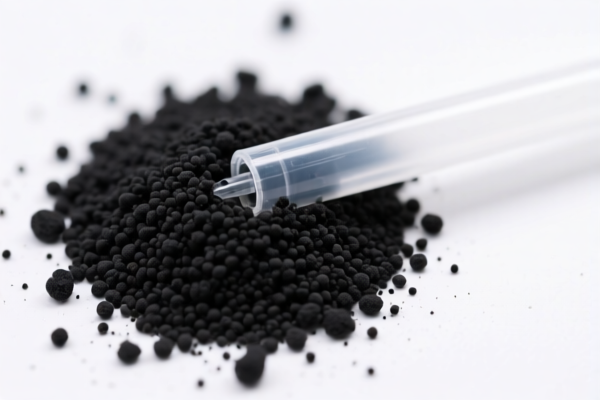
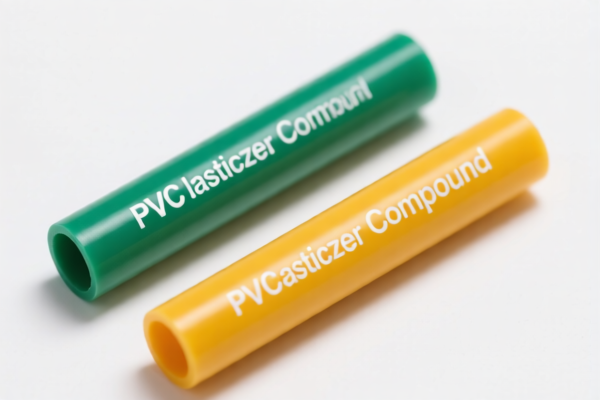
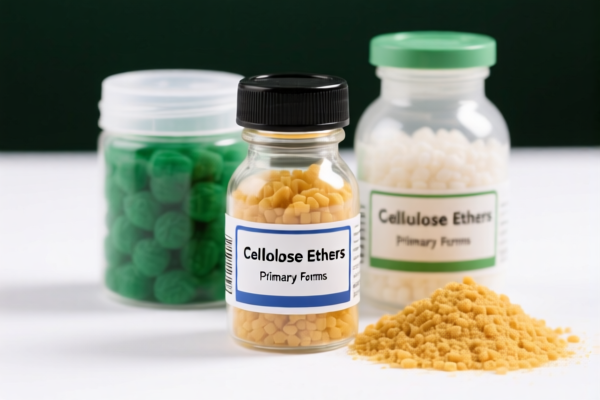

AI Analysis
🧪 Plastic Processing Auxiliary Compound (Plastic Additives & Stabilizers)
🌐 HS Code Reference & Customs Clearance Guide | 2026 Latest Tariff Analysis | Professional Clearance Strategy
📌 I. Product Definition & Classification: What Exactly is a "Plastic Processing Auxiliary Compound"?
Plastic Processing Auxiliary Compounds are chemical additives used to improve the processing properties, durability, or final appearance of plastic and rubber products. In international trade, these are not a single homogeneous group but are classified based on their chemical nature, base material (polymer vs. non-polymer), and primary function (plasticizing vs. stabilizing).
Key Distinction Points: * Plasticizers/Additives (HS 3812): Substances added to plastics/rubbers to increase flexibility, workability, or distensibility (e.g., composite plasticizers, stabilizers not based on polymers). * Polymer Stabilizers (HS 3901): If the stabilizer itself is a type of ethylene polymer or copolymer in primary forms. * Other Organic Compounds (HS 2942): Complex organic compounds that do not fit into specific chemical categories like esters or ethers, often used as specialized stabilizer blends.
⚠️ Critical Classification Rule:
- If the product is a mixture of chemicals (non-polymeric) designed to modify plastic properties → HS 3812.
- If the product is chemically an ethylene polymer/copolymer used as a stabilizer → HS 3901.
- If the product is a complex organic compound not classified elsewhere → HS 2942.
📦 II. HS Code Classification Details (2026 Latest Tariff Authority Comparison)
| HS Code | Product Description | Applicable Scenario | Key Characteristic |
|---|---|---|---|
3812.20.10.00 |
Plastic additives, matched with material/usage, often containing composite plasticizer components | General-purpose plastic softeners, lubricants, or stabilizer blends | Non-polymeric chemical mixture |
3812.10.10.00 |
Additives for plastic/rubber processing, chemical additives fitting composite plasticizer/stabilizer categories | Rubber processing aids, specific plastic stabilizers | Chemical additive, not a polymer |
3901.90.90.00 |
Plastic stabilizer compounds, material is polymer-related chemicals, fits "Other Ethylene Polymers" | Stabilizers that are actually ethylene polymers in primary form | Ethylene Polymer |
3901.90.55.01 |
Plastic stabilizer compounds, polymer category, fits "Ethylene Copolymers in Primary Forms" | Stabilizers made from ethylene copolymers | Ethylene Copolymer |
2942.00.35.00 |
Plastic stabilizer compounds, organic compound, composite剂 fits "Other Organic Compounds" | Specialized organic stabilizer blends not classified elsewhere | Complex Organic Compound |
🔍 Key Reminder:
- Do not classify polymer-based stabilizers as "Chemical Mixtures" (HS 3812) if they are technically ethylene polymers.
- The total tax rate of 41.5% applies to all the above HS codes for imports from China to the USA due to additional tariffs.
💰 III. 2026 Latest Tariff Rate Breakdown (Including Additional Taxes)
✅ Applicable Country: USA (US)
✅ Country of Origin: China (CN)
✅ Effective Date: 2025 Nov 10 onwards (including subsequent imports)
🎯 1. HS 3812.20.10.00 & 3812.10.10.00 — Plastic/Rubber Additives (Non-Polymeric)
| Item | Detail |
|---|---|
| Base Tariff Rate | 6.5% (Ad Valorem) |
| Section 301 Additional Tariff | +25.0% |
| Section 122 Tariff | +10.0% |
| Total Effective Rate | 41.5% |
| Tax Calculation | CIF Value × 41.5% |
| De Minimis Exemption | ❌ Not Eligible (deny_de_minimis) |
| Legal Basis Path | USITC:3812.20.10.00 → FOOTNOTE:301 → FOOTNOTE:122 |
📌 Explanation:
- The 6.5% is the standard Most Favored Nation (MFN) rate for chemical products.
- The 25% is the Section 301 tariff imposed on Chinese goods to address unfair trade practices.
- The 10% is an additional tariff (Section 122 or similar national security/trade balance measures) applied to specific chemical categories.
- Total 41.5% is extremely high, making cost optimization critical.
🎯 2. HS 3901.90.90.00 & 3901.90.55.01 — Polymer-Based Stabilizers (Ethylene Polymers)
| Item | Detail |
|---|---|
| Base Tariff Rate | 6.5% (Ad Valorem) |
| Section 301 Additional Tariff | +25.0% |
| Section 122 Tariff | +10.0% |
| Total Effective Rate | 41.5% |
| Tax Calculation | CIF Value × 41.5% |
| De Minimis Exemption | ❌ Not Eligible (deny_de_minimis) |
| Legal Basis Path | USITC:3901.90.90.00 → FOOTNOTE:301 → FOOTNOTE:122 |
📌 Explanation:
- Even though these are polymers (HS 39), they are still subject to the same 41.5% total tariff when originating from China.
- The base rate for ethylene polymers is often low, but the additional tariffs dominate the cost structure.
🎯 3. HS 2942.00.35.00 — Other Organic Compounds
| Item | Detail |
|---|---|
| Base Tariff Rate | 6.5% (Ad Valorem) |
| Section 301 Additional Tariff | +25.0% |
| Section 122 Tariff | +10.0% |
| Total Effective Rate | 41.5% |
| Tax Calculation | CIF Value × 41.5% |
| De Minimis Exemption | ❌ Not Eligible (deny_de_minimis) |
| Legal Basis Path | USITC:2942.00.35.00 → FOOTNOTE:301 → FOOTNOTE:122 |
📌 Explanation:
- "Other organic compounds" catch-all category.
- Same tariff structure as above. Misclassification here to avoid higher base rates is risky if the chemical structure doesn't strictly fit "Other."
🛠️ IV. Customs Clearance Practical Advice (Actionable Pitfall Avoidance)
✅ 1. Documentation Checklist (Mandatory)
| Document | Must Provide | Explanation |
|---|---|---|
| ✅ Product Specification Sheet | ✔️ | Must detail chemical composition, CAS numbers, and function (e.g., "Plasticizer," "Stabilizer"). |
| ✅ Technical Data Sheet (TDS) | ✔️ | Clarifies if the product is a polymer, copolymer, or simple mixture. Critical for HS 39 vs. HS 38 distinction. |
| ✅ Formula/Composition Breakdown | ✔️ | Percentage of each component. Needed to prove if it's an "Ethylene Copolymer" (HS 3901) or a "Mixture" (HS 3812). |
| ✅ Commercial Invoice | ✔️ | Must clearly state "Plastic Processing Auxiliary Compound" and correct HS Code. |
| ✅ Certificate of Origin (CO) | ✔️ | Proves Chinese origin to apply the correct 41.5% rate (and avoid penalties for misdeclaration). |
| ✅ Packaging List | ✔️ | Details net/gross weight, number of containers. |
✅ 2. Declaration Tips (Key Mnemonics)
🔥 "Chemical vs. Polymer, Name Matches Formula!"
| Scenario | Correct Declaration | Wrong Action |
|---|---|---|
| Standard Plasticizer Blend | HS 3812.20.10.00 |
Misdeclaring as "Polymer" → Risk of detention |
| Rubber Processing Aid | HS 3812.10.10.00 |
Generic "Chemical Additive" → Delayed inspection |
| Stabilizer is an Ethylene Polymer | HS 3901.90.90.00 |
Declaring as "Mixture" → Incorrect HS, potential fraud |
| Complex Organic Stabilizer | HS 2942.00.35.00 |
Declaring as "Plastic Part" → Wrong Chapter (39 vs 39/38/29) |
✅ 3. Special Circumstances Handling
| Situation | Handling Advice |
|---|---|
| Blended Products | If it contains both polymers and non-polymers, declare the principal component or the one defining the essential character. |
| Sample Imports | Even samples are subject to the 41.5% tariff. Do not use "Sample" as an excuse for exemption. |
| OEM/Contract Manufacturing | Provide the client’s formula or specifications to support the HS Code classification. |
| Re-export from Third Country | If shipped from Vietnam/Malaysia, ensure no substantial transformation occurred in China. If yes, origin remains China. |
🌍 V. Global Market Clearance Comparison (2026 Latest)
| Country/Region | Recommended HS Code | Tariff (China Origin) | Certification Required | Notes |
|---|---|---|---|---|
| 🇺🇸 USA | 3812.20.10.00 etc. |
41.5% | No specific, but TDS required | High tariff due to Section 301 & 122 |
| 🇨🇳 China | 3812.20.10.00 |
5-6% | None | Low base rate, no additional tariffs |
| 🇪🇺 EU | 3812.20.00 |
0-4% | REACH Registration | REACH compliance is mandatory for chemicals |
| 🇬🇧 UK | 3812.20.00 |
0-4% | UK REACH | Post-Brexit, UK REACH required |
| 🇯🇵 Japan | 3812.20.00 |
0-6% | PRTR Act | Report if above threshold |
📌 Conclusion:
- The USA is the most expensive market for these goods due to the 41.5% combined tariff.
- EU and Japan are more tariff-friendly but have strict chemical regulatory regimes (REACH, PRTR).
- Ensure chemical safety data is ready for EU/UK entry to avoid clearance delays.
📌 VI. Common Mistakes & Pitfall Avoidance (Lessons Learned)
❌ Mistake 1: Declaring a polymer-based stabilizer as a simple chemical mixture (HS 3812) to confuse customs.
👉 Consequence: Customs audit finds polymer content → Penalty for misdeclaration + higher back-tariffs if base rates differ significantly.
❌ Mistake 2: Ignoring the 10% Section 122 Tariff.
👉 Consequence: Underpayment of duties by 10% → Audit, seizure, and potential blacklisting.
❌ Mistake 3: Using vague descriptions like "Plastic Additive" without chemical details.
👉 Consequence: Customs requests additional info → Delayed clearance → Demurrage charges.
❌ Mistake 4: Assuming "De Minimis" applies.
👉 Consequence: 41.5% tax applies to ALL values, even low-value shipments. No exemption.
✅ Correct Practice:
"Ethylene Copolymer Stabilizer for PVC Processing, Non-Toxic, CAS No. XXX, HS Code 3901.90.55.01"
🎯 VII. Conclusion: Professional Classification, Cost Efficiency, Risk Reduction
🎯 Key Takeaways:
🔹 "HS Code Determines Tax: 41.5% is the Wall for Chinese Origin."
🔹 "Chemical vs. Polymer: Correct Classification Avoids Penalties."
🔹 "Document Everything: TDS and Formulas are Your Best Defense."
📌 Pro Tip:
If you are importing high volumes, consider:
1. Advance Ruling: Apply for a binding tariff information (BTI) or advance ruling from US Customs to confirm HS Code.
2. Supply Chain Diversification: Evaluate sourcing from non-China origins (e.g., Southeast Asia) to mitigate the 41.5% tariff impact.
3. REACH Compliance: If exporting to EU, ensure all substances are registered under REACH to avoid regulatory blocks.
📣 Immediate Action:
📞 Consult a Licensed Customs Broker + Provide Full Chemical Composition + Apply for Pre-Classification
🚀 Navigate Tariffs with Precision, Ensure Smooth Global Trade!
✨ Professional Customs Clearance Starts with Accurate Classification!
💼 Your Bottom Line Depends on the Right HS Code!
Customer Reviews
About HS Code Classification
The Harmonized System (HS) is an internationally standardized nomenclature developed by the World Customs Organization (WCO) to classify traded products. Over 200 countries use the HS system as the basis for customs tariffs, trade statistics, and import/export regulations.
Each HS code follows a hierarchical structure:
- Chapter (2 digits) — Broad category of goods (e.g., Chapter 84: Machinery and Mechanical Appliances)
- Heading (4 digits) — More specific grouping within the chapter
- Subheading (6 digits) — Internationally standardized breakdown, used by all WCO member countries
- National subdivisions (8-10 digits) — Country-specific extensions for further classification, such as US HTSUS 10-digit codes
Correct HS code classification is essential for smooth customs clearance, accurate duty payment, and compliance with trade regulations. Misclassification can lead to customs delays, overpayment of duties, or penalties.
When importing from CN to US, the applicable tariff rates may include:
- Most-Favored-Nation (MFN) rate — The standard duty rate applied to WTO members
- General rate — Applied to countries without trade agreements
- Trade remedy duties — Additional tariffs such as Section 301 (anti-dumping), Section 232 (national security), or countervailing duties
The information provided on this page is for reference purposes only. For official classification, please consult with your local customs authority or a licensed customs broker.