Plastic Profiles for Building Decoration
CN → US| HS Code | Tariff Rate | Origin | Destination | Doc |
|---|---|---|---|---|
| 3916200091 | 40.8% | CN | US | Official Doc |
| 3917290090 | 38.1% | CN | US | Official Doc |
| 3916100000 | 40.8% | CN | US | Official Doc |
| 3925900000 | 40.3% | CN | US | Official Doc |
| 3917400095 | 40.3% | CN | US | Official Doc |
| 3925200091 | 22.8% | CN | US | Official Doc |
Product Images
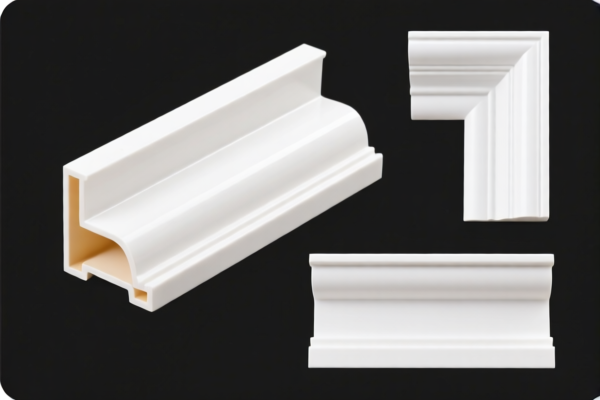

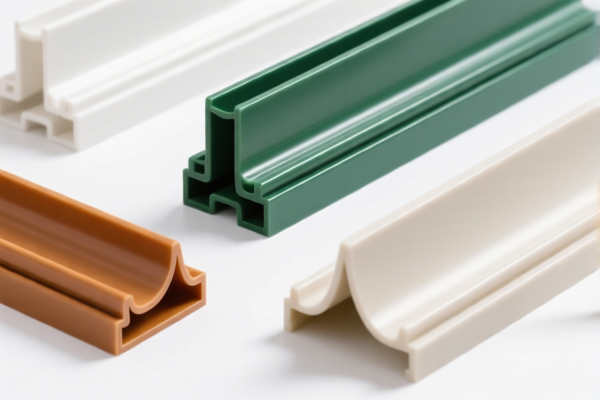
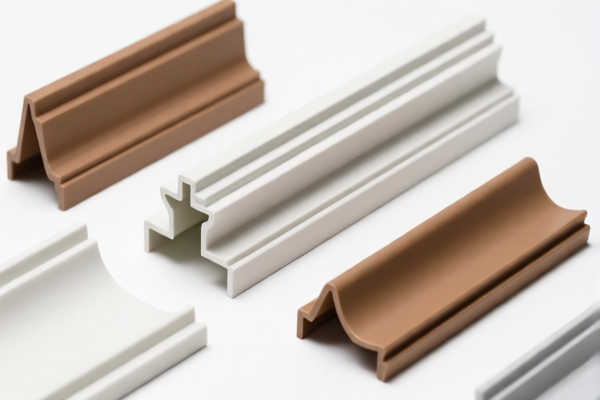
AI Analysis
🏗️ Plastic Profiles for Building Decoration
🌐 HS Code Reference & Clearance Guide | 2026 Latest Tariff Full Analysis | Professional Customs Strategy
📌 I. Product Definition & Classification: Do You Really Understand "Plastic Profiles" for Building Decoration?
Plastic profiles are long, shaped plastic materials used extensively in construction and interior decoration. In international trade, they are strictly categorized based on their material composition, form (hard vs. flexible), and specific application (e.g., pipes, construction components, or general extrusions). Misclassification can lead to significant tariff differences, especially under current US trade policies (Section 301 & IEEPA).
Key Distinctions: * General Extruded Profiles (3916): Used for general structural or decorative purposes, not strictly defined as pipes or building parts in specific subheadings. * Pipes & Tubes (3917): Hollow profiles intended for conveying fluids/gases or as rigid conduit systems. * Building Construction Parts (3925): Profiles specifically identified as parts of buildings (e.g., window frames, door frames, siding).
⚠️ Critical Classification Point:
- If the profile is a pipe/tube (hollow, for conveyance) → 3917.xx.xx
- If the profile is a window/door frame → 3925.20.xx (Lower Duty)
- If the profile is a general decorative/structural shape → 3916.xx.xx (Higher Duty)
- If the profile is a general building component not specifically framed → 3925.90.xx
📦 II. HS Code Classification Details (2026 Latest Tariff Authority Comparison)
| HS Code | Product Description | Applicable Scenario | Duty Rate (China Origin) |
|---|---|---|---|
3916.20.00.91 |
Plastic profiles, other than those of heading 3917, of plastics other than polyethylene | General decorative profiles, PVC/PP profiles not classified as pipes | 40.8% |
3917.29.00.90 |
Rigid pipes, tubes, and hoses, of plastics, other than those of heading 3917, other | Rigid plastic pipes/conduits not elsewhere specified | 38.1% |
3916.10.00.00 |
Profiles, of polymers of ethylene | Profiles made specifically of Polyethylene (PE) | 40.8% |
3925.90.00.00 |
Builders' ware of plastics, n.e.s. (not elsewhere specified) | General plastic building components, trims, moldings | 40.3% |
3917.40.00.95 |
Fittings for pipes, tubes, or hoses, of plastics, other | Plastic accessories/fittings for plumbing or conduit systems | 40.3% |
3925.20.00.91 |
Window and door frames and shutters, of plastics | Specifically Window/Door Frames | 22.8% |
🔍 Key Insight:
- The difference between 3925.20.xx (22.8%) and 3916/3925.90 (40%+) is massive.
- Crucial: You must prove the product is specifically designed and used as a window/door frame. General "decoration profiles" often fall into the higher 40%+ brackets.
💰 III. 2026 Latest Tariff Rate Detailed Explanation (Including Surcharges & Policy Additions)
✅ Applicable Country: United States (US)
✅ Origin: China (CN)
✅ Effective Time: 2025 November 10 onwards (and subsequent imports)
🎯 1. 3916.20.00.91 & 3916.10.00.00 —— General Plastic Profiles (High Duty)
| Item | Content |
|---|---|
| Base Rate | 5.8% (Ad Valorem) |
| Section 301 Surcharge | +25.0% (USITC Footnote 9903.88.01) |
| IEEPA Surcharge | +10.0% (Targeting Chinese/HK products, from Nov 10, 2025) |
| Total Rate | 40.8% |
| Tax Calculation | CIF Value × 40.8% |
| De Minimis Eligibility | ❌ Not Eligible (deny_de_minimis) |
| Legal Basis Path | IEEPA:9903.01.25 → IEEPA:9903.01.24 → USITC:3916.xx.xx → FOOTNOTE:9903.88.01 |
📌 Explanation:
- These codes represent general plastic extrusions.
- The 25% Section 301 duty is mandatory for Chinese-origin goods.
- The 10% IEEPA surcharge is a new additional layer effective late 2025.
- Total 40.8% makes these items very expensive to import into the US.
🎯 2. 3917.29.00.90 & 3917.40.00.95 —— Pipes, Tubes, and Fittings
| Item | Content |
|---|---|
| Base Rate | 3.1% (for pipes) / 5.3% (for fittings) |
| Section 301 Surcharge | +25.0% |
| IEEPA Surcharge | +10.0% |
| Total Rate (Pipes) | 38.1% |
| Total Rate (Fittings) | 40.3% |
| Tax Calculation | CIF Value × Rate |
| De Minimis Eligibility | ❌ Not Eligible |
| Legal Basis Path | IEEPA:9903.01.25 → USITC:3917.xx.xx → FOOTNOTE:9903.88.01 |
📌 Note:
- Even though pipes might have a slightly lower base rate (3.1%), the surcharges bring them close to the general profile rate.
- Ensure the product is indeed a pipe/tube (hollow, for flow) and not just a hollow decorative strip.
🎯 3. 3925.90.00.00 —— General Builders' Ware of Plastics
| Item | Content |
|---|---|
| Base Rate | 5.3% |
| Section 301 Surcharge | +25.0% |
| IEEPA Surcharge | +10.0% |
| Total Rate | 40.3% |
| Tax Calculation | CIF Value × 40.3% |
| De Minimis Eligibility | ❌ Not Eligible |
| Legal Basis Path | IEEPA:9903.01.25 → USITC:3925.90.xx → FOOTNOTE:9903.88.01 |
📌 Explanation:
- This is a "catch-all" for plastic building components not specifically named elsewhere (like windows).
- If your "decoration profile" is used for wall cladding, trim, or general building aesthetics, it likely falls here.
🎯 4. 3925.20.00.91 —— Window and Door Frames (The Sweet Spot!)
| Item | Content |
|---|---|
| Base Rate | 5.3% |
| Section 301 Surcharge | +7.5% (Reduced rate for specific building components under certain conditions/trade nuances) |
| IEEPA Surcharge | +10.0% |
| Total Rate | 22.8% |
| Tax Calculation | CIF Value × 22.8% |
| De Minimis Eligibility | ❌ Not Eligible |
| Legal Basis Path | IEEPA:9903.01.25 → USITC:3925.20.xx → FOOTNOTE:9903.88.01 |
📌 Critical Advantage:
- Only 22.8% total duty!
- This is 18 percentage points cheaper than general profiles (40.8%).
- Condition: The product must be specifically designed as a window or door frame. It cannot be a general decorative strip. You must provide evidence (specifications, installation manuals, intended use) that it is a frame.
🛠️ IV. Customs Clearance Practical Advice (Real-World Pitfall Avoidance Guide)
✅ 1. Preparation Checklist (Missing Documents = Delays)
| Document | Required | Explanation |
|---|---|---|
| ✅ Product Specifications | ✔️ | Detailed dimensions, cross-section shape, material type (PVC, PE, etc.) |
| ✅ Intended Use Declaration | ✔️ | Crucial: Must state if it is for "Window/Door Frames" (to get 22.8%) or "General Decoration" (40%+). |
| ✅ Product Photos (Cross-section) | ✔️ | Clear images of the profile shape to distinguish from pipes/tubes. |
| ✅ Installation Manual | ✔️ | Proves if it's a frame component or a decorative trim. |
| ✅ Commercial Invoice | ✔️ | Accurate description: e.g., "Plastic Window Frame Profile" vs. "Plastic Decorative Strip". |
| ✅ Origin Certificate (CO) | ✔️ | Essential for proving Chinese origin and applying correct surcharges. |
✅ 2. Declaration Strategies (Key Mantras)
🔥 "Frames Get 22.8%, General Gets 40%. Be Specific!"
| Scenario | Correct Declaration | Wrong Approach |
|---|---|---|
| Window/Door Frames | 3925.20.00.91 |
Calling it "Plastic Profile" → 40.8% |
| General Wall Trim/Decor | 3916.20.00.91 or 3925.90.00.00 |
Trying to force it as "Frame" → Customs Penalties |
| Hollow Pipes/Conduits | 3917.29.00.90 |
Calling it "Profile" → Misclassification Risk |
| Plastic Accessories/Fittings | 3917.40.00.95 |
N/A |
📌 Warning:
- Customs officers may inspect the product. If you declare "Window Frame" but the product is just a decorative molding that could fit in a window but is not a structural frame, you risk audits, back-dated duties, and fines.
- Only use3925.20.00.91if the product is primarily and structurally a window/door frame.
✅ 3. Special Case Handling
| Situation | Handling Advice |
|---|---|
| Mixed Shipments | Separate "Frames" from "General Trims" in the invoice. Different HS Codes, different duties. |
| OEM Custom Shapes | Provide design drawings to prove if it's a frame. Generic shapes default to higher duty codes. |
| Material Confusion | Clearly state polymer type (PVC, PE, PP). Polyethylene (PE) has its own specific code (3916.10.00.00) with 40.8% duty. |
| Pre-Ruling | Apply for an Advance Ruling from US CBP if unsure about the classification. It provides legal certainty. |
🌍 V. Global Market Clearance Comparison (2026 Latest)
| Country/Region | Recommended HS Code | Duty Rate (China) | Certification Required | Notes |
|---|---|---|---|---|
| 🇺🇸 USA | 3925.20.00.91 |
22.8% (Frames) / 40.8% (General) | No specific, but quality standards apply | High tariff on general plastics |
| 🇨🇳 China | 3925.20.00.91 |
~5% (Import) | CCC (if applicable) | No extra surcharges |
| 🇪🇺 EU | 3925.20.00.91 |
6.5% (Standard) | CE Marking, REACH | No Section 301 equivalent |
| 🇬🇧 UK | 3925.20.00.91 |
6.5% | UKCA Marking | Post-Brexit standards apply |
| 🇦🇺 Australia | 3925.20.00.91 |
5% | RCM | No major surcharges |
📌 Conclusion:
- The US is the most critical market due to the 25% Section 301 + 10% IEEPA surcharges.
- Optimization Strategy: If your product can be classified as a window/door frame, prioritize that classification to save 18% in duties.
- For general decorative profiles, expect ~40% total duty. Budget accordingly or consider supply chain diversification.
📌 VI. Common Mistakes & Pitfall Guide (Lessons from Experience)
❌ Mistake 1: Calling all plastic shapes "Profiles" and using 3916
👉 Consequence: If it's a pipe, you might get flagged for misdeclaration. If it's a frame, you pay 40.8% instead of 22.8%.
❌ Mistake 2: Declaring Window Frames as "Plastic Building Components" (3925.90)
👉 Consequence: Paying 40.3% instead of 22.8%. Overpayment of nearly $1,800 per $10,000 shipment.
❌ Mistake 3: Ignoring the Material (PE vs. PVC)
👉 Consequence: PE profiles (3916.10.00.00) are often confused with general profiles. Both are 40.8%, but incorrect classification leads to customs holds.
❌ Mistake 4: No Documentation of Intended Use
👉 Consequence: Customs cannot verify if it's a "Frame" → Defaults to highest general rate + potential penalties.
✅ Correct Approach:
"Plastic PVC Window Frame Profile, Cross-section [Description], for Residential Construction, Model XYZ"
Use HS Code:3925.20.00.91
🎯 VII. Conclusion: Precision Classification, Cost Efficiency!
🎯 Remember the Mantra:
🔹 "Frames are 22.8%, General is 40%. Know your shape!"
🔹 "Pipes are 38%, Fittings are 40%. Don't mix them up!"
🔹 "If it's not a frame, don't declare it as a frame. Avoid audits!"
📌 Pro Tip:
- For large volumes, apply for a Binding Tariff Information (BTI) or Advance Ruling from US CBP.
- If your product is a hybrid (e.g., frame + decorative trim), consider separating them in the invoice if possible, or consult a customs broker to find the most favorable classification that is legally defensible.
- Supply Chain: If tariffs are prohibitive, explore sourcing from countries with FTAs (Free Trade Agreements) with the US, such as Mexico or Canada, where tariffs may be 0%.
📣 Immediate Action:
📞 Contact a Licensed Customs Broker
📄 Provide Product Drawings & Usage Manual
🚀 Secure the 22.8% Rate if Eligible!
✨ Professional Clearance Starts with Precise Classification!
💼 Your Cost is Calculated in Every Detail!
Customer Reviews
About HS Code Classification
The Harmonized System (HS) is an internationally standardized nomenclature developed by the World Customs Organization (WCO) to classify traded products. Over 200 countries use the HS system as the basis for customs tariffs, trade statistics, and import/export regulations.
Each HS code follows a hierarchical structure:
- Chapter (2 digits) — Broad category of goods (e.g., Chapter 84: Machinery and Mechanical Appliances)
- Heading (4 digits) — More specific grouping within the chapter
- Subheading (6 digits) — Internationally standardized breakdown, used by all WCO member countries
- National subdivisions (8-10 digits) — Country-specific extensions for further classification, such as US HTSUS 10-digit codes
Correct HS code classification is essential for smooth customs clearance, accurate duty payment, and compliance with trade regulations. Misclassification can lead to customs delays, overpayment of duties, or penalties.
When importing from CN to US, the applicable tariff rates may include:
- Most-Favored-Nation (MFN) rate — The standard duty rate applied to WTO members
- General rate — Applied to countries without trade agreements
- Trade remedy duties — Additional tariffs such as Section 301 (anti-dumping), Section 232 (national security), or countervailing duties
The information provided on this page is for reference purposes only. For official classification, please consult with your local customs authority or a licensed customs broker.