Plastic Protective Shoe Covers
CN → US| HS Code | Tariff Rate | Origin | Destination | Doc |
|---|---|---|---|---|
| 6405902000 | 21.3% | CN | US | Official Doc |
| 3921901950 | 40.3% | CN | US | Official Doc |
| 6405100090 | 27.5% | CN | US | Official Doc |
| 3926204010 | 16.5% | CN | US | Official Doc |
| 3926201020 | 10.0% | CN | US | Official Doc |
Product Images
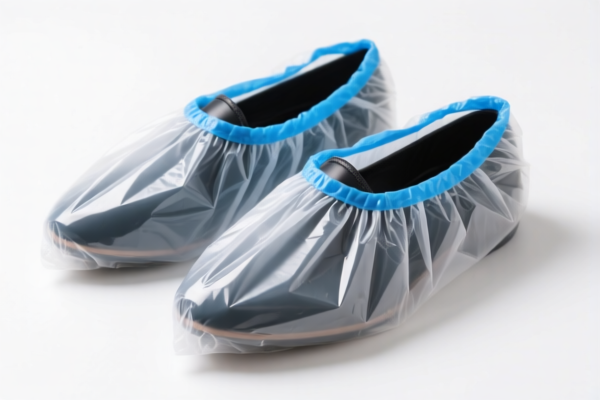
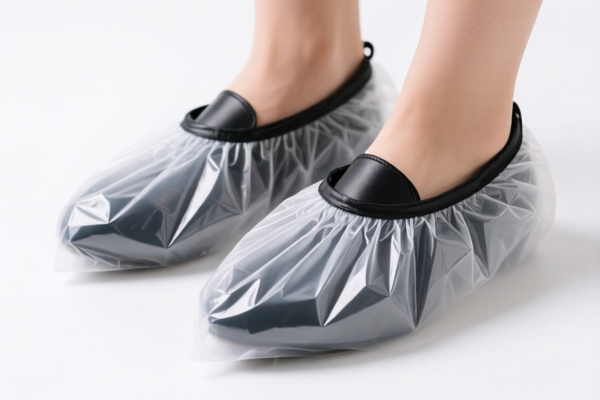
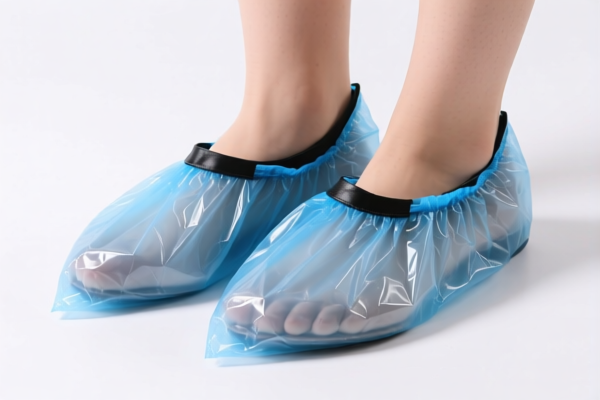

AI Analysis
🥿 Disposable Plastic Protective Shoe Covers
🌐 HS Code Reference & Customs Clearance Guide | 2026 Latest Tariff Analysis | Professional Compliance Strategy
📌 Part 1: Product Definition & Classification: What Exactly Are "Shoe Covers"?
Disposable Plastic Shoe Covers are single-use protective garments worn over footwear to prevent contamination, protect the floor, or keep shoes clean. In international trade, their classification depends heavily on whether they are viewed as finished footwear accessories or manufactured plastic articles.
Key Distinction:
- If viewed as a footwear component (shoe upper/cover) → Classified under Chapter 64 (Footwear).
- If viewed as a manufactured plastic article (sheet/film/other) → Classified under Chapter 39 (Plastics).
⚠️ Critical Compliance Point:
- "Once-used" Nature: Since they are disposable and often not durable enough to be considered "footwear" in the traditional sense, Customs may classify them as plastic articles (Chapter 39) rather than footwear (Chapter 64), especially if the plastic is thin film-like.
- Material Composition: Must be 100% plastic (PE, PP, PVC, etc.) to fit the HS codes provided below.
📦 Part 2: HS Code Classification Details (2026 Latest Tariff Authority对照)
Based on the provided data, here are the 5 potential HS Codes for Plastic Protective Shoe Covers, ranked by tax efficiency.
| HS Code | Product Description | Matching Logic (Why it fits) | Total Tax Rate (China → US) |
|---|---|---|---|
| 3926.20.10.20 | Other made-up plastic articles: Disposable plastic items | ✅ Best Match: Explicitly includes "Disposable" and "Plastic". No conflict with other categories. | 10.0% |
| 3926.20.40.10 | Other made-up plastic articles: Other plastic products (Disposable) | ✅ Good Match: Covers "Plastic" material and "Disposable" use. No additional surcharges besides 122. | 16.5% |
| 6405.90.20.00 | Footwear: Other footwear: Upper non-leather, outer sole non-rubber/leather/plastic | ✅ Logical Match: Views the cover as a "shoe" (footwear). Material "plastic" is inferred as reasonable for non-leather uppers. | 21.3% |
| 6405.10.00.90 | Footwear: Other footwear: Upper leather, outer sole non-rubber/leather/plastic | ⚠️ Debatable: Assumes plastic material for non-leather shoes. Classified as "shoe accessory/upper". | 27.5% |
| 3921.90.19.50 | Other plates, sheets, film, foil & strip, of plastics: Other | ⚠️ High Risk: Views shoe covers as "plastic sheets/films". High tariff due to "122 Clause" and high base/add-on rates. | 40.3% |
🔍 Analysis:
- HS 3926.20.10.20 is the most accurate and cost-effective classification because it explicitly accounts for "Disposable" plastic products.
- HS 6405.90.20.00 is a valid alternative if the product is robust enough to be considered "footwear," but it incurs higher tariffs due to Section 122 rules.
- HS 3921.90.19.50 is the least favorable due to high base duties (5.3%) and heavy 301/122 surcharges (35% total).
💰 Part 3: 2026 Latest Tariff Rate Breakdown (Including Surcharges)
✅ Applicable Country: United States (US)
✅ Country of Origin: China (CN)
✅ Effective Date: 2025/2026 (Current Trade Framework)
🎯 1. 3926.20.10.20 – Disposable Plastic Articles (🏆 RECOMMENDED)
| Item | Details |
|---|---|
| Base Duty | 0.0% |
| Section 301/Retaliatory | 0.0% |
| Section 122 Tariff | 10% |
| Total Effective Rate | 10.0% |
| Calculation | CIF Value × 10% |
| De Minimis Exemption | ❌ Not Eligible (Section 122 tariffs apply to low-value shipments) |
| Legal Basis | USITC:3926.20.10.20 → 122_Clause:10% |
📌 Why This is Best:
- No Base Duty and No Section 301 Surcharges.
- Only the 10% Section 122 tariff applies.
- Ideal for bulk import of disposable PPE.
🎯 2. 3926.20.40.10 – Other Plastic Products (Disposable)
| Item | Details |
|---|---|
| Base Duty | 6.5% |
| Section 301/Retaliatory | 0.0% |
| Section 122 Tariff | 10% |
| Total Effective Rate | 16.5% |
| Calculation | CIF Value × 16.5% |
| De Minimis Exemption | ❌ Not Eligible |
| Legal Basis | USITC:3926.20.40.10 → 122_Clause:10% |
📌 Note:
- Slightly higher due to the 6.5% Base Duty.
- Still very competitive compared to footwear categories.
🎯 3. 6405.90.20.00 – Other Footwear (Plastic Upper)
| Item | Details |
|---|---|
| Base Duty | 3.8% |
| Section 301/Retaliatory | 7.5% |
| Section 122 Tariff | 10% |
| Total Effective Rate | 21.3% |
| Calculation | CIF Value × 21.3% |
| De Minimis Exemption | ❌ Not Eligible |
| Legal Basis | USITC:6405.90.20.00 → 301:7.5% + 122:10% |
📌 Note:
- Higher total tax due to Section 301 (7.5%) and Base Duty (3.8%).
- Riskier classification if Customs argues it’s not "footwear."
🎯 4. 6405.10.00.90 – Other Footwear (Leather Upper Assumed)
| Item | Details |
|---|---|
| Base Duty | 10.0% |
| Section 301/Retaliatory | 7.5% |
| Section 122 Tariff | 10% |
| Total Effective Rate | 27.5% |
| Calculation | CIF Value × 27.5% |
| De Minimis Exemption | ❌ Not Eligible |
📌 Warning:
- Misclassification Risk: If the product is plastic, claiming "Leather Upper" (6405.10) is factually incorrect and can lead to penalties.
- High total tax rate.
🎯 5. 3921.90.19.50 – Other Plastic Sheets/Films
| Item | Details |
|---|---|
| Base Duty | 5.3% |
| Section 301/Retaliatory | 25.0% |
| Section 122 Tariff | 10% |
| Total Effective Rate | 40.3% |
| Calculation | CIF Value × 40.3% |
| De Minimis Exemption | ❌ Not Eligible |
📌 Avoid This:
- Highest Tax Burden: 25% Section 301 + 10% Section 122 + 5.3% Base.
- Only use if Customs explicitly rejects all "made-up article" classifications.
🛠️ Part 4: Customs Clearance Practical Advice
✅ 1. Documentation Checklist (Must-Have)
| Document | Required? | Notes |
|---|---|---|
| ✅ Product Specification Sheet | ✔️ | Must state: "100% Plastic," "Disposable," "Protective Shoe Cover." |
| ✅ Commercial Invoice | ✔️ | Clearly describe as "Disposable Plastic Shoe Covers" – avoid vague terms like "Plastic Bags." |
| ✅ Packing List | ✔️ | Include quantity per package, total packages, net/gross weight. |
| ✅ Material Safety Data Sheet (MSDS) | ✔️ | If made of PVC/PE, confirm non-hazardous. |
| ✅ Certificate of Origin (CO) | ✔️ | Essential for verifying Country of Origin (China) to apply correct 122/301 rates. |
| ✅ Photos of Product & Packaging | ✔️ | Show thin-film structure to support "plastic article" vs. "footwear" classification if needed. |
✅ 2. Declaration Tips (Key Strategy)
🔥 “Call it Disposable Plastic, Not Footwear!”
| Scenario | Recommended HS Code | Reason |
|---|---|---|
| Standard Disposable Shoe Covers (PE/PP thin film) | 3926.20.10.20 | Explicitly "Disposable Plastic Article." Lowest tax (10%). |
| Thicker, Reusable Shoe Covers | 6405.90.20.00 | If durable enough to be "footwear," use Chapter 64. |
| Shoe Covers on Rolls (Cut-to-size) | 3921.90.19.50 (Risk) | May be seen as "Plastic Film." High tax (40.3%). Avoid if possible. |
📌 Critical Warning:
- Do NOT declare as "Footwear" if the product is flimsy, thin, and clearly disposable. Customs may downgrade to Chapter 39 but assess higher duties if the description is inconsistent.
- Best Practice: Declare as "Disposable Plastic Protective Shoe Covers, 100% PE, for Industrial/Medical Use." This supports HS 3926.20.10.20.
✅ 3. Special Cases & Pitfalls
| Case | Advice |
|---|---|
| OEM Custom Printing | Ensure the printing does not change the material classification. Still a plastic article. |
| Packaged in Boxes | Declare the product, not the packaging. Packaging should be negligible in value. |
| Low-Value Shipments (< $800) | NOT ELIGIBLE for De Minimis exemption due to Section 122 Tariffs. You must pay 10% tax even for small packages. |
| Mixed Shipments | If shipping shoe covers with other plastics, ensure HS codes are separated to avoid misclassification penalties. |
🌍 Part 5: Global Market Comparison (2026)
| Market | Recommended HS Code | Est. Duty Rate | Notes |
|---|---|---|---|
| 🇺🇸 USA | 3926.20.10.20 | 10.0% | Only 122 Tariff. Best for China-origin goods. |
| 🇨🇳 China | 3926.20.10.20 | ~5-10% | Check latest Chinese tariff schedule for imports. |
| 🇪🇺 EU | 3926.20.90 | 6.5% | No Section 301/122. Standard EU duty. |
| 🇬🇧 UK | 3926.20.90 | 6.5% | Post-Brexit standard rate. |
| 🇯🇵 Japan | 3926.20.00 | 5% | No major surcharges for disposable plastics. |
📌 Conclusion:
- The US market is the most complex due to Section 301 and Section 122 tariffs.
- HS 3926.20.10.20 is the only optimal choice for US imports to minimize cost (10%).
- For other markets, standard plastic article duties apply (5-6.5%).
📌 Part 6: Common Mistakes & How to Avoid Them
❌ Mistake 1: Declaring as "Footwear" (6405.xxxx)
👉 Result: Higher tax (21.3%+) and potential rejection if product is clearly disposable plastic.
❌ Mistake 2: Declaring as "Plastic Film" (3921.xxxx)
👉 Result: Highest tax (40.3%) due to 25% Section 301 surcharge.
❌ Mistake 3: Assuming De Minimis Exemption for small packages
👉 Result: FAIL. Section 122 tariffs override De Minimis for China-origin goods. You will be charged 10% even on $50 shipments.
❌ Mistake 4: Vague Description ("Plastic Covers")
👉 Result: Customs will inspect and may assign the worst-case HS code.
✅ Correct Declaration Example:
"Disposable Plastic Protective Shoe Covers, 100% Polyethylene, Single-Use, for Industrial/Medical Protection, Model XYZ"
→ HS Code: 3926.20.10.20
→ Tax: 10%
🎯 Part 7: Conclusion – Smart Clearance, Lower Costs
🎯 Key Takeaway:
🔹 Use HS 3926.20.10.20 – It explicitly covers Disposable Plastic Articles.
🔹 Tax Rate: 10% – Only Section 122 applies. No 301 Surcharge.
🔹 Avoid Footwear Codes – They are 2-4x more expensive.
🔹 No De Minimis Exemption – Pay 10% on all shipments, no matter the size.
📌 Pro Tip:
If you are importing from Vietnam, Malaysia, or Thailand, you may be eligible for IEEPA Exemptions or lower FTA rates.
For China-origin goods, 3926.20.10.20 is your best defense against high tariffs.
📣 Action Item:
📞 Contact your Customs Broker with the exact description:
"Disposable Plastic Shoe Covers, 100% PE, for Protection."
📄 Ensure Commercial Invoice matches this description.
💰 Calculate CIF × 10% for accurate budgeting.
✨ Professional Clearance Starts with Accurate Classification!
💼 Save 30%+ in Duties by Choosing the Right HS Code!
Customer Reviews
About HS Code Classification
The Harmonized System (HS) is an internationally standardized nomenclature developed by the World Customs Organization (WCO) to classify traded products. Over 200 countries use the HS system as the basis for customs tariffs, trade statistics, and import/export regulations.
Each HS code follows a hierarchical structure:
- Chapter (2 digits) — Broad category of goods (e.g., Chapter 84: Machinery and Mechanical Appliances)
- Heading (4 digits) — More specific grouping within the chapter
- Subheading (6 digits) — Internationally standardized breakdown, used by all WCO member countries
- National subdivisions (8-10 digits) — Country-specific extensions for further classification, such as US HTSUS 10-digit codes
Correct HS code classification is essential for smooth customs clearance, accurate duty payment, and compliance with trade regulations. Misclassification can lead to customs delays, overpayment of duties, or penalties.
When importing from CN to US, the applicable tariff rates may include:
- Most-Favored-Nation (MFN) rate — The standard duty rate applied to WTO members
- General rate — Applied to countries without trade agreements
- Trade remedy duties — Additional tariffs such as Section 301 (anti-dumping), Section 232 (national security), or countervailing duties
The information provided on this page is for reference purposes only. For official classification, please consult with your local customs authority or a licensed customs broker.