Plastic Purified Water Bucket
CN → US| HS Code | Tariff Rate | Origin | Destination | Doc |
|---|---|---|---|---|
| 3923900012 | 38.0% | CN | US | Official Doc |
| 3923900014 | 38.0% | CN | US | Official Doc |
| 3926901000 | 20.9% | CN | US | Official Doc |
| 3926909989 | 22.8% | CN | US | Official Doc |
Product Images

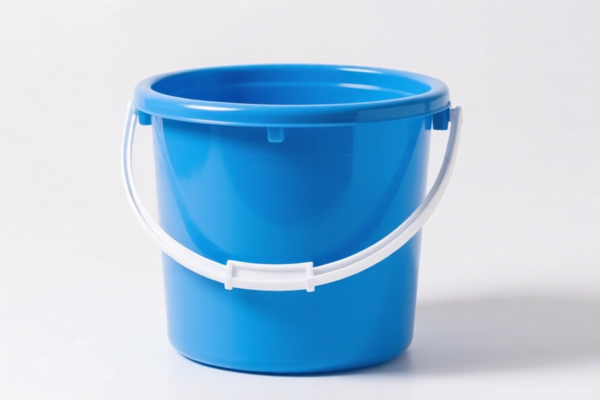
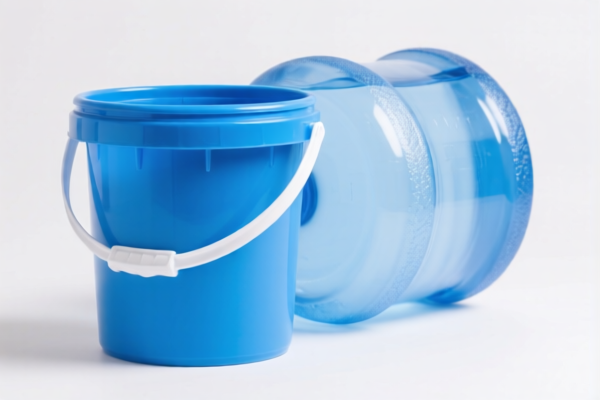
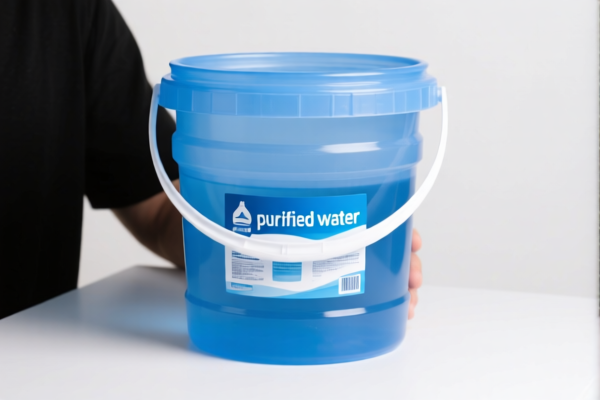
AI Analysis
🪣 Plastic Purified Water Bucket (Plastic Container for Liquid Storage)
🌐 HS Code Reference & Customs Clearance Guide | 2026 Latest Tariff Analysis | Professional Compliance Strategy 📌 I. Product Definition & Classification: Understanding the "Water Bucket"
A Plastic Purified Water Bucket is primarily defined by its material (plastic), its function (containing liquid), and its capacity. In international trade, classification hinges on whether the item is viewed as a simple container or part of a complex water treatment system.
Key Distinction: * Simple Container (Empty Plastic Bucket): If the product is solely a vessel for holding water (e.g., 5-gallon jug, industrial drum), it falls under Chapter 39 (Plastics). * Water Treatment Device: If the "bucket" includes internal filtration mechanisms, UV sterilization, or automated dispensing systems, it may be reclassified as a machine/device under Chapter 84 or 85.
⚠️ Critical Classification Point: * If it is just a plastic container → HS Code 3923.90. * If it contains filters or mechanical purification parts → HS Code 8421.21 or 8421.99. * If it is an electrical appliance with filtration → HS Code 8509.80 or 8543.70.
📦 II. HS Code Classification Details (2026 Latest Tariff Mapping)
Based on the provided data, here are the precise classifications for plastic water-related products:
| HS Code | Product Description | Classification Logic | Key Features |
|---|---|---|---|
3923.90.00.14 |
Plastic containers for holding liquids, shaped as drums/buckets | Pure Plastic Container | Material: Plastic; Function: Storage; Shape: Drum/Bucket. No mechanical/electrical parts. |
3923.90.00.12 |
Plastic buckets < 11.36 liters, made of plastic, for holding liquids | Small Capacity Plastic Container | Volume: < 11.36L (approx. 3 gallons); Material: Plastic. Strictly a container. |
8421.21.00.00 |
Mechanical apparatus for filtering or purifying water | Mechanical Water Filter | Function: Purification via mechanical means. Not just a container. |
8421.99.01.40 |
Parts and accessories for water filtering/purifying machinery (finished purifiers) | Water Purifier Components/Units | Part of a mechanical purification system. |
8509.80.50.95 |
Household appliances with filtering function (Water Treatment Device) | Electrical Household Appliance | Has electrical components (e.g., electric pump, UV light) + filtration. |
8543.70.98.60 |
Other electric apparatus/machines with independent functions, including filtering | Specialized Electrical Device | Complex electrical device with specific filtering function, not standard household appliance. |
🔍 Focus on the "Bucket": For a standard "Plastic Purified Water Bucket" (assuming it is a container for storing purified water, not a filter itself), the primary HS Codes are
3923.90.00.14and3923.90.00.12. * Use3923.90.00.14for general drums/buckets. * Use3923.90.00.12if the capacity is strictly under 11.36 liters.
💰 III. 2026 Latest Tariff Rate Breakdown (Including Surcharges & Policies)
✅ Applicable Country: United States (US) ✅ Origin: China (CN) ✅ Effective Date: 2025-11-10 (Includes subsequent imports)
🎯 1. 3923.90.00.14 – Plastic Containers (Drums/Buckets)
| Item | Content |
|---|---|
| Base Duty Rate | 3.0% |
| Section 301 Surcharge | +25.0% |
| Section 122 Surcharge | +10.0% |
| Total Duty Rate | 38.0% |
| Tax Calculation | CIF Value × 38% |
| De Minimis Eligibility | ❌ No (Subject to high tariffs) |
| Legal Authority Path | Section 301: 25% + Section 122: 10% + Base: 3% |
📌 Explanation: * Base 3%: Standard MFN rate for plastic articles. * 301 Clause (25%): Major retaliatory tariff on Chinese goods. * Section 122 (10%): Specific surcharge applicable to certain plastic imports from China. * Total 38%: This is a high-cost item for importers.
🎯 2. 3923.90.00.12 – Plastic Buckets (< 11.36L)
| Item | Content |
|---|---|
| Base Duty Rate | 3.0% |
| Section 301 Surcharge | +25.0% |
| Section 122 Surcharge | +10.0% |
| Total Duty Rate | 38.0% |
| Tax Calculation | CIF Value × 38% |
| De Minimis Eligibility | ❌ No |
| Legal Authority Path | Section 301: 25% + Section 122: 10% + Base: 3% |
📌 Note: * Despite the smaller size, the tariff structure is identical to the larger drum. * Do not assume smaller volume = lower tax. The surcharge is ad valorem (percentage-based).
⚠️ Warning: Misclassification Risk
If you misdeclare a simple plastic bucket as a "Water Purifier" (8421.21.00.00 or 8509.80.50.95):
| HS Code | Total Tax | Why It Might Be Dangerous |
|---|---|---|
8421.21.00.00 |
35.0% | Lower than 38%, BUT requires proof of mechanical filtration. High audit risk if no filter is present. |
8509.80.50.95 |
14.2% | Significant Savings! BUT only for electrical appliances. If it's just plastic, declaring it as an electrical appliance is fraud. |
8543.70.98.60 |
37.6% | Slightly lower than 38%, but requires complex electrical certification. High risk for simple plastic goods. |
🚨 Compliance Alert: Only declare as
8421or8509if the product actually contains mechanical filters or electrical components. If it is merely a plastic bucket, you MUST pay 38%.
🛠️ IV. Customs Clearance Practical Advice (Actionable Guide)
✅ 1. Required Documentation Checklist
| Document | Mandatory? | Notes |
|---|---|---|
| ✅ Commercial Invoice | Yes | Clearly state "Plastic Bucket" or "Plastic Container for Liquids". Do NOT use "Water Purifier" if it's just a bucket. |
| ✅ Packing List | Yes | Specify dimensions and volume (e.g., "10L Bucket"). |
| ✅ Product Photos | Yes | Show the product clearly. If it has no filter/intake/outlet ports, it proves it's a container. |
| ✅ Material Declaration | Yes | Confirm it is "Food Grade Plastic" (if for drinking water) to meet FDA standards. |
| ✅ Origin Certificate | Yes | Required for Section 301/122 assessment. |
✅ 2. Declaration Strategy (Key Tips)
🔥 "Be Honest, Be Precise, Avoid Fraud"
| Scenario | Correct HS Code | Incorrect/High Risk HS Code | Reason |
|---|---|---|---|
| Empty Plastic Bucket | 3923.90.00.14 / .12 |
8421.21.00.00 |
No mechanical filter. Misdeclaration leads to penalties. |
| Bucket + Pre-installed Filter | 8421.21.00.00 |
3923.90.00.14 |
Has filtration function. Justifying 35% vs 38% might save money, but must prove function. |
| Electric Dispenser with Bucket | 8509.80.50.95 |
3923.90.00.14 |
Electrical component exists. Lowers tax to 14.2%. |
✅ 3. Special Considerations for "Purified Water"
- FDA Compliance: If the bucket is intended for drinking water, it must be FDA-compliant food-grade plastic. Provide a FDA Letter of Compliance or test report. Customs may inspect for safety.
- Cleaning Status: Ensure the bucket is manufactured clean (not filled with water). Shipping empty plastic containers is standard. If shipped with water, different rules apply (food/beverage import regulations).
🌍 V. Global Market Comparison (2026)
| Market | HS Code (Container) | Total Duty | Notes |
|---|---|---|---|
| 🇺🇸 USA | 3923.90.00.14 |
38.0% | High due to 301 + 122 clauses. |
| 🇨🇳 China | 3923.90.00.14 |
~5-10% | Lower duties, no retaliatory tariffs. |
| 🇪🇺 EU | 3923.39.90 |
~2-4% | No Section 122/301 equivalents. |
| 🇨🇦 Canada | 3923.30.00 |
~0-5% | FTA benefits may apply depending on origin. |
📌 Conclusion: The US market is the most expensive for Chinese plastic buckets due to叠加 tariffs (301 + 122).
📌 VI. Common Mistakes & Pitfalls
❌ Mistake 1: Declaring a simple plastic bucket as 8509.80.50.95 (Electrical Appliance) to get 14.2% tax.
👉 Consequence: Customs audit will reveal no electrical parts. Heavy fines, seizure, and blacklisting.
❌ Mistake 2: Ignoring Section 122. 👉 Consequence: Assuming only 301 (25%) applies. The 10% additional tariff is mandatory for these plastic items from China.
❌ Mistake 3: Mixing "Water Filter" and "Water Bucket" in one shipment without clear distinction. 👉 Consequence: Confusion in valuation and classification. Always separate pure containers (3923) from filtration units (8421/8509).
✅ Correct Practice:
"Plastic Drum, 20L Capacity, Food Grade, For Storage Only, No Electrical or Mechanical Parts, Model XYZ."
🎯 VII. Conclusion: Professional Clearance, Cost Control, Risk Mitigation
🎯 Remember the Key Rule:
🔹 "Plastic Bucket = 3923 = 38% Tax" 🔹 "Electric Filter = 8509 = 14.2% Tax (If Applicable)" 🔹 "Mechanical Filter = 8421 = 35% Tax (If Applicable)"
🔹 "Don't lie about functionality. If it's just a bucket, pay the 38%. If it's a machine, declare correctly to optimize cost."
📌 Pro Tip: If you are importing large volumes (e.g., industrial drums), consider negotiating FOB terms to lower CIF value, or explore if your supplier has alternative origin countries (e.g., Vietnam) to avoid Section 301/122 tariffs (subject to strict origin rules).
📣 Immediate Action:
📞 Verify product structure. 📄 Prepare FDA compliance docs. 🚀 Declare accurately to avoid customs delays.
✨ Professional Customs Clearance Starts with Accurate Classification! 💼 Your Cost Efficiency Depends on This Detail!
Customer Reviews
About HS Code Classification
The Harmonized System (HS) is an internationally standardized nomenclature developed by the World Customs Organization (WCO) to classify traded products. Over 200 countries use the HS system as the basis for customs tariffs, trade statistics, and import/export regulations.
Each HS code follows a hierarchical structure:
- Chapter (2 digits) — Broad category of goods (e.g., Chapter 84: Machinery and Mechanical Appliances)
- Heading (4 digits) — More specific grouping within the chapter
- Subheading (6 digits) — Internationally standardized breakdown, used by all WCO member countries
- National subdivisions (8-10 digits) — Country-specific extensions for further classification, such as US HTSUS 10-digit codes
Correct HS code classification is essential for smooth customs clearance, accurate duty payment, and compliance with trade regulations. Misclassification can lead to customs delays, overpayment of duties, or penalties.
When importing from CN to US, the applicable tariff rates may include:
- Most-Favored-Nation (MFN) rate — The standard duty rate applied to WTO members
- General rate — Applied to countries without trade agreements
- Trade remedy duties — Additional tariffs such as Section 301 (anti-dumping), Section 232 (national security), or countervailing duties
The information provided on this page is for reference purposes only. For official classification, please consult with your local customs authority or a licensed customs broker.